If you’re considering a Chevy Equinox EV, or you already own one, you’re smart to ask about common problems and fixes. The Equinox EV is one of Chevy’s newest electric crossovers, so real-world reliability data is still developing, and early owners have uncovered a mix of software, charging, and tire-related issues alongside lots of trouble‑free miles.
A quick note before we dive in
Overview: Is the Chevy Equinox EV reliable?
On paper, the Chevy Equinox EV sits on GM’s Ultium platform, which also underpins the Blazer EV, Cadillac Lyriq, and other new electric models. That brings modern battery tech, over‑the‑air update capability, and strong safety tech, but it also means you’re buying into a relatively new software‑heavy ecosystem.
Early Equinox EV reliability snapshot (2024–2026)
In short: the Equinox EV isn’t problem‑free, but most known issues have documented fixes. The real work, as an owner or used‑EV shopper, is making sure your specific vehicle has had those fixes applied and that you know the quick DIY steps when charging or software gets fussy.
Major Chevy Equinox EV recalls and service campaigns
Before we get into day‑to‑day annoyances, it’s worth knowing about the bigger, safety‑relevant problems that have triggered recalls or factory service programs. These are handled free of charge at Chevy dealers, but only if your vehicle is included and actually gets the work done.
Key Equinox EV recalls and service actions to know
Always run your VIN through the NHTSA or Chevrolet recall tools before you buy, or after you take delivery.
1. Vehicle control software / power loss
GM has recalled a large number of Chevy Equinox EVs over a software defect in vehicle control systems that can cause unexpected loss of power or propulsion while driving. The remedy is a software update, usually performed at a dealer.
If you feel sudden power drops or see stability/propulsion warnings, stop driving and schedule service immediately.
2. Automatic emergency braking (AEB) with cruise
Roughly 2,800 2025 Equinox EVs were recalled because automatic emergency braking might not engage properly when cruise control is active. This mostly affects AWD models without Super Cruise.
Dealers install updated calibration; some units can receive software over the air, but most early vehicles need a shop visit.
3. Tire tread separation risk
For some 2025–2026 Equinox EVs, GM identified a batch of Continental CrossContact tires that can suffer partial or full tread detachment, increasing crash risk. Owners may notice vibration, noise, or bulging.
Dealers inspect DOT codes on the tires and replace affected ones free if they were produced during the faulty week.
Don’t assume your car is fixed
Software glitches and power loss issues
Early Ultium‑platform vehicles, including the Equinox EV, lean heavily on software for propulsion, charging, and driver assistance. When that software misbehaves, you can see anything from weird warning lights to full‑on loss of power.
- Intermittent or sudden reduction in power, especially under acceleration or at highway speeds.
- Instrument‑cluster warnings about propulsion power being reduced or stability control issues.
- Vehicle defaulting to a limp‑home mode until restarted or recharged.
- Difficulty charging immediately after a power‑loss episode.
Quick triage if you feel power loss
In many cases, dealers resolve these complaints with a software reflash of the powertrain control modules. Because these updates are version‑specific, make sure your service receipt lists the latest software levels or campaign numbers applied.
Braking and driver-assistance problems
Two areas get the most attention from Equinox EV owners: automatic emergency braking (AEB) behavior and occasional oddities in adaptive cruise or lane‑keeping functions. Most of this traces back to calibration and software, not hardware failures.
Common braking and driver-assistance complaints
These are the patterns owners most often report, and how dealers typically address them.
| Symptom | Likely Cause | Owner Fix | Dealer Fix |
|---|---|---|---|
| AEB doesn’t slow the car when cruise is active | Earlier software bug on some 2025 AWD models | Turn cruise off until repaired; avoid tailgating | Apply AEB recall software update; road test |
| Random forward‑collision or pedestrian alerts with no obstacle | Camera/radar mis‑calibration or dirty sensors | Clean camera/radar areas; remove bumper stickers | Calibrate sensors; install latest driver‑assist software |
| Brake pedal feels “grabby” or inconsistent at low speeds | Blending between regenerative and friction brakes | Drive in one‑pedal mode more often; learn pedal feel | Update brake‑by‑wire software; check for TSBs |
| Lane‑keep assist ping‑ponging between lane markers | Weak lane lines, curves, or outdated lane‑assist tuning | Use lane‑keep only on clear, well‑marked highways | Calibrate camera; apply system update if available |
Because these systems are software‑heavy, most fixes involve calibration and updates rather than parts replacement.
Safety first with braking issues
Tire-related problems and ride issues
The Equinox EV’s tire story has two threads: a specific tread‑separation recall on certain 21‑inch Continental CrossContacts, and more routine complaints about noise, vibration, and quick wear, common on heavy EV crossovers.
- Vibration at highway speeds that wasn’t there when new.
- Localized tread wear or visible bulges.
- Road roar or thumping from one corner of the vehicle.
- Tires wearing faster on the outside shoulders due to weight and torque.
How to check if your tires are in the recall range
Even if your tires aren’t part of the recall, schedule rotations every 5,000–7,500 miles and keep pressures at the door‑jamb spec. EVs are hard on tires; neglecting them can turn a mild vibration into a blowout risk faster than you’d expect.
Common Equinox EV charging problems (and easy fixes)
If there’s a single theme in early owner forums, it’s this: charging can be quirky. The good news is that many Equinox EV charging problems turn out to be settings, scheduling, or third‑party hardware, not catastrophic failures. Still, you want a clear playbook when the car refuses to take a charge.
Most common Equinox EV charging complaints
Start with these simple checks before assuming the worst.
1. “Not charging. Station not sending power”
Owners sometimes see this message when using home Level 2 chargers or public stations. It can indicate:
- The charger is on a delayed schedule (no power yet).
- The outlet or breaker is tripping under load.
- The station’s firmware is glitching.
DIY fix: Check whether the charger itself shows an error, reboot it at the breaker, and try another station. If the car charges fine elsewhere, replace or service the charger, not the car.
2. Level 1 (120V) won’t charge, Level 2/3 works
A few owners report the included 120V cord showing power while the car displays “Unable to charge – service charging system.”
DIY steps:
- Verify you’ve set the car to Level 1 charging and 8A if the circuit is weak.
- Try a different outlet on a different circuit.
- Borrow another Level 1 cord if possible.
If it still fails only on Level 1, have the dealer inspect the charge port and onboard charger under warranty.
3. Charging stops around 66–77%
Several Equinox EV owners have seen charging repeatedly stop in the mid‑60% to mid‑70% range, even when the target is set higher. Often this is a Battery Management System (BMS) calibration quirk, not a real loss of capacity.
DIY fix that often works: On a reliable Level 2 charger, set the limit to 100% and let the car reach it once. Many owners report that this single full charge “resets” the BMS estimate and makes lower limits work normally again.
4. Public station connects, then drops session
Hit‑or‑miss behavior with certain networks is common across EV brands. Sometimes the Equinox EV handshakes differently with certain DC fast chargers or app‑based Level 2 stations.
DIY checklist:
- Start the session from the charging‑network app before you plug in.
- Try a second cable at the same station.
- Move to a different brand of charger if available.
If your car consistently fails where other EVs succeed, have the dealer pull charging logs and check for software updates.
When to call the dealer immediately
Battery health, range behavior, and BMS quirks
So far, there’s no wave of documented Equinox EV battery failures. What you do see are quirks in how the Battery Management System estimates state of charge (SoC) and range, especially for owners who almost never charge above 70–80%.
- Display stuck at a certain percentage (for example, 66% or 77%) even though charging continues briefly.
- Big jumps in estimated range after short drives or small charges.
- App and in‑car displays that disagree about percent or miles remaining.
- Range dropping faster than expected at highway speeds or in cold weather.
Healthy habits for Ultium batteries
Remember that “range” is an estimate, not a promise. High speeds, big temperature swings, roof racks, and heavy loads all trim that number. When shopping for a used Equinox EV, look for vehicles with documented charging history and, if possible, a third‑party battery health report like the Recharged Score to see how the pack is really doing.
Interior, infotainment, and build-quality complaints
Mechanically, the Equinox EV has been more about software and calibration than broken parts. Inside the cabin, complaints are more old‑school: rattles, misaligned trim, and infotainment quirks that will feel familiar to anyone who’s owned a mainstream crossover.
Annoying, but fixable, Equinox EV quality issues
Most of these can be addressed under warranty or with simple adjustments.
Rattles & squeaks
Owners occasionally report rattles from the dash, doors, or hatch area over rough pavement. These are usually due to loose clips, trim, or cargo‑area covers.
Fix: Have the dealer ride along, then secure or replace the offending clip under warranty. DIYers can often isolate the noise with felt tape and patience.
Infotainment glitches
The Google‑based infotainment system is feature‑rich but not immune to bugs: frozen screens, slow CarPlay/Android Auto connections, or apps that crash.
Fix: Perform a soft reset from the system menu, delete and re‑pair your phone, and confirm your vehicle has the latest infotainment software loaded at each service visit.
HVAC & visibility nitpicks
Some owners dislike how the climate controls behave in auto mode or find the physical buttons hard to see in bright light.
Fix: Experiment with manual fan and temp settings, and consider subtle aftermarket lighting or high‑contrast labels if the buttons are hard to read.
Preventive maintenance tips for Equinox EV owners
One advantage of EVs is less mechanical maintenance, no oil changes, spark plugs, or transmission fluid. But the Equinox EV still benefits from a thoughtful maintenance routine, especially around tires, brakes, and software.
Low‑effort habits that prevent big headaches
1. Make software updates part of every service visit
Ask the advisor to check for outstanding recalls, technical service bulletins (TSBs), and control‑module updates, then print them on the repair order. This keeps powertrain, charging, and driver‑assist systems on the latest calibrations.
2. Rotate and inspect tires frequently
Every 5,000–7,500 miles, rotate tires and check for uneven wear, bulges, or vibration. Confirm DOT codes if your tires fall into the known recall window.
3. Test both Level 1 and Level 2 charging at home
At least once a month, verify that your Equinox EV can charge on a standard 120V outlet and your usual Level 2 setup. Catching a failing cord or breaker early is much cheaper than a roadside tow.
4. Keep charge limits and schedules simple
If you don’t need complicated departure‑time schedules, avoid layering them in the car and in your wallbox app. Start with a basic overnight plan, like 20% to 80%, and add complexity only if you really need it.
5. Log weird behavior immediately
Any time you see unexplained warnings, loss of power, or repeated charging failures, take smartphone photos or screenshots. A paper trail helps dealers (and, if needed, lemon‑law attorneys) take your concern seriously.
6. Protect the battery with smart driving
Hard launches and frequent 100% fast charges won’t instantly kill the pack, but they add stress. If you can, save DC fast charging for road trips and use Level 2 at home for daily driving.
Buying a used Chevy Equinox EV: problem checklist
Shopping used is where knowing Equinox EV common problems and fixes really pays off. Because so many issues are software‑ or recall‑related, you can dramatically reduce your risk by choosing a vehicle with a clean repair history and documented updates.
1. Run the VIN for recalls and campaigns
Before you fall in love with a specific Equinox EV, run its VIN through the NHTSA recall site and Chevrolet’s own recall checker. Confirm that:
- Power‑loss/vehicle‑control software recalls are marked as completed.
- AEB and braking‑system campaigns are done.
- Tire recall inspections and replacements (if needed) are recorded.
2. Do a targeted test drive and charge test
Don’t just loop the block. On your test drive, you should:
- Engage and disengage adaptive cruise and lane‑keep on a well‑marked road.
- Do a few firm stops to feel for brake weirdness.
- Use a nearby Level 2 or DC fast charger to confirm the car accepts a charge without errors.
How Recharged can help with used Equinox EVs
Quick used Equinox EV inspection list
Confirm all recall and software updates
Ask the seller for service records showing recall numbers and any software updates. If they can’t provide them, budget time for a dealer visit before you rely on the car for daily driving.
Scan for warning lights or stored codes
During the test drive, cycle power and look for any persistent ABS, stability, or propulsion warnings. Some buyers also bring a Bluetooth OBD‑II scanner that can read basic fault codes.
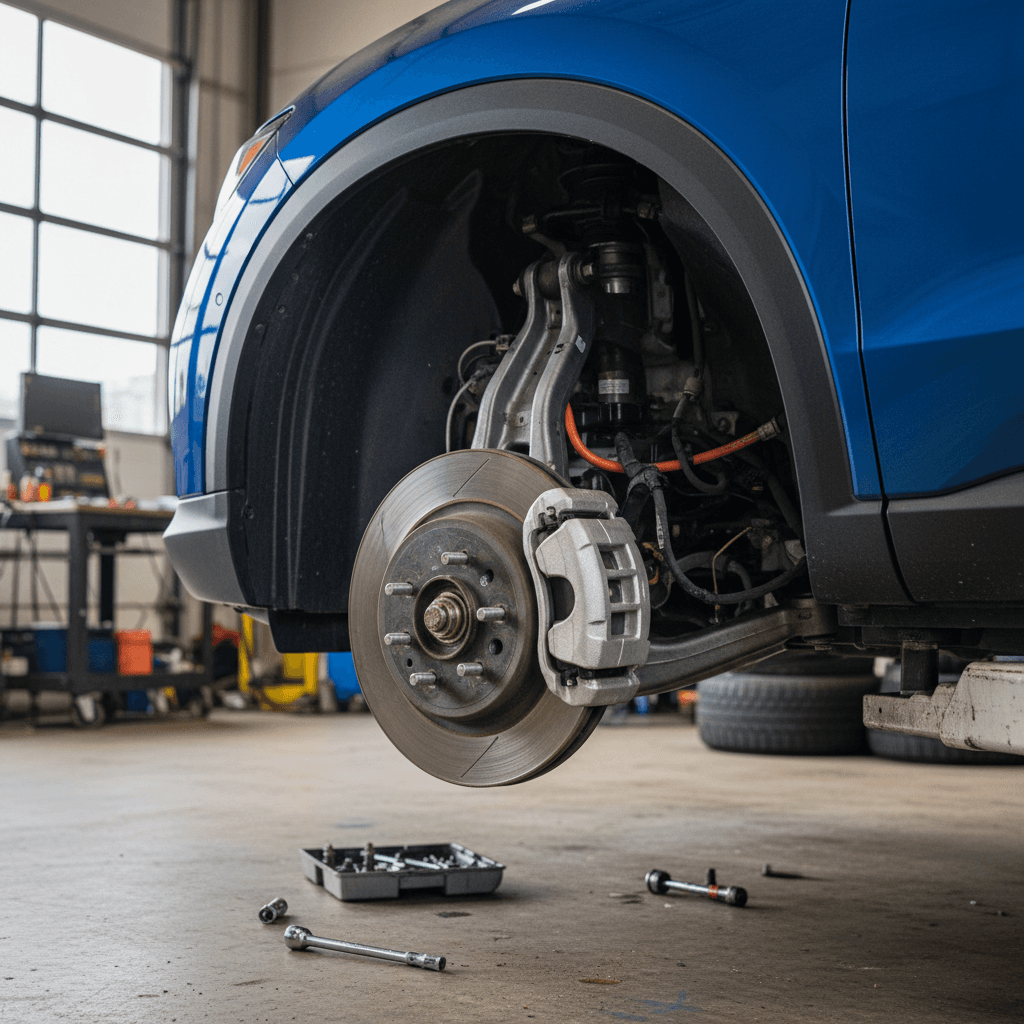
Inspect tires and brakes closely
Check tire brand, size, and DOT codes, and run your hand over the tread for cupping or uneven wear. Look at brake rotors through the wheels for deep grooves or heavy rust, which can signal sticky calipers.
Check all charging options
Verify that the included Level 1 cord works and ask how the previous owner usually charged. If they relied only on DC fast charging, expect more battery and tire wear than a mostly‑home‑charged twin.
Test every door, hatch, and interior function
Open and close the hatch, fold the rear seats, run all windows, and try every infotainment function you plan to use. Small rattles and glitches are easy to miss on a short drive but annoying later.
Ask for a third‑party battery health report
Whenever possible, get an independent battery health assessment, like the Recharged Score battery diagnostics, so you know whether the pack is aging normally for its miles and climate history.
Chevy Equinox EV problems: frequently asked questions
Frequently asked questions about Equinox EV problems
Bottom line: Who the Equinox EV is right for
The Chevy Equinox EV is a genuinely appealing compact electric SUV: practical size, modern tech, and competitive range. Its main drawbacks so far aren’t blown motors or failing batteries, but software bugs, calibration hiccups, and a few very specific recalls that demand an engaged, informed owner.
If you’re willing to stay on top of updates, watch your tires, and learn the basics of EV charging behavior, the Equinox EV can be a solid everyday electric. If you’d rather not think about control‑module versions or recall bulletins, you’re better off working with an EV‑focused retailer like Recharged, where battery health, open recalls, and pricing are already vetted for you. Either way, knowing the common problems and fixes before you sign the paperwork is the best reliability upgrade you can give yourself.