If you’re eyeing the retro-cool 2025 Volkswagen ID. Buzz, you’re probably wondering what really matters on a daily basis: **how far will it go on a charge in the real world?** On paper, the 2025 VW ID. Buzz range looks competitive, but range tests from reviewers, and early U.S. owners, tell a more nuanced story, especially at highway speeds and with a full load of people and gear.
Why range tests matter
2025 VW ID. Buzz range overview
Key 2025 ID. Buzz range and charging stats
In U.S. spec, the 2025 ID. Buzz uses a **single 91 kWh battery pack (about 86 kWh usable)** across the lineup. Rear‑wheel‑drive (FWD in VW’s marketing) and dual‑motor all‑wheel‑drive versions share essentially the same pack, with EPA estimates of **about 234 miles for RWD and 231 miles for AWD** on a full charge.
Boxy shape, real consequences
Battery size, EPA estimates, and MPGe
2025 VW ID. Buzz battery and EPA efficiency
How the 2025 ID. Buzz is rated on paper before you ever hit the road.
| Spec | RWD (FWD in VW literature) | AWD |
|---|---|---|
| Usable battery capacity | 86 kWh | 86 kWh |
| EPA estimated range | 234 miles | 231 miles |
| EPA MPGe city | 90 MPGe | 87 MPGe |
| EPA MPGe highway | 75 MPGe | 74 MPGe |
| EPA MPGe combined | 83 MPGe | 80 MPGe |
| Max DC fast‑charge rate | Up to 200 kW | Up to 200 kW |
| Max AC Level 2 rate | 11 kW | 11 kW |
EPA estimates provide a starting point; your real‑world range will vary with speed, temperature, and load.
On paper, the 2025 ID. Buzz’s **EPA combined MPGe in the low 80s** puts it in the same ballpark as other large electric SUVs and vans. The highway MPGe in the mid‑70s is the more important figure if you’re planning road trips, because that’s where boxy EVs show their weaknesses.
Quick range math you can actually use
Real-world 2025 ID. Buzz range tests
Instrumented tests and long highway loops give us a clearer picture of how the ID. Buzz behaves outside the lab. Multiple outlets have now put 2025 U.S. models through their paces, and the pattern is consistent: **the Buzz comes up short of its EPA numbers at sustained highway speeds, but does better around town.**
How different tests measured 2025 ID. Buzz range
Think in scenarios, not just one headline number.
Highway, 75 mph
Approx. 180–190 miles from full to empty in independent 75‑mph tests, both RWD and AWD. That’s roughly 20–25% below the EPA estimate but typical for a tall, blunt EV.
Mixed driving
Roughly 220–250 miles has been reported in mixed city/suburban use at lower average speeds. Efficiency climbs as speeds drop and regen braking can work more often.
Gentle suburban loops
Some reviewers have seen efficiencies around 3.0 mi/kWh in relaxed driving, implying 245–260 miles on a full charge, if you keep speeds modest and conditions mild.
One long‑distance European test over more than 500 miles of mostly motorway driving found average consumption closer to **25–27 kWh/100 km at higher cruising speeds**, which translates to about **2.3–2.6 mi/kWh**, line up that math with the 86 kWh usable pack, and you land squarely in that **190–220‑mile real‑world window** on road trips.
Good news for daily driving
City vs. highway: how speed kills range
In the city and suburbs
At lower speeds, the ID. Buzz can be surprisingly efficient. Frequent stops let the **regenerative brakes recapture energy**, and you’re rarely pushing much air out of the way at 25–45 mph.
- Expect 3.0–3.3 mi/kWh in mild weather if you’re not lead‑footed.
- That equates to a practical 240–260 miles of driving if you used the full pack.
- Most owners will top up at home, never running from 0–100% in one shot.
On the interstate
Get the Buzz onto a 70–80 mph interstate and physics turn against you. The frontal area is big, even if the drag coefficient is respectable for a van.
- At 70–75 mph, plan on 2.2–2.6 mi/kWh depending on wind and temperature.
- That yields roughly 190–220 miles of realistic highway range.
- Add a roof box, bikes, or strong headwinds, and you should be conservative with your planning.
Don’t plan to the last mile
Charging times and road-trip planning
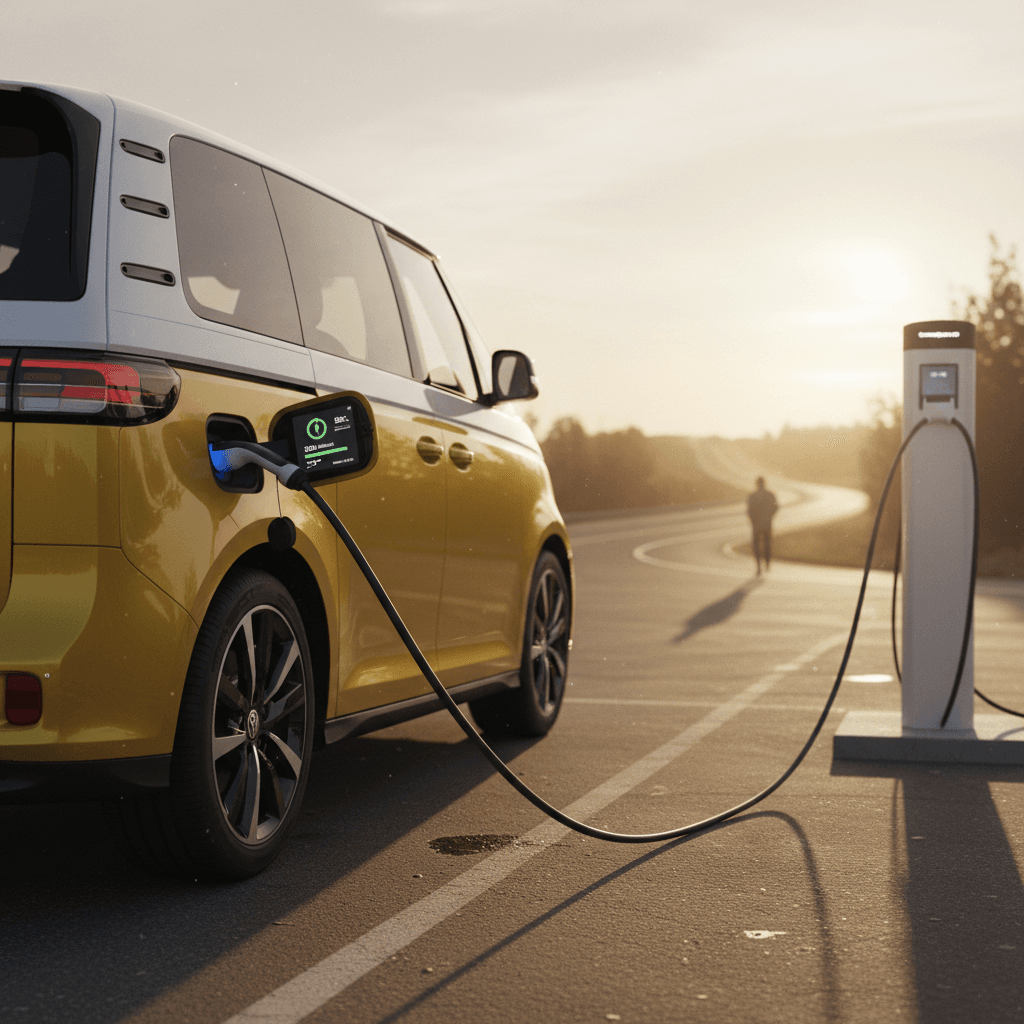
Range and charging are two sides of the same coin. The ID. Buzz doesn’t go as far per charge as some sleeker crossovers, but it makes up ground with **strong DC fast‑charging performance** and a solid onboard AC charger for home use.
2025 ID. Buzz charging speeds: home and away
How long it actually takes to recharge the 2025 ID. Buzz, depending on where you plug in.
| Charging type | Power | Approx. time | What it’s good for |
|---|---|---|---|
| Level 1 household outlet | ~1.2 kW | Up to 90+ hours 0–100% | Emergency backup only |
| Basic Level 2 (7.2 kW) | 7.2 kW | ~15 hours 0–100% | Overnight top‑ups if you can’t upgrade wiring |
| Full Level 2 (11 kW) | Up to 11 kW | ~9 hours 0–100% | Ideal home setup; plug in when you get home, full by morning |
| DC fast charge | Up to 200 kW | ~26–30 minutes 10–80% | Road trips; coffee and bathroom stop while you recharge |
| 10 minutes on DC fast charge | Variable | ~80 miles (RWD), ~79 miles (AWD) added | Quick top‑up between stops or around town |
For most owners, a 40‑ or 48‑amp Level 2 charger at home makes the Buzz easy to live with, and DC fast charging covers road‑trip duty.
Think in 10–80% chunks
For U.S. buyers, it’s worth noting the bigger picture: **Volkswagen is pausing U.S. imports after the 2025 model year**, with plans to resume with a refreshed version expected for the 2027 model year. That doesn’t change how far today’s vans go on a charge, but it does mean **used 2025 examples will dominate the market for a while**, and understanding their range and charging behavior is especially important if you’re thinking long‑term ownership.
Weather, weight, and driving style
Every EV is sensitive to conditions, but large, heavy vans like the ID. Buzz feel the effects more clearly. A Buzz loaded with people and cargo on a cold, wet day is going to behave very differently from a mostly empty one cruising around a mild‑weather suburb.
Major factors that swing 2025 ID. Buzz range
1. Temperature and climate control
At freezing temps, the battery is less efficient and the cabin heater draws real power. It’s normal to see **15–30% less range** in cold weather. Preconditioning while plugged in helps a lot.
2. Speed and wind
Jumping from 65 mph to 75–80 mph has a huge aerodynamic penalty. Strong headwinds effectively increase your speed in the air, shaving dozens of miles off your range.
3. Payload and roof accessories
Passengers, camping gear, tools, and trailers all add weight. **Roof boxes and bike racks increase drag**, further biting into highway range.
4. Tire choice and pressure
Aggressive all‑terrain or winter tires can hurt efficiency, as can under‑inflated tires. Keeping to the recommended pressures and using low‑rolling‑resistance rubber preserves range.
5. Driving style
Smooth acceleration, early lift‑off to maximize regen, and using Eco modes where appropriate can easily swing your **efficiency by 10–20%** in everyday driving.
Cold‑weather expectations
Range tips for families and vanlife shoppers
The 2025 ID. Buzz is tailor‑made for **families, rideshare drivers, and vanlife‑curious shoppers** who love the idea of a modern electric Microbus. If that’s you, range planning is less about hitting a magic number and more about fitting the Buzz into your real routine.
Practical range strategies by use case
How to make the most of the ID. Buzz depending on how you’ll use it.
Family hauler
Doing school runs, errands, and occasional weekend trips?
- Install a **Level 2 charger at home** so you always start the day near 100%.
- Plan charging stops near kid‑friendly food or parks on longer drives.
- Use scheduled charging to take advantage of off‑peak electricity rates where available.
Rideshare & shuttle duty
If you’re moving people all day in town:
- Focus on **midday top‑ups** at fast chargers between shifts.
- Keep speeds moderate in urban areas to stretch each charge.
- Consider RWD for slightly better efficiency if AWD traction isn’t critical.
Road‑trip & vanlife
For longer adventures and camping:
- Plan legs around **140–160 highway miles** between DC fast chargers.
- Target campgrounds and RV parks with 50‑amp outlets for overnight Level 2 charging.
- Pack lighter or use rear carriers instead of roof boxes to reduce drag.
Build your route around chargers, not just range
What range to expect when buying a used ID. Buzz
Because Volkswagen is skipping a 2026 U.S. model year, the **2025 ID. Buzz will be the de facto choice on the used market** until the refreshed version returns. That makes understanding both **range and battery health** critical if you’re shopping second‑hand rather than ordering new.
Battery health vs. daily range
Modern packs, including the one in the ID. Buzz, tend to age well when they’re not abused. Still, **heat, frequent fast charging, and constant 100% top‑offs** can accelerate degradation.
- Expect some loss of range over the first 3–5 years, often in the single‑digit percentage range if treated well.
- A 10% hit still leaves the ID. Buzz with roughly 210 EPA miles on paper and similar proportional drops in real‑world use.
How Recharged can help
If you’re considering a used ID. Buzz, you don’t have to guess about the battery.
- Every vehicle listed on Recharged includes a Recharged Score Report with verified battery health.
- You’ll see **how the pack is performing versus new**, plus transparent pricing based on current market conditions.
- Our EV specialists can talk through whether the remaining range fits your commute, family trips, or work use.
That’s especially valuable for a model like the ID. Buzz, where range expectations should match your intended use, not just the window sticker.
Don’t overpay for a tired pack
2025 VW ID. Buzz range FAQ
Common 2025 ID. Buzz range questions
Bottom line: Is the 2025 ID. Buzz’s range enough?
The 2025 VW ID. Buzz isn’t a long‑range highway champ, but that was never its mission. In the real world, you’re looking at **roughly 180–200 miles of highway range** and **well over 200 miles around town**, backed by **fast 200 kW DC charging** that makes road trips very manageable with some planning. For families, city‑centric drivers, and van‑life shoppers who value space and character over absolute range, that’s a perfectly livable package.
If you’re thinking about a 2025 ID. Buzz, especially on the used market during VW’s temporary model‑year pause, the key is matching its capabilities to your lifestyle and getting clear data on battery health. That’s exactly where **Recharged** can help, with **verified battery diagnostics, fair market pricing, financing, trade‑in support, and even nationwide delivery**. Do that homework up front, and the range you’ll actually get from an ID. Buzz won’t be a surprise, it’ll just be part of the charm.