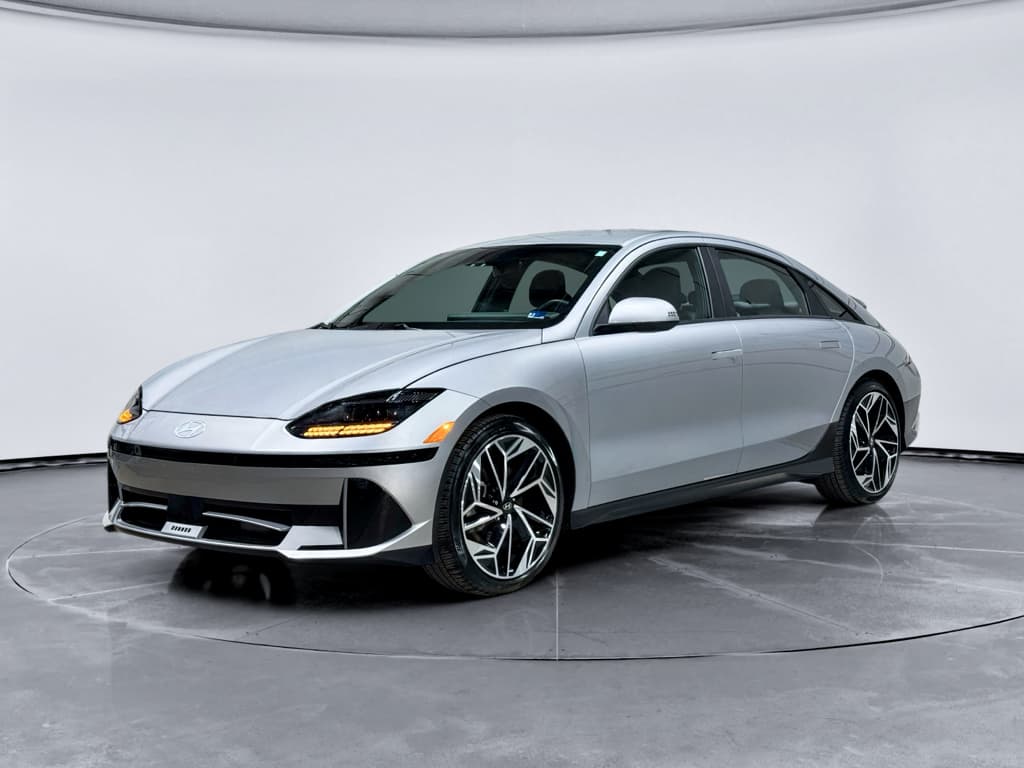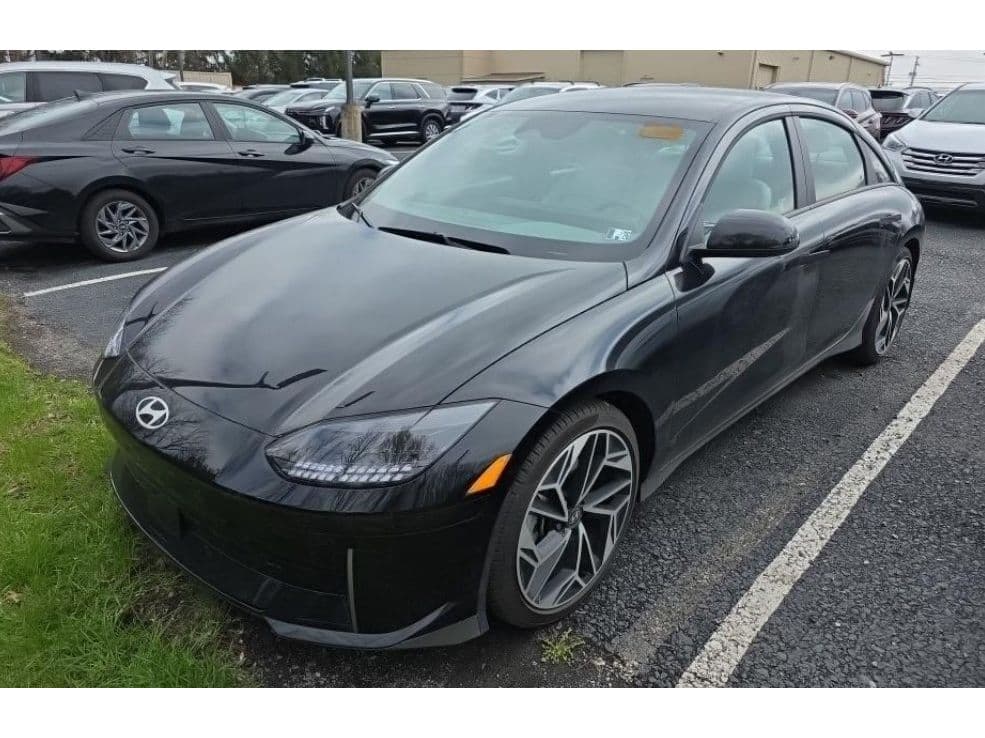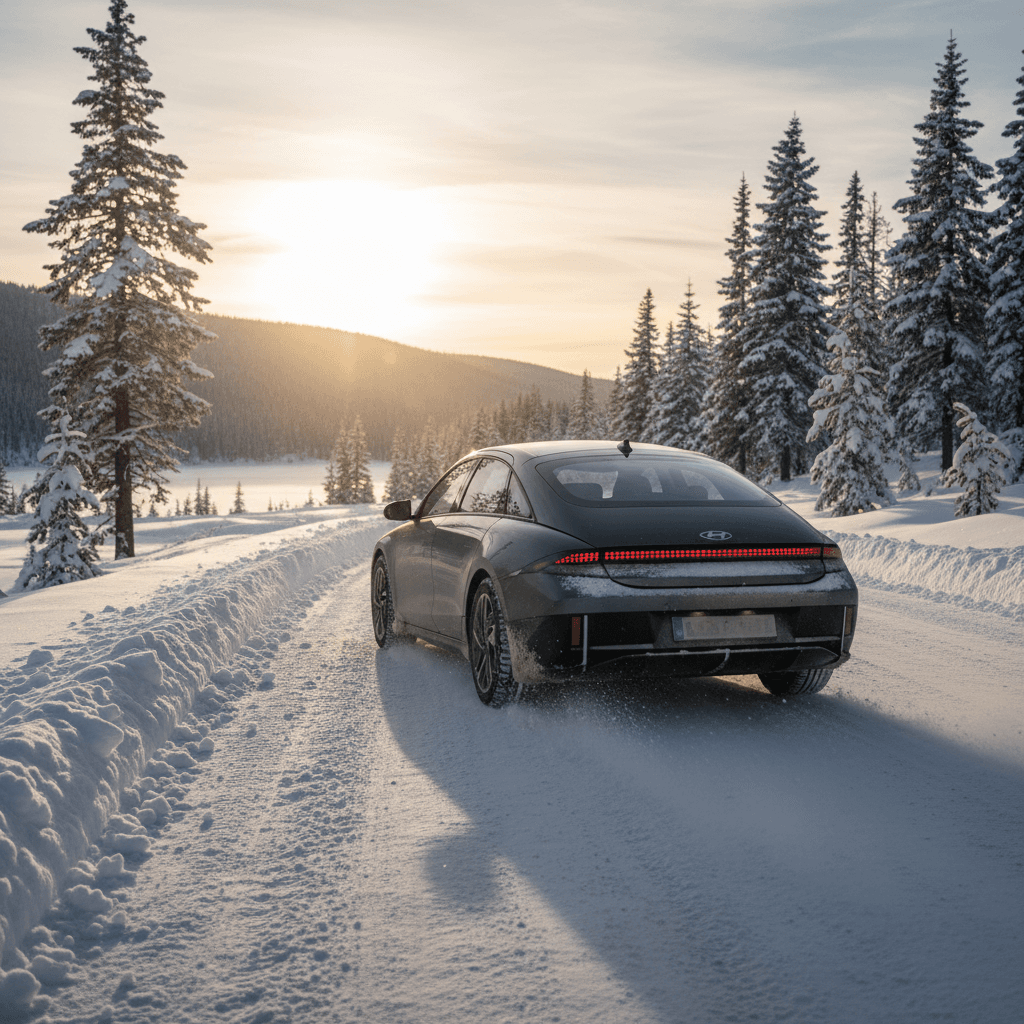
If you live where roads turn white every winter, you’re right to ask whether the Hyundai IONIQ 6 is best for snow and ice. On paper it’s a low, sleek EV built for efficiency, not a lifted crossover. In practice, its weight distribution, traction electronics, and available HTRAC all‑wheel drive make it far more capable in winter than its silhouette suggests, provided you set it up correctly.
Quick answer
Is the Hyundai IONIQ 6 Good in Snow and Ice?
From a dynamics standpoint, the IONIQ 6 checks most of the boxes you want in a winter EV. The battery is mounted low in the floor, giving it a very low center of gravity and nearly even weight distribution. That helps the tires maintain contact and grip on slick surfaces. With HTRAC all‑wheel drive, dual motors continuously shuffle torque between axles to limit wheelspin, and Hyundai adds a dedicated Snow mode that softens throttle response and tailors traction control for low‑grip surfaces.
Real‑world owner reports from snowy regions back this up: many describe the AWD IONIQ 6 in Snow mode as feeling “like a tank” in snow and “rock solid” on ice when driven sensibly. Even rear‑wheel drive (RWD) models with high‑quality winter tires get good marks for stability, though they’re easier to provoke into sliding if you drive aggressively or mix RWD with low‑grip all‑season tires.
Not an off‑roader
IONIQ 6 Winter Strengths and Limitations
Key Winter Pros and Cons of the IONIQ 6
Where it shines, and where you need to compensate
Winter strengths
- Low center of gravity: Battery in the floor helps stability on slick surfaces.
- Available HTRAC AWD: Dual motors and smart traction control manage wheelspin well.
- Snow drive mode: Softer torque delivery and tuned stability control for snow and ice.
- Predictable handling: Owners praise how calm and controllable it feels in storms.
- Fast cabin warm‑up: Instant electric heat means less shivering on cold starts.
Winter limitations
- Low ground clearance: Around 5.6 inches means deep snow can pack under the car.
- Underbody panels: Plastic shields can get chewed up by heavy, wet snow or gravel.
- Cold range loss: Expect roughly 25–35% less range in sustained sub‑freezing temps.
- Aero‑oriented design: Long overhangs and rear bumper can collect snow/ice.
- Tire‑sensitive: Summer or mediocre all‑seasons turn any EV into a handful in winter.
Hyundai IONIQ 6 Winter‑Relevant Specs
AWD vs RWD: Which IONIQ 6 Is Best for Snow?
HTRAC AWD: Best for snow and ice
If you regularly see accumulating snow, unplowed side streets, or icy hills, the AWD IONIQ 6 is the safer bet. Dual motors can send power to the axle with grip, while Snow mode tames throttle response and adjusts traction control. Owners in Canada and mountain states consistently report that the AWD car feels secure and predictable in storms, especially on quality winter or all‑weather tires.
AWD also helps with confidence on mixed surfaces, think slushy lane changes, wet‑over‑ice patches, and steep driveways. It won’t change the laws of physics, but it gives the traction aids more to work with.
RWD: Viable, but more sensitive to setup
Rear‑wheel drive IONIQ 6 models can still be excellent winter cars, but they’re more setup‑dependent and less forgiving of mistakes. With dedicated winter tires and Snow mode, many RWD owners report strong traction on packed snow and well‑plowed roads.
Where RWD shows its limits is on ice and in sudden maneuvers. It’s easier to spin the rear tires if you over‑accelerate out of a slick corner, and recovery takes more skill. If you’re an experienced winter driver on a budget, RWD plus top‑tier winter tires can make sense. If you’re new to snow or live on a steep hill, the AWD premium is usually worth it.
Practical choice
Ground Clearance, Tires, and Snow Mode: What Matters Most
Hyundai didn’t design the IONIQ 6 to be a crossover. Its minimum ground clearance is roughly 5.6 inches, in line with a typical midsize sedan. That’s fine for plowed highways and city streets, but once snow depths approach the rocker panels, you’re pushing a plow. Packed snow under the belly can lift any low EV and reduce steering and braking effectiveness.
- Avoid driving through more than 5–6 inches of heavy, wet snow for long stretches.
- Watch for ruts that can drag on underbody panels and wheel‑arch liners.
- Slow down for unplowed driveways and parking‑lot berms to avoid tearing plastic shields.
Tires matter more than badges
Three Levers That Make or Break Winter Performance
Think beyond just AWD vs RWD
1. Tire type & compound
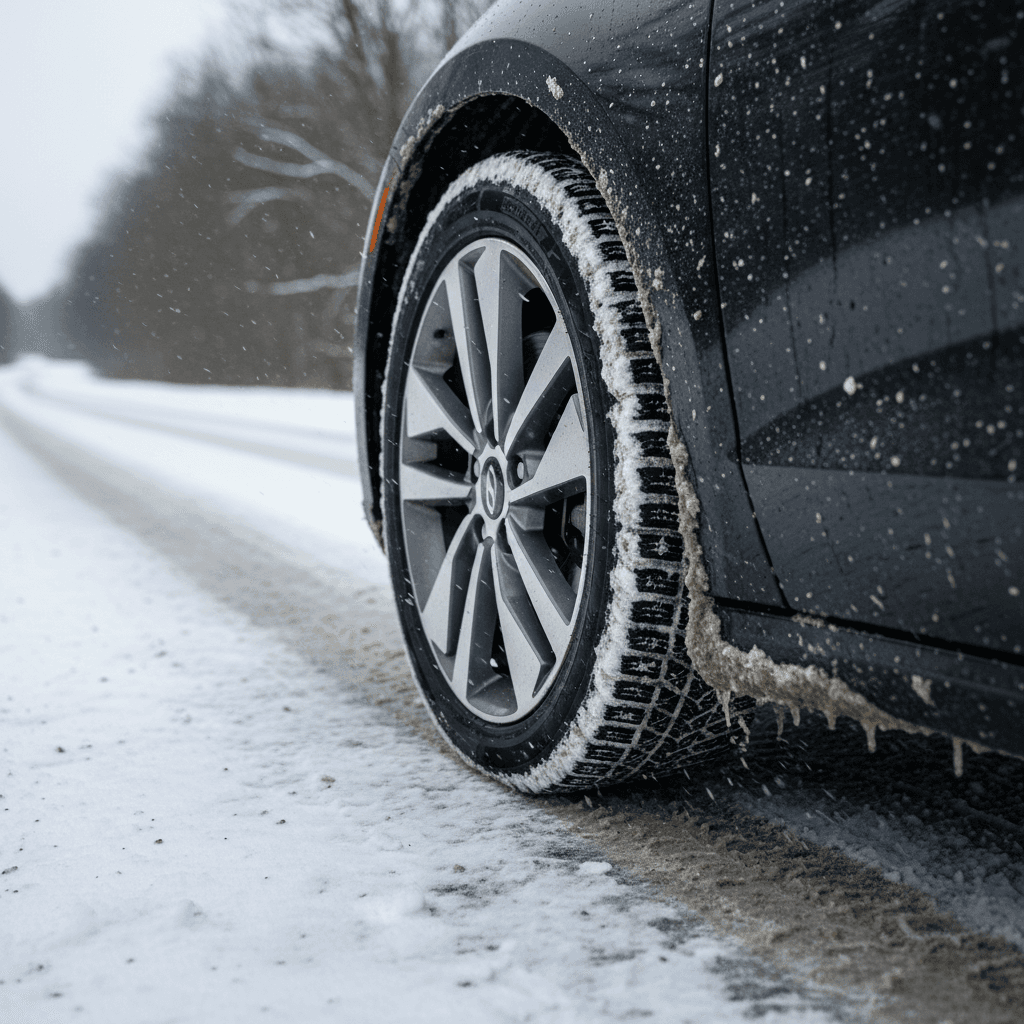
Sub‑7 °C (about 45 °F), summer compounds harden and lose grip. For frequent snow and ice, dedicated winter tires or aggressive all‑weather tires (like Michelin CrossClimate or Nokian WR series) dramatically shorten stopping distances and improve steering control.
2. Snow mode & traction aids
Snow mode on the IONIQ 6 softens throttle inputs and alters traction and stability control to prioritize grip over raw acceleration. Use it whenever you’re on snow, slush, or icy surfaces, even at low speeds. It makes the car less jumpy and easier to catch if it starts to slide.
3. Road conditions & clearance
No EV can cheat physics. The IONIQ 6 excels on plowed, packed, or lightly snowy pavement. In deep ruts or crusty snow, its low nose, rear bumper, and underbody panels can pack up with snow and ice, which reduces clearance and may cause scraping.
Cold-Weather Range Loss: What to Expect
When people ask whether the Hyundai IONIQ 6 is best for snow and ice, they usually care about two things: can it keep moving and how far will it go. Traction is only half that story. The other half is winter range.
Like most modern EVs, the IONIQ 6 can lose roughly 25–35% of its usable range in sustained sub‑freezing temperatures, especially on highway drives where wind chill and cabin heating are constant factors. That’s not a Hyundai problem; it’s lithium‑ion chemistry. The good news is that the IONIQ 6 is one of the more efficient EVs to begin with, so even after that loss it often compares well to less aerodynamic competitors.
IONIQ 6 Winter Range Planning (Simplified)
Very rough planning numbers for typical mixed driving with heat on, compared to EPA ratings. Always err on the conservative side.
| Trim example | EPA range (mi) | Cold-weather planning range (mi) | Best use case |
|---|---|---|---|
| Long Range RWD | 305–361 | 210–260 | Long commutes, highway trips with 1–2 fast‑charge stops |
| Long Range AWD | 270–320 | 190–230 | Snow‑belt drivers balancing traction with usable winter range |
| Standard Range RWD | ~240 | 165–180 | Shorter commutes, urban/suburban use in cold climates |
Assumes healthy battery and moderate highway speeds; your results will vary with temperature, speed, elevation, wind, and use of preconditioning.
Range‑savvy habits
Owner Experiences: How the IONIQ 6 Really Behaves in Winter
Owner reports from Canada, the northern U.S., and mountain states paint a consistent picture: the IONIQ 6 is one of the better winter‑driving EV sedans available today when you match it with the right tires.
- AWD owners often describe it as “a tank” in snow when Snow mode is active, with excellent stability on packed snow and confidence on icy ramps and side streets.
- RWD owners with high‑end winter tires like Nokian Hakkapeliitta or Michelin X‑Ice frequently call it the best snow car they’ve owned, praising the predictable balance and calm traction control.
- Drivers who try to get by on the stock 20‑inch performance‑oriented tires are more likely to report sketchy behavior on ice or compacted snow, no surprise given the tread pattern and compound priorities.
- Several owners note that Snow mode dramatically improves drivability on ice compared to Normal or Sport, reducing wheelspin and making it easier to steer where you want to go.
Because of the even weight distribution of a BEV, the AWD drives much better in snow, especially with snow tires and Snow mode. My only complaint is how much snow gets caught in the wheel wells.
Overlap with taxi and fleet feedback
Winter Setup Checklist for Your IONIQ 6
IONIQ 6 Winter Setup: Step‑by‑Step
1. Choose the right tires
If your winters are long or icy, invest in dedicated <strong>winter tires</strong> on 18‑inch wheels; they cut braking distances dramatically versus all‑seasons. In milder but wet/snowy climates, premium <strong>all‑weather tires</strong> (with the 3PMSF snowflake symbol) are a strong compromise.
2. Downsize from 20s if possible
If your IONIQ 6 came on 20‑inch wheels, consider a separate 18‑inch winter wheel/tire set. Narrower tires with taller sidewalls cut through slush better and give you more tire options at lower cost.
3. Learn and use Snow mode
Practice engaging <strong>Snow mode</strong> in a safe, empty lot before the first big storm. Feel how throttle response and traction control change. On real snow days, start in Snow mode and only switch out once roads are fully clear.
4. Precondition smartly
Whenever possible, preheat the cabin and battery <strong>while plugged in</strong>. Many IONIQ 6 trims support scheduled departure or app‑based preconditioning. That saves range, keeps windows clear, and improves fast‑charging performance en route.
5. Protect and inspect underbody panels
After deep or heavy, wet snow drives, glance under the car and around wheel wells for packed ice or loose plastic shields. Removing packed snow early and tightening any loose fasteners can prevent expensive damage later.
6. Winter‑proof the charging routine
Keep a soft brush in the trunk for clearing the charge port door, avoid slamming frozen doors, and periodically clear snow and ice from the area around your home charger to prevent slips and damaged cables.
Used Hyundai IONIQ 6: Shopping for Snow Belts
If you’re considering a used Hyundai IONIQ 6 and live in a winter climate, you’re not just buying an EV, you’re buying a winter tool. That’s exactly the use case Recharged was built around: helping you understand not just whether a used EV fits your budget, but whether it fits your climate and driving pattern.
What to Check on a Used IONIQ 6 for Winter Duty
Beyond the usual Carfax and walk‑around
Battery health & winter range
Cold exaggerates weak batteries. A Recharged Score Report includes verified battery health so you can estimate realistic winter range, not just EPA numbers. That matters when a 30% winter hit could turn a comfortable 260‑mile car into a 180‑mile car.
Winter history & configuration
Ask whether the car lived in a snow belt and, if so, what tires it ran and how underbody panels look. Many IONIQ 6s come from milder climates and will be essentially “winter‑fresh,” while others may show scars from deep‑snow use.
Underside and wheel‑well inspection
Have someone check the plastic underbody shields and wheel‑arch liners for cracks, missing fasteners, or prior repairs from snow or gravel damage. This is straightforward but easy to miss on a casual test drive.
Financing, trade‑in & delivery
With Recharged you can sell or trade your current car, finance the difference, and have a winter‑ready IONIQ 6 delivered to your door, even if you’re shopping from a snowier state than where the car currently lives.
Think route, not just climate
Common Winter Issues and How to Avoid Them
Most IONIQ 6 winter complaints aren’t about getting stuck, they’re about snow and ice ending up where you don’t want them or surprising behavior from electronics when the weather gets brutal. Here are the patterns that come up most often and how to stay ahead of them.
Typical IONIQ 6 Winter Complaints and Fixes
Issues reported by cold‑climate drivers, with simple prevention tips.
| Issue | What it looks like | Prevention / fix |
|---|---|---|
| Snow packed in wheel wells | Rubbing noises or vibration as snow builds up around tires. | Pause periodically to kick or brush snow out of wheel wells on heavy‑snow days; avoid deep slush at high speed. |
| Underbody panel damage | Plastic shields hanging down after driving in deep, heavy snow or on rough gravel roads. | Slow down for ruts and berms; inspect underbody each spring; repair loose panels before next winter. |
| Snow into trunk area | Wet snow on the long rear deck slides into the trunk when opened. | Brush off rear deck thoroughly before driving and before opening the trunk after a storm. |
| Frozen wipers or blades | Streaky windshield or blades stuck to glass after an overnight freeze. | Before storms, park with wipers in service position and use a proper scraper, not wipers, to clear ice. |
| Reduced brake feel on ice | ABS and stability control working overtime, longer stopping distances than drivers expect. | Drive slower, leave much more following distance, and remember that even the best EV can’t brake faster than its tires allow. |
Not every car or driver will experience these, but they’re worth knowing before your first big storm.
Don’t confuse traction with physics
FAQ: Hyundai IONIQ 6 in Snow and Ice
Frequently Asked Questions About the IONIQ 6 in Winter
Bottom Line: Is the IONIQ 6 the Best EV for Snow and Ice?
If your definition of “best for snow and ice” is a vehicle that feels planted, predictable, and efficient on real winter roads, not waist‑deep trails, the Hyundai IONIQ 6 absolutely belongs on the shortlist. In AWD form, on proper tires, with Snow mode engaged, it punches well above what its low, streamlined body suggests. Its weak spots, ground clearance, underbody vulnerability in deep snow, and cold‑weather range loss, are manageable with realistic expectations and good setup.
For many commuters and families in snowy cities and suburbs, that combination of stability, comfort, and efficiency arguably makes the IONIQ 6 a better winter tool than some taller, thirstier crossovers. If you’re weighing a used IONIQ 6 against other EVs for a cold‑climate life, Recharged can help you compare real‑world winter range, battery health, and total cost of ownership, and deliver a car that’s ready for the first snowstorm, not just the test drive.