If you’re cross‑shopping a Hyundai IONIQ 5 against a traditional gas SUV, the big question isn’t just sticker price. It’s long‑term money: fuel, maintenance, depreciation, and what you actually spend to own the car. This Hyundai IONIQ 5 vs gas car cost comparison walks through the numbers step by step so you can see how an EV stacks up in the real world.
2026 snapshot: energy prices
Why compare the IONIQ 5 to a gas SUV?
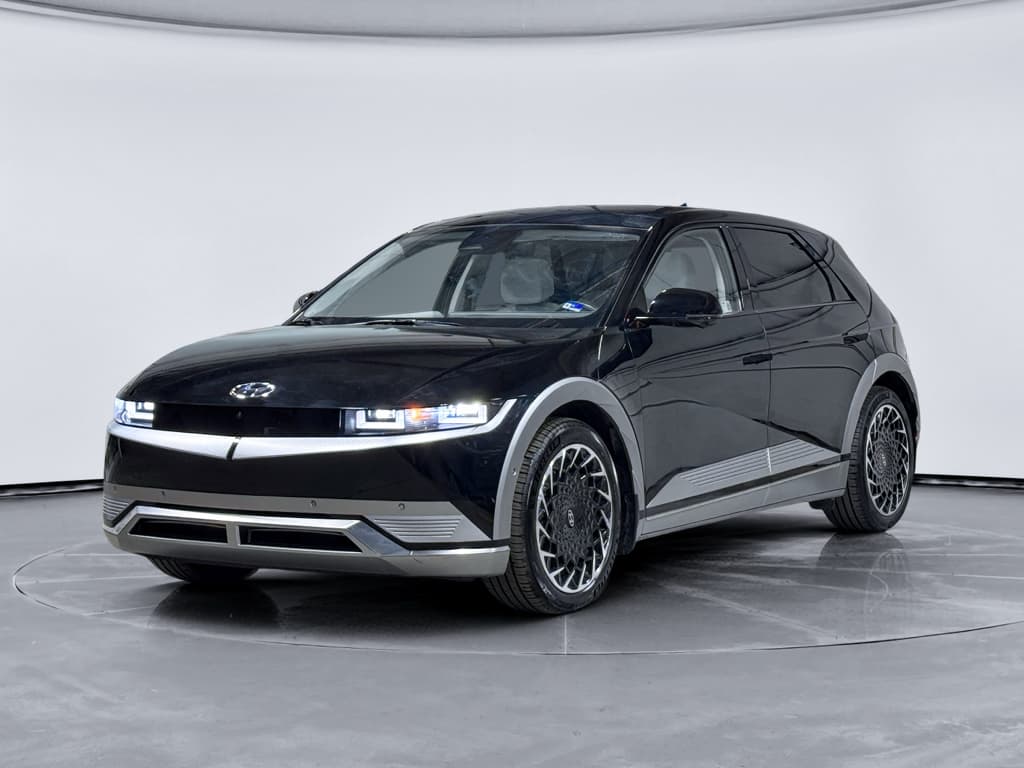
The Hyundai IONIQ 5 is a compact SUV with the space, performance, and comfort that many American families expect from a gas crossover. That means the real decision for a lot of shoppers isn’t “tiny EV hatchback vs pickup,” it’s “IONIQ 5 vs something like a Hyundai Tucson, Honda CR‑V, Toyota RAV4, or similar gas SUV.”
Those gas models all live in the same price and size neighborhood, so they’re a good baseline when we talk about cost of ownership. This article focuses on a typical, non‑luxury gasoline compact SUV, roughly 30 mpg combined, as the benchmark against the IONIQ 5.
Hyundai IONIQ 5 efficiency at a glance
Hyundai IONIQ 5 vs gas car: key takeaways
- On typical U.S. energy prices in 2026, an IONIQ 5 costs roughly half as much per mile for “fuel” as a 30‑mpg gas SUV if you mostly charge at home.
- Lower maintenance (no oil changes, fewer moving parts) can shave another $500–$800 per year compared with many gas SUVs, especially out of warranty.
- Insurance and registration are often similar, though some states still offer
EV incentives or reduced fees that tilt the math further in the IONIQ 5’s favor. - Depreciation has been steep for many new EVs, which is bad news for first buyers but a big opportunity in the used market, where you can often buy an IONIQ 5 for the price of a fairly ordinary new gas SUV.
- Over a typical 5‑year / 75,000‑mile ownership window, it’s common to see the IONIQ 5 beat a gas SUV by several thousand dollars in total cost, especially if you buy used and charge mostly at home.
Your results will vary
Assumptions for a fair cost comparison
To keep this Hyundai IONIQ 5 vs gas car cost comparison realistic, we’ll use conservative, middle‑of‑the‑road assumptions. You can adjust the numbers to match your situation, but this framework keeps the EV and gas SUV on equal footing.
Baseline assumptions: IONIQ 5 vs gas SUV
These assumptions are used in the five‑year total cost examples below.
| Factor | Hyundai IONIQ 5 | Comparable gas SUV |
|---|---|---|
| Vehicle class | Compact SUV EV | Compact gasoline SUV |
| Efficiency | 30 kWh / 100 miles | 30 mpg (combined) |
| Energy price | $0.18 per kWh (home) | $2.95 per gallon (regular) |
| Annual miles | 15,000 | 15,000 |
| Ownership window | 5 years / 75,000 miles | 5 years / 75,000 miles |
| Home charging share | 90% home, 10% DC fast | N/A |
| Home charging efficiency | 90% (wall‑to‑battery) | N/A |
You can plug in your own local prices and annual miles to customize this model.
Quick way to personalize this
Energy costs: electricity vs gasoline
Hyundai IONIQ 5 electricity cost
Using our baseline:
- Efficiency: 30 kWh / 100 miles (0.30 kWh per mile)
- Average U.S. residential rate: $0.18/kWh
- Home‑charging efficiency: ~90%
Effective energy used from the wall:
0.30 kWh ÷ 0.90 ≈ 0.33 kWh per mile
Cost per mile (home charging):
0.33 × $0.18 ≈ $0.06 per mile
If you occasionally use DC fast chargers at higher rates (say $0.30–$0.40/kWh), your blended cost may rise to roughly $0.07–$0.08 per mile depending on how often you use them.
Gasoline SUV fuel cost
- Efficiency: 30 mpg combined
- Average gas price: about $2.95/gallon
Cost per mile:
$2.95 ÷ 30 ≈ $0.10 per mile
If local prices spike to $3.50/gal, you’re closer to $0.12/mile. If you’re lucky enough to pay $2.50/gal, that drops to ~$0.08/mile.
Either way, on typical 2026 prices, electricity for an IONIQ 5 is usually 30–50% cheaper per mile than gasoline for a similar SUV, assuming mostly home charging.
Estimated annual “fuel” cost comparison (15,000 miles/year)

Maintenance and repairs
Electric drivetrains are mechanically simpler than internal‑combustion engines. Fewer fluids, no exhaust system, no multi‑speed transmission, and minimal friction braking in normal use all show up as lower maintenance over time. That doesn’t mean EVs are maintenance‑free, but the pattern of expenses is very different from a gas SUV.
Typical 5‑year maintenance profile
High‑level view of what you’ll actually pay for upkeep.
Hyundai IONIQ 5
- No oil changes or spark plugs
- Far less brake wear thanks to strong regen
- Cabin filters, brake fluid, tire rotations
- Tires may wear a bit faster due to instant torque
Rough 5‑year estimate:
$1,500–$2,000 in routine maintenance for a typical driver.
Gasoline compact SUV
- Oil and filter changes 2–3× per year
- Transmission fluid and possible service items
- More frequent brake pad and rotor replacement
- Belts, plugs, exhaust components (longer term)
Rough 5‑year estimate:
$2,500–$3,500 in routine maintenance and minor repairs.
Realistic savings, not science‑fiction
Insurance, taxes, and fees
Insurance pricing is driven more by driver profile, location, and claim history than by gas vs. electric. Some insurers still price EVs slightly higher because of expensive accident repairs, while others offer EV discounts. In practice, you should think of insurance as roughly similar between an IONIQ 5 and a comparable gas SUV, with a swing of a few hundred dollars per year either way depending on your ZIP code and insurer.
On taxes and fees, several states charge extra registration fees on EVs to make up for lost gas‑tax revenue, while others offer state‑level purchase incentives or lower registration costs. When you zoom out to a 5‑year view, these edge factors rarely overturn the core fuel and maintenance advantage the IONIQ 5 enjoys, but they are worth checking for your specific state.
Check state‑level EV policies
Depreciation and used values
Depreciation is where the story gets more nuanced. Early in the EV adoption curve, many new EVs, including the IONIQ 5, have seen faster initial depreciation than popular gas SUVs. That can make a brand‑new IONIQ 5 feel expensive to own for the first buyer, but it’s exactly why the used market is so compelling.
New purchase: IONIQ 5 vs gas SUV
If you buy new and trade out in 3–4 years, the gas SUV may hold value slightly better, especially if it’s a brand with a long resale track record (like Toyota or Honda). In this scenario, the IONIQ 5’s fuel and maintenance savings have to work against somewhat steeper depreciation.
That’s one reason many cost‑of‑ownership calculators still show EVs and gas cars fairly close when both are purchased new at MSRP and sold quickly.
Buying used: where the IONIQ 5 shines
If you buy a 2–3 year‑old IONIQ 5, you let the first owner take the bulk of the depreciation hit. You get a modern EV with remaining factory battery warranty, but at a price that often undercuts a comparably equipped new gas SUV.
At that point, the equation tilts: you start with a lower purchase price and enjoy cheaper energy and maintenance from day one.
Battery health is the wild card
5‑year total cost of ownership summary
Let’s pull everything together into a simple five‑year, 75,000‑mile example. To keep it intuitive, we’ll focus on a scenario where you buy used, because that’s where the IONIQ 5 is particularly compelling today.
Example: 5‑year cost of ownership (used IONIQ 5 vs new gas SUV)
Illustrative scenario assuming a used 2‑year‑old IONIQ 5 vs a brand‑new gas SUV with similar equipment.
| Cost category (5 years / 75,000 miles) | Used Hyundai IONIQ 5 | New gas compact SUV |
|---|---|---|
| Purchase price (out‑the‑door) | $32,000 (2‑year‑old IONIQ 5) | $34,000 (new, modest options) |
| Estimated value after 5 more years | $16,000 | $17,000 |
| Depreciation cost | $16,000 | $17,000 |
| Energy (fuel/electricity) | ≈$4,500 | ≈$7,500 |
| Maintenance & minor repairs | ≈$1,800 | ≈$3,000 |
| Insurance, taxes, fees | ≈$9,000 | ≈$8,500 |
| Total 5‑year cost (all‑in) | ≈$31,300 | ≈$36,000 |
| Average cost per mile | ≈$0.42/mile | ≈$0.48/mile |
Numbers are rounded estimates to show directionally how the costs compare, not precise quotes.
What this example shows
Beyond the dollars: experience and time
Qualitative differences you’ll actually notice
Money matters, but so does how it feels to live with the car.
Convenience of home charging
Smooth, quiet drive
Time saved over 5 years
When you add up the hours you don’t spend at gas stations and service centers, a good EV isn’t just cheaper to run, it changes how you think about fueling and maintenance altogether.
When a gas car can still make sense
Despite the strong numbers in this Hyundai IONIQ 5 vs gas car cost comparison, there are still scenarios where sticking with gasoline is rational. The key is to be honest about your usage pattern and infrastructure.
Situations where a gas SUV may be the better fit, for now
You can’t reliably charge at home or work
If you live in a dense urban area with no assigned parking and limited public charging, the convenience penalties of an EV may outweigh the fuel savings, at least until local infrastructure improves.
You tow or haul heavy loads regularly
The IONIQ 5 can tow modestly, but frequent heavy towing still favors efficient gas or hybrid SUVs and trucks, which handle sustained high loads without large range penalties.
You drive extreme distances through charging deserts
If your routine includes long, rural routes with minimal DC fast‑charging coverage, the predictability of gas stations every few miles is still hard to beat.
Local electricity is unusually expensive
In a handful of high‑cost electricity markets, especially without EV‑specific off‑peak rates, the running‑cost gap between EVs and efficient gas cars can shrink or temporarily reverse.
Don’t ignore your real charging behavior
How buying a used IONIQ 5 with Recharged changes the math
EVs are especially sensitive to battery health, charging history, and software updates. Two identical IONIQ 5s on paper can have very different real‑world range and long‑term cost profiles depending on how they’ve been driven and charged.
Transparency on the biggest unknown: the battery
Every vehicle sold through Recharged includes a Recharged Score Report with verified battery health. That gives you clarity on remaining range, estimated degradation, and how the pack has been treated over its life.
Instead of guessing whether a used IONIQ 5 will still meet your needs in five years, you can make a decision based on real diagnostics, not just the dash’s optimistic range estimate.
Financing, trade‑in, and lower friction
Because Recharged combines financing, trade‑in or consignment options, and nationwide delivery in a digital buying experience, it’s easier to compare a used IONIQ 5 directly against the gas SUV you’re driving today.
You can see your monthly payment, evaluate your current vehicle’s value, and understand total ownership costs with EV‑specialist support, without spending weekends at multiple dealerships.
Where the savings really show up
FAQ: Hyundai IONIQ 5 vs gas car costs
Frequently asked questions
The headline from this Hyundai IONIQ 5 vs gas car cost comparison is straightforward: if you can reliably charge at home and you buy smart, ideally a well‑vetted used IONIQ 5, the odds are good you’ll spend less per mile and enjoy a quieter, smoother commute than you would in a comparable gas SUV. The details will always depend on your local energy prices and driving patterns, but the combination of lower fueling costs, reduced maintenance, and strong used‑EV values makes a compelling case. If you’re ready to run the numbers on a specific IONIQ 5, Recharged can help you line up financing, evaluate your trade‑in, and see a clear, battery‑verified picture of long‑term ownership before you ever click “buy.”