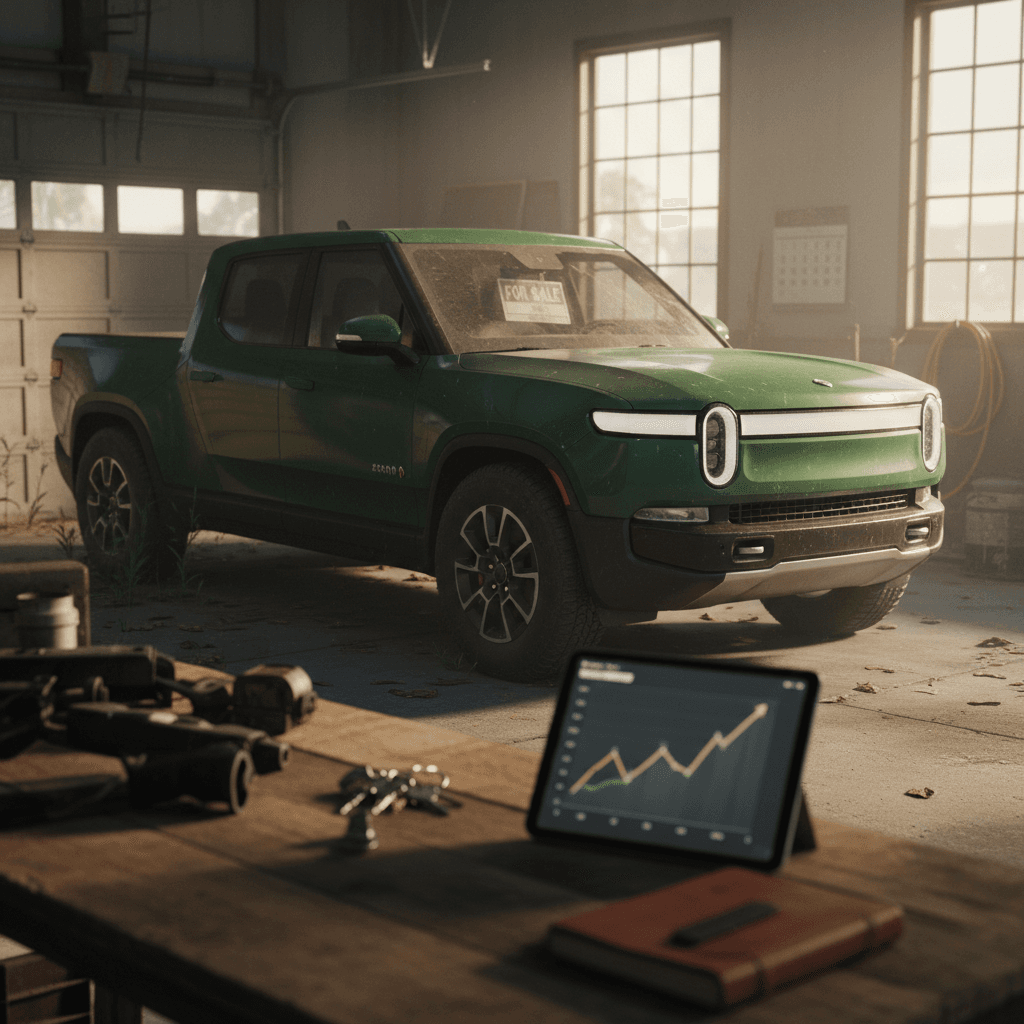
If you own a Rivian R1T, or you’re thinking about buying one used, resale value is no longer an abstract question. As EV incentives change, Rivian’s stock price swings, and more used electric pickups hit the market, the Rivian R1T resale value forecast is front and center for shoppers and owners who don’t want to get caught on the wrong side of depreciation.
Quick snapshot
Why Rivian R1T resale value matters now
The R1T isn’t just a niche toy anymore; it’s one of the first modern all-electric pickups to see real volume on the used market. At the same time, Rivian is navigating expiring federal tax credits, price pressure from larger automakers, and a bumpy path to profitability. Those forces can quickly shift buyer demand, and with it, used pricing.
- More R1Ts coming off leases and early purchases are hitting the secondary market.
- Federal and state EV incentives in the U.S. are in flux, which can push new and used prices up or down quickly.
- Rivian’s long-term viability and the upcoming R2 platform add both opportunity and uncertainty for today’s R1T owners.
Why timing your move matters
Where Rivian R1T values stand today
Rivian R1T pricing snapshot (early 2026)
Used pricing data shows the average used Rivian R1T now trading in the low-to-mid-$50,000s, with earlier 2022 trucks dipping into the high $40,000s and newer, well-optioned 2024–2025 trucks still commanding the high $60,000s in some cases. That puts the R1T well above the average used vehicle price, but below many of its own original stickers.
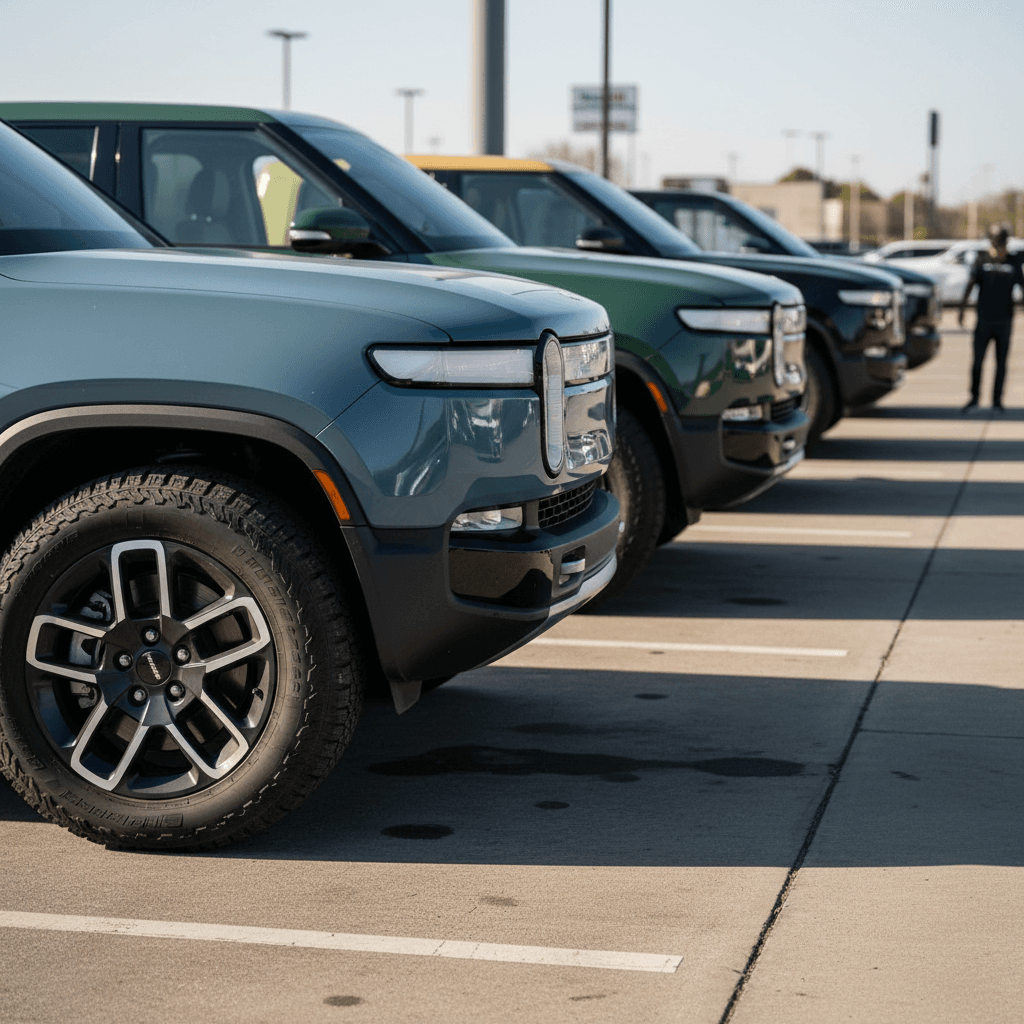
5-year Rivian R1T resale value forecast
No forecast is perfect, especially in an EV market that’s still finding its footing, but we can triangulate from pricing guides, auction data, and broader EV trends to outline a reasonable 5-year picture for the R1T.
Illustrative 5-year depreciation forecast for a Rivian R1T
Example based on a new Rivian R1T with a $80,000 original price. Actual values will vary by trim, mileage, region, and condition.
| Year of ownership | Approx. value | % of original price | Typical buyer scenario |
|---|---|---|---|
| Year 1 | $65,000–$68,000 | 81–85% | Still nearly new; low miles, warranty in full effect. |
| Year 3 | $52,000–$58,000 | 65–72% | Sweet spot for value-focused used buyers. |
| Year 5 | $40,000–$47,000 | 50–59% | Battery health and brand stability matter more; some out-of-warranty repairs appear. |
| Year 7 | $32,000–$38,000 | 40–48% | Heavier mileage; values diverge sharply based on care and condition. |
| Year 10 | $20,000–$28,000 | 25–35% | Range, repair history, and software support drive most of the remaining value. |
Forecast assumes average mileage, normal wear, and a stable macro environment without extreme incentive shocks.
How this compares to other EVs
Key factors shaping R1T resale value
What moves Rivian R1T values up, or down
Think beyond mileage. EVs, and especially electric pickups, are sensitive to a unique mix of factors.
Rivian’s financial health
Resale values depend partly on whether buyers believe Rivian will be around in 5–10 years to provide parts, service, and software updates. News about factory plans, cash burn, or strategic partnerships can ripple into used pricing.
EV incentive changes
Federal and state incentives influence what people will pay for new trucks, and that flows directly into used values. When incentives shrink or expire, used trucks sometimes become relatively more attractive; when new incentives grow, used prices can soften.
Macro EV sentiment
When headlines turn negative for EVs, battery fires, range complaints, or OEMs delaying electric programs, some shoppers pull back. In those moments, sellers with clean, well-documented trucks and realistic pricing tend to win.
Use case & geography
Trucks living mostly highway miles in temperate climates typically age better than vehicles used for heavy towing in extreme heat or cold. Urban buyers may prioritize pristine cosmetics; mountain-town buyers might pay up for capability and winter equipment.
Warranty & service history
Because EV repairs can be specialized and costly, a documented service record and existing warranty coverage have more impact on R1T prices than on many gas pickups. Gaps or mystery repairs can drag down offers quickly.
Software & feature updates
Rivian, like Tesla, leans heavily on OTA (over-the-air) software updates. Trucks that stay updated and have modern driver-assistance features, infotainment, and charging improvements are easier to sell and often command higher prices.
How battery health and range affect R1T value
For any EV, the battery pack is the single most expensive component and the largest driver of long-term value. On paper, Rivian’s battery warranty is reassuring, but buyers don’t trade on paper alone, they want proof that real-world range still matches their daily needs.
Why buyers scrutinize battery health
- Usable range directly affects whether the truck works for long commutes or towing.
- High levels of fast charging, especially in extreme heat, can accelerate degradation over time.
- Out-of-warranty battery concerns spook some first-time EV buyers, who may demand discounts to compensate for perceived risk.
Signs of a strong-value R1T battery
- Range that’s still close to original EPA estimates at common state of charge levels.
- Service records noting any battery work, software updates, or recalls.
- An independent health report, like a Recharged Score, that quantifies pack condition instead of guessing.
Pro tip: Document your charging habits
Rivian R1T vs other EVs and gas trucks
So far, the R1T has landed in an unusual middle ground. It hasn’t held value as fiercely as some Teslas did at their peak, but it’s also avoided the worst of the EV depreciation stories.
How the R1T stacks up on resale
High-level comparison of typical 5-year resale performance. Actual results vary widely by configuration and market conditions.
| Vehicle type | 5-year value retention (typical) | Relative resale strength | Key drivers |
|---|---|---|---|
| Mainstream gas pickup (F-150, Silverado) | 55–65% | Strong | Broad demand, simple powertrains, work-truck image. |
| Premium gas pickup (Ram TRX, Raptor) | 60–70% | Very strong | Enthusiast demand, limited supply, high-performance appeal. |
| Average EV sedan/crossover | 35–45% | Weak | Rapid tech change, heavy incentive swings, range concerns. |
| Tesla Model Y | 50–60% | Moderate–strong | Brand strength, efficient charging, strong demand but more competition. |
| Rivian R1T (early data) | 50–60% | Moderate–strong | Adventure branding, unique capabilities, but subject to EV headwinds. |
Data synthesizes published depreciation studies and early used-market behavior rather than a single guidebook.
A bright spot among EVs
Owner strategies to protect Rivian R1T resale value
Practical steps to keep your R1T’s value higher
1. Optimize your charging routine
Favor Level 2 home or workplace charging, avoid frequent 100% charges, and minimize back-to-back DC fast-charging sessions. Healthier batteries support stronger offers when you sell.
2. Stay current on software and recalls
Install OTA updates promptly and keep records of any recall or service campaigns. Buyers want to see that the truck has the latest software and has been cared for by knowledgeable techs.
3. Protect the adventure gear
The R1T’s value proposition leans heavily on its gear tunnel, off-road hardware, and interior materials. Repair or replace damaged trim, bed components, and seat surfaces before listing the truck.
4. Track your usage transparently
Log major trips, towing history, and any off-road abuse. Honest documentation paired with a clean inspection often brings better offers than vague assurances.
5. Time your sale around model updates
Big announcements, like the launch of Rivian’s R2 or another significant refresh, can move prices. If you’re borderline about selling, swing a few months before a widely anticipated reveal rather than a few months after.
6. Compare multiple sale paths
Don’t rely on a single trade-in quote. Get instant offers, explore consignment, and check private-party demand. Platforms like <strong>Recharged</strong> can help you benchmark fair value quickly.
Buying a used Rivian R1T: What to look for
If you’re on the other side of the deal, shopping for a used R1T, timing and due diligence can turn today’s depreciation into tomorrow’s bargain. The gap between a well-cared-for truck and a rough one is already wide and likely to widen as the fleet ages.
Used R1T buyer checklist
Four areas that have an outsized impact on long-term value and ownership costs.
Battery and charging health
- Ask for a recent range test at common state-of-charge levels.
- Look for a third-party health report such as a Recharged Score battery diagnostic.
- Review charging history if the seller can provide app screenshots or logs.
Accident and repair history
- Obtain a full vehicle history report.
- Pay special attention to suspension, underbody, and high-voltage components on trucks that have towed or off-roaded heavily.
- Verify that any structural repairs were performed at Rivian-approved facilities where possible.
Use-case alignment
- Match the truck’s past life to your future one, lightly used urban commuter trucks tend to feel different than ex-overland rigs.
- Check for aftermarket modifications that may affect warranty coverage.
Software & feature set
- Confirm that advanced driver-assist and connectivity features still work and are correctly configured for your account.
- Verify the truck has up-to-date maps and charging-network integrations for road trips.
Don’t skip a high-voltage inspection
How Recharged helps you buy or sell a Rivian R1T
Because the Rivian R1T is still relatively new and evolving quickly, transparency is everything. That’s where Recharged comes in. We’re focused on making used EV ownership, especially for higher-price models like the R1T, simpler and more predictable.
- Every vehicle on Recharged includes a Recharged Score Report, with verified battery health, detailed inspection results, and fair market pricing benchmarks for models like the R1T.
- You can trade in your current vehicle or get an instant offer or consignment-style listing if you want to maximize what your R1T is worth.
- We offer financing options tailored to used EVs, including higher-priced electric trucks, with guidance on how depreciation and total cost of ownership should shape your budget.
- Nationwide delivery and our EV-specialist support team mean you don’t have to live near a major Rivian market to buy or sell with confidence.
Turn uncertainty into leverage
Ready to find your next EV?
Browse VehiclesRivian R1T resale value forecast: FAQ
Frequently asked questions about Rivian R1T resale value
Bottom line: Is the Rivian R1T a safe bet?
The Rivian R1T sits in a rare space: It’s an early electric pickup with real capability, a passionate following, and a young but growing used market. Its resale story isn’t perfect, no EV’s is, but compared with the broader electric field, the Rivian R1T resale value forecast looks cautiously optimistic. If you manage battery health, keep documentation tight, and buy or sell using real market data instead of hype, you can enjoy the truck’s strengths without getting blindsided by depreciation.
If you’re ready to explore your options, Recharged can help you shop used electric trucks, evaluate trade-in or consignment paths for your current vehicle, and understand exactly how an R1T fits into your long-term budget. In a market this dynamic, the right information, and the right partner, can make all the difference.