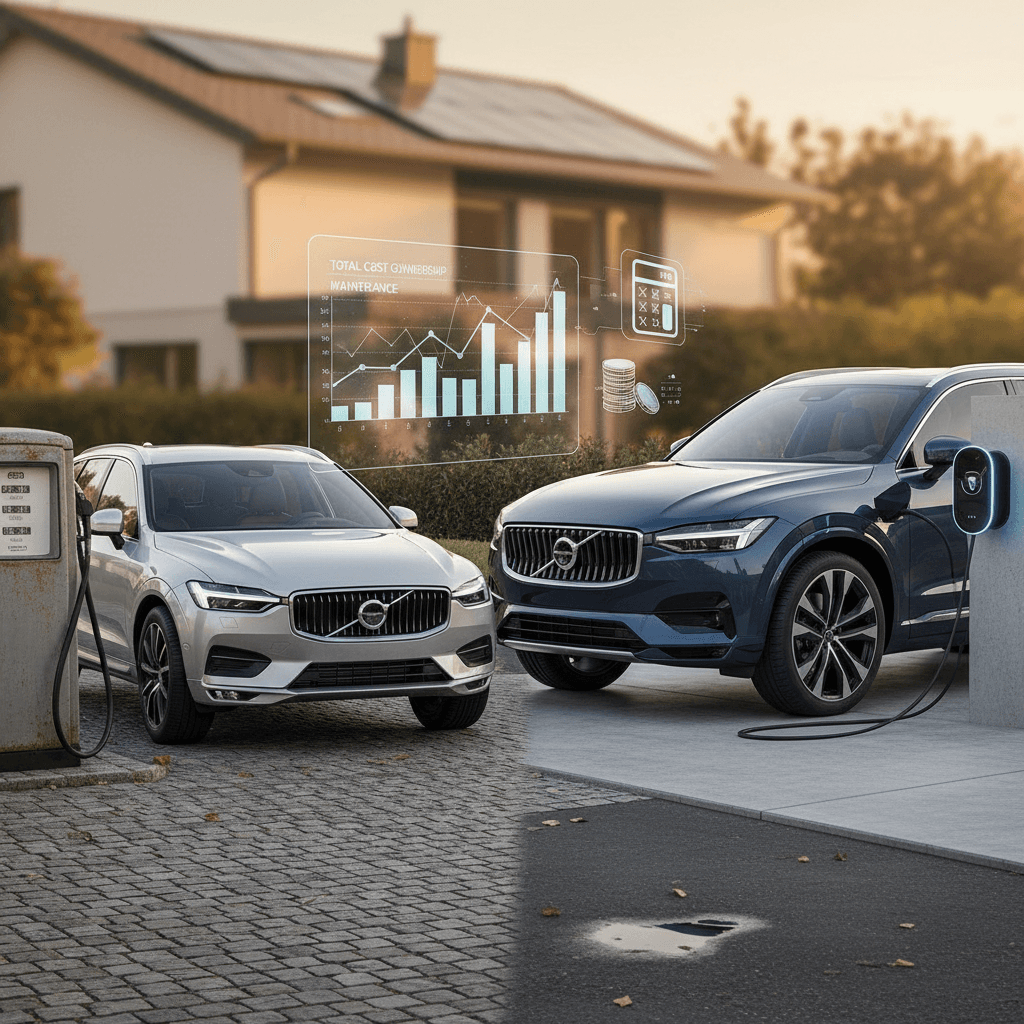
If you’re torn between a gasoline Volvo XC60 and the all‑electric Volvo EX90, the question usually isn’t just “Which one do I like more?” It’s “Which one will actually cost me less to own over the next few years?” This guide walks through Volvo XC60 vs Volvo EX90 total cost of ownership (TCO) in plain language, so you can see where the money really goes.
What we’ll compare
Why compare the Volvo XC60 and EX90 on total cost of ownership?
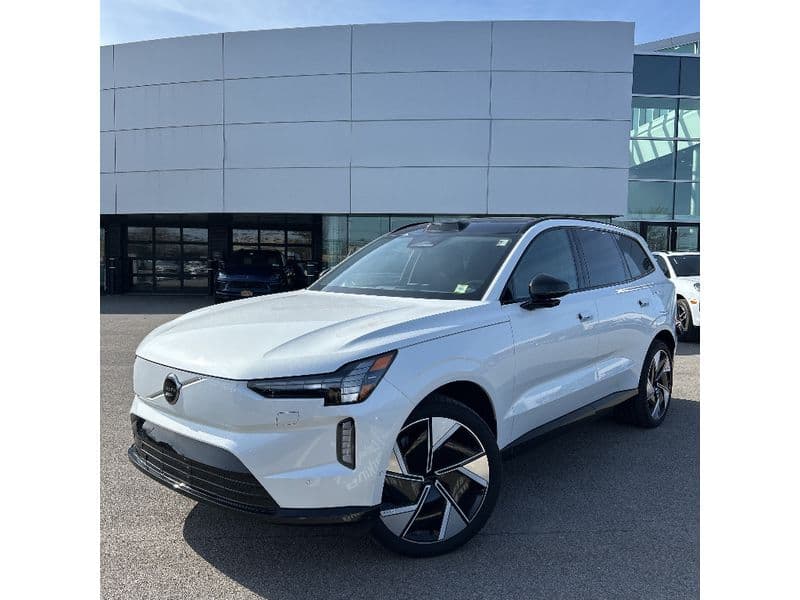
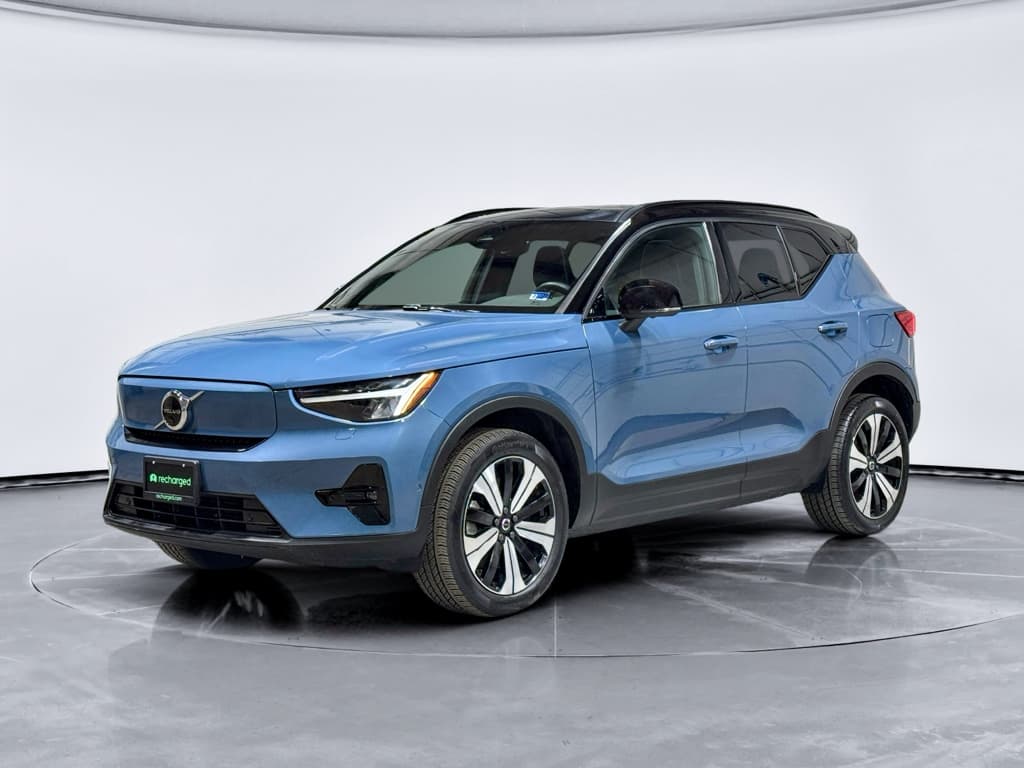
On paper, the Volvo XC60 and EX90 don’t look like direct competitors. The XC60 is a two‑row compact luxury SUV available with gasoline and plug‑in hybrid powertrains, while the EX90 is Volvo’s new three‑row, all‑electric flagship SUV. But if you’re a Volvo shopper trying to decide whether to stay with a familiar gas model or jump into a full EV, these two represent the crossroads: comfortably familiar vs fully electric future.
- You want Volvo’s safety and design but aren’t sure an EV will pencil out.
- You’re cross‑shopping a well‑equipped XC60 against a base or mid‑trim EX90.
- You’re thinking long‑term: kids, road trips, commute, and resale value.
- You care about fuel costs and maintenance but don’t want to do spreadsheet gymnastics.
Think in monthly cost, not just purchase price
Sticker price: Volvo XC60 vs Volvo EX90 and what you actually get
First, some realistic, rounded new‑vehicle price ranges in the U.S. for 2025‑era models. These aren’t official offers; they’re ballpark numbers you’d likely see on a dealer lot before negotiations, options, or destination fees.
Typical new MSRP ranges (U.S.)
Approximate starting prices for popular trims that XC60 and EX90 shoppers actually consider.
| Model | Powertrain | Typical trim shoppers consider | Approx. MSRP range |
|---|---|---|---|
| Volvo XC60 | Gas B5/B6 | Plus / Ultimate | $50,000 – $60,000 |
| Volvo XC60 Recharge | Plug‑in hybrid | Plus / Ultimate | $60,000 – $70,000 |
| Volvo EX90 | All‑electric, dual‑motor | Core / Plus | $80,000 – $90,000 |
Real shoppers usually compare well‑equipped XC60s with base or mid‑trim EX90s, not bare‑bones models.
Right up front, the EX90 looks like a big financial leap: often $20,000 or more above a comparable gasoline XC60. But remember, the EX90 is larger, more powerful, and better equipped, with standard three‑row seating and a massive battery. The real question is how much of that gap the EV’s lower running costs, and potential incentives, can claw back over time.
Used vs new matters a lot
Fuel vs electricity: Where the EX90 starts paying you back
Fuel is where electric SUVs quietly fight back against their higher sticker prices. To keep this grounded, let’s lay out some realistic assumptions for a typical U.S. owner:
- Annual miles driven: 12,000 miles
- Gas price: $3.50 per gallon (national ballpark, April 2026)
- Electricity at home: $0.16 per kWh (many U.S. utilities fall near this)
- Public fast charging: $0.30–$0.45 per kWh (varies by network and state)
Volvo XC60 (gas)
- Real‑world fuel economy: ~24 mpg combined for a well‑equipped B5/B6
- Annual fuel use: 12,000 miles ÷ 24 mpg ≈ 500 gallons
- Annual fuel cost: 500 gallons × $3.50 ≈ $1,750
Volvo EX90 (electric)
- Real‑world efficiency: roughly 2.3–2.6 miles/kWh for a big, dual‑motor SUV
- Annual energy use: 12,000 ÷ 2.4 ≈ 5,000 kWh
- Annual electricity cost (mostly home): 5,000 × $0.16 ≈ $800
If you lean heavily on public DC fast charging, effective cost can climb toward $1,300–$1,800 per year instead.
Rough annual energy cost difference
Your energy mix is everything
Maintenance and repairs: Simplicity favors the EX90
Volvo builds both SUVs with safety and longevity in mind, but their mechanical layouts are very different. The XC60 carries a turbocharged engine (and in some cases a supercharger and hybrid components), while the EX90 rides on a dedicated EV platform with no engine, transmission, or exhaust system to service.
Typical ownership maintenance patterns
What you’ll realistically pay attention to over 4–5 years.
Volvo XC60 (gas or PHEV)
- Oil and filter changes 1–2 times per year
- Engine air filters, spark plugs, belts in the long run
- Transmission fluid service depending on mileage
- Brake pads/rotors eventually (regen helps PHEV a bit)
- More fluids, more moving parts, more potential for wear
Rule of thumb: $700–$1,000 per year in maintenance and wear items once the free service window ends, depending on mileage and shop rates.
Volvo EX90 (EV)
- No oil changes, ever
- Far fewer fluids overall
- Brake wear is usually lighter thanks to regenerative braking
- Tire rotations and alignments become the main routine expense
- Software updates often delivered over‑the‑air
Rule of thumb: Many EV owners see $300–$600 per year in routine maintenance over the first several years, mainly tires and inspections.
Don’t ignore tires on a heavy EV
Insurance, taxes, and fees: How similar are XC60 and EX90?
Insurance and registration are where the math gets fuzzier, because they depend heavily on where you live, your driving record, and how you use the car. Still, a few themes tend to show up when you compare a gas XC60 and an EX90:
- Insurance premiums: The EX90’s higher sticker price and advanced tech can push premiums up slightly versus an XC60, especially for collision and comprehensive coverage.
- Registration fees: Some states base fees on weight or vehicle price, which can work against a heavy EV, while others offer discounts for zero‑emission vehicles.
- Road‑use or EV fees: A growing number of states add annual EV surcharges to make up for lost gas‑tax revenue. Factor this into your yearly budget if your state does it.
Think of insurance as a percentage of value
Depreciation and resale: How each Volvo holds its value
Depreciation, the silent budget killer, is simply how much value your Volvo loses as it ages. Historically, a well‑kept XC60 has been a safe bet in the luxury‑SUV world: not bulletproof, but respectable. The EX90 is newer territory: a flagship EV with a large battery, fast‑moving software, and evolving incentives.
XC60 depreciation pattern
- After 3–4 years, many luxury crossovers shed 40–50% of their original MSRP.
- Buy smart (lightly used) and you let the first owner take the steepest hit.
- Gasoline powertrains are a known quantity; demand is broad and predictable.
In plain terms: a $55,000 XC60 new could realistically be worth around $28,000–$33,000 after four years, depending on mileage and condition.
EX90 depreciation pattern
- EVs have sometimes shown steeper early depreciation, but patterns are stabilizing as demand grows and charging improves.
- Battery health is the wild card, buyers will pay more for verified pack health and up‑to‑date software.
- Changes in incentives can move used prices quickly in either direction.
Think in scenarios: If demand for big EV SUVs stays strong and charging keeps improving, the EX90’s resale could surprise on the upside. If incentives or tech move rapidly, early EX90s may see heavier first‑owner depreciation.
Why battery verification matters for EX90 resale
Ready to find your next EV?
Browse VehiclesIncentives, tax credits, and EV perks for EX90 owners
When you’re weighing Volvo XC60 vs Volvo EX90 total cost of ownership, incentives are the lever that can quietly move thousands of dollars in the EX90’s favor, if you qualify and if the specific EX90 build meets the latest rules. The landscape changes often, but here’s how to think about it.
- Federal EV tax credit: Depending on final assembly location and battery sourcing, certain EX90 trims or future model years may qualify for all or part of a federal clean‑vehicle credit. Income caps, price caps, and dealer participation all matter.
- State and local incentives: Some states offer EV rebates, HOV‑lane access, reduced registration fees, or utility‑bill credits for installing home charging equipment.
- Utility programs: Many electric utilities offer time‑of‑use rates tailored for EV owners, which can dramatically lower off‑peak charging costs. Some even help with charger installation costs.
Incentives are not guaranteed
4‑year total cost of ownership snapshot: XC60 vs EX90
Let’s put everything into a simple, hypothetical 4‑year picture. This isn’t a quote; it’s a way to see how the big buckets compare if you bought new in the U.S. and drove 12,000 miles per year. We’ll assume:
- You buy a well‑equipped XC60 gas model around $55,000 MSRP.
- You buy a base/mid‑trim EX90 around $85,000 MSRP.
- You finance similarly on both, so we’ll focus on costs beyond loan principal and interest.
- You mostly charge the EX90 at home, with some road‑trip fast charging.
- No major accidents or unusual repairs on either vehicle.
Very rough 4‑year TCO comparison (beyond loan payments)
Illustrative only, to show directional differences between XC60 and EX90 costs.
| Cost category (4 years) | Volvo XC60 (gas) | Volvo EX90 (EV) | What to notice |
|---|---|---|---|
| Fuel / Electricity | ≈$7,000 | ≈$3,200–$5,000 | EX90 wins big if you charge mostly at home; gap narrows with heavy fast‑charging use. |
| Routine maintenance & wear | ≈$3,000–$4,000 | ≈$1,500–$2,500 | EX90’s lack of engine/transmission cuts common service items. |
| Insurance, taxes, EV fees | Slightly lower | Slightly higher | EX90’s higher value and EV fees can nudge these costs up. |
| Depreciation (paper loss) | ≈$22,000–$27,000 | ≈$30,000–$40,000+ | EX90’s higher initial price means bigger dollar‑amount depreciation, even if percentage is similar. |
| Potential incentives | N/A | - up to several thousand | Only the EX90 is eligible for EV‑specific incentives and utility programs. |
Your real numbers will vary with driving habits, energy prices, financing, and resale value, use this as a pattern, not a promise.
Even with healthy fuel and maintenance savings, the EX90’s much higher purchase price and heavier early depreciation usually mean it still costs more to own, in pure dollars, over the first four years, unless incentives and unusually low electricity costs dramatically tilt the scales.
Where the EX90 starts to shine
Home charging vs public charging: What it does to EX90 costs
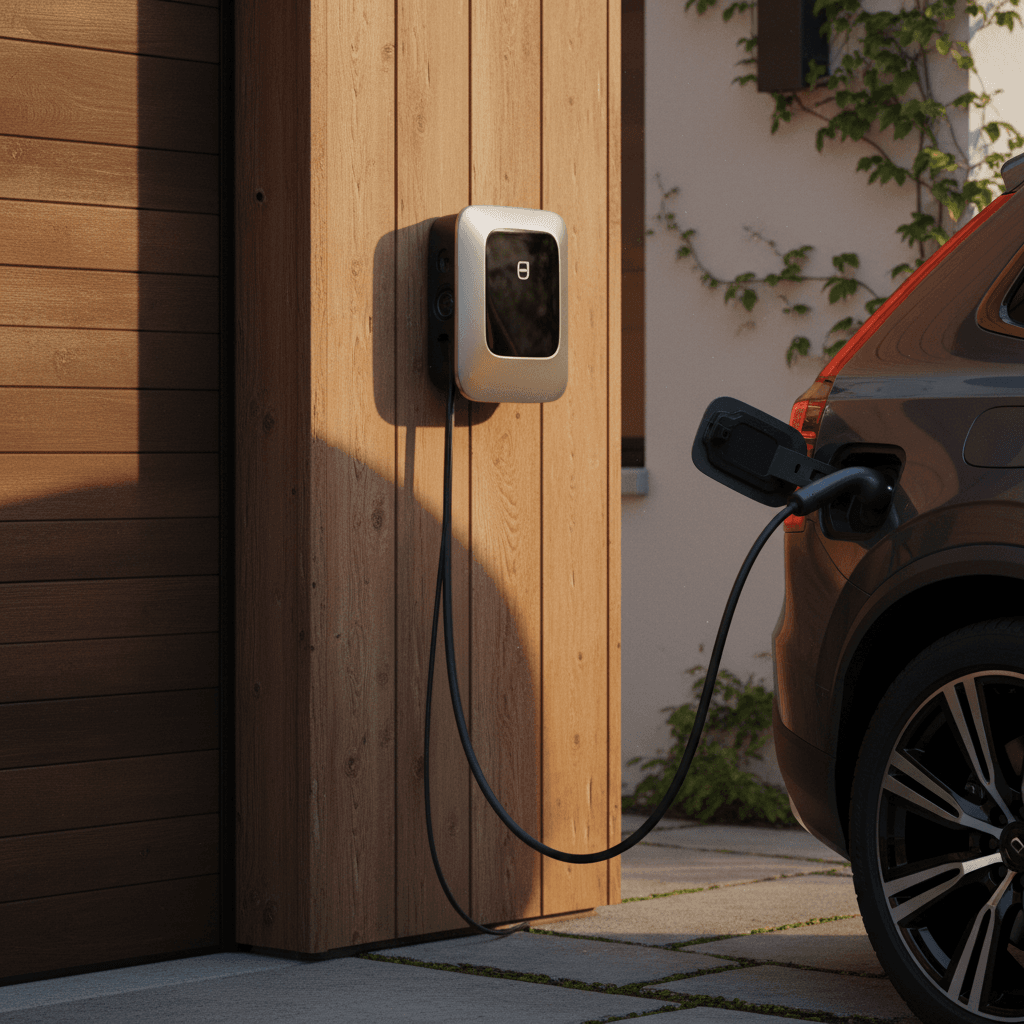
If you’re considering an EX90, your charging reality is one of the biggest swing factors in total cost of ownership. A suburban homeowner with a driveway and a 240‑volt outlet lives a very different life from a city apartment dweller relying on peak‑hour DC fast charging.
Two EX90 charging lives, two very different TCOs
Same EX90, same miles, very different energy bills.
Home‑charging hero
- Level 2 home charger on a time‑of‑use plan
- 80–90% of charging done overnight at low residential rates
- Occasional DC fast charging on road trips
Result: Energy costs can easily land in the $700–$900 per year range at current prices, well under a comparable XC60’s fuel bill.
Public‑station dependent
- Apartment living, no home outlet
- Regular use of public Level 2 and DC fast charging
- Paying station‑operator markups and sometimes idle fees
Result: Annual energy costs can climb into the $1,300–$1,800 range or more, sometimes erasing much of the fuel‑savings advantage over a gas XC60.
Run your own back‑of‑napkin math
The used‑market angle: Where Recharged fits in
New‑car math is useful, but most shoppers don’t buy brand‑new luxury SUVs every time. The real magic trick is buying the right Volvo at the right point in its life, so someone else eats the worst of the depreciation while you enjoy the car.
How buying used reshapes XC60 vs EX90 TCO
1. Let the first owner take the steep drop
A 3‑ to 4‑year‑old XC60 often costs tens of thousands less than new, yet still has years of comfortable, reliable life ahead. The same principle will apply to EX90s as they start showing up used.
2. Focus on battery health for EX90s
On a used EX90, the battery pack is the heart of the car’s value. The <strong>Recharged Score battery health report</strong> gives you an objective view of remaining capacity and helps you avoid hidden range loss.
3. Use fair‑market pricing, not hype
Volvo XC60 and EX90 prices can be pushed up or down by local inventory, incentives, and news cycles. Recharged leans on data‑driven, fair‑market pricing to keep you out of emotional bidding wars.
4. Consider financing and trade‑in together
Your total cost of ownership starts with the deal you make on day one. With Recharged, you can <strong>finance, get a trade‑in offer, or even consign your current car</strong> in one digital experience, instead of juggling multiple negotiations.
How Recharged simplifies the EV side of the equation
Who should choose the XC60 vs the EX90?
There’s no universal winner here; the best choice is the one that fits your life, your driveway, and your budget. But after running through the Volvo XC60 vs Volvo EX90 total cost of ownership, some patterns emerge.
When the XC60 makes more sense
- You don’t have reliable home charging and rely heavily on public stations.
- You prefer a lower purchase price and are comfortable with fuel and maintenance costs.
- You want a smaller, easier‑to‑park SUV and don’t truly need three rows.
- Your driving is relatively low‑mileage, or you replace vehicles every 3–4 years.
Translation: If you want a luxury Volvo SUV experience with predictable costs and minimal lifestyle changes, a well‑bought XC60, especially used, can be the saner financial move.
When the EX90 is worth the stretch
- You have (or can easily add) Level 2 home charging.
- You drive enough miles that fuel savings really matter.
- You plan to keep the vehicle for many years, spreading out the higher up‑front cost.
- You value quiet, smooth EV driving, three‑row space, and cutting‑edge safety and tech.
Translation: If you set the EX90 up for success, home charging, decent mileage, longer ownership, it can justify its higher price in both dollars and day‑to‑day experience.
Volvo XC60 vs EX90 total cost of ownership: FAQ
Frequently asked questions
Bottom line: How to shop smart for XC60 and EX90
When you stack Volvo XC60 vs Volvo EX90 total cost of ownership, the EX90 doesn’t magically become the cheapest choice overnight. It’s a bigger, more expensive, more advanced SUV that rewards the right owner: someone with home charging, solid mileage, and a long‑term horizon. The XC60, meanwhile, stays a wonderfully rational choice if you want a smaller footprint, a lower entry price, and familiar fueling with fewer what‑ifs.
If you’re leaning toward electric but worried about the dollars, consider letting someone else take the early‑ownership hit. A used EX90 or XC60, bought at the right price with transparent battery and vehicle health, can deliver most of the experience for a fraction of the cost. That’s exactly what Recharged was built for: verified battery diagnostics, fair‑market pricing, EV‑savvy financing, and nationwide delivery, all wrapped in a digital experience that doesn’t leave you guessing about what this Volvo will really cost to own.