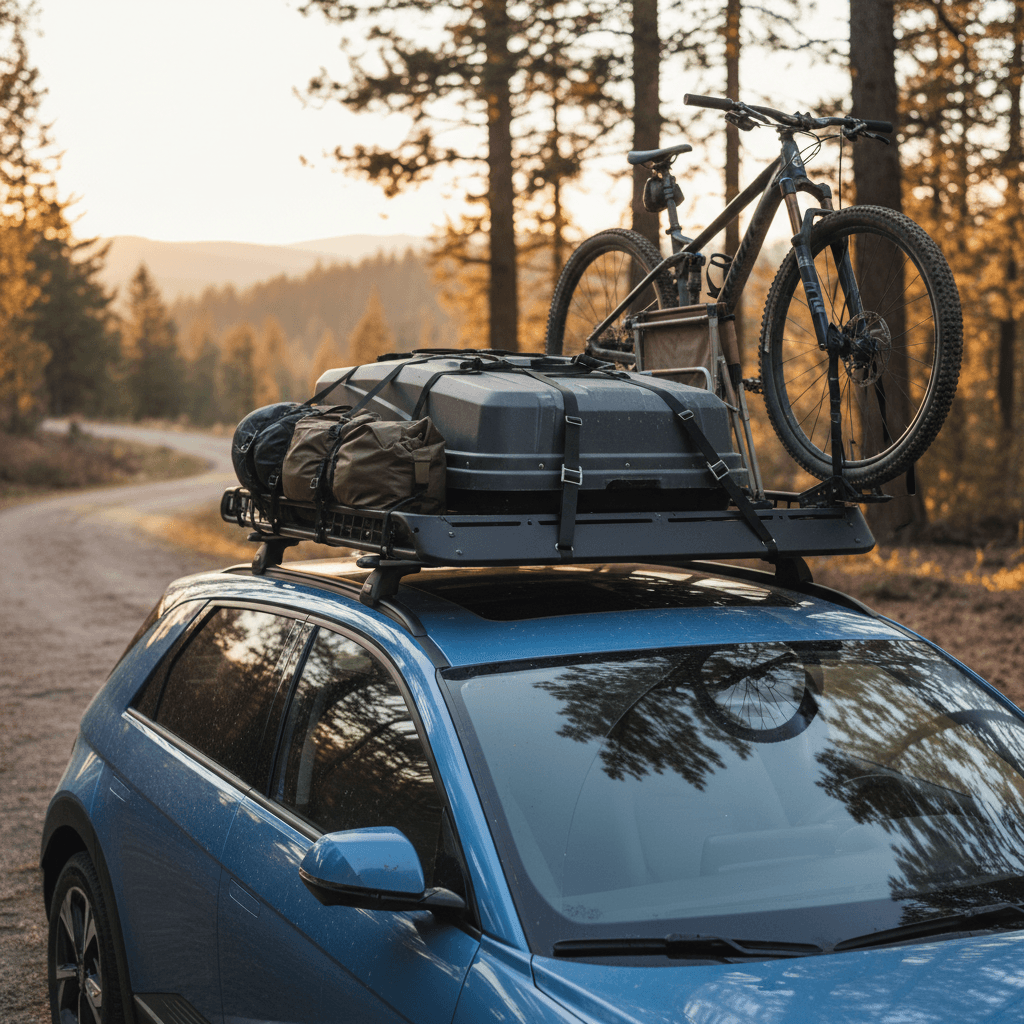
If you’re planning road trips, bike adventures, or ski weekends in your Hyundai Ioniq 5, it’s natural to wonder about the Hyundai Ioniq 5 roof rack weight limit. You don’t want to overload the roof, damage the car, or wreck your range. The tricky part is that Hyundai doesn’t spell this out clearly in every market, yet there are firm limits you need to respect.
Key takeaway up front
Hyundai Ioniq 5 roof rack weight limit: the short answer
Hyundai’s own technical sheets for the Ioniq 5 in markets where factory rails are common list a roof rack load limit of 80 kg (about 176 lb). That’s a typical figure for a compact crossover and it aligns with what we see on similar EVs. In plain language, that 80 kg is the maximum total weight allowed on top of the car while driving: rack + box or carriers + cargo.
- 80 kg / ~176 lb is a realistic working limit for many Ioniq 5 configurations with approved racks
- That limit is for driving (dynamic load), not parked camping use
- The weight of the crossbars, feet, and any box or carrier counts against the limit
- You still must stay within the vehicle’s overall payload (occupants + cargo)
U.S. manuals can be vague
Dynamic vs static roof load on the Ioniq 5
Before you start doing math with bike weights and cargo boxes, it helps to separate two ideas: dynamic (driving) load and static (parked) load. Roof rack marketing often blurs the difference, but your Hyundai doesn’t.
Two kinds of roof load you need to understand
Dynamic roof load (while driving)
This is the big one for safety. Dynamic load is the total weight the roof structure and mounting points can safely handle at speed, over bumps, in crosswinds, and in an emergency maneuver.
- Set by Hyundai, not the rack brand.
- On Ioniq 5, assume 70–80 kg max including rack and cargo.
- Exceeding it increases rollover risk and can tear mounts out of the roof.
Static roof load (parked)
Static load is what the roof can support when you’re not moving. Because the suspension and dynamic forces are out of the picture, this number is much higher.
- Relevant for rooftop tents.
- Typically several times the dynamic rating.
- Still limited by roof structure and tent mounting system.
Never exceed the dynamic limit
OEM vs aftermarket Ioniq 5 roof racks and their ratings
The Hyundai Ioniq 5 comes in a few roof configurations depending on trim and market, some with integrated rails, some with hidden mounting points, some with more glass. All of that affects which racks fit, but it does not change the underlying roof load rating very much.
Hyundai (OEM) racks
- Sold under Hyundai accessory part numbers, often co‑branded with companies like Thule.
- Designed to match the Ioniq 5’s specific mounting points and curvature.
- Typically rated to the same limit Hyundai gives the roof: around 75–80 kg total.
- Good choice if you want plug‑and‑play fit and maximum peace of mind.
Aftermarket crossbars and systems
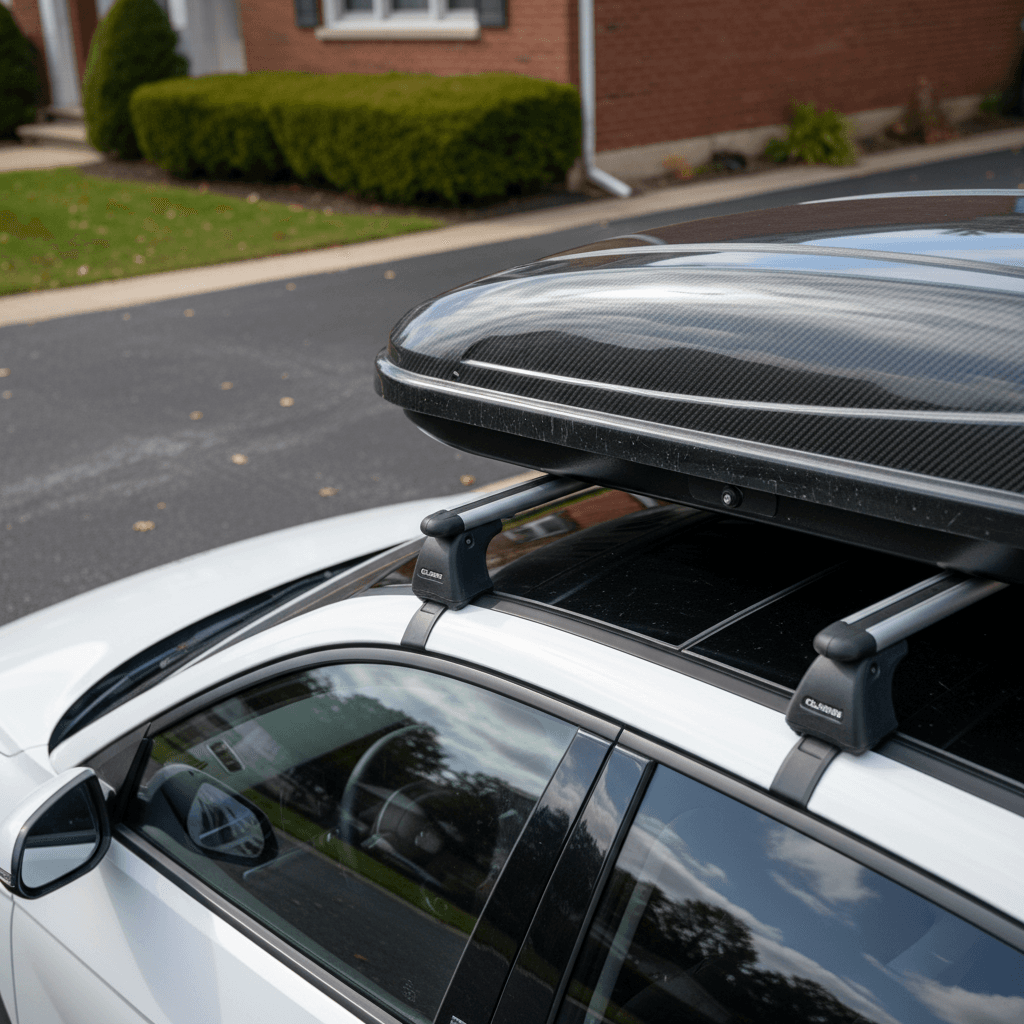
- Brands like Thule, Yakima, and others offer kits that clamp into the door openings or attach to factory rails.
- Often advertised rack ratings of 75–100 kg (165–220 lb) or more.
- That rating is for the bars themselves, not your car’s roof.
- You must obey the lower of the two numbers: rack rating vs vehicle roof rating.
How to choose a rack for your Ioniq 5
How much can you really carry on your Ioniq 5 roof?
Let’s put the Hyundai Ioniq 5 roof rack weight limit into everyday terms. Say we use an 80 kg (176 lb) dynamic roof limit as the reference. Here’s what that looks like with real gear.
Example Ioniq 5 roof loads (keep total at or below ~80 kg / 176 lb)
Approximate weights for common cargo setups. Always check your specific rack and accessory specs.
| Setup | Rack + hardware | Carriers/box | Cargo | Total roof load | Safe for Ioniq 5?* |
|---|---|---|---|---|---|
| Two bikes on roof | 15 lb (bars + feet) | 26 lb (two bike trays) | 60 lb (two 30 lb bikes) | 101 lb | Borderline / typically too high |
| One bike on roof | 15 lb | 13 lb (one bike tray) | 30 lb | 58 lb | Generally OK |
| Medium roof box, light camping gear | 17 lb | 40 lb (empty box) | 60 lb | 117 lb | Too high, reduce cargo |
| Medium roof box, soft luggage only | 17 lb | 40 lb | 30 lb | 87 lb | Target – keep under this |
| Ski/snowboard rack with four skis | 15 lb | 12 lb | 32 lb | 59 lb | Generally OK |
All weights are estimates; your exact components may differ.
Remember the hidden weights
Can the Hyundai Ioniq 5 carry a rooftop tent?
Rooftop tents are a hot topic with Ioniq 5 owners, especially because some trims have large glass roof sections and relatively short roof rails. The basic problem is that many popular rooftop tents weigh 120–160 lb before you add people. That leaves almost no headroom under an 80 kg dynamic limit once you factor in crossbars and mounting hardware.
Rooftop tent reality check for the Ioniq 5
Tent weight alone
Hard‑shell rooftop tents often start around 120–150 lb. Add 15–20 lb for bars and mounts and you’ve nearly hit the likely dynamic limit with no bedding or extra gear inside.
Dynamic vs static
Parked, the roof structure can generally handle more thanks to static loading. But every mile you drive with that tent up there is using the dynamic limit, which is where failures happen.
Why most experts say “don’t”
On vehicles like the Ioniq 5 without heavy‑duty roof structures, rooftop tents are typically not recommended. A small trailer or ground tent is far easier on the car and usually better for range.
Our stance on rooftop tents
How roof racks and cargo affect Ioniq 5 range
Even if you stay well within the Hyundai Ioniq 5 roof rack weight limit, anything on the roof will cost you range. Most of the penalty comes from aerodynamic drag, not from the extra pounds themselves.
Typical efficiency hit from roof cargo (ballpark)
Plan your charging around roof cargo
If you do a lot of adventure travel, it’s worth experimenting with different setups, roof box vs hitch rack vs small trailer, and using your trip computer to see how each affects your typical watt‑hours per mile. That kind of data is exactly what a good used EV buyer or seller should care about, and it’s part of what Recharged looks at when we share real‑world range expectations.
Step-by-step checklist for loading your Ioniq 5 roof rack
Safe Ioniq 5 roof loading checklist
1. Confirm your roof and rack ratings
Check your owner’s manual, door‑jamb label, and rack instructions. Use the <strong>lowest number</strong> you find as your maximum dynamic roof load. If nothing else is listed, stay under about 70–80 kg (150–175 lb).
2. Weigh or estimate every component
Add up the weight of crossbars, feet, clips, boxes, trays, and each item of cargo. Manufacturer specs are a good starting point; a cheap luggage scale or bathroom scale is even better.
3. Subtract the rack and carriers first
Whatever your limit is, subtract the weight of the rack system and empty carriers. The remaining number is your <strong>usable cargo budget</strong> for the roof itself.
4. Load the heaviest items in the cabin first
For stability, keep dense items, tools, water, canned food, inside the car or in the trunk. Use the roof for <strong>bulky but relatively light</strong> things like sleeping bags and jackets.
5. Keep weight centered and low
Mount boxes and racks as close to the roof as possible and roughly centered between the axles. Avoid large side‑to‑side weight imbalance that can affect emergency handling.
6. Recheck all mounts every trip
Before each highway drive, tug on every bar, box, and carrier. Verify torque on mounting hardware per the rack instructions and inspect the rubber pads or clips for damage.
When in doubt, run lighter
Roof rack vs hitch rack vs small trailer for extra cargo
The roof is only one way to carry more stuff. Depending on what you’re hauling, a hitch rack or a small trailer might be a smarter long‑term choice for an Ioniq 5 owner, especially if you’re pushing the roof limits.
Three ways to carry more with your Ioniq 5
Each has pros and cons for weight, range, and convenience.
Roof rack + box or carriers
- Best for: Soft luggage, skis, snowboards, one bike.
- Pros: Uses vertical space, good for occasional trips.
- Cons: Strict weight limit, biggest aero penalty, tricky loading for shorter drivers.
Hitch‑mounted bike or cargo rack
- Best for: Bikes, cooler, small cargo box.
- Pros: Lower center of gravity, often smaller range hit than a roof box.
- Cons: Requires hitch, watch tongue weight rating, can affect parking sensors.
Small utility or cargo trailer
- Best for: Camping gear, kayaks, bulky items you’d rather not lift overhead.
- Pros: Takes load off the roof entirely, easy to load.
- Cons: Stronger impact on range at highway speeds, need to respect towing limits.
How Recharged thinks about these setups
Buying a used Ioniq 5 for adventures: what to check
If your goal is camping and road‑tripping, you might specifically be shopping for a used Ioniq 5 with factory rails or a clean roof you can build on. Because roof loads and towing stress more than just paint, it pays to look closely before you sign anything.
Used Ioniq 5 adventure checklist
Look for evidence of heavy racks or tents
Check the roof for dents around mounting points, scuffs in the door jambs from clip‑on racks, or seal damage around rail bases. These can hint at past overloading or poorly installed hardware.
Inspect the hatch, hinges, and glass
Repeated heavy loads can stress hatch struts and hinges. Make sure the hatch opens and closes smoothly, and look for cracks or chips in the panoramic glass near the rack areas.
Ask how it was used on trips
A previous owner who towed within spec and used a modest roof box a few times a year is very different from someone who ran a heavy rooftop tent full‑time. Don’t be shy about asking for details.
Get objective data on battery health
High drag and heavy loads mean more energy per mile over the car’s life. A <strong>Recharged Score battery health report</strong> benchmarks the pack against similar Ioniq 5s so you know if there’s abnormal degradation.
Verify payload and towing labels
Confirm the payload and towing labels on the driver’s door jamb match the manual. Aftermarket hitches or suspension work should be disclosed and professionally documented.
Buying through Recharged makes this much easier: every Ioniq 5 we list includes a detailed Recharged Score with verified battery health, realistic range expectations, and a history review, plus EV‑savvy guidance if you’re planning to add racks, hitches, or towing gear later.
Frequently asked questions about Ioniq 5 roof rack limits
Hyundai Ioniq 5 roof rack weight limit: FAQs
The bottom line is simple: treat the Hyundai Ioniq 5 roof rack weight limit as roughly 70–80 kg (150–175 lb) of total dynamic load, count every pound on the roof, and use the roof for bulky but relatively light items. For heavy bikes, big camping kits, or overlanding dreams, a hitch rack or small trailer is usually a smarter way to protect your EV, your warranty, and your range. If you’re looking for a used Ioniq 5 that’s ready for adventure, Recharged can help you find one with the right configuration, and give you the battery health transparency you need before you load up and head out.