If you drive an electric vehicle in the Bay State, you still have to deal with Massachusetts electric car inspection requirements, but the rules aren’t identical to gas cars. Understanding what’s checked, what EVs are exempt from, and when you need an inspection can save you time, money, and some last‑minute scrambling at the RMV.
Quick takeaway for EV owners
Overview: How Massachusetts Inspections Work for EVs
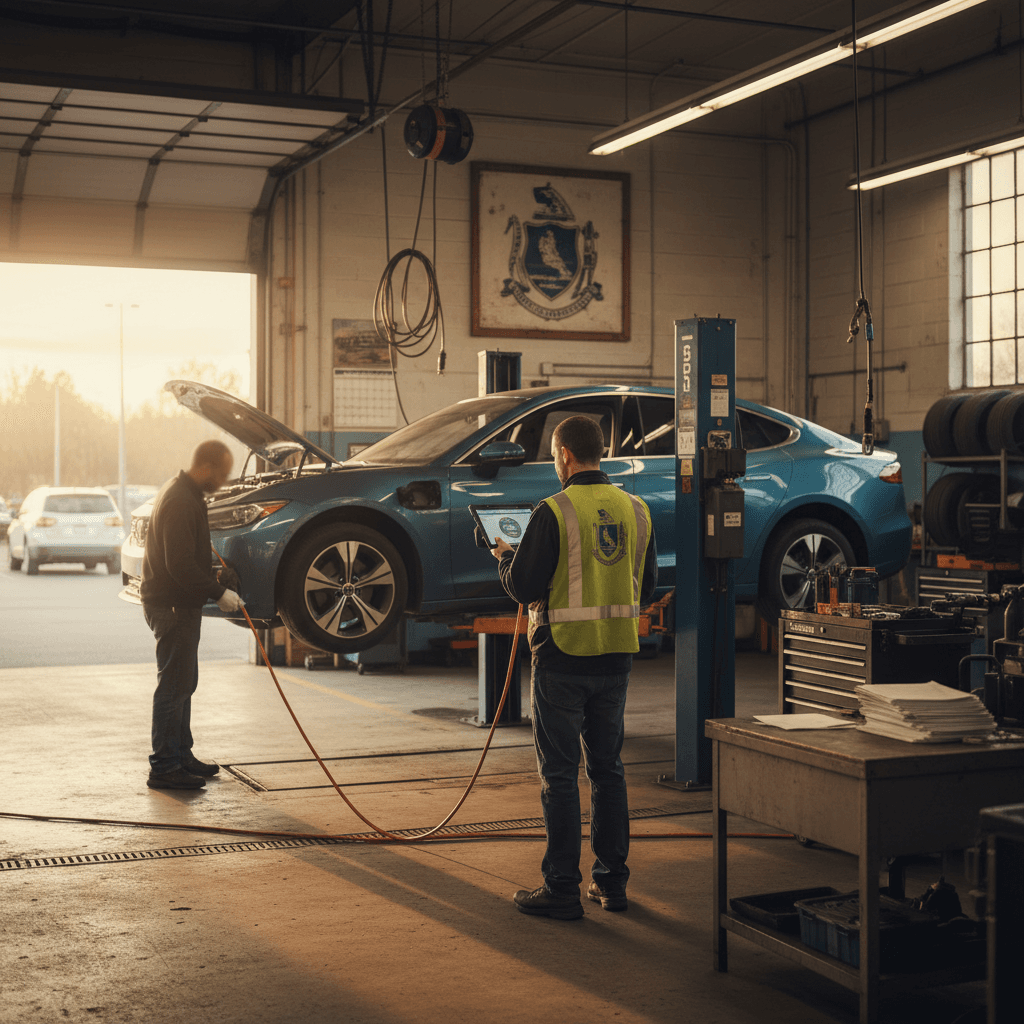
Massachusetts requires most vehicles to pass an inspection every year to stay registered. For electric vehicles, the focus is on safety, not tailpipe emissions. You’ll bring your EV to a licensed inspection station, pay a state‑set fee, and a technician will check critical systems like brakes, lights, steering, and tires. If the car passes, you’ll get a new inspection sticker on your windshield that’s valid for one year.
- Annual inspection required for most EVs registered in Massachusetts
- Safety inspection only for battery electric vehicles (no tailpipe emissions test)
- Inspection must be completed within 7 days of registering a vehicle bought from a dealer, or within a short window after a private‑party purchase
- Pass = new sticker; fail = repair the issue and return for re‑inspection
Don’t let your sticker lapse
Do Electric Cars Need Inspection in Massachusetts?
Yes. If your electric car is registered in Massachusetts and driven on public roads, it almost certainly needs an annual inspection. The state doesn’t give a free pass just because your car has a battery instead of a gas tank. The difference is that pure battery electric vehicles (like a Tesla Model 3, Chevy Bolt, or Hyundai Ioniq 5) skip the emissions portion, while plug‑in hybrids are treated more like conventional cars.
How Different “Electric” Vehicles Are Treated in Massachusetts
High‑level view of which parts of the state inspection typically apply by powertrain type.
| Vehicle type | Example models | Safety inspection | Emissions test |
|---|---|---|---|
| Battery electric vehicle (BEV) | Tesla Model 3, Ford F‑150 Lightning, Nissan Ariya | Required | Usually exempt |
| Plug‑in hybrid electric vehicle (PHEV) | Toyota RAV4 Prime, Hyundai Tucson PHEV | Required | Required (treated like gas cars) |
| Conventional hybrid (HEV) | Toyota Prius (non‑plug‑in) | Required | Required |
| Light‑duty gas/diesel | Honda CR‑V, Chevy Silverado | Required | Required |
Always confirm with your inspection station or the Massachusetts RMV for the latest rules, especially for gray‑area vehicles or specialty conversions.
Confirm your vehicle type
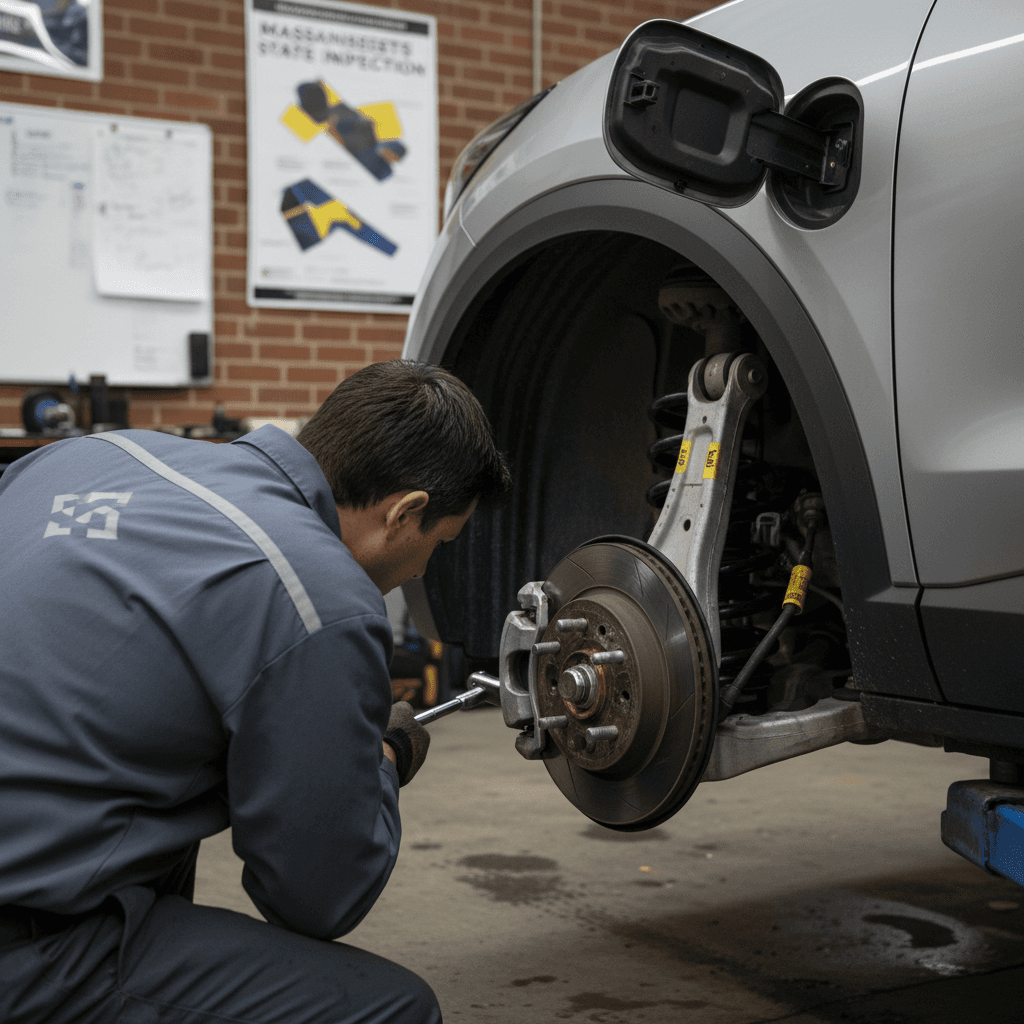
Safety Only: What Gets Checked on an EV
When you roll into a Massachusetts inspection bay with an EV, the tech isn’t worried about mufflers or catalytic converters. Instead, they focus on the same safety items they’d check on any modern car, plus a few EV‑specific quirks, like making sure your parking brake actually holds even though the car is silent at idle.
Key Safety Items Checked on a Massachusetts EV Inspection
Expect a thorough once‑over of anything that keeps you, your passengers, and everyone around you safe.
Brakes & parking brake
Lights & signals
Steering & suspension
Tires & wheels
Glass, mirrors & wipers
VIN & registration
What about the high‑voltage battery?
Timeline, Cost, and Where to Go for MA EV Inspections
The process for getting your EV inspected in Massachusetts mirrors what gas‑car owners deal with. The state sets the fee and rules; individual garages are just licensed to carry them out. That means you typically can’t shop around on price, but you can choose a station that knows EVs and treats them with care.
- When you need an inspection: Within a short window after registering a vehicle (often 7 days from registration) and then every 12 months, before your current sticker expires.
- Cost: The state sets a flat fee for inspections, which applies whether your car is gas, hybrid, or fully electric.
- Where to go: Any licensed Massachusetts inspection station that handles light‑duty vehicles, many independent garages, chain shops, and some dealerships qualify.
- How long it takes: Plan on 20–30 minutes if there’s no line, longer during peak times (lunchtime, Saturdays, end of the month).
Best time to go
How EV Inspections Differ from Gas Vehicle Inspections
At first glance, the Massachusetts inspection process looks the same for every car. But when you’re the one driving an EV, a few differences stand out, especially around emissions and noise. Understanding these can help you avoid confusion when you pull into the bay and the tech asks you not to shut the car off.
What’s the same
- Annual safety inspection requirement and windshield sticker
- Checking tires, brakes, lights, suspension, horn, and glass
- Verification of VIN, registration, and plate
- State‑set inspection fee and basic time in the bay
What’s different for EVs
- No tailpipe emissions test for full battery EVs
- No check of exhaust components (mufflers, catalytic converters)
- Inspector may confirm that the car is in “ready” mode, easy to forget when it’s silent
- Some inspectors are still learning EV quirks, so you may do a bit more explaining
Hidden EV advantage
Common Reasons EVs Fail Inspection in Massachusetts
Even though you’re skipping the emissions probe, EVs can absolutely fail a Massachusetts inspection. The causes are often the same issues that trip up gas cars, and they tend to sneak up on owners who assume low maintenance means no maintenance.
Top EV‑Related Reasons for Failing a MA Inspection
Most of these are easy to prevent with simple checks before you visit a station.
Worn or mismatched tires
Dashboard warning lights
Burned‑out lights
Loose or damaged suspension parts
Cracked windshield
Paperwork problems
Don’t ignore a “Reject” sticker
Used EV Buyer’s Guide to Massachusetts Inspections
If you’re buying a used EV in Massachusetts, or bringing one in from another state, the inspection process can be your friend or your enemy. It’s a safeguard that keeps unsafe vehicles off the road, but it can also expose issues after money has changed hands if you don’t prepare.
Buying from a Massachusetts dealer
Licensed dealers in Massachusetts are expected to sell vehicles that can pass state inspection. In practice, that usually means:
- You register the EV and have about a week to get it inspected.
- If it fails for safety reasons, you may have some leverage with the dealer, depending on the issue and sales paperwork.
- Battery health, however, is rarely part of a standard inspection, so a “pass” doesn’t guarantee strong range.
Private‑party or out‑of‑state purchase
Buying from a private seller or bringing an EV in from another state puts more of the burden on you:
- You’re still required to get a Massachusetts inspection shortly after registration.
- If you discover worn brakes, suspension issues, or unsafe tires, you’ll probably be paying out of pocket.
- That’s why a pre‑purchase inspection and a real battery health report matter so much for used EVs.
How Recharged fits in
Prep Checklist Before Your Massachusetts EV Inspection
A little prep work before you pull into the inspection lane can be the difference between a smooth pass and an annoying fail‑and‑return cycle. You don’t need a lift or special tools, just a few minutes in your driveway and a short test drive.
7‑Step DIY Checklist Before Your EV Inspection
1. Check all exterior lights
Turn on your headlights, high beams, brake lights, turn signals, hazards, and plate lights. Ask a friend to watch or back up to a wall and look for reflections.
2. Inspect your tires
Look for low tread, exposed cords, sidewall bulges, or obvious damage. If your EV has staggered sizes, confirm they match factory specs.
3. Test the horn, wipers, and washers
Tap the horn, cycle the wipers through all speeds, and confirm washer fluid sprays cleanly on the windshield.
4. Scan for dashboard warning lights
When the car is in “ready” mode, make sure you don’t have active ABS, airbag, or other major warning lights. If you do, get them diagnosed before inspection.
5. Do a short brake and steering test
On a safe, low‑traffic road, listen for clunks over bumps, feel for vibration while braking, and note any pulling left or right.
6. Confirm registration and plate
Make sure your plate is securely mounted and readable, and your registration card or digital proof is handy for the inspector.
7. Check glass and mirrors
Look for windshield cracks in your field of view and ensure both side mirrors are intact and adjustable.
Keep EV paperwork handy
FAQ: Massachusetts Electric Car Inspection Requirements
Frequently Asked Questions About MA EV Inspections
Bottom Line: What Massachusetts EV Drivers Should Know
Owning an electric vehicle in Massachusetts doesn’t exempt you from inspections, it just changes the focus. Your EV will get a safety‑only inspection in most cases, skipping the emissions probe but still going through a full check of brakes, lights, tires, steering, and other essentials. Stay on top of your sticker date, fix obvious issues before you roll into the bay, and use the inspection as one piece of a broader picture of your car’s health.
If you’re shopping for a used electric vehicle, remember that a passed Massachusetts inspection is only the starting point. It tells you the car is legal and reasonably safe today, but not how much range you’ll have two winters from now. That’s where a deeper battery and condition assessment, like Recharged’s Recharged Score Report, can give you clarity on value, long‑term ownership costs, and whether the EV you’re considering is truly a good fit for your daily life in the Commonwealth.