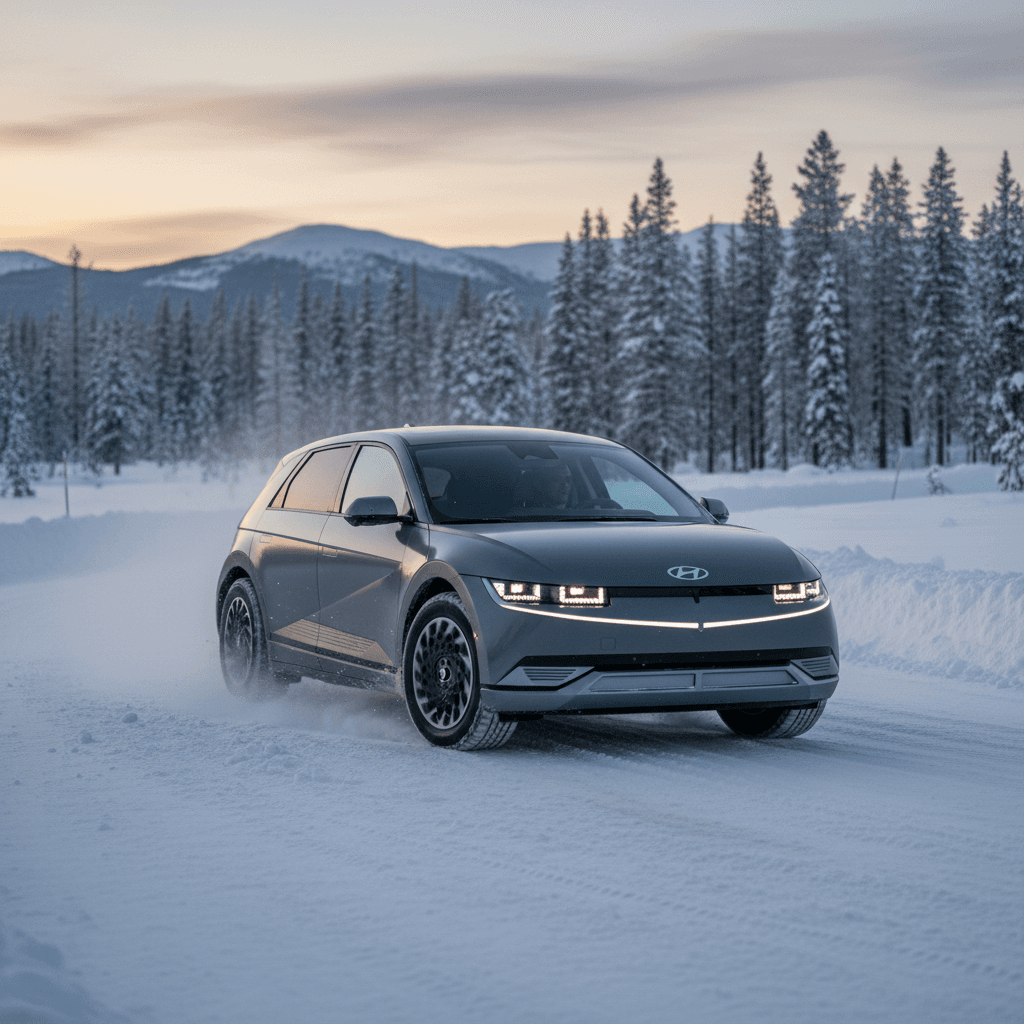
If you live where winter is a season, not a weekend, you’ve probably wondered whether the Hyundai IONIQ 5 is actually good in snow and ice, or if those futuristic lines hide a fair‑weather EV. The answer is nuanced: with the right spec and setup, the IONIQ 5 is one of the more confidence‑inspiring electric crossovers on slick roads, but it’s not magic. Let’s pull it apart like a proper winter road test.
Quick Take
Hyundai IONIQ 5 in Winter: Big Picture
IONIQ 5 Winter-Relevant Specs at a Glance
On paper, the IONIQ 5 is not a hardcore off‑roader. Ground clearance is around 6.1 inches, very much “plowed-road crossover,” not “forest service trail.” But the combination of a low center of gravity, instant torque control at each axle in HTRAC all‑wheel drive trims, and a thoughtfully tuned Snow mode makes it a quietly capable winter companion for normal suburban and highway use, especially if you respect the physics and invest in the right tires.
Where the IONIQ 5 Shines in Snow and Ice
Key Winter Strengths of the IONIQ 5
The ingredients that make it unexpectedly composed when the weather goes sideways
Confident AWD (HTRAC)
Dual‑motor HTRAC models can shuffle torque front to rear in milliseconds, preventing that classic front‑wheel‑drive snowplow feeling and helping you pull cleanly out of slick intersections.
Predictable Stability Control
Hyundai’s traction and stability tuning leans conservative in Snow mode. That’s good news when the road turns to polished glass, you get gentle intervention instead of sudden, spooky corrections.
Smooth, EV-Specific Snow Mode
Snow mode softens throttle response, adjusts regen, and fine‑tunes AWD behavior so you can roll on power without lighting up the tires. It effectively turns the car into the world’s nicest slow cooker: everything happens gently, on purpose.
Out in real storms, owners routinely describe the IONIQ 5, especially AWD trims with winter tires, as “boring” in the best possible way: it just goes where you point it. No fishtailing drama, no turbo‑lag surprises, just a heavy, balanced EV that meters out grip with a calm, almost Nordic indifference.
What Owners Say
Where the IONIQ 5 Struggles in Snow and Ice
- Limited ground clearance: Around 6 inches is fine for plowed streets and a few fresh inches of snow, but deep ruts and unplowed back roads can have the car plowing with its belly faster than a traditional SUV.
- Weight cuts both ways: That 4,200–4,600‑pound curb weight helps traction when you’re accelerating, but it also means more momentum to manage if you do lose grip on ice.
- Low‑rolling‑resistance stock tires: Many trims ship on efficiency‑minded all‑seasons that harden up below freezing and get skittish on ice.
- Snow and ice buildup: Owners report snow packing into the rear light bar, wheel wells, and the base of the windshield, sometimes disabling driver‑assist sensors until cleaned.
- Cold‑weather range loss: Expect roughly 30–40% less usable range on very cold days, especially at highway speeds.
Reality Check
AWD vs RWD IONIQ 5: Which Is Best for Snow?
HTRAC AWD: The Winter-Friendly Choice
- Dual motors: One at each axle for true all‑wheel drive rather than traction‑by‑braking.
- Better launch traction: Helps you get moving cleanly from icy stops and up slick hills.
- More power: AWD trims are also the punchier ones, but in winter that’s secondary to their control.
- Best pick for snow states: If you regularly drive in storms or mixed precipitation, this is the spec to target on the new or used market.
RWD: Manageable, But Tires Are Non‑Negotiable
- Balanced feel: The rear‑drive layout and low center of gravity give a pleasantly neutral handling balance on winter tires.
- Snow mode still helps: It will carefully meter power to the rear wheels, making it surprisingly composed in light‑to‑moderate snow.
- Traction is tire‑limited: On stock all‑seasons, steep, icy hills can still humble you. With proper winter tires, many owners in Canada and the northern U.S. report doing just fine.
If you’re shopping with serious winter in mind, AWS HTRAC trims are the safer default. But don’t dismiss RWD outright if your budget is tighter or your climate is more “slushy mid‑Atlantic” than “Rocky Mountain passes.” Given good tires and a driver who respects conditions, the rear‑drive IONIQ 5 can be a perfectly acceptable snow car.
How Snow Mode Works on the IONIQ 5
Hyundai hides a lot of winter engineering inside a single button. On most IONIQ 5s, you press and hold the drive‑mode button to engage Snow mode; tap again to exit. You’ll see a snowflake graphic in the cluster and feel an immediate softening of the throttle.
- Softer power delivery: The pedal becomes less sensitive, so it’s harder to accidentally dump too much torque onto slippery pavement.
- Smarter torque split (AWD): HTRAC will prioritize stability over outright acceleration, carefully balancing front and rear wheel torque to prevent spin‑up.
- Adjusted traction control: The system is tuned for low grip, stepping in early but progressively, helping you pull away without the herky‑jerky cut‑and‑restore of older systems.
- Regen behavior: In very slick conditions, it’s wise to dial regen down a notch so Snow mode and the ABS system aren’t fighting each other when you lift off suddenly.
When to Use Snow Mode
Why Tires Matter More Than Badges in Winter
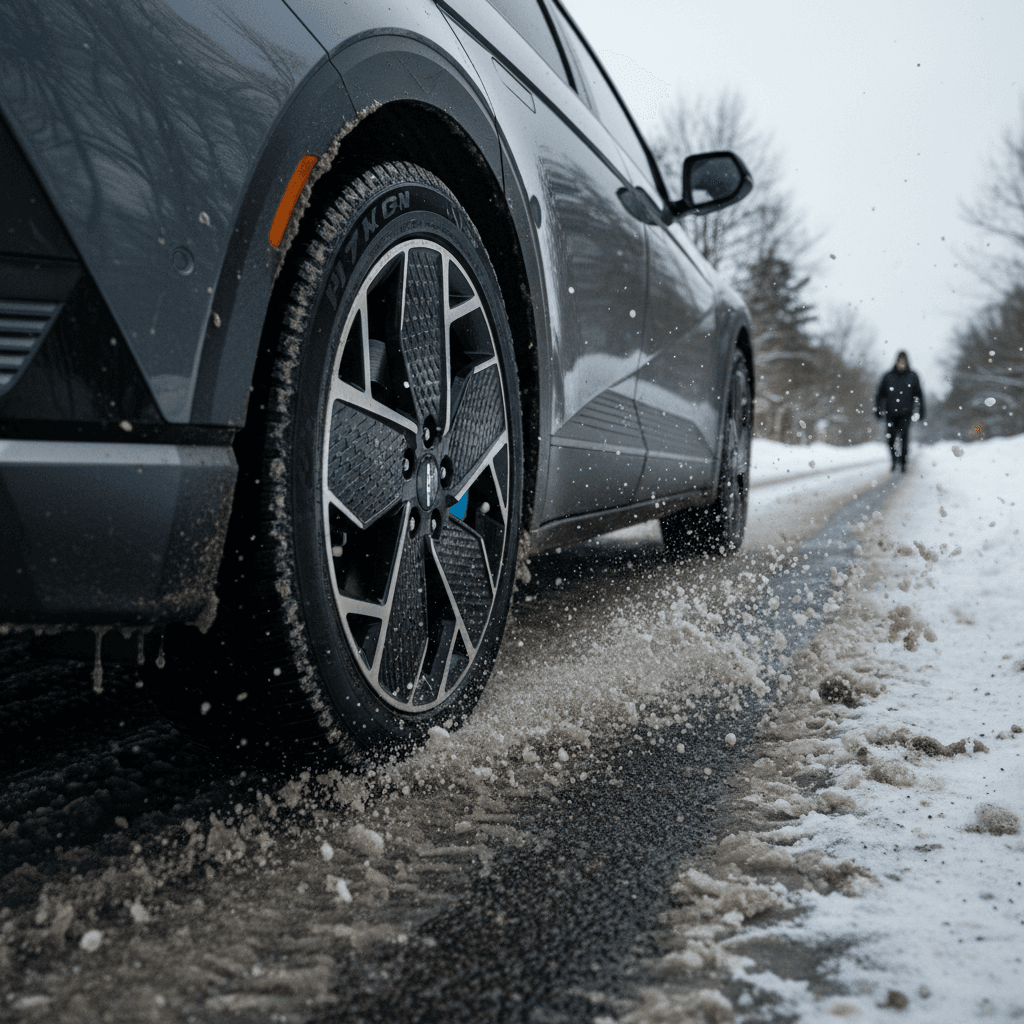
The IONIQ 5’s “best for snow and ice” status lives or dies on the four contact patches under you. From the factory, many trims wear low‑rolling‑resistance all‑season tires, which are great for EPA numbers and terrible at hanging onto ice.
Best Tire Strategies for an IONIQ 5 Winter
Spending money here matters more than adding options in the brochure
Dedicated Winter Tires
If you see real snow for months, a quality winter tire (Blizzak, X‑Ice, Hakkapeliitta, etc.) is transformative. Braking distances shrink dramatically and the car stops feeling like a passenger in bad weather.
All-Weather (3PMSF) Tires
In shoulder‑season climates, all‑weather tires with the three‑peak mountain snowflake symbol can be a smart compromise: better snow grip than all‑seasons, without the hassle of full seasonal swaps.
Stick With OE All-Seasons?
Fine only for mild winters and mostly cleared roads. In serious snow or on ice, they’re the limiting factor long before the motors or HTRAC system.
Don’t Let Electronics Trick You
Cold-Weather Range Loss: What to Expect
All EVs lose range in the cold; the IONIQ 5 is no exception. Between denser air, battery chemistry, and your desire to feel your toes, you should plan on roughly 30–40% less effective range during sustained sub‑freezing weather, especially at highway speeds.
Typical Winter Range Expectations for IONIQ 5
Approximate real‑world numbers for planning, assuming winter tires and mixed driving. Your results will vary with speed, temperature, and terrain.
| Trim / Battery | EPA Rated Range (mi) | Conservative Winter Range (mi) | Best Use Case |
|---|---|---|---|
| RWD Long Range | ≈300 | ≈180–200 | Commuting + occasional winter road trips with planning |
| AWD Long Range | ≈260 | ≈155–180 | Snowbelt daily driver; frequent storms, moderate trips |
| Standard Range (any) | ≈220 | ≈130–150 | Short‑range urban/suburban use in cold climates |
Use these as conservative planning figures rather than promises.
Preconditioning Helps
Setting Up Your IONIQ 5 for Winter Success
Essential Winter Setup Checklist for Your IONIQ 5
1. Choose the Right Tires
For serious snow, install a dedicated winter set on smaller, narrower wheels if possible. If that’s overkill for your climate, pick an all‑weather tire with the three‑peak mountain snowflake symbol.
2. Learn Snow Mode Before the Storm
Activate Snow mode in an empty lot after a light snowfall and feel how the car responds to throttle and braking. It’s better to meet the system on your terms than learn it mid‑blizzard.
3. Dial Back Regen on Ice
In extreme slick conditions, reduce regenerative braking or disable one‑pedal/i‑Pedal so friction brakes and ABS can manage stopping more predictably without sudden weight transfer.
4. Protect and Clean Sensors
Expect snow to cake over cameras, radar, and the rear light bar. Make a habit of wiping them off at every stop; don’t assume lane‑keep or adaptive cruise will be there when you need them.
5. Use Cabin Preheat While Plugged In
Warm the cabin and, where supported, the battery while the car is still charging. You’ll start with a warm pack and avoid hammering range just trying to defrost yourself for the first 20 minutes.
6. Keep a Snow Brush and De‑icer Handy
The IONIQ 5’s wide windshield and hatch glass collect snow and ice. Keep a decent brush, scraper, and lock de‑icer in the car so you’re not improvising with your sleeve.
EV Winter Driving Style
Buying a Used IONIQ 5 for Snow States
If you’re eyeing a used Hyundai IONIQ 5 specifically for winter duty, you’re shopping smart: you avoid the new‑car price hit and let someone else take the early depreciation. But you want to choose your example carefully, because winter amplifies any weakness, especially in the battery and tires.
Winter-Focused Checks When Shopping Used
Things a Carfax can’t tell you about surviving February
Battery Health & Range
Cold weather exposes weak packs. A Recharged Score battery health report can show you the real state of the pack so you’re not surprised by a car that already struggles to hit its rated range.
History in Harsh Climates
Look for signs of heavy road‑salt exposure (undercarriage corrosion, worn suspension bits). A car that’s been through multiple northern winters may be fine, but you want documentation of regular service and underbody wash care.
Wheel & Tire Package
Those big 20‑inch wheels look great but aren’t ideal for deep snow or pothole season. A used car that comes with a second set of smaller winter wheels and tires is an unsexy but valuable bonus.
Software & Updates
Later software updates have improved charging behavior and, in some cases, winter performance. When you buy through Recharged, our EV specialists can walk you through what firmware a given car is on and what that means for cold‑weather driving.
At Recharged, every used IONIQ 5 comes with a Recharged Score Report that includes verified battery health and fair‑market pricing. If you’re planning to throw this car at real winters, that transparency matters: it tells you how much range you can realistically expect on a frigid January morning before you sign anything.
Hyundai IONIQ 5 Winter Driving FAQ
Common Questions About the IONIQ 5 in Snow and Ice
Bottom Line: Is the IONIQ 5 Best for Snow and Ice?
If your definition of “best for snow and ice” is a lifted tank on knobby tires that can brute‑force its way through unplowed drifts, the IONIQ 5 isn’t that car, and neither is any sleek, road‑biased EV crossover. But if what you want is a stable, quiet, all‑electric daily driver that shrugs off real winter weather on maintained roads, the Hyundai IONIQ 5 absolutely belongs on your short list, especially in HTRAC AWD form.
The formula is simple: AWD if you can, great tires no matter what, Snow mode when it’s truly slick, and realistic expectations about range loss. Get those right and the IONIQ 5 becomes one of the most reassuring EVs you can pilot through a blizzard, more trusty winter boot than fashion sneaker.
If you’re considering a used IONIQ 5 for life in the snowbelt, shopping through Recharged means every car comes with a Recharged Score battery health report, EV‑savvy guidance, and the option to handle the whole process digitally, right down to delivery to your (plowed) driveway. That way, when the first big storm hits next season, the only drama is whether the school district calls a snow day, not whether your EV can get you there and back.