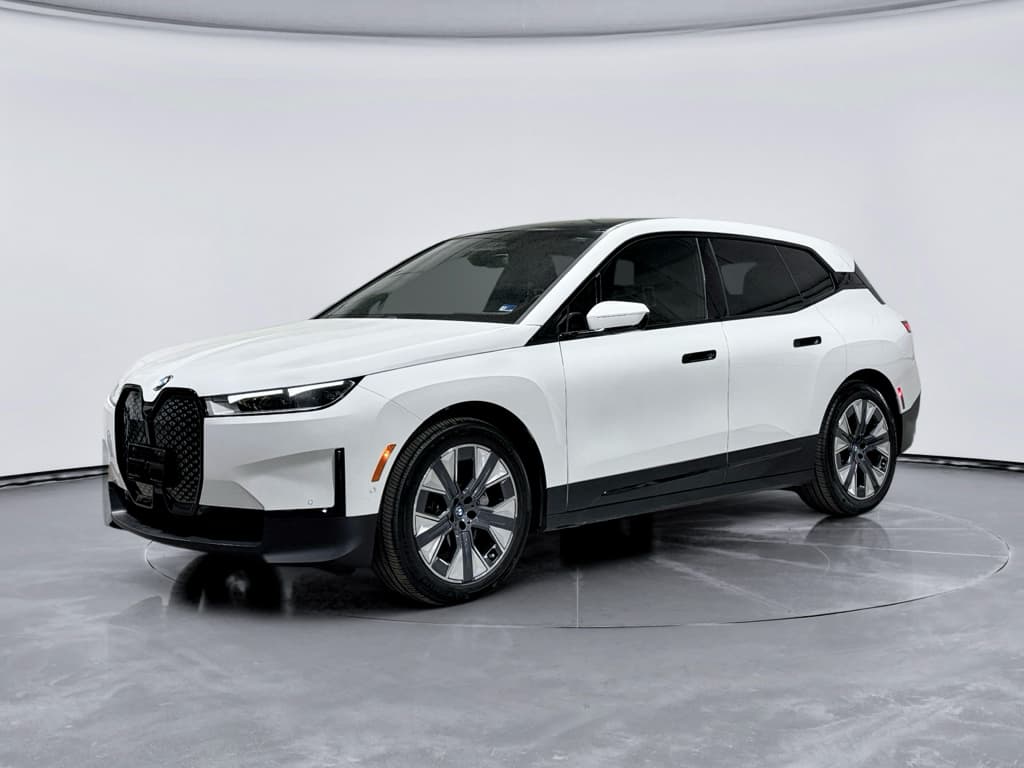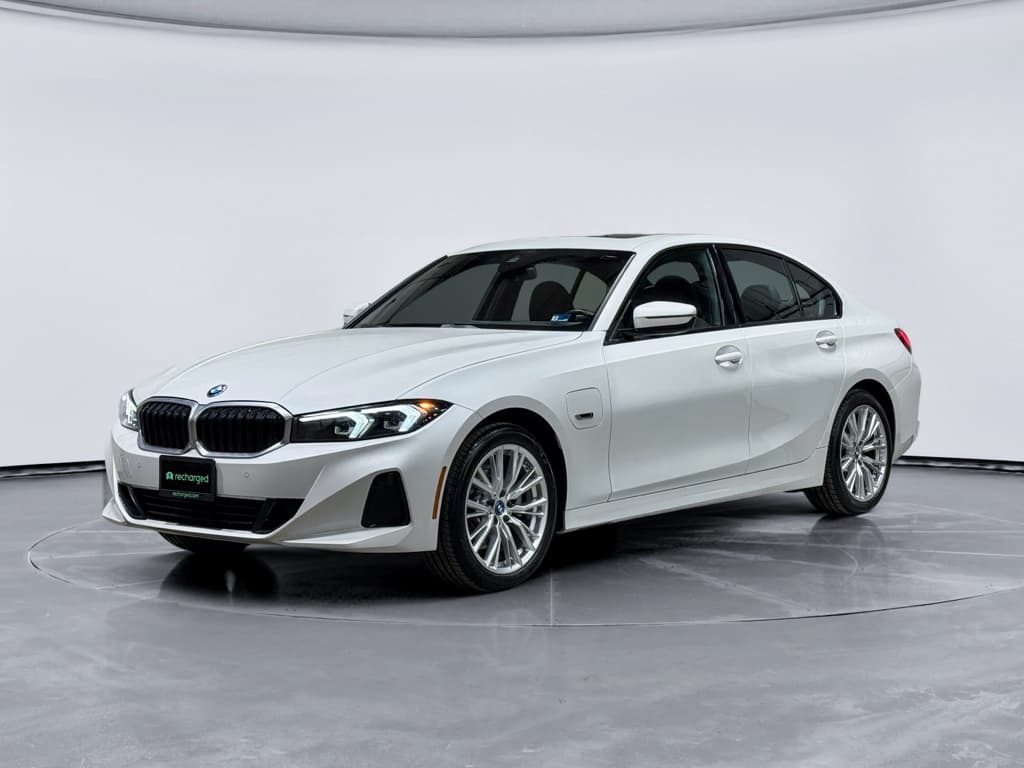
The 2023 BMW i4 is BMW’s first truly convincing electric sport sedan, essentially a battery-powered 4 Series Gran Coupe. By 2026 standards it’s no longer the newest thing in showrooms, but as a used EV it’s suddenly very interesting: strong performance, solid range, a familiar BMW cabin, and heavy early depreciation that makes it far more affordable than it was new.
TL;DR verdict
2023 BMW i4 overview: where it fits in today
BMW launched the i4 for the 2022 model year as an electric counterpart to the 4 Series Gran Coupe. The 2023 i4 kept the same basic recipe: a low, sleek fastback, rear‑ or all‑wheel drive, and power levels ranging from quick to genuinely fast. Where many EV sedans feel like clean‑sheet tech products, the i4 feels like a familiar BMW that happens to be electric, and that’s exactly what a lot of shoppers want.
2023 BMW i4 at a glance
Model-year nuance
Trims and key specs: eDrive35 vs eDrive40 vs M50
In 2023, U.S. buyers saw three main i4 flavors: the entry eDrive35, the longer‑range eDrive40, and the performance‑oriented M50. All share an 11 kW onboard AC charger and DC fast‑charging capability around 200 kW, but they differ in battery size, motors, and performance.
2023 BMW i4 trims compared
Key specs for the three core 2023 BMW i4 variants most shoppers will encounter on the used market.
| Trim | Drive | Battery (usable, approx.) | Power | 0–60 mph | EPA range (mi) | Notable traits |
|---|---|---|---|---|---|---|
| eDrive35 | RWD | ≈66 kWh | ≈281 hp | 5.8 s | ~256 | Best price, adequate range, smaller battery |
| eDrive40 | RWD | ≈81 kWh | ≈335 hp | 5.4 s | ~282–301 | Best range and efficiency, classic BMW RWD feel |
| M50 | AWD dual‑motor | ≈81 kWh | ≈536 hp | 3.7 s | ~227–270 | Serious performance, sportier tuning, less range |
EPA figures vary slightly with wheel size; numbers below reflect typical U.S. configurations.
Wheel-size impact
Real-world range and efficiency
On paper, the 2023 i4’s range sits in the high‑200s for most trims. In practice, owners see a pretty honest translation of the EPA stickers: many report that the i4 tracks close to its rated range in mixed driving as long as you’re not running 80 mph into a winter headwind.
What you can realistically expect for range
Approximate real‑world highway ranges at 70 mph in mild weather, starting near 90–100% and stopping around 10–15%.
eDrive35
Realistic highway range: ~200–220 miles
Smaller battery, but still fine for commuting and moderate road trips if you plan your stops.
eDrive40
Realistic highway range: ~240–260 miles
The sweet spot for many drivers, enough to do 3–4 hour stints between fast charges.
M50
Realistic highway range: ~200–230 miles
Drops further with performance tires and bigger wheels, but still workable for road trips with planning.
Cold weather behavior
Charging: home, DC fast charging, and road trips
Charging is where EV ownership either feels seamless or frustrating. The 2023 i4 sits in the middle of the pack: faster than older CCS cars and most plug‑in hybrids, but not at the bleeding edge like some 800‑volt Korean sedans. For most owners using a reasonable home setup, it’s more than adequate.
Home charging
- Onboard AC charger: 11 kW
- Typical home Level 2: 7–11 kW wallbox
- 0–100% at 11 kW: roughly 8–9 hours for the big battery
In practice, you’ll rarely charge from empty. Plugging in each night at home, most owners add 25–35 miles of range per hour on a 240 V Level 2 charger, plenty to recover a full week of commuting overnight.
DC fast charging
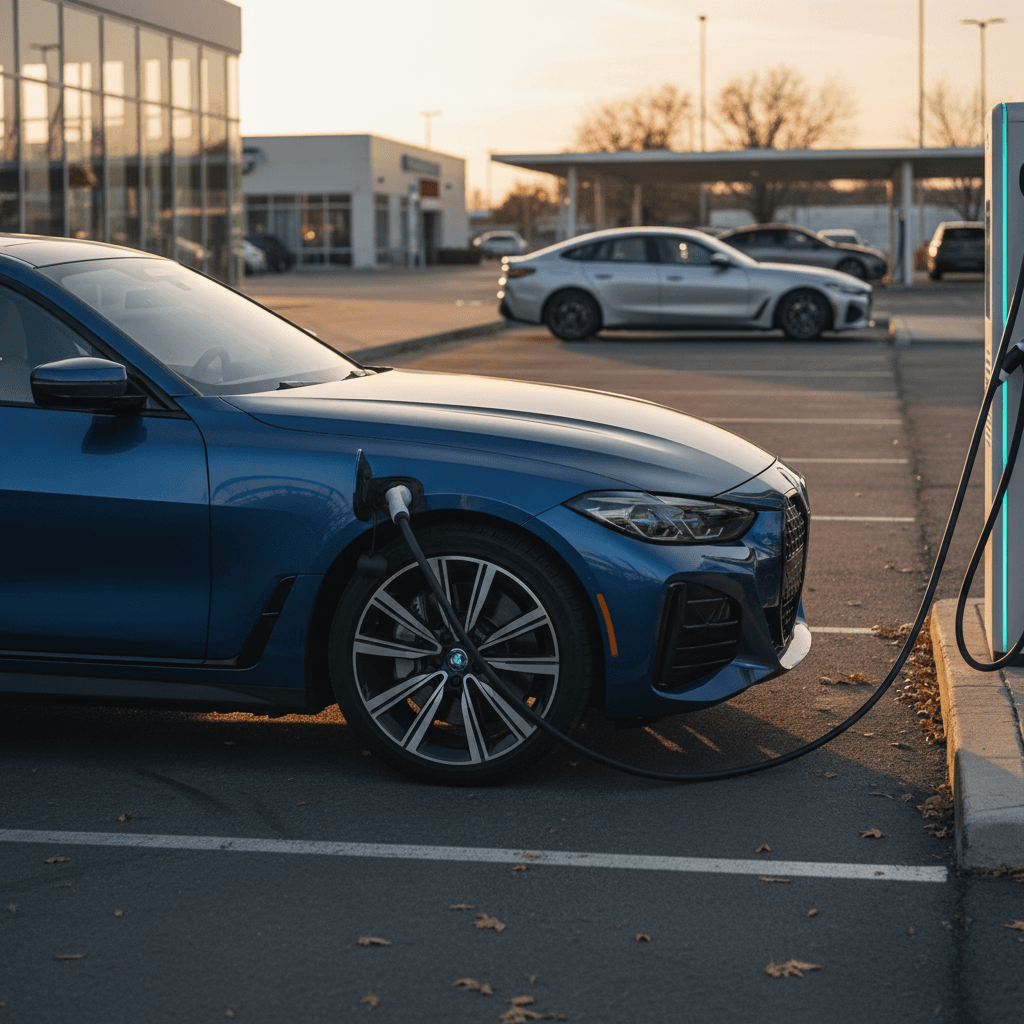
- Peak rate: up to ~200 kW on a healthy 350 kW station
- 10–80%: advertised around 31 minutes in ideal conditions
- Best results: arrive with 5–20% state of charge and let the car precondition the battery
Owners report that when the battery is properly preconditioned and the charger is behaving, the i4 holds triple‑digit kW well into the mid‑state‑of‑charge range, then tapers as expected.
Fast‑charging like a pro
Charging quirks to be aware of
Driving dynamics: how the 2023 i4 actually feels
If you care about driving feel, the 2023 BMW i4 is one of the best EVs in its class. It inherits much of the chassis tuning from the 3/4 Series family: a planted stance, precise steering, and a sense that the car shrinks around you when you drive quickly. Unlike some ultra‑light steering setups in rival EVs, the i4 still feels recognizably BMW.
Behind the wheel of each trim
All i4s are quick; how you plan to drive should guide which one you hunt for used.
eDrive35
Plenty of punch for daily use, with 0–60 mph in the mid‑5‑second range. Rear‑wheel drive makes it playful in a safe, predictable way. A good match if you mostly care about comfort and value.
eDrive40
Feels like a classic BMW sport sedan gone electric: strong mid‑range shove, rear‑drive balance, and confident highway passing. For many shoppers the eDrive40 strikes the best compromise of performance, range, and efficiency.
M50
Launches hard enough to surprise passengers, 0–60 mph in around 3.7 seconds. All‑wheel drive traction and adaptive dampers in many examples make it genuinely fun on a back road. The tradeoff is firmer ride quality and notably less range.
Where the i4 shines
Interior, comfort, and practicality
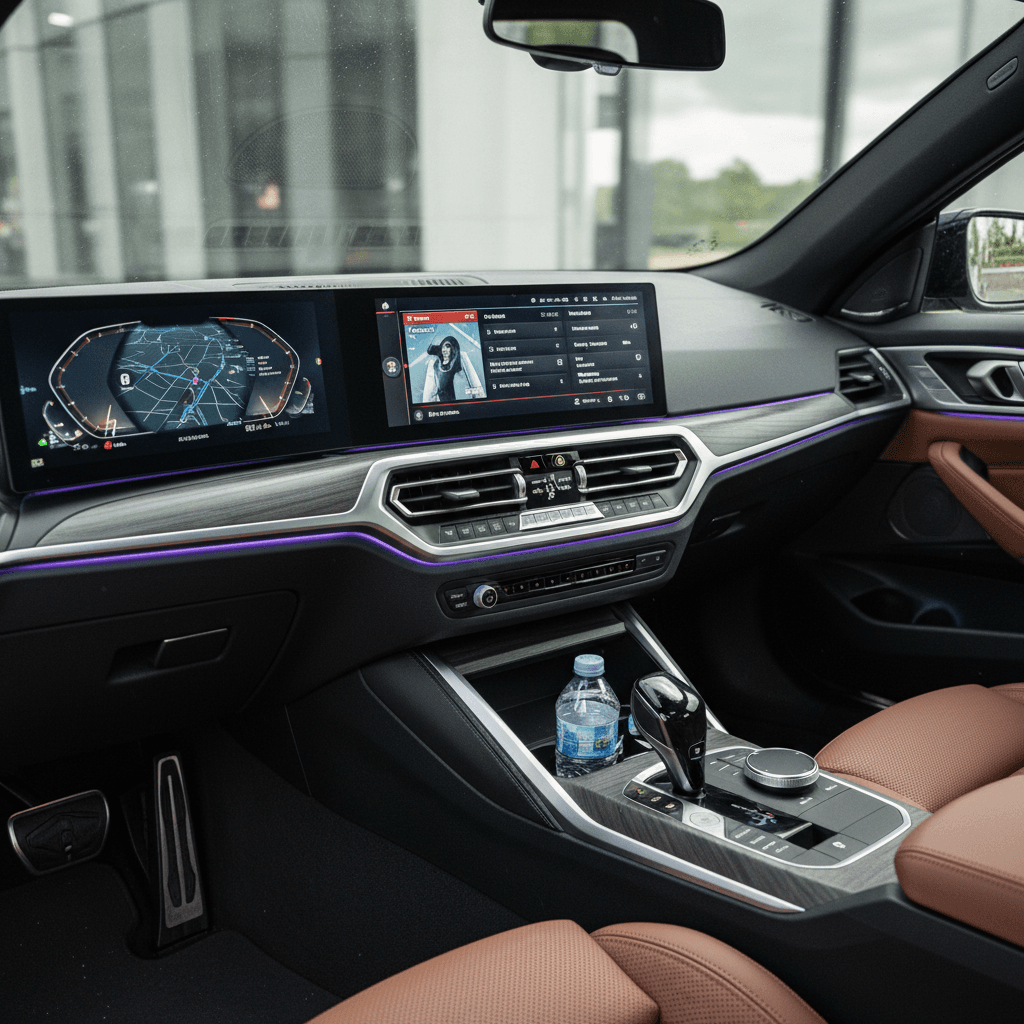
Inside, the 2023 BMW i4 feels much more like a traditional premium sedan than a tech showcase. You get high‑quality materials, solid switchgear, and BMW’s curved dual‑screen setup, but also physical controls for the things that matter. Road and wind noise are nicely suppressed, and the car feels substantial in a way that some lighter EVs do not.
Space & seating
- Front seats: Comfortable and supportive, with plenty of adjustment and good long‑distance comfort.
- Rear seats: This is where the i4 shows its gas‑car roots, the rear bench is usable for adults but tight, and a tall central tunnel eats into middle‑seat space.
- Headroom: The sloping roofline looks great but can feel snug for tall rear passengers.
Cargo & practicality
- Hatchback trunk: Around 470 L of space, with a wide opening and fold‑flat rear seats, more practical than a traditional sedan trunk.
- No frunk: Pop the hood and you’ll find…a lot of unused space and hardware, but no front storage bin.
- Towing: Light towing is possible in some markets; U.S. buyers should verify hitch ratings and local fitments if that matters to you.
Day‑to‑day usability
Tech and infotainment: BMW UI vs Tesla-style minimalism
Tech‑wise, the 2023 i4 walks a middle path. You get BMW’s curved display with a digital instrument cluster and central touchscreen, wireless Apple CarPlay and Android Auto, and a full suite of driver‑assistance features. But unlike a Tesla, you still have a traditional gauge area and a more conventional control layout.
Tech strengths and weaknesses
The 2023 i4’s tech experience is solid, but not the class benchmark.
Infotainment & apps
- Wireless CarPlay/Android Auto standard in most examples.
- BMW’s native navigation integrates charging stops and can precondition the battery for DC fast charging.
- Interface is deep; there’s a learning curve if you’re used to simpler systems.
Driver assistance
- Adaptive cruise control, lane‑keeping, blind‑spot monitoring, and parking assistance widely available.
- Solid on highways, but not designed to be hands‑off like GM Super Cruise or Tesla Autopilot.
Where it lags
- Route planning and charging‑stop logic are less polished than leaders like Tesla or Hyundai/Kia.
- Some owners report the system feeling sluggish or buggy after software updates.
Reliability, recalls, and common issues
Broadly, the 2023 BMW i4 has shown average reliability in early owner surveys, not a problem child, but not flawless either. Electric powertrains tend to be robust; the issues that crop up most often are with software, charging, and in‑car electronics rather than motors or battery packs.
- Multiple recalls: early i4s have been subject to several recalls, ranging from battery‑related inspections to safety‑system software updates. Any used i4 you’re considering should have all recall work completed.
- Charging issues: owners report occasional failures to start a charge at home or on certain public stations, stubborn charge‑port doors, and rare cases where the car won’t charge to full on a given unit.
- In‑car electronics: glitches with the infotainment system, backup camera, and driver‑assistance sensors show up in owner surveys more than mechanical complaints.
- Usual BMW wear items: suspension bushings and brakes are still consumables. The i4’s weight means tires and pads can wear faster than on a lighter gasoline sedan, especially on the M50.
Battery concerns?
Used pricing, depreciation, and value vs rivals
New, the 2023 BMW i4 was a pricey proposition. Today, depreciation has done a lot of work: typical examples have shed close to half their original MSRP within about three years, putting them squarely in reach of many used‑EV buyers who want something more premium than a mainstream compact sedan.
2023 BMW i4 depreciation snapshot
Illustrative depreciation figures based on typical well‑equipped examples vs. original MSRP.
| Year | Estimated value | Change vs. new | Notes |
|---|---|---|---|
| New (2023) | ≈$53,000 | , | Well‑equipped eDrive40 or lightly optioned M50 |
| Year 1 | ≈$46,000 | ‑$7,000 | Normal luxury‑car first‑year drop |
| Year 2 | ≈$33,000 | ‑$20,000 | Where many off‑lease cars start to appear |
| Year 3 (today) | ≈$27,000 | ‑$26,000 | Around 50% depreciation, depending on spec and miles |
Actual numbers will vary based on miles, condition, options, and local market, but the pattern, steep early depreciation, is consistent.
Compared with Tesla Model 3
- Model 3 typically offers more range per dollar, faster charging, and better native route planning.
- The Tesla often qualifies for more generous tax incentives when new or CPO.
- The BMW fights back with better cabin quality, more traditional ergonomics, and a more engaging driving feel.
Compared with Hyundai Ioniq 6 & others
- Hyundai’s E‑GMP cars and some newer rivals charge faster and offer very efficient highway range.
- The i4 counters with a more premium badge and interior, plus the familiarity of a BMW dealership network.
- If you spend a lot of time on long road trips, the fastest‑charging Koreans still have an edge; if you mostly commute and take occasional trips, the i4’s value proposition looks stronger.
Why depreciation is your friend
Who the 2023 BMW i4 is (and isn’t) for
Is a 2023 BMW i4 right for you?
Think about your daily use, not just the brochure numbers.
Great fit if…
- You’re coming from a BMW or similar European sport sedan and want an EV that still feels like a driver’s car.
- You have reliable home or workplace Level 2 charging.
- You value cabin quality and brand cachet over having the very latest software UX.
- Most of your driving is commuting, errands, and a few long trips per year.
Probably not ideal if…
- You regularly drive 250–300‑mile legs at 75–80 mph with limited charging options.
- You want a super‑spacious rear seat and flat floor for adults or big car seats.
- You prioritize the absolute fastest DC fast‑charging or cutting‑edge self‑driving features.
- You have no way to install home or workplace charging and would rely heavily on public networks.
Checklist: what to check on a used 2023 i4
Pre‑purchase checks for a used 2023 BMW i4
1. Confirm recall and software status
Ask for a printout from a BMW dealer or service history showing that all open recalls and software campaigns have been completed. This is especially important for any battery‑ or safety‑related recalls.
2. Get a battery‑health report
Don’t rely on a generic SOH percentage buried in a menu. Use a data‑driven battery‑health report, like the Recharged Score, to see how the pack has aged, how often it’s been fast‑charged, and whether there are weak modules.
3. Inspect and test charging
Test both AC and DC charging if possible. Verify that the charge‑port door operates smoothly, the car starts charging on the first try, and there are no error messages partway through a session.
4. Check tires, brakes, and suspension
Performance models and heavier EVs can eat through tires and brake pads quickly. Look for uneven wear, cupped tires, or clunks over bumps that could indicate worn bushings or dampers.
5. Evaluate interior electronics
Cycle through the infotainment system, cameras, parking sensors, and driver‑assist functions. Watch for glitchy behavior, laggy screen responses, or persistent warning lights.
6. Verify options and packages
BMW’s option structure can be complex. Make sure the car actually has features advertised in the listing, like adaptive suspension, premium audio, or advanced driver‑assist packages, by checking menus and doing a physical walk‑through.
7. Review charging history if available
Some sellers or dealers can share charging‑session history. Lots of repeated 0–100% DC fast‑charging sessions aren’t an automatic dealbreaker, but they do increase the importance of a strong battery‑health report.
8. Consider total cost of ownership
Price is only one part of the equation. Factor in insurance, tires, out‑of‑warranty repairs, and home‑charging installation. A retailer like Recharged can help you compare all‑in ownership costs across multiple EVs, not just list prices.
Frequently asked questions about the 2023 BMW i4
2023 BMW i4 FAQs
Bottom line: is the 2023 BMW i4 a good used EV?
As a new car, the 2023 BMW i4 had to justify a premium price against rivals that often charged faster or went farther on a charge. As a used EV, it tells a different story: deep early depreciation, strong real‑world performance, and a cabin that still feels thoroughly modern.
If you want a quiet, quick, premium four‑door that still feels like a BMW to drive, a 2023 i4, especially an eDrive40 on sensible wheels, belongs high on your shopping list. Just go in with eyes open about rear‑seat space, the lack of a frunk, and the reality that its charging experience is good rather than best‑in‑class.
This is also where buying through a specialist used‑EV retailer like Recharged makes a difference. Every car on the platform comes with a Recharged Score battery‑health report, transparent pricing, and EV‑savvy support on financing, trade‑ins, and home‑charging setup. If the 2023 BMW i4 fits your life on paper, that kind of data and guidance is what turns it from an interesting spec sheet into a confident long‑term choice.