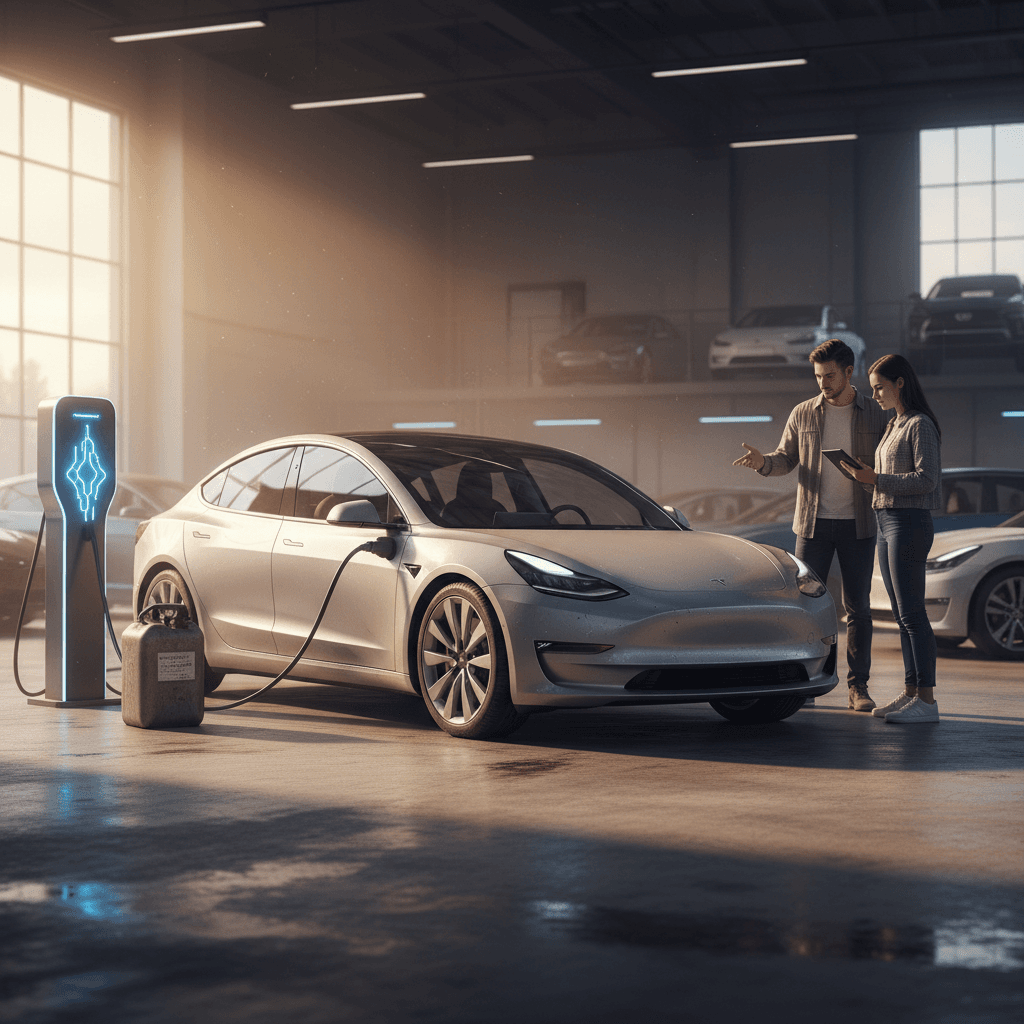
If you’ve ever typed “hybrid Tesla” into a search bar, you’re not alone. A lot of shoppers love the idea of Tesla’s tech and performance, but still want the security of a gas backup. This guide untangles the confusion, explains why Tesla is all‑electric, and shows you how to pick between a hybrid and a Tesla, especially if you’re eyeing a used EV to keep costs in check.
Quick answer
Why so many shoppers search for a “hybrid Tesla”
When people say they want a hybrid Tesla, they usually mean one of three things: 1. They want EV-like efficiency, but they don’t fully trust public charging yet. 2. They want to slash fuel costs, but not change their driving habits. 3. They’re worried about range on long road trips or harsh‑weather days. A hybrid, or a plug‑in hybrid (PHEV), looks like a safety net. You can drive electric most of the time, but if you forget to plug in, the gas engine bails you out. Tesla, on the other hand, bets that you’re ready to go all‑electric and live in charging instead of filling up.
Why drivers cross-shop hybrids and Teslas
Think in trips, not tank size
Does Tesla actually make a hybrid?
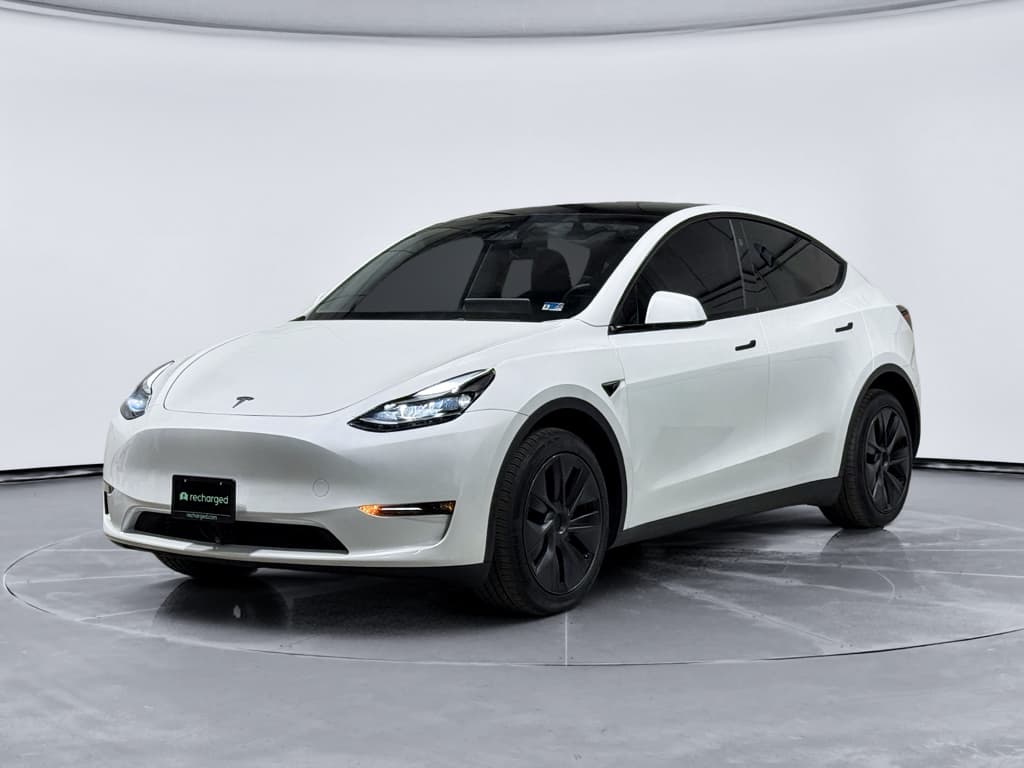
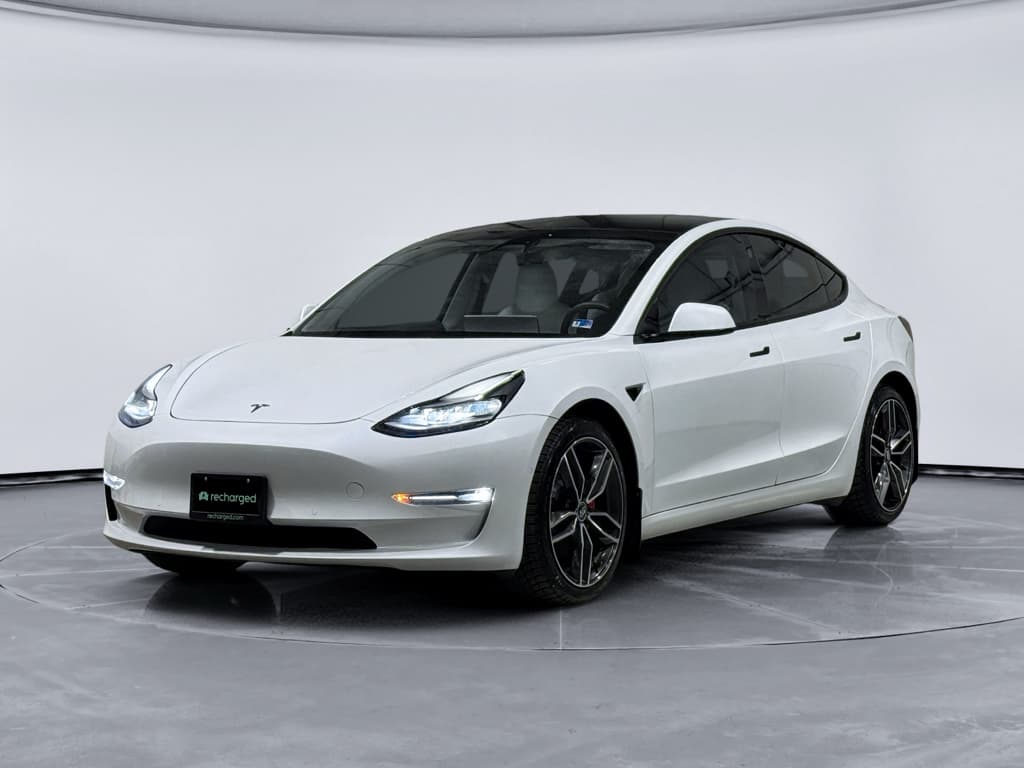
No. Tesla does not make a hybrid or plug‑in hybrid today, and it never has. Tesla’s entire car lineup is battery electric: - Model 3 – compact sedan - Model Y – compact SUV - Model S – large sedan - Model X – large SUV - Cybertruck – electric pickup All of them use only electric motors and a battery pack. There is no built‑in gas engine, tank, or transmission. If you run out of charge, you can’t just flip over to gasoline.
What about Toyota’s Tesla-powered RAV4 EV?
Hybrid vs Tesla: how the tech really differs
How a hybrid or plug‑in hybrid works
- Two power sources: a gasoline engine plus one or more electric motors.
- Small battery: typically 1–18 kWh, enough for a handful of pure‑EV miles (regular hybrid) or 20–50+ miles (plug‑in hybrid).
- Refuel with gas: you can drive even if the battery is empty.
- More moving parts: engine oil, transmission fluid, exhaust system, spark plugs, and more.
How a Tesla (BEV) works
- Single power source: one or more electric motors.
- Large battery pack: 50–100+ kWh in most modern Teslas.
- Charge instead of refuel: at home, work, or public chargers.
- Fewer wear items: no oil changes, no muffler, far fewer drivetrain parts to service.
Three types of “hybrid” people mix up with Teslas
Same goal, lower fuel bills, but very different hardware
Conventional hybrid (HEV)
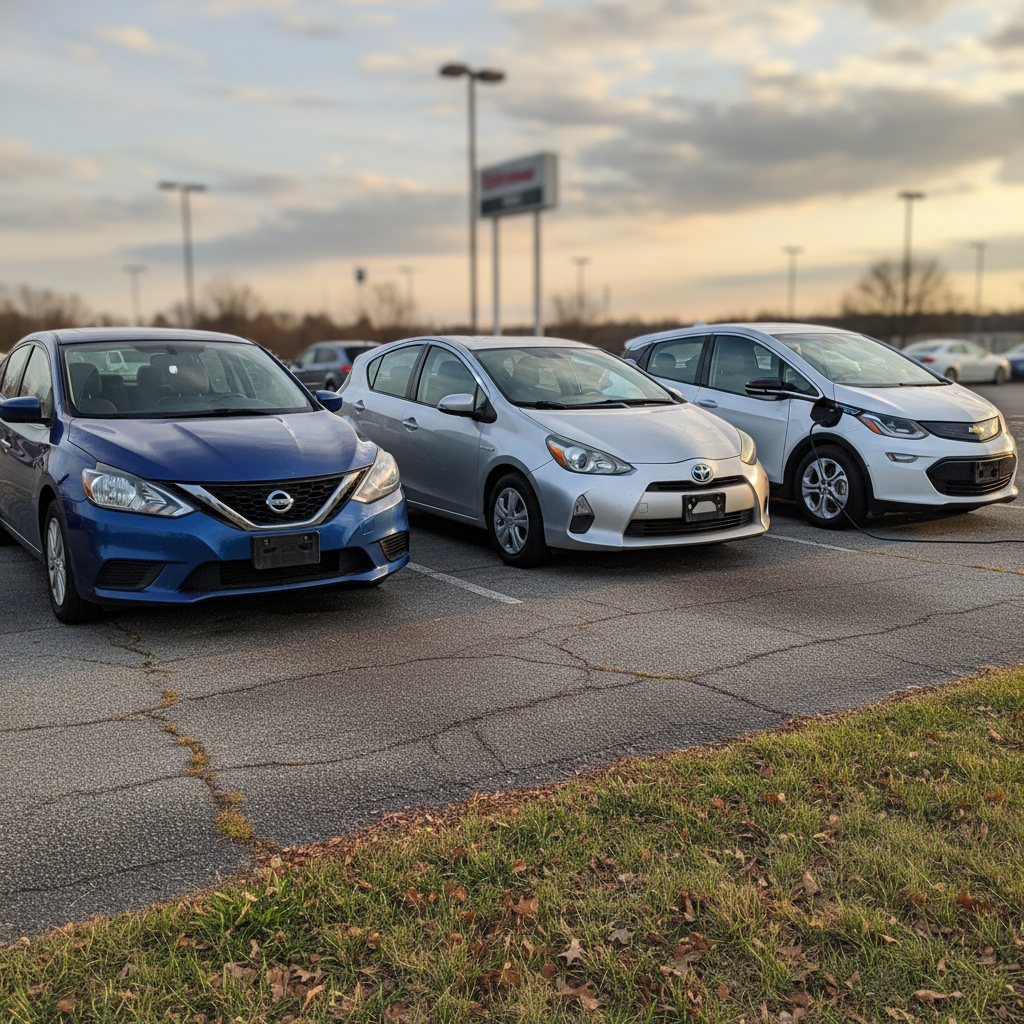
Think Prius or regular hybrid SUVs. You never plug in, the battery is charged by the engine and braking. Great city MPG, but you still live at the gas station.
Plug‑in hybrid (PHEV)
Has a bigger battery and a charge port. You might get 20–60 miles on electricity before the gas engine wakes up. For many commuters, that covers a normal day.
Full EV (like Tesla)
All‑electric, all the time. You plug in at home or on the road. Most daily driving is cheap and smooth, with fast‑charging for long trips.
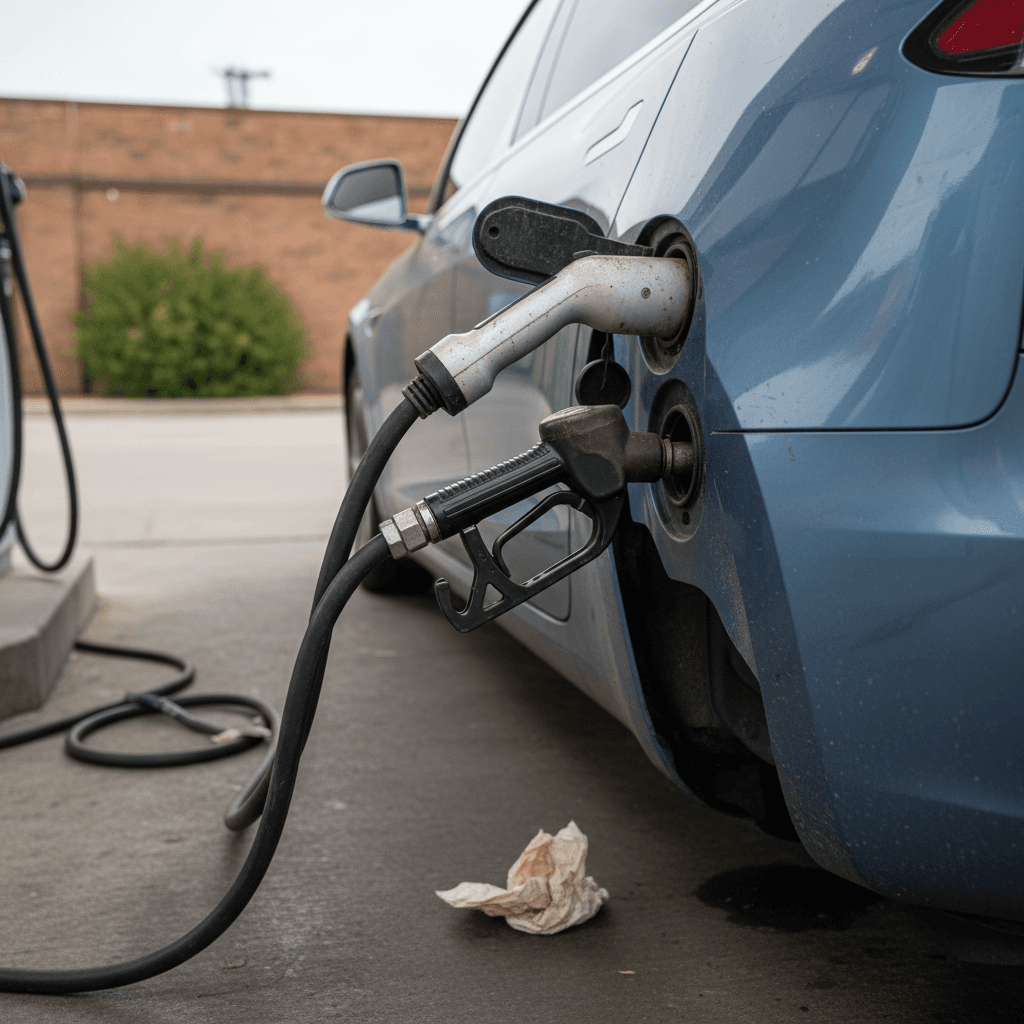
Real-world pros and cons: hybrid vs Tesla
Hybrid vs Tesla: strengths and tradeoffs
How a hybrid or plug‑in hybrid stacks up against a Tesla for typical U.S. drivers.
| Factor | Hybrid / Plug‑in hybrid | Tesla / Full EV |
|---|---|---|
| Fuel & energy cost | Good – better than pure gas, but you still buy fuel regularly | Excellent – electricity is usually cheaper per mile, especially at home |
| Road trips | Excellent – gas is everywhere, no planning needed | Good – fast‑charging works, but you plan stops |
| Daily commuting | Good – especially if you rarely plug in a PHEV | Excellent – quiet, instant torque, minimal “fuel” hassle |
| Maintenance | Moderate – engine, oil, transmission, exhaust | Low – fewer moving parts, no oil changes |
| Emissions | Lower than pure gas | Lowest – zero tailpipe emissions |
| Upfront price | Often cheaper than comparable EV new | Used Teslas can be competitive with new hybrids |
| Complexity | High – both engine and EV systems | Lower – only electric drivetrain |
Use this table as a quick gut check before you fall in love with any single badge.
One thing people forget about plug‑in hybrids
Which drivers fit a hybrid vs a Tesla best?
Match your driving style to the right tech
You’ll likely be happier in a hybrid or PHEV if…
You live in an area with almost no public charging and no ability to install home charging.
You regularly drive 300–500 miles in a day, on short notice, to rural areas with sparse infrastructure.
Your household budget is tight and you’ve found a heavily discounted hybrid or PHEV you like.
You share the car with drivers who simply won’t remember to plug in, even if you ask nicely.
You’ll likely be happier in a Tesla or other EV if…
You can install at least a 240‑volt outlet or Level 2 charger at home, or you already have one.
Most of your driving is commuting, school runs, and errands under 50–70 miles per day.
You want to cut fuel and maintenance costs for the next 5–10 years, not just the next few months.
You’re comfortable planning charging stops on long trips the way you already glance at the weather before hitting the road.
Good news for most U.S. drivers
Total cost: gas, electricity, maintenance and resale
Sticker price is the loud part of the story, but the quiet part is what you pay over years in fuel, maintenance and depreciation. That’s where a Tesla, or any well‑bought used EV, can surprise you.
Where hybrids and Teslas differ on cost
Look beyond the monthly payment
Fuel & electricity
- Hybrids: Great MPG, but gas prices bounce all over the place.
- Plug‑in hybrids: Cheap if you plug in daily; less so if you forget.
- Tesla / EVs: Home charging can be dramatically cheaper per mile than gas, especially with off‑peak rates.
Maintenance & repairs
- Hybrids: Still need engine oil, filters, belts, spark plugs and exhaust work over time.
- Teslas: No oil changes, far fewer drivetrain parts, and regenerative braking means brake pads last much longer.
- Over 5–10 years, that difference adds up.
Used pricing can flip the script
Using a used Tesla as your “hybrid Tesla” alternative
If what you really want is hybrid‑like confidence, low running costs without range anxiety, a used Tesla with verified battery health is often the sweet spot. You get the EV driving experience and Tesla tech, without paying brand‑new money.
What to check before you choose a used Tesla over a hybrid
1. Battery health, not just mileage
Two Teslas with the same odometer can have very different battery histories. Look for a clear battery health report, not just a guess. At Recharged, every car gets a <strong>Recharged Score</strong> with verified battery diagnostics so you know how much range you’re really buying.
2. Supercharging and fast‑charging status
Make sure the car isn’t restricted from fast‑charging networks due to prior damage or improper repairs. This is critical if you plan road trips.
3. Home charging plan
Decide where the car will live at night and how you’ll charge it, 120‑volt trickle, 240‑volt outlet, or a wallbox. This is the difference between EV ownership feeling magical or frustrating.
4. Total ownership costs vs your hybrid shortlist
Compare monthly payment plus estimated fuel/electricity and maintenance. A used Model 3 with cheap home charging can undercut a new hybrid’s gas bill significantly.
5. Warranty and support
Check what remains of the original battery and drivetrain warranty and what additional coverage you can add. Recharged backs this up with EV‑specialist support to walk you through the fine print.
Step-by-step: decide between a hybrid and a Tesla
Simple decision path for undecided shoppers
Step 1: Map your real driving
Write down a typical week: commute miles, errands, weekend trips. Flag any regular drives over 150–200 miles each way.
Step 2: Be honest about charging access
Can you install a 240‑volt outlet or wallbox where you park? If yes, you’re already in great shape for a Tesla or other EV.
Step 3: Compare 3 concrete vehicles, not ideas
Pick one hybrid or PHEV you like and one or two used Teslas in your budget. Compare price, range, fuel/energy costs, and maintenance, not just badges.
Step 4: Test‑drive both experiences
Drive a hybrid on your normal routes, then do the same in a Tesla. Feel the difference in noise, throttle response, and how relaxed you are in traffic.
Step 5: Run the numbers with real quotes
Get insurance and financing estimates, and, if you’re trading in a car, a real offer. Recharged can help with <strong>trade‑ins, financing, and nationwide delivery</strong> if you land on a used EV.
Step 6: Decide what matters most
Is your top priority convenience of gas stations, or low long‑term cost and driving feel? When you answer that honestly, the hybrid vs Tesla decision usually becomes obvious.
Hybrid Tesla FAQs
Frequently asked questions about “hybrid Teslas”
Bottom line: is a hybrid or a Tesla better for you?
There may never be a true “hybrid Tesla,” and that’s okay. The real decision isn’t about labels, it’s about how you live today and where you want your money to go over the next decade, toward gasoline and engine service, or toward electricity and a simpler drivetrain. If your daily driving is modest and you can plug in at home, a used Tesla with a clean battery bill of health can feel like the best kind of hybrid: all the electric benefits, without the gas bill. If your life is long‑distance, last‑minute road trips with no charger in sight, a good hybrid or plug‑in hybrid may still be the right tool for the job.
When you’re ready to explore the EV side of that decision, Recharged can help you compare used Teslas and other EVs with transparent battery health reports, fair pricing, financing, trade‑in options and delivery to your driveway. That way, whether you end up in a hybrid or a Tesla, you’re not guessing, you’re choosing on your terms.