If you drive a hybrid, your tyres are doing more than just holding air and keeping the wheels off the asphalt. The right hybrid car tyres can quietly add real-world miles per gallon, extend your EV-only range in a plug‑in hybrid, and make the car feel calmer and more planted. The wrong set can turn a smart, efficient machine into a noisy, thirsty slog.
Hybrid vs plug‑in hybrid vs full EV
Why hybrid car tyres matter more than you think
Hybrid powertrains are built around efficiency and smoothness. Tyres are the only part of the car that actually touch the road, so they decide how much of that clever engineering makes it to the real world. With the wrong rubber, your hybrid has to work harder, burning more fuel or battery just to push noisy, draggy tyres along. With the right tyres, you get a quieter cabin, sharper braking and a noticeable boost in fuel economy or electric range.
What a good set of hybrid tyres can do for you
Do hybrid cars need special tyres?
Strictly speaking, most hybrids don’t require a tyre labeled “EV” or “hybrid”. Your owner’s manual will specify a size, load index and speed rating, not a marketing term. But hybrids do place unique demands on tyres, and some designs handle those demands better than others.
- Hybrids and PHEVs are often heavier than similar petrol cars because of the battery pack.
- Regenerative braking can scrub speed quickly, putting extra stress on the tread and shoulder blocks.
- The cabin is quieter at low speeds, so road noise becomes more obvious.
- Efficiency matters more: every bit of rolling resistance shows up at the pump, or on your EV range estimate.
Short answer
How hybrid car tyres affect MPG and EV range
Think of rolling resistance as a tax you pay every time the tyre makes a revolution. Low rolling resistance (LRR) hybrid car tyres are designed to waste less energy as heat and deformation. That means the petrol engine or electric motor doesn’t have to work as hard to maintain speed.
Where the savings actually come from
Small changes in drag add up over tens of thousands of miles.
Lower rolling resistance
LRR tyres use special rubber compounds and tread patterns that flex less as they roll, turning less energy into heat.
That can translate into a 2–4% improvement in fuel economy for many hybrids over the life of the tyre.
Better use of EV mode
In a plug‑in hybrid, every watt‑hour counts. Tyres that roll more easily help you squeeze a few more miles of electric‑only driving out of each charge, especially in stop‑and‑go traffic.
Less work for the powertrain
Efficient tyres reduce strain on the engine, motor and battery. Over time that can mean slightly cooler operating temps and less wear on big‑ticket components.
Real‑world expectations
Hybrid tyres vs EV-specific and “normal” tyres
Standard all‑season tyres
- Pros: Inexpensive, widely available, decent all‑round performance.
- Cons: Often higher rolling resistance and more noise; may have lower load ratings than ideal for heavier hybrids and PHEVs.
- Best for: Older, lighter hybrids where cost is the main concern and you don’t care about squeezing every last MPG.
EV-specific or LRR touring tyres
- Pros: Lower rolling resistance, reinforced construction for weight and regenerative braking, attention to tyre noise.
- Cons: Typically cost more; ride can feel a bit firmer on rough pavement.
- Best for: Modern hybrids and plug‑in hybrids where you want efficiency, comfort and safety in one package.
Don’t under‑spec your tyres
Key features to look for in hybrid car tyres
Once you’re past the alphabet soup of model names and marketing jargon, there are five core attributes that matter most for tyres on a hybrid.
Hybrid tyre buying checklist
1. Low rolling resistance (LRR) design
Look for tyres marketed as “fuel efficient”, “Energy Saver”, “Eco” or specifically designed for hybrids/EVs. Independent tests often confirm that these designs reduce rolling resistance without compromising wet braking.
2. Proper load index
Check the sidewall of your current tyres and match or exceed that load index, especially on heavier PHEVs and crossovers. More battery weight means more load on each tyre.
3. Strong wet and dry braking
Efficiency is pointless if braking distances grow. Study wet‑braking ratings and reviews, especially if you drive in heavy rain. Hybrids often feel deceptively quick at low speeds thanks to electric torque.
4. Noise and comfort tuning
Many hybrid‑friendly tyres use variable pitch tread blocks and, in some cases, foam inserts inside the casing to reduce noise. If you do long highway runs, prioritise tyres with a reputation for a quiet cabin.
5. All‑season vs dedicated winter
In much of the US, an all‑season touring LRR tyre is fine year‑round. If you regularly see heavy snow or icy conditions, a dedicated winter tyre will do more for your safety than any efficiency rating.
Popular low rolling resistance tyre lines for hybrids
Tyre models change constantly, but several long‑running lines consistently test well for fuel‑efficient driving and are common fits on hybrids in the US. Always confirm size, load and speed rating for your specific car before buying.
Examples of fuel‑efficient all‑season tyres for hybrids
These lines are widely used on hybrids and fuel‑efficient petrol cars. Availability and exact specs vary by size.
| Tyre line | Type | Typical fitment | What it’s known for |
|---|---|---|---|
| Michelin Energy Saver A/S | All‑season touring, LRR | Hybrids and compact/midsize sedans | Excellent MPG, quiet ride, premium price |
| Bridgestone Ecopia EP422 Plus | All‑season LRR touring | Family sedans, small SUVs, hybrids | Balanced efficiency, long tread life |
| Goodyear Assurance Fuel Max | All‑season touring, LRR | Older hybrids, compact sedans | Good fuel savings at a mainstream price |
| Continental TrueContact Tour | All‑season touring | High‑mileage commuters, family cars | Strong tread life, wet braking with efficiency edge |
| Yokohama Avid Ascend LX | All‑season touring, LRR | Sedans and hatchbacks | Long treadwear with decent fuel economy |
Use this as a starting point, not a shopping cart, always match what your vehicle calls for.
What about EV‑only tyres on a hybrid?
Tyre size, load and speed ratings for hybrids
The most common mistake hybrid owners make is shopping by price and star rating alone. The cryptic code on the sidewall, the one that looks like 205/55R16 91V, actually tells you most of what you need to know.
- Size (e.g. 205/55R16): Width, aspect ratio and wheel diameter. Changing these can upset your speedometer and hybrid control logic.
- Load index (e.g. 91): How much weight each tyre can safely carry. Heavier hybrids and PHEVs often need higher indices than comparable petrol models.
- Speed rating (e.g. V, H, T): The maximum sustained speed the tyre is designed to handle. Don’t go below what the car was supplied with from the factory.
Never downgrade load or speed rating
Maintenance tips to keep your hybrid efficient
You can bolt on the most efficient hybrid car tyres ever moulded, then throw away half the benefit by neglecting basic maintenance. The good news is that the habits that save tyres also save fuel.
Four habits that make tyres, and hybrids, last longer
None of these require a lift or a toolbox.
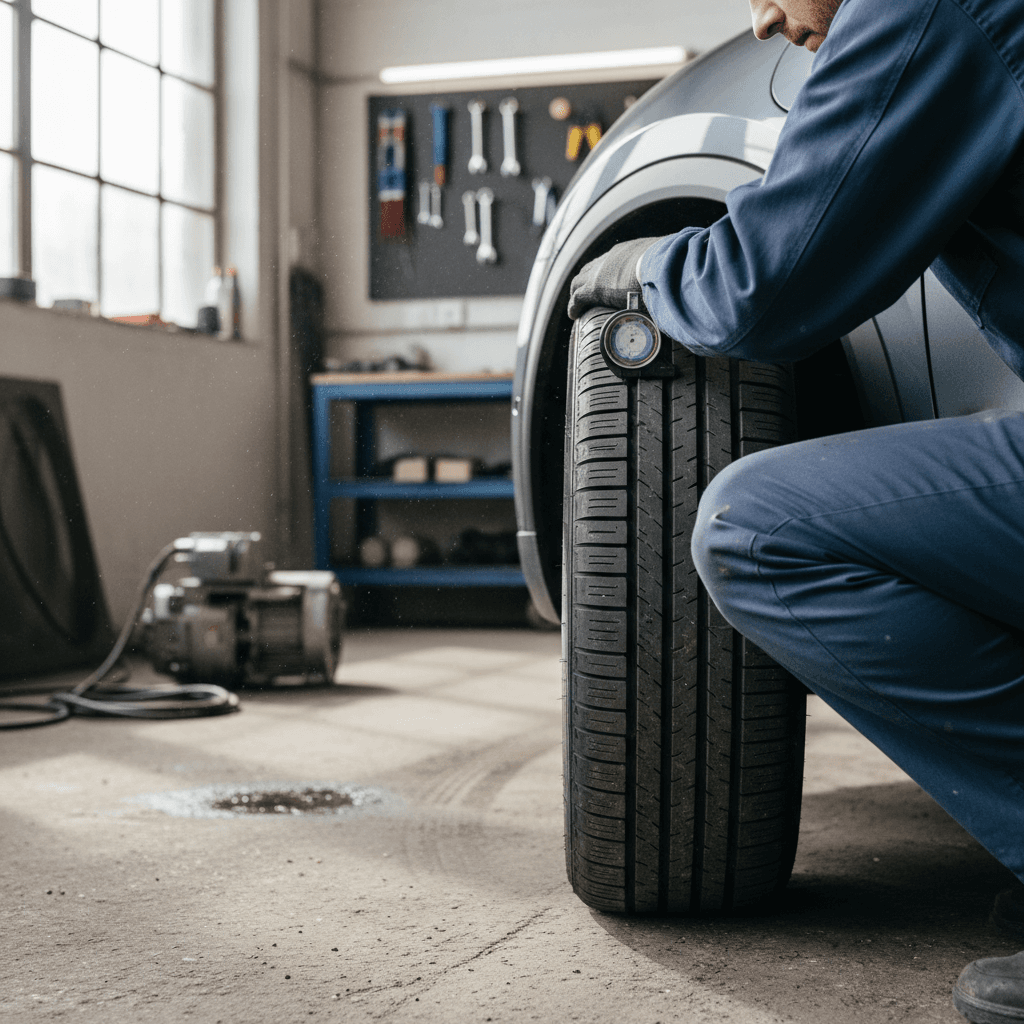
Check pressures monthly
Under‑inflated tyres are efficiency killers. A few PSI down and your rolling resistance spikes.
Use a decent gauge and set pressures to what’s on the door‑jamb sticker, adjusting for big seasonal swings in temperature.
Rotate every 5,000–7,500 miles
Hybrids often have uneven wear patterns thanks to regenerative braking and front‑heavy weight balance.
Regular rotations keep tread depth even and extend tyre life.
Watch alignment
If your steering wheel is off‑center or the car drifts on a flat road, you’re scrubbing rubber off the tyres, and wasting energy.
A simple alignment once a year or after big pothole hits is cheap insurance.
Inspect sidewalls and tread
Cracks, bulges and cords showing are non‑negotiable replacement triggers.
Hybrids tend to stay in families for years; tyres can age out before they wear out.
Signs it’s time to replace your hybrid’s tyres
Hybrids encourage a kind of benign neglect: the car is quiet, it always starts, nothing feels urgent. Tyres don’t light up a warning icon when they’re past their prime, so you have to be proactive.
- Tread depth at or below 2/32" (or 4/32" if you often drive in heavy rain). Use a tread gauge or the classic penny test.
- Visible cracking in the sidewalls or between tread blocks, especially on tyres older than 6 years.
- The car feels vague or wanders in crosswinds, even after an alignment.
- You notice longer stopping distances in the wet or easy wheelspin pulling away from a stop.
- Uneven wear across the tread, often caused by mis‑inflation or alignment problems.
Age matters on low‑miles hybrids
Hybrid tyres when you’re buying a used EV or PHEV
Tyres are one of the easiest places for a seller to cut corners. On a used hybrid or plug‑in, mismatched, bargain‑basement tyres are a red flag, if they skimped on the only safety‑critical wear item you can see, what else has been deferred?
What to look for on a test drive
- Listen for constant hum or droning that rises with speed, often a sign of cheap or cupped tyres.
- Pay attention to how the car tracks on the highway; persistent pull or vibration may signal alignment or tyre issues.
- In a safe area, brake firmly from 40–50 mph and feel for ABS chatter or instability.
Where Recharged fits in
- Every vehicle sold through Recharged gets a comprehensive inspection, including tyres and wheels.
- The Recharged Score Report includes verified battery health plus notes on remaining tyre life and any recommendations.
- If a set of tyres is near the end of its useful life, the team can talk you through options before delivery, so you’re not surprised six months later.
Hybrid car tyres: FAQ
Frequently asked questions about hybrid car tyres
The bottom line on hybrid car tyres
Tyres are the unsung heroes of hybrid ownership. Choose well, and your car glides, sips fuel, stretches its EV mode and stops with confidence. Cheap out or ignore ageing rubber, and you start sanding away everything that makes a hybrid appealing in the first place.
Focus on low rolling resistance designs from reputable brands, match the size and load rating on your door sticker, and stay on top of inflation and rotations. If you’re shopping for a used hybrid or plug‑in, pay close attention to what’s wrapped around the wheels, then lean on tools like the Recharged Score Report to understand tyre condition and battery health together. That’s how you get a hybrid that feels as smart as it looks on paper.