Moving across state lines with an electric vehicle raises a big question: is it better to ship your EV or drive it yourself? If you’re juggling a long-distance move, buying a used electric car from out of state, or relocating for work, knowing how to ship an electric car to another state safely and affordably can save you time, mileage, and stress.
Good news for EV owners
Why ship an electric car instead of driving it?
- You’re moving several states away and need to fly to your new home on a tight schedule.
- You’re buying a used EV from a seller or dealer in another state and don’t want to add 1,000+ miles on day one.
- Your EV’s range or charging network access makes a long winter or rural route inconvenient.
- You want to avoid putting extra cycles and degradation on the high-voltage battery.
- You’re coordinating multiple vehicles or young kids and don’t want a multi-day road trip.
For many owners, especially buyers of used electric vehicles, shipping is simply a way to protect the car’s condition and their own time. A cross-country drive can easily add 2,000–3,000 miles and several fast-charging cycles; a carrier adds zero odometer miles and keeps the high-voltage battery largely at rest.
How shipping an EV differs from shipping a gas car
EV shipping vs. gas car shipping at a glance
Most steps are identical, but three areas matter more for EVs: weight, batteries, and software.
Weight & capacity
Battery regulations
Software & towing modes
Some carriers now refuse EVs
Average cost to ship an electric car in 2026
Typical 2026 EV shipping ranges (U.S. domestic, running vehicle)
Those ranges apply to a running electric car on a standard route with an open trailer. Several levers can move your quote higher or lower: - **Distance & route:** Dense lanes (Los Angeles–Dallas, Atlanta–Chicago) are cheaper per mile than rural or one-way routes. - **Vehicle size & weight:** Big-battery SUVs and trucks (e.g., Rivian R1S, F‑150 Lightning) can trigger overweight or oversize fees. - **Season & demand:** Snowbird season, major storms, or diesel price spikes affect spot rates. - **Speed:** Guaranteed pickup windows or expedited delivery cost more. - **Trailer choice:** Enclosed carriers add 30–60% but reduce exposure to weather, debris, and road salt.
Illustrative EV shipping scenarios
These examples are planning ranges, not firm quotes. Always get real-time pricing from multiple carriers.
| Scenario | Distance | Transport type | Estimated range |
|---|---|---|---|
| Used Nissan Leaf from Charlotte, NC to Orlando, FL | 530 miles | Open carrier | $650–$900 |
| Tesla Model 3 from Phoenix, AZ to Seattle, WA | 1,400 miles | Open carrier | $1,150–$1,600 |
| Rivian R1T from Boston, MA to Denver, CO | 2,000 miles | Enclosed carrier | $1,900–$2,600 |
| Lucid Air from Los Angeles, CA to Austin, TX | 1,350 miles | Enclosed carrier | $1,700–$2,300 |
Actual quotes vary with diesel prices, driver availability, city access, and your exact dates.
Get multiple quotes, not just one
Step-by-step: how to ship an EV to another state
9 key steps to ship an electric car to another state
1. Decide whether shipping beats driving
Compare the cost of shipping with the cost of a multi-day road trip: hotels, food, charging, time off work, and extra battery cycles. If your move is time-sensitive or cross-country, shipping often wins.
2. Gather basic vehicle details
Have your VIN, exact trim, running condition, ground clearance, modifications (wide tires, roof boxes, lift kits), and whether you have both physical keys/fobs ready before you request quotes.
3. Request quotes from EV-ready carriers
Look for auto transporters that mention electric vehicles explicitly. Ask about their <strong>experience with your brand</strong> (Tesla, Rivian, Hyundai, etc.), battery procedures, and whether they offer open and enclosed options.
4. Verify DOT and insurance info
Check each carrier’s U.S. DOT and MC numbers, safety record, and cargo coverage. Don’t rely only on marketplace broker ratings; confirm documentation before you sign a shipping agreement.
5. Choose open vs. enclosed
Open carriers are the default and the best value; enclosed is smart for high-value EVs, harsh winter routes, or show-quality cars. We’ll break down the tradeoffs in the next section.
6. Book your shipment and confirm windows
Interstate EV shipping typically uses pickup and delivery windows rather than exact times. Make sure you know the earliest/latest days they might arrive and whether someone else can release or receive the car.
7. Prep your EV (photos, charge, settings)
Clean the car, remove personal items, photograph everything, set your battery to the right state of charge, and enable any transport or tow modes the brand recommends.
8. Complete the bill of lading at pickup
Walk around the vehicle with the driver, note any existing damage on the bill of lading, and keep a copy (or clear photos) for your records. This document is critical if you have to file a claim later.
9. Inspect on delivery before signing
At drop-off, compare the car against your original photos and the pickup bill of lading. Flag any new damage immediately with photos and notes on the paperwork before you sign and the driver leaves.
Choosing the right type of carrier for your EV
Open carrier (most common)
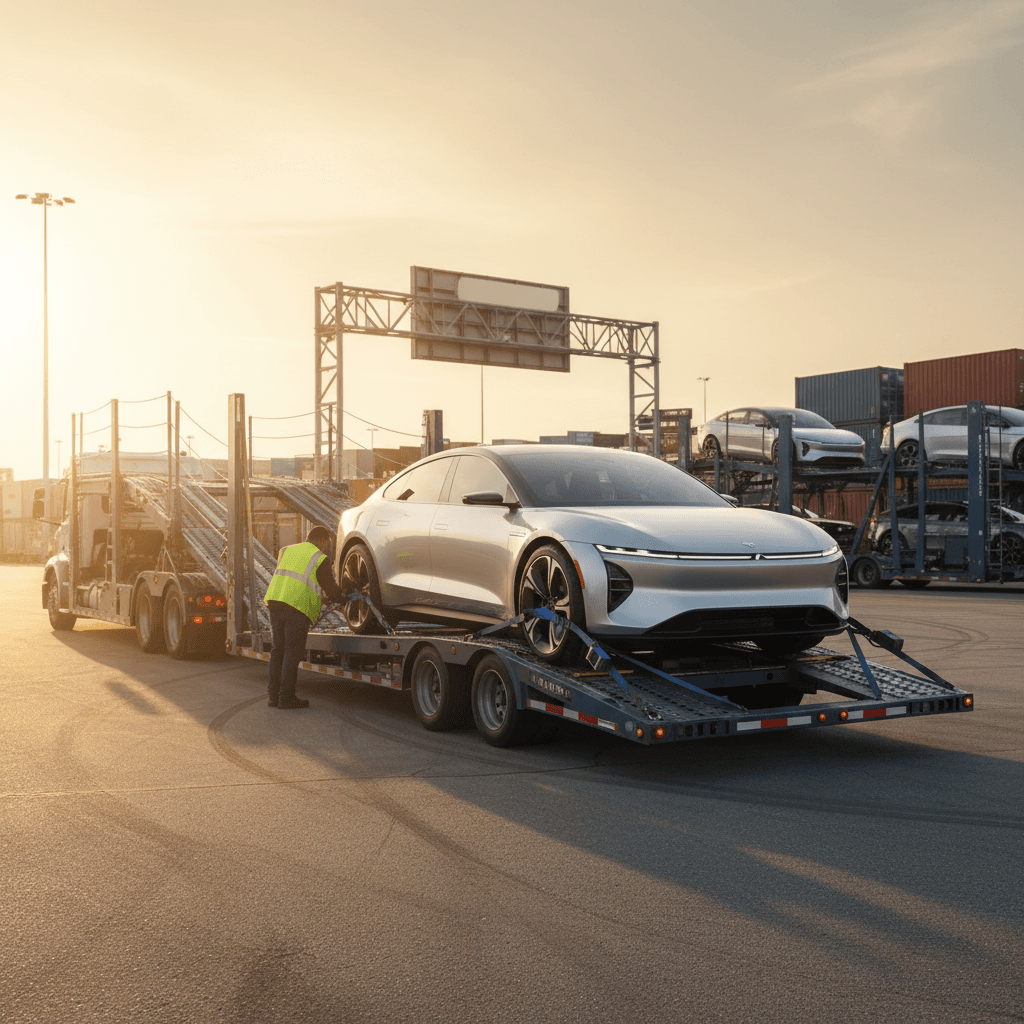
Open multi-car trailers are what you see delivering cars to dealerships. For most daily-driver EVs, they’re the default choice.
- Pros: Lowest cost per mile, most available routes and dates, fine for typical used EVs.
- Cons: Exposed to weather, road grime, and potential rock chips; not ideal in heavy winter salt.
- Best for: Mainstream models like Chevy Bolt EUV, Hyundai Ioniq 5, Tesla Model 3 with normal cosmetic expectations.
Enclosed carrier (premium option)
Enclosed trailers surround your EV on all sides, protecting from weather and debris. Ramps are typically shallower, helpful for low-slung performance EVs.
- Pros: Maximum cosmetic protection, reduced theft risk, better for low-clearance or luxury EVs.
- Cons: 30–60% more expensive, fewer departure slots, may have longer lead times.
- Best for: High-end Teslas, Lucid Air, Porsche Taycan, or any EV with custom paint or bodywork.
When in doubt, upgrade for peace of mind
Preparing your electric car for shipping
Practical checklist to prep an EV for interstate shipping
Document condition with clear photos
Take high-resolution photos of all four sides, close-ups of wheels, bumpers, mirrors, and glass, plus interior shots. Time-stamp them and store them in the cloud in case your phone is lost.
Charge to a moderate level
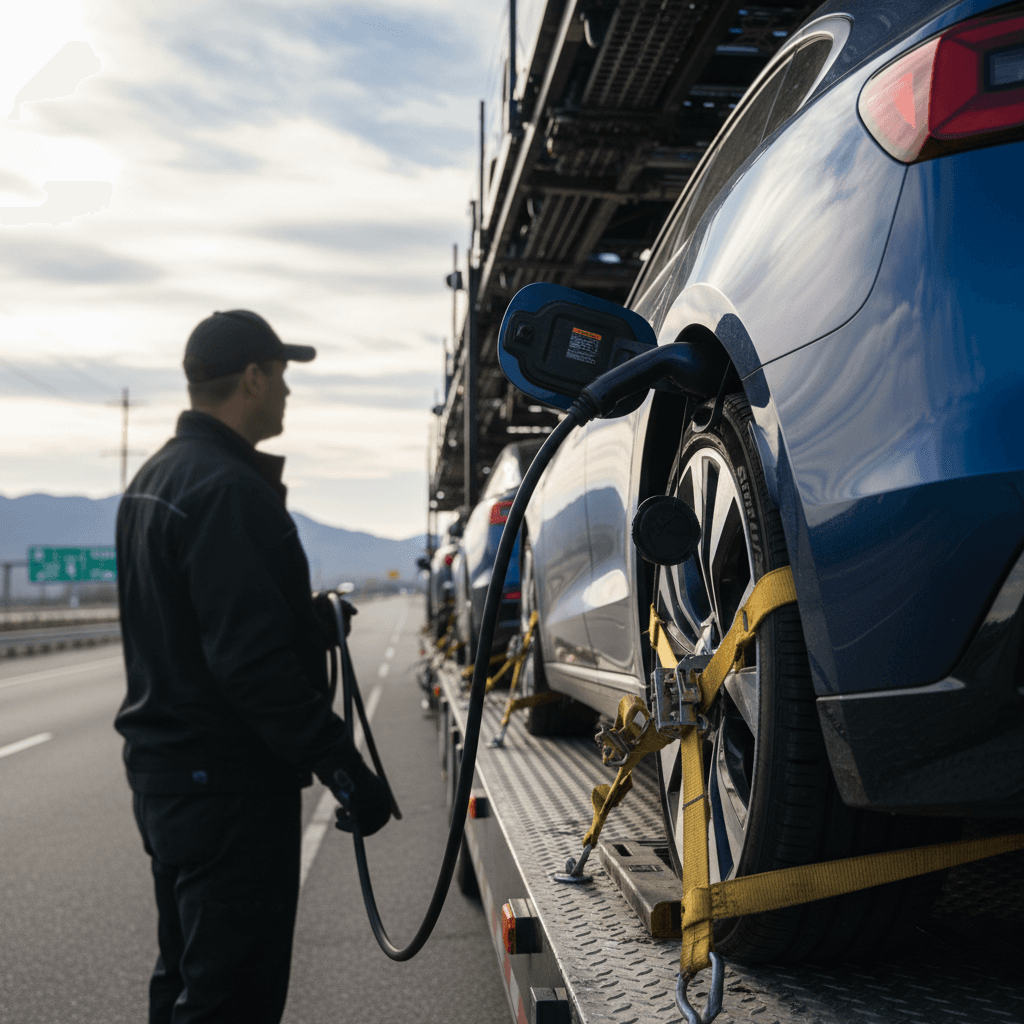
Aim for roughly <strong>30–60% state of charge</strong>, unless your carrier specifies otherwise. This gives enough juice for loading and unloading without leaving the pack full during days of storage.
Turn off scheduled charging and accessories
Disable scheduled charging, Sentry Mode or similar camera features, cabin overheat protection, and any always-on accessories that could drain the 12V or traction battery during transit.
Set transport/tow mode if your EV has one
Many EVs include a transport or tow mode in their settings. Enable it at pickup so the parking brake and drive system behave as the carrier expects when winched or rolled.
Secure loose items and charging cables
Remove personal belongings and any non-essential gear. If you ship a portable EVSE or charging adapter, secure it in the trunk or frunk and tell the driver where it is.
Check for leaks, alerts, and recalls
Address any fluid leaks, warning lights, or open safety recalls before shipping. Some carriers will refuse a vehicle with active high-voltage or brake system alerts.
Fold mirrors and retract handles
Fold side mirrors and retract auto-present door handles if the car allows it. On some EVs, you may want to temporarily disable auto-fold to avoid repeated cycling as the car wakes up.
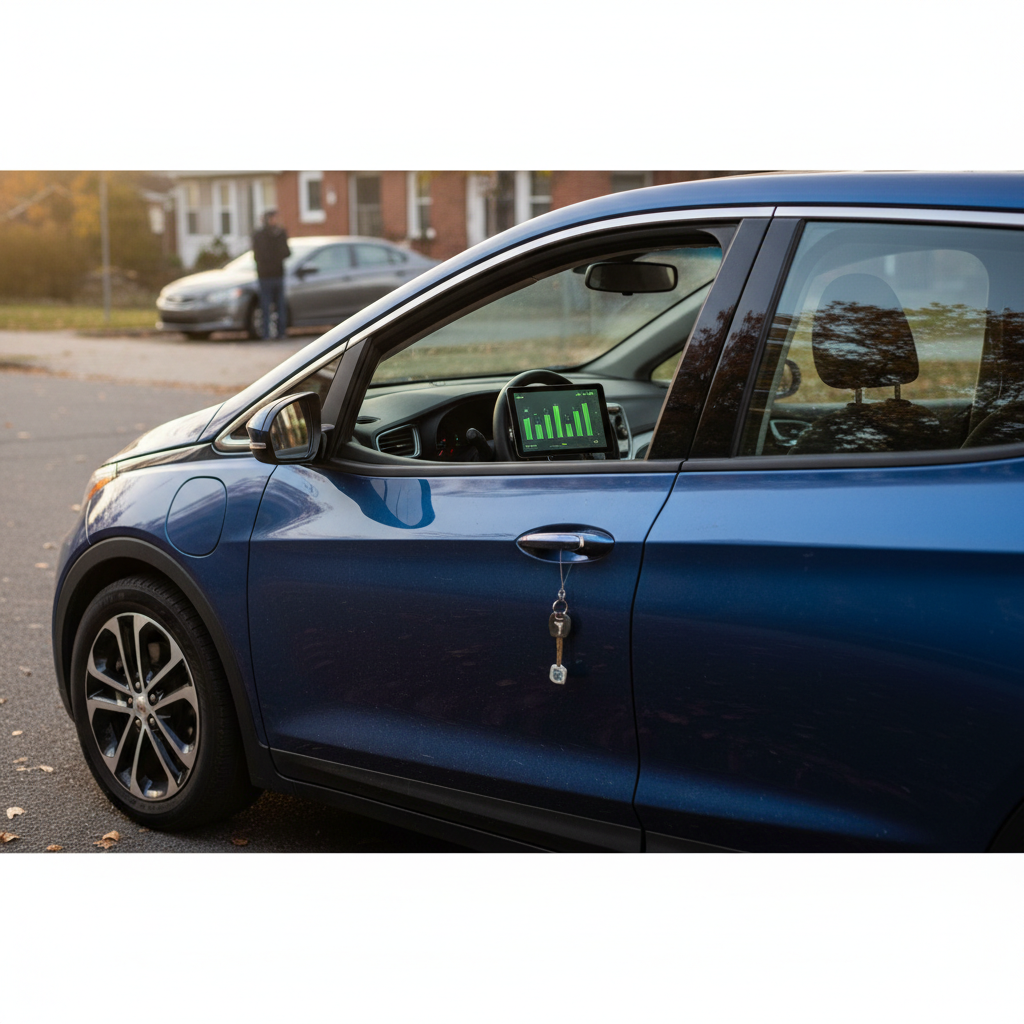
Provide two keys or fobs when possible
Ideally leave one fob with the driver and hide a spare in a labeled envelope inside the car. This prevents lockouts if the fob battery dies midway through the trip.
Don’t ship a loose EV battery pack
Battery state of charge & shipping safety
Lithium-ion batteries are extraordinarily energy-dense, which is why auto and freight regulators treat them differently from gasoline tanks or 12‑volt lead-acid batteries. When the battery is installed in the vehicle, U.S. rules allow it to move under specific vehicle provisions, but carriers increasingly adopt their own extra safeguards.
- Many EV-focused carriers recommend a 30–50% state of charge for long-distance shipping.
- Higher states of charge increase thermal stress if the car sits in hot sun on a parked trailer for days.
- Ultra-low charge (below ~15–20%) can complicate loading, especially if the car needs to climb ramps or be repositioned at a terminal.
- If your EV allows it, enabling battery preservation or storage mode is a smart extra step before pickup.
Ask your carrier for a target state of charge
Insurance, liability, and what happens if something goes wrong
Most reputable carriers include some level of cargo insurance, but the limits and exclusions matter, especially for higher-value electric cars. Before you sign a contract, read the fine print and line it up against your EV’s current market value.
Key insurance questions to ask your EV carrier
Don’t wait until there’s a scratch, or worse, to find out you’re underinsured.
Coverage limits & deductibles
Damage documentation process
Exclusions for batteries & electronics
Your own auto policy
Never skip the walk-around
Shipping an EV you just bought or are selling
Interstate shipping is especially common when you’re buying or selling a used EV long-distance. The stakes are higher because the buyer may not see the vehicle in person until it rolls off the truck.
If you’re the buyer
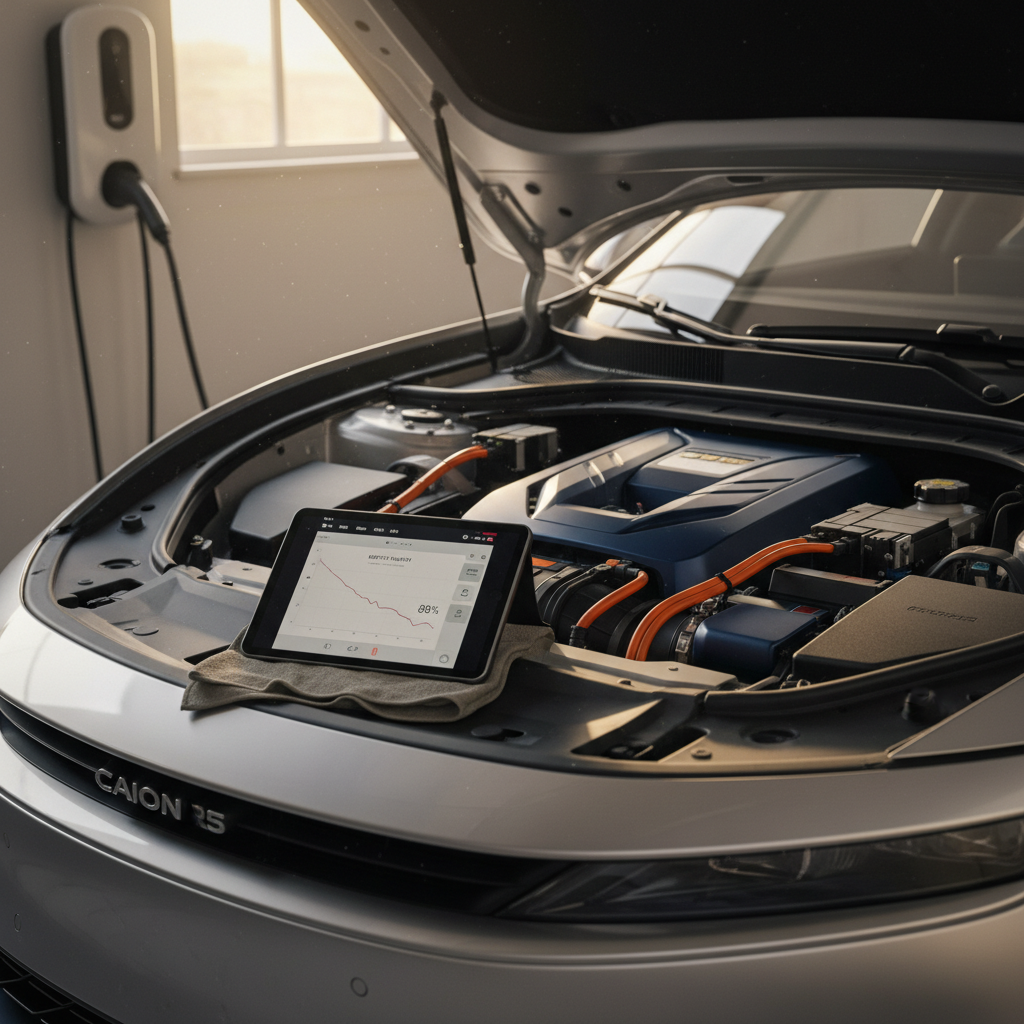
- Get a thorough inspection and battery health report before you commit. For example, every vehicle at Recharged comes with a Recharged Score that verifies battery health, mileage, and market pricing.
- Build shipping into your total budget; a cross-country enclosed shipment can add a couple thousand dollars.
- Confirm with the seller who will hand keys to the driver, complete the pickup inspection, and provide temporary tags or plates if required in your state.
- Plan where the carrier can legally drop the car, narrow city streets or HOA rules can complicate delivery.
If you’re the seller
- Clean the car thoroughly and photograph every panel. Transparency reduces disputes and protects you if damage happens in transit.
- Agree in writing who chooses and pays the carrier and whose name is on the shipping contract.
- Remove your personal accounts from the infotainment system and mobile app before pickup.
- Provide written, step-by-step instructions for the driver if your EV has unusual startup, air suspension, or parking brake behavior.
How Recharged fits into interstate EV shipping
FAQ: how to ship an electric car to another state
Common questions about interstate EV shipping
Bottom line: should you ship your EV or drive it?
If you’re only moving one or two states away and you like road trips, driving your EV can be a fun shake-down run, especially if fast chargers are plentiful along your route. But for cross-country moves, complex family logistics, or freshly purchased used EVs, shipping an electric car to another state often makes more sense. You’ll save days of travel, avoid piling thousands of miles and fast-charging cycles onto the battery, and offload the risk of road debris and fatigue to a professional carrier.
The key is to treat EV shipping as a process, not just a price: choose an EV-capable carrier, understand how your battery and software behave in transport, document the car’s condition carefully, and keep insurance details in writing. If you’re still shopping for the right used EV before you worry about getting it home, exploring vehicles with a Recharged Score battery-health report can give you confidence that the car you’re shipping is worth the expense when it rolls off the truck in your new driveway.