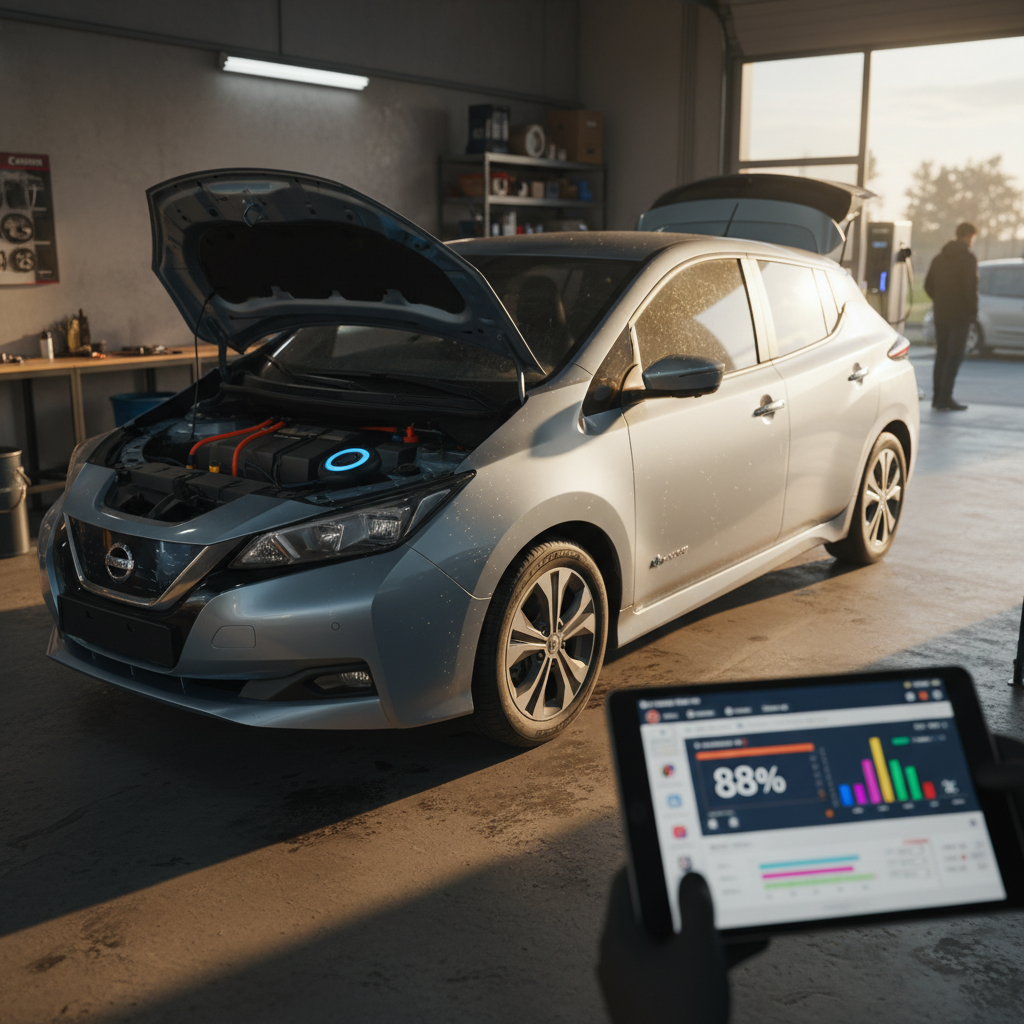
If you like the idea of a sleek German sport sedan that runs on electrons, you’ve probably asked yourself, “Should I buy a used BMW i4?” The i4 combines classic BMW driving feel with modern EV tech, yet as a used car, questions about battery life, range, charging, and depreciation become just as important as horsepower and 0–60 times. This guide walks you through the upsides, downsides, and the key checks you should make before you put a used BMW i4 in your driveway.
Short Answer
Is a Used BMW i4 Right for You?
Great fit if you…
- Want a premium EV sedan that feels familiar coming from a 3 Series or 4 Series Gran Coupe.
- Value a quiet, comfortable commute with enough range for daily driving and weekend trips.
- Plan to install or already have Level 2 home charging.
- Care about interior quality and driving feel as much as tech features.
Might not be ideal if you…
- Rely heavily on CCS DC fast charging in areas where chargers are sparse or unreliable.
- Want rock-bottom ownership costs; BMW parts and labor can be pricey out of warranty.
- Need a big family hauler, the i4 is a compact/midsize hatchback, not an SUV.
- Plan lots of track days or hard canyon driving; that puts extra stress on brakes, tires, and battery.
Big Picture Tip
BMW i4 at a Glance: Key Specs That Matter Used
Used BMW i4: Core Numbers
Common Used BMW i4 Trims and Highlights
Most used i4s on the U.S. market today are 2022–2024 models. Here’s how the main trims differ in character when you’re shopping used.
| Trim | Drive | EPA Range (mi) | Power | Personality |
|---|---|---|---|---|
| eDrive35 | RWD | 252–276 | ~282 hp | Entry i4 with slightly smaller battery; still quick and efficient. |
| eDrive40 | RWD | 283–301 | 335 hp | Best blend of price, range, and performance for most buyers. |
| xDrive40 | AWD | 279–307 | 396 hp | All-wheel drive confidence with strong acceleration. |
| M50 | AWD | 227–269 | 536 hp (boost) | Serious performance; sacrifices some range and may have been driven harder. |
Ranges shown are typical EPA estimates for 2024 models on standard wheels; actual range varies with wheel size, options, and driving style.
Range and Charging: What to Expect From a Used i4
Range is the make-or-break issue for many used EV shoppers. The good news is that most BMW i4s deliver real-world range close to their original EPA ratings when the battery is in good health and you’re not constantly driving at 85+ mph. For 2023–2024 models, that’s typically in the 250–300 mile band for eDrive40 and xDrive40 trims, and more like 220–260 miles for the M50 on larger wheels.
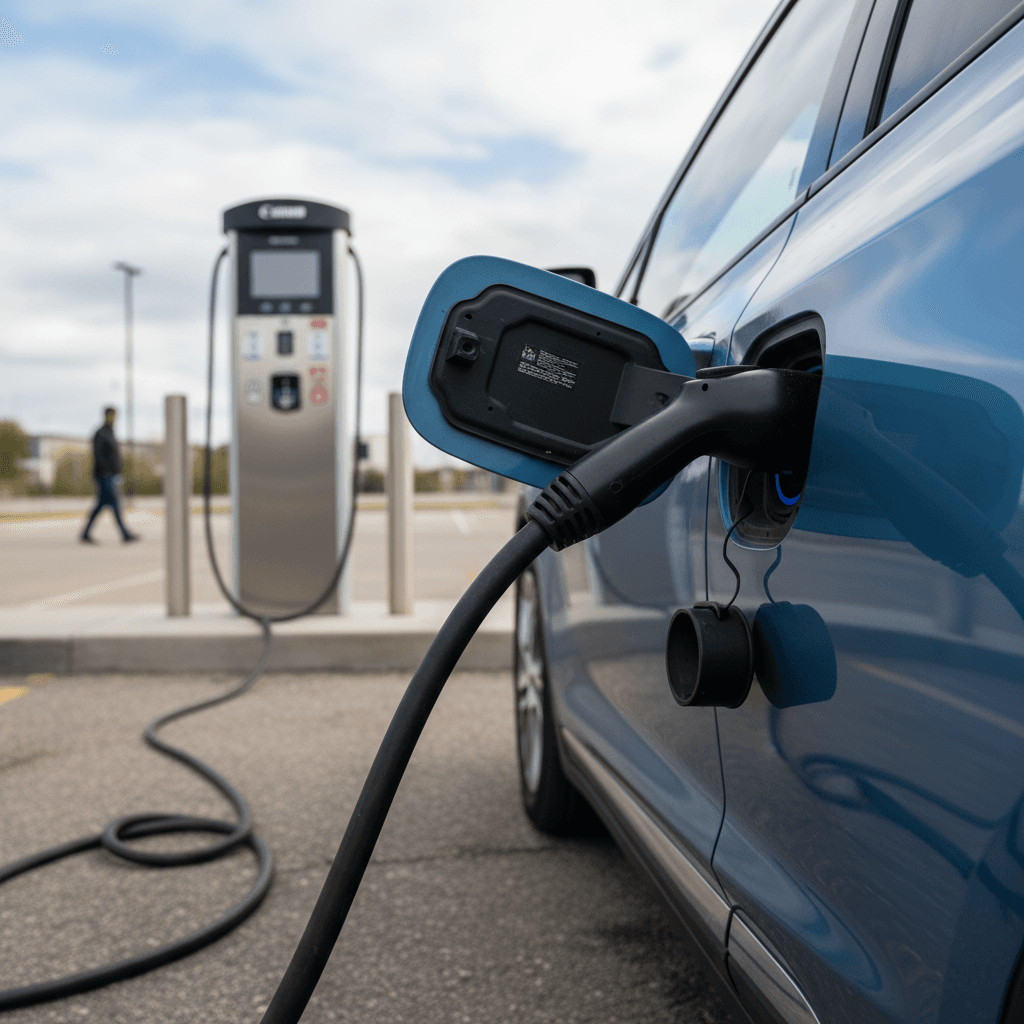
- Home Level 2 charging: With the i4’s 11 kW onboard charger, a 0–100% charge at 240 V typically takes around 8–10 hours, perfect for overnight charging.
- Public Level 2: Expect roughly 25–30 miles of range added per hour on a typical 7–11 kW public charger.
- DC fast charging: On a strong 180–200 kW CCS fast charger, a healthy i4 can usually go from about 10–80% in roughly 30–35 minutes, adding 180–200 miles of range in that window.
- Connector: U.S.-market i4s use the CCS1 fast-charging standard, not Tesla’s NACS plug, though future adapters and network changes may broaden your options.
Used EV Reality Check
If you mostly charge at home and use public DC fast chargers a few times a month, a used i4’s charging performance will likely feel more than adequate. If you road-trip weekly and depend on fast charging for most of your energy, you’ll want to pay closer attention to battery health and charging history.
Battery Life, Degradation, and Warranty on a Used i4
BMW engineered the i4’s battery pack to last the life of the vehicle, and early data suggests modest degradation in the first 3–5 years when the car is charged reasonably. Most U.S. cars came with an 8‑year / roughly 80,000‑mile high-voltage battery warranty from the original in‑service date, which can still be active on a used 2022 or 2023 i4.
What Affects Battery Health on a Used BMW i4?
You can’t see degradation from the driver’s seat, so you need clues.
Heat Exposure
Lots of time parked in extreme heat can accelerate battery wear. Sunbelt cars are fine, but shaded parking and garages help.
Fast-Charge Habits
Occasional DC fast charging is fine; using it as your primary charging method can add extra stress over many years.
Driving Style
Frequent full-throttle launches and high sustained speeds use more energy and can reveal weak cells sooner.
Why an Independent Battery Check Matters
When you shop outside a specialist, you may have to rely on approximate range readouts, owner anecdotes, or a BMW dealer scan. With Recharged, the battery’s condition is quantified in the Recharged Score Report, and you can compare one i4 against another on more than just options and color.
Trim Levels: Which Used BMW i4 Should You Buy?
On the used market, you’re most likely to encounter 2022–2024 cars in four primary configurations: eDrive35, eDrive40, xDrive40, and M50. They share a lot of hardware and interior design, but feel very different to own and drive.
Best all-around: eDrive40
If you want the classic BMW rear-drive feel with 300 miles of EPA-rated range and strong acceleration, the eDrive40 is the sweet spot. It’s quick enough for any normal driving, efficient, and often cheaper than AWD or M models on the used market.
Budget choice: eDrive35
The eDrive35 trades a slightly smaller battery and a touch less power for a lower price. If you mostly commute and rarely take long trips, this can be a smart value play.
All-weather: xDrive40
Adding a front motor for all-wheel drive improves traction and delivers very strong straight-line performance without a huge range penalty. Ideal if you live in a snowy climate.
Performance pick: M50
The M50 is the halo car, with serious acceleration and more aggressive suspension. It’s a blast, but expect shorter range, more tire wear, and a higher chance the first owner drove it hard. Inspect these cars especially carefully.
Trim Selection Tip
Costs, Depreciation, and Value for Money
One reason you’re considering a used BMW i4 instead of ordering new is cost. Early EVs like the i4 have seen steep first-owner depreciation, which can work heavily in your favor as a second owner. For example, market data shows that a 2023 BMW i4 has lost roughly 48% of its value over about three years, dropping from the low‑$50,000s new to the upper‑$20,000s on the resale market.
- Depreciation: The i4 has depreciated faster than some mainstream EVs, but that means strong value for used buyers today, especially if you’re willing to buy a former lease return.
- Insurance: Premium-brand EVs typically cost more to insure than a mainstream compact, but similar to other luxury sedans.
- Maintenance: No oil changes, but you still have tires, brakes, cabin filters, and occasional software or hardware fixes. Out-of-warranty BMW service rates are higher than average, so extended coverage can be worth considering.
- Charging costs: If you can charge at home overnight on a time-of-use rate plan, your cost per mile will usually undercut a comparable gas 3 Series by a wide margin.
How Recharged Helps on Price
Common Complaints and How to Avoid a Bad Car
No used car is perfect, and the BMW i4 has a few recurring themes in owner feedback that you’ll want to keep in mind. None are automatic deal-breakers, but they’re exactly the things you should check on a test drive or in a third‑party inspection.
Typical Used BMW i4 Concerns
What shoppers report, and what to do about it.
Firm Ride on M50
The M50’s sport suspension and larger wheels can feel harsh on broken pavement. If comfort matters, test on rough roads or favor an eDrive40/xDrive40 with smaller wheels.
CCS Charger Experience
Because the i4 uses CCS fast charging, your experience depends on the local networks. Before you buy, try a DC fast charge near you to see speeds and reliability.
Tight Back Seat
The i4 is a sleek hatchback, not an SUV. Adults fit in back, but space is tighter than in many crossovers. Bring the family on your test drive if rear room matters.
Red Flags on a Used i4
Used BMW i4 vs. Tesla Model 3 and Other Used EVs
You’re likely cross-shopping the i4 against a used Tesla Model 3, Polestar 2, Hyundai IONIQ 5, or Kia EV6. The i4 isn’t the spec-sheet winner in every category, but it has a clear personality: BMW driving dynamics, a premium interior, and a hatchback body that’s more practical than it looks.
Used BMW i4 vs. Popular Alternatives
How a typical rear-drive i4 compares to two of its most common rivals on the used market.
| Model | Feel | Range (typical) | Charging | Interior & Tech |
|---|---|---|---|---|
| BMW i4 eDrive40 | Sporty, refined, quiet | ~280–300 mi | Strong DC fast charging on CCS; great for home Level 2 | High-quality cabin, more traditional controls than Tesla |
| Tesla Model 3 RWD | Very efficient, lighter, minimalist | ~260–280 mi | Best access to Tesla Supercharger network | Minimalist interior, excellent software, fewer physical buttons |
| Hyundai IONIQ 5 | Crossover-like, roomy | ~260–300 mi | Very fast 800 V charging on compatible DC stations | Spacious, airy cabin, great value if you prefer SUVs |
Comparisons are approximate and depend on specific model year, battery size, wheels, and options.
Who the i4 Suits Best
Inspection Checklist Before You Buy a Used BMW i4
Treat a used BMW i4 like you would any other premium German car: do your homework, insist on documentation, and be meticulous in your inspection. Here’s a practical checklist you can take to a test drive or send to a mobile inspector.
Used BMW i4 Inspection Checklist
1. Verify Battery Warranty Status
Ask for the in‑service date and mileage, then confirm how much of the 8‑year / ~80,000‑mile high-voltage battery warranty remains. A car with several years of coverage left is safer to own.
2. Review Charging History and Behavior
If possible, see charging logs or at least ask how the car was charged, mostly home Level 2, or frequent DC fast charging? Then perform a DC fast charge test to confirm you see reasonable speeds.
3. Check Range at 100%
On a fully charged battery, note the predicted range on the dash in its most efficient mode. Compare it to the original EPA rating; large gaps can hint at battery degradation or very aggressive driving history.
4. Scan for Fault Codes
Have a BMW dealer or qualified EV shop scan the car for stored and pending fault codes, especially for high-voltage and charging systems. Hidden issues can turn into expensive surprises later.
5. Inspect Tires, Brakes, and Suspension
Uneven tire wear, worn bushings, or noisy suspension can indicate hard driving or alignment issues. On M50s, check for excessive inner tire wear from aggressive camber or wheel fitments.
6. Examine Body and Underbody
Look for evidence of collision repair, especially near the battery pack and high-voltage cables. Rust is rare on newer i4s, but you still want a clean, undamaged underbody.
7. Test All Tech and Driver Aids
Cycle through parking sensors, cameras, adaptive cruise, lane-keep assists, and infotainment features. Software gremlins can be annoying, and some fixes require dealer updates.
Documentation is Your Friend
How Recharged Helps You Buy a Used BMW i4 Confidently
Buying a used EV is different from buying a used gas car. You’re not just checking oil leaks, you’re weighing battery health, charging behavior, and software support. That’s exactly the gap Recharged is built to close.
What You Get With a Used BMW i4 from Recharged
More than a listing, an expert-guided EV purchase.
Recharged Score Report
Every BMW i4 on Recharged comes with a detailed Recharged Score: independent battery health diagnostics, charging performance, and a fair market price analysis so you can compare cars objectively.
Flexible Ways to Buy & Sell
Whether you’re trading in a gas car, getting an instant offer, or using consignment, Recharged makes it easy to move into an i4. Financing options are tailored to used EVs, with expert help along the way.
Nationwide, EV-Savvy Support
From our digital buying experience to our Experience Center in Richmond, VA and nationwide delivery, you get EV specialists who live and breathe this stuff, not just another generalist dealer.
Used BMW i4: Frequently Asked Questions
Common Questions About Buying a Used BMW i4
Bottom Line: Should You Buy a Used BMW i4?
If you’re drawn to the idea of a premium, fun-to-drive electric sedan but don’t want to absorb new-car depreciation, a used BMW i4 is absolutely worth considering. It delivers strong range, quick charging, and a cabin that feels more like a traditional luxury car than a science project. The trade-offs are familiar to anyone who has owned a German sport sedan: potentially higher repair costs out of warranty and the need to be choosy about previous owners.
The smartest move is to buy a used i4 with verified battery health, transparent history, and pricing grounded in real market data. That’s exactly what Recharged is set up to provide. Whether you end up in an eDrive35, an all-rounder eDrive40, an all-weather xDrive40, or a thrilling M50, the right used BMW i4 can deliver years of electric driving enjoyment, provided you go in with clear eyes and the right information.