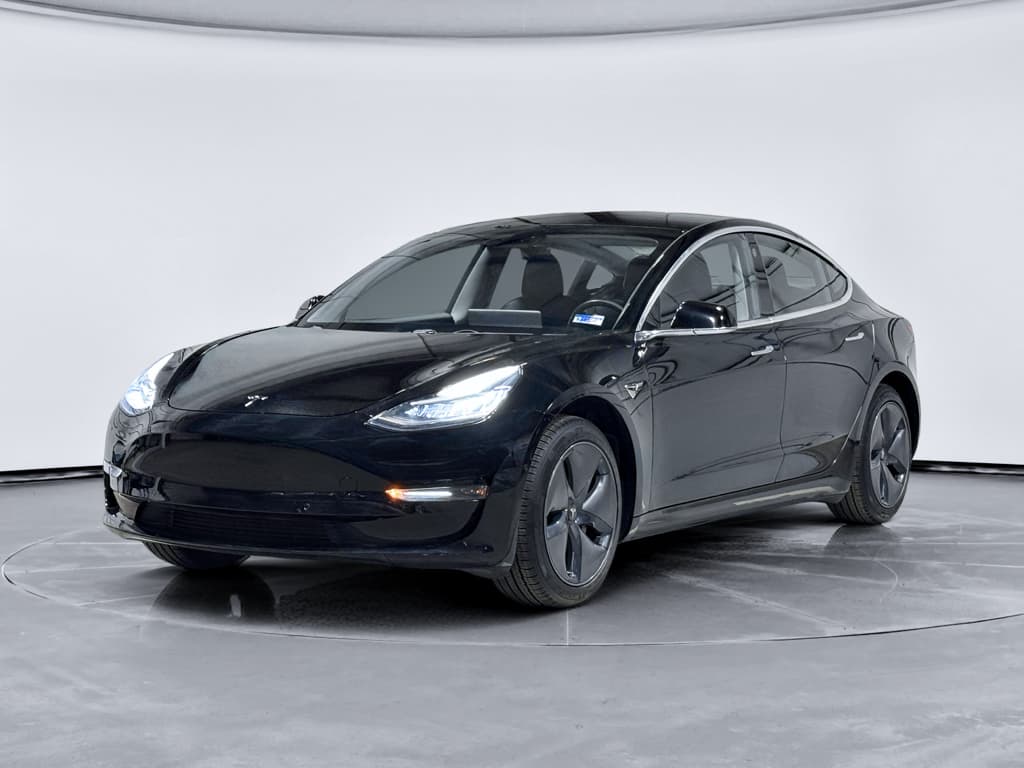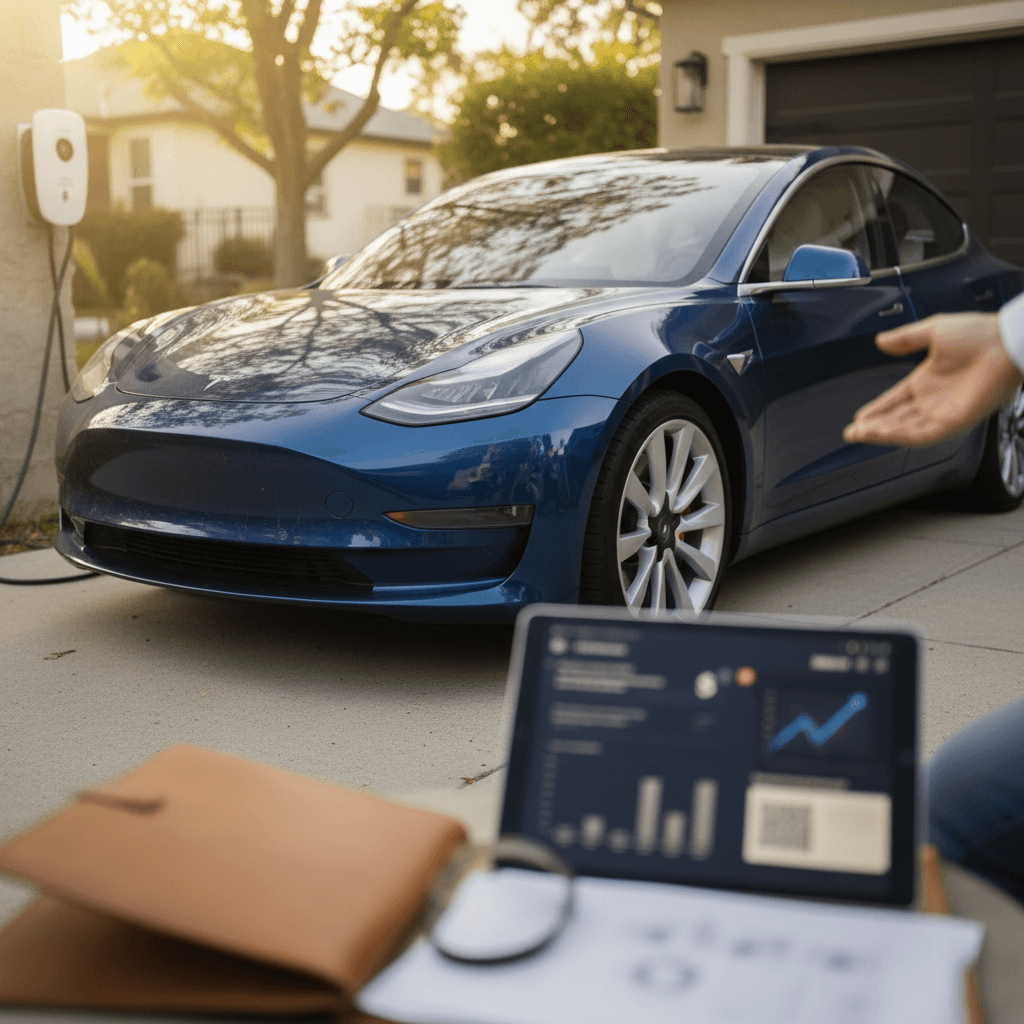
You don’t sell a Tesla Model 3 the way you sell a tired old gas sedan. You’re selling rolling software, an over‑the‑air lifestyle, and, fair or not, a referendum on the whole EV experiment. If you want to get top dollar, you need a plan. This guide breaks down exactly how to sell a Tesla Model 3 in 2026: when to list it, where to sell, how to price it, and why battery health proof can make or break your deal.
2026 used Tesla reality check
Why selling a Tesla Model 3 is different
1. The battery is the headline
For gas cars, buyers obsess over oil changes and timing belts. For a Model 3, they want to know: What’s the real battery health? Range anxiety and battery‑replacement horror stories loom large in buyers’ minds, even though Tesla packs typically degrade slowly.
If you can show credible battery data, not just a guess from the dash, you immediately separate your car from the pack.
2. Software and options live in the VIN
Autopilot, Full Self‑Driving (Supervised), premium connectivity, heated rear seats, even your MCU hardware level, all of that is software‑defined. A savvy buyer will ask exactly what’s included and what stays with the car.
Documenting software and option codes is part of selling a Tesla, not an afterthought.
- Buyers will compare your car against both Tesla’s own used inventory and big online retailers in two tabs.
- Your OTA software history and Supercharging behavior matter more than your oil‑change receipts (because you don’t have any).
- Range at 80–90% charge is more persuasive than a photo of your odometer.
Don’t ignore negative headlines
Decide when to sell your Model 3
Timing is half the game. You’re balancing depreciation, battery age, demand for used EVs, and whatever Tesla decides to do with new‑car pricing this quarter.
Model 3 timing benchmarks to keep in mind
Watch Tesla’s price moves
Ask yourself three questions: 1. **Is your Model 3 still under warranty?** Cars with remaining basic or battery/drive‑unit warranty are easier to sell and command stronger prices. 2. **Are you planning a big life change?** Moving somewhere with weak charging, adding a second kid, or starting a long commute may all be reasons to sell sooner rather than later. 3. **Are tax incentives shifting in your area?** Some state and local incentives, and even used‑EV credits, come and go. If buyers are racing to capture a credit on a used EV, that can temporarily boost demand for your car.
Choose how to sell your Tesla Model 3
Three main ways to sell a Tesla Model 3
Your choice is really a trade between price and hassle.
1. Trade‑in to a dealer or Tesla
Pros: Fast, low‑friction, no strangers test‑driving your car. You can roll equity straight into your next vehicle, and in many states a trade‑in lowers sales tax on your new car.
Cons: Usually the lowest payout. Dealers price in auction risk and reconditioning. Tesla’s trade‑in numbers are famously conservative.
2. Sell to online car buyers
Think CarMax, Carvana, EV‑focused dealers, or marketplace partners like Recharged.
Pros: Quick online offers, pick‑up from your driveway, transparent process.
Cons: Offers can be stronger than traditional trade‑ins but still below a well‑executed private sale.
3. Private‑party sale
Pros: Often the highest sale price, especially for clean, optioned cars with great battery health.
Cons: You’re doing the photos, the listing, the screening, test drives, payment, and paperwork yourself. More time, more risk if you’re careless with payment methods.
Where Recharged fits in
Figure out what your Model 3 is worth
Pricing a Model 3 is more nuanced than punching a license plate into a generic valuation tool. Those tools are built around oil changes and trim levels; your car is a rolling software build with a gigantic lithium‑ion battery underneath.
Key value drivers for a used Tesla Model 3
Use this matrix to sanity‑check your expectations before you list.
| Factor | Hurts value | Neutral | Helps value |
|---|---|---|---|
| Battery health | Noticeable range loss, no proof | Normal degradation, basic screenshots | Verified high SOH with report |
| Mileage | Well above peers | Typical for age | Below‑average, highway‑heavy miles |
| Accident history | Structural damage, airbag deployment | Minor cosmetic repairs, disclosed | Clean history, documented repairs |
| Software & options | No driver assistance, subscriptions lapsed | Basic Autopilot, standard options | Enhanced Autopilot or FSD (owned), premium packages |
| Cosmetic condition | Curb rash, dents, worn interior | Typical light wear | Detailed, paint corrected, minimal wear |
| Charging history | Frequent DC fast‑only, unknown habits | Mixed home/DC use | Mostly home Level 2, gentle charging habits |
Each row can nudge your price up or down compared to an average same‑year, same‑mileage Model 3.
Step‑by‑step: sanity‑check your asking price
1. Collect real offers first
Get no‑obligation bids from Tesla, a couple of online buyers, and maybe a local dealer. This gives you a realistic floor value before you fantasize about private‑sale numbers.
2. Cross‑check with used listings
Look at asking prices for same‑year, similar‑mileage Model 3s in your region. Focus on completed sales or “just sold” data when you can find it, not just optimistic listings.
3. Adjust for trim and options
Long Range and Performance trims, winter package, white interior, tow hitch, these all move the needle. Don’t price your base RWD like it has the options of a Performance car.
4. Price in your battery story
If you can prove strong battery health with data, you can justify pricing near the top of the range. If you can’t, expect buyers to discount for uncertainty.
5. Leave room to negotiate
For private sales, start a few percent above the number you’d actually accept. For online instant offers, focus more on the net check amount than the sticker drama.
Private sale target vs. instant‑offer reality
Prepare your Tesla Model 3 for sale

A Model 3 is brutally honest. The big glass roof and slab‑sided panels show every swirl mark and door ding. Spend a little time (and a little money) on prep and you tilt the playing field in your favor.
- Deep clean inside and out. Vacuum, wipe every glossy surface, clean the glass, condition the seats. Tesla interiors photograph either like a tech showroom or a rideshare horror story. Choose wisely.
- Fix cheap, obvious defects. Headlight bulbs, wiper blades, missing aero caps, cracked phone charging pad, small repairs that remove easy excuses for buyers to haggle.
- Address curb rash if it’s bad. A mobile wheel‑repair service can make chewed‑up rims look nearly new for less than you’ll lose in negotiating.
- Resolve warning lights. No one wants to buy a car that greets them with orange and red icons. If there’s a persistent error, get it diagnosed and be ready to show the paperwork.
- Gather both keys and accessories. Mobile key is nice, but serious buyers want two key cards, charging cable, adapters, cargo covers, and floor mats. Missing basics signal neglect.
Don’t reset or hide useful data
Document battery health, software and features
For a used EV buyer, the fear is simple: “Am I buying a $30,000 car that comes with a $15,000 battery bill?” Your job is to prove that they are not.
What to document before you list
Give buyers more data than they knew to ask for.
Battery health proof
- Recent screenshots of rated range at 80% and 100% (if you’re comfortable charging that high once).
- Any third‑party diagnostics or health reports.
- Service history related to the high‑voltage system.
Software & options
- Autopilot and FSD status (owned vs subscription).
- Premium connectivity status.
- MCU / hardware version if you know it.
- Any paid upgrades like acceleration boost.
Ownership & charging habits
- Home vs. DC fast charging mix if you can speak to it.
- Typical charge limit (e.g., 70–80%).
- Garage‑kept or not, climate details.
How Recharged’s battery report helps
If you’re selling on your own, at least grab clear, high‑resolution photos of the Energy and Charging screens, including: - Current software version and update status. - Rated range at your usual state of charge. - Any recent service alerts or warranty records linked in your Tesla app.
Create a high‑converting Model 3 listing
A good listing doesn’t just say “2021 Model 3, low miles.” It tells a story: how the car was used, why you’re selling it, and why the buyer shouldn’t be afraid of owning an aging battery on four wheels.
Checklist: build a listing that actually sells
1. Lead with the battery story
In your first paragraph, mention battery health, typical range at your normal charge level, and your charging habits. Remove the mystery up front instead of burying it at the bottom.
2. Use honest, flattering photos
Take 15–25 photos: all four corners, straight front and rear, interior from each door, wheel close‑ups, screens, and any flaws. Shoot at dusk or on an overcast day so the glass and paint don’t blow out.
3. Explain why you’re selling
“Upgrading to a Model Y for more cargo space” or “Moving somewhere without good charging” is miles better than saying nothing. Buyers relax when the story makes sense.
4. List software and options explicitly
Spell out Autopilot/FSD status, winter package, interior color, wheels, tow hitch, and any paid unlocks. This is where casually optioned Model 3s quietly outclass bare‑bones examples.
5. Disclose accidents and repairs
If the car has been hit or repainted, say so and attach invoices. Buyers forgive an honest fender‑bender much faster than a surprise Carfax report.
6. Set clear terms
State your preferred payment methods (cashier’s check, verified bank transfer, escrow service) and whether your price is firm or negotiable. Ambiguity invites low‑effort offers.
“Selling a used EV is 50% about the car and 50% about how well you explain the car.”
Test drives, payments and paperwork
Once the listing is live, you’re suddenly in the dating business: screening strangers, setting ground rules, and hoping nobody ghosts you after the second message.
Safe, efficient test drives
- Meet in a public, well‑lit location with cameras, ideally near Level 2 chargers so you can show charging in person if they ask.
- Verify the buyer’s driver’s license and take a quick photo of it before anyone takes the wheel.
- Start with you driving. After a few miles, swap seats so they can experience the car, not just your sales pitch.
- Limit joyrides. Serious buyers don’t need three separate “second looks” to make up their mind.
Getting paid without drama
- Avoid personal checks or peer‑to‑peer apps for large transactions.
- Prefer bank cashier’s checks verified at the issuing branch, wire transfers, or reputable escrow services.
- Have a simple bill of sale template ready with VIN, mileage, price, and terms.
- If there’s a lien, coordinate with your lender so you know exactly how to release the title.
Title and tax gotchas
How Recharged can help you sell or trade your Model 3
You can sell your Tesla the hard way, DIY photos, tire‑kickers, and payment anxiety, or you can hand most of the friction to people who live and breathe used EVs.
Why many Model 3 owners use Recharged instead of going it alone
You keep the upside of a used‑EV specialist without having to become one.
Expert pricing and Recharged Score
Recharged is built specifically around used EVs. Every car gets a Recharged Score Report with verified battery health, transparent value analysis, and fair‑market pricing guidance. That makes it easier to justify your asking price to savvy buyers who’ve been doom‑scrolling EV depreciation charts.
Flexible selling options and nationwide reach
You can:
- Get an instant offer and sell your Model 3 outright.
- Use consignment to market it to EV‑interested buyers across the country.
- Trade it in toward another EV, with financing and nationwide delivery.
Recharged’s digital process, EV‑specialist support, and Experience Center in Richmond, VA mean you’re not just another VIN on a dealer lot.
Ready to find your next EV?
Browse VehiclesA simpler way to move on
FAQ: Selling a Tesla Model 3
Frequently asked questions about selling a Tesla Model 3
Selling a Tesla Model 3 in 2026 is part economics lesson, part tech support, part theater. The cars themselves are still compelling; the question is whether you present yours as a confident, well‑documented machine or a question mark on wheels. If you time the market, price against real offers, prove your battery health, and tell a clear story, you can walk away with a strong check, and maybe the keys to your next EV. And if you’d rather skip the circus, Recharged is built to help you sell or trade your Model 3 with expert eyes on every step.