If you’re wondering how to sell a Genesis GV60 in a private sale, you’re already ahead of the game. The GV60 is a niche but desirable luxury EV, and the way you price it, prove its battery health, and present it online can mean the difference between a lowball offer and a smooth, top‑of‑market sale.
EV market reality check
Why sell your Genesis GV60 in a private sale?
Stronger sale price
On a relatively new EV like the GV60, the gap between trade‑in value and private‑party value can easily be several thousand dollars. Pricing tools like Edmunds and KBB regularly show private‑party numbers sitting above trade‑in for clean, low‑mileage luxury EVs.
If you’re willing to do the legwork, photos, listings, test drives, you can capture that spread instead of leaving it with a dealer or instant‑offer site.
More control over the process
With a private sale, you decide how to present the car, when to show it, and what you’re willing to accept. You can tell the story of how you’ve used and maintained your GV60, highlight features like Face Connect, Boost mode, or the fixed‑rate charging curve, and make sure the next owner understands what they’re getting.
For many EV owners, finding a good home for a well‑cared‑for car is nearly as important as the money.
The trade‑off
Understand GV60 resale value and timing
Genesis GV60 used market at a glance
The GV60 sits in a quirky corner of the market: premium, quick, loaded with tech, and still relatively rare. That helps resale value in some regions, but fast‑moving EV tech and big incentives on new models can drag prices down. Understanding where your specific car fits is step one.
- Check recent listings for similar GV60s (year, trim, mileage, color) in your region and nationwide.
- Use appraisal tools from sites like Edmunds, KBB, or CarGurus to see trade‑in vs. private‑party ranges for your configuration.
- Watch seasonal timing: demand often lifts in spring and early summer, and when gas prices spike or new‑EV incentives shrink.
Time it around incentives and gas prices
Decide on a realistic price range
Pricing is where most private sellers either leave money on the table or scare buyers away. With the GV60, your goal is to land just above what dealers are asking for similar cars while still looking like a fair, data‑backed deal.
Setting your Genesis GV60 asking price
Use this as a starting framework, then adjust for your trim, options, mileage, and regional demand.
| Condition & Mileage | Typical Scenario | Starting Ask vs. Market | Negotiation Room |
|---|---|---|---|
| Excellent, under 15,000 miles | One‑owner, clean history, all maintenance, no damage | 5–8% above average private‑party value | Expect buyers to negotiate 3–5% |
| Good, 15,000–35,000 miles | Minor wheel rash or chips, no accidents, complete records | At or slightly above average private‑party value | Plan for 5–7% negotiation room |
| Higher mileage or minor accident history | 40,000+ miles or repaired cosmetic damage | 2–5% below average private‑party value | Less haggling, but expect more questions |
Always base your final price on live local comps, not just generic tables.
Anchor the price with real numbers
Prep your Genesis GV60 so it shows its best
Private buyers shop with their eyes first. The GV60’s sculpted bodywork and high‑tech interior can sell themselves, if you take the time to make them pop. You don’t need a concours‑level detail, but you do need a car that looks lovingly maintained.
Pre‑sale prep for your GV60
1. Deep clean inside and out
Wash, clay, and wax the exterior if you can. Clean the 20–21‑inch wheels, dress the tires, and remove bugs from the front end. Inside, vacuum thoroughly, wipe down the vegan leather, clean the glass, and banish any pet hair or odors.
2. Fix easy cosmetic issues
Touch up obvious paint chips, replace missing wheel center caps, and swap any obviously worn wiper blades or cabin filters. Buyers assume visible neglect means hidden neglect.
3. Clear the tech clutter
Delete personal profiles, clear navigation history, and remove custom themes that might distract buyers. Make sure all driver‑assist features are turned on and functioning for test drives.
4. Top up tires and fluids
Set tire pressures to spec (including the spare, if equipped), top up washer fluid, and be sure there are no warning lights on the dash. A clean instrument cluster instantly reassures EV shoppers.
5. Gather every accessory
Round up both key fobs, charging cables, adapters, manuals, cargo covers, and rubber mats. Missing EV charging gear is a red flag and an easy lever for buyers to demand a discount.
Document battery health and service history
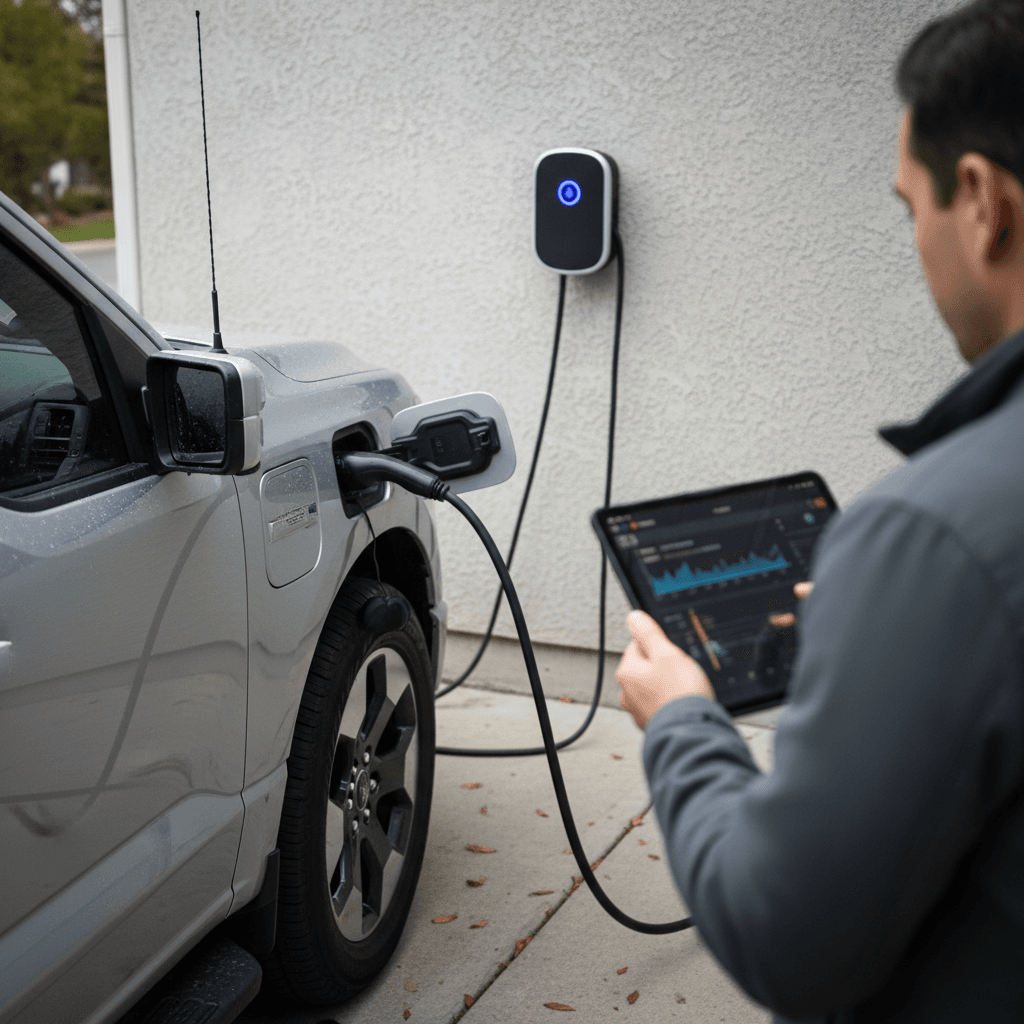
With a used EV, the question on every shopper’s mind is simple: How healthy is the battery? The GV60’s pack is designed to last, but you can’t expect buyers to take that on faith. The more proof you can provide, the more confident they’ll be paying a strong private‑party price.
Ways to prove your GV60’s battery health
Stack these together for maximum buyer confidence.
1. Capture range and SoH data
Take photos of the GV60’s state of charge and estimated range at 100% on the main display. If you use an OBD‑II dongle and app that estimates State of Health (SoH), include screenshots, clearly labeled as estimates, not official Genesis data.
2. Share fast‑charge behavior
If you’ve recently DC fast‑charged, note how quickly it ramped up and what speeds you typically see. A GV60 that still pulls strong fast‑charge power is more reassuring than one that tapers unusually early.
3. Show maintenance and recall records
Print or PDF your service history: annual checks, tire rotations, software updates, recall work. Genesis dealers can usually provide a summary, and many buyers will appreciate proof of regular care.
How Recharged helps here
Ready to find your next EV?
Browse VehiclesWrite a standout Genesis GV60 listing
Most private listings for EVs are vague: “Low miles, great condition, serious buyers only.” That doesn’t cut it for a tech‑heavy luxury crossover like the GV60. You want a listing that speaks directly to EV‑savvy shoppers and reassures first‑time EV buyers at the same time.
Must‑include details
- Exact trim and drivetrain (Standard RWD, Standard AWD, Advanced, Performance).
- Year, mileage, and ownership (one‑owner, clean title, any accidents disclosed).
- Color and interior, especially if you have rare combinations.
- EPA range figure for your trim and what you typically see in daily driving.
- Charging details: home charging setup, access to DC fast charging, and what cables/adapters are included.
- Key features: Face and Fingerprint recognition, Boost mode, Bang & Olufsen audio, 360° cameras, highway assist.
Storytelling that sells
Don’t just list features, explain how they made your life easier:
- “Daily commuter from home to office, mostly Level 2 home charging, no DC fast‑charging abuse.”
- “Always garaged, non‑smoker, no kids or pets, interior still smells new.”
- “Road‑tripped from DC to Boston several times with no charging issues, plug‑and‑charge at Electrify America worked flawlessly.”
This sort of context calms the silent fears most used‑EV shoppers have.
Photos make or break your listing
Where to list your Genesis GV60 for a private sale
You don’t need to be everywhere, but you do want your GV60 where EV‑curious shoppers are already looking. Cast a smart, not scattershot, net.
Good places to advertise a GV60 private sale
Mix broad classifieds with EV‑friendly communities.
Mainstream marketplaces
Sites like Autotrader, Cars.com, Craigslist, and Facebook Marketplace put you in front of a broad audience. Expect more tire‑kickers, but also more total leads.
EV‑focused groups
Local and regional EV owner Facebook groups, Reddit communities, and forums for Hyundai/Genesis EVs often have shoppers who already understand charging, range, and tax credits.
EV‑specialist marketplaces
Platforms like Recharged focus exclusively on used EVs. Instead of going fully DIY, you can get a firm offer, explore consignment‑style selling, or at least benchmark your pricing against professionally listed EVs nationwide.
Screen buyers and manage test drives safely
Once the listing is live, your phone or inbox will start to twitch. Not every inquiry deserves your time. A little structure keeps you safe and sane.
Safe screening and test‑drive process
1. Pre‑qualify by message
Reply with a short template asking how they plan to pay (cash, bank loan, credit union) and when they’d like to see the car. Serious buyers will answer. Scammers usually won’t.
2. Meet in public, during daylight
Choose a mall, dealer row, or bank parking lot with cameras. Bring a friend if possible. Never invite strangers to your home for the first meeting.
3. Verify a valid driver’s license
Before handing over the keys, snap a photo of the buyer’s license or write down the number. Many private sellers also take a quick phone photo of the buyer and plate of any car they arrive in.
4. Ride along on the test drive
You should be in the passenger seat, walking them through the GV60’s controls and driver‑assist systems. Set a predefined route that includes surface streets and a bit of highway, but no full‑throttle Boost launches unless you’re comfortable.
5. Control who plugs into your chargers
If you demonstrate DC fast charging, use a familiar station and keep your account details private. For home Level 2 charging, avoid inviting buyers to your house unless you already feel comfortable with them.
Red flags to walk away from
Negotiate and close the sale without drama
EV shoppers are often data‑driven. Use that to your advantage instead of bracing for a fight. If you’ve priced your GV60 thoughtfully and presented clear battery and service documentation, negotiation should feel like fine‑tuning, not combat.
Set your walk‑away number
Before anyone shows up, decide the lowest number you’ll actually accept. Keep that to yourself, but write it down. When a buyer makes a reasonable offer in that range, you’ll know it’s time to shake hands instead of wondering if you left money on the table.
Remember to factor in remaining payments on your loan or lease, plus sales tax implications in your state.
Use facts, not feelings
When a buyer pushes hard, fall back on your homework:
- “We’re already below similar GV60 Advanced listings within 200 miles.”
- “You’re also getting both key fobs, all charging accessories, and recent battery health documentation.”
- “If I can’t get close to this number, I have a standing offer from an EV marketplace.”
Being able to mention a real offer from Recharged or another reputable buyer gives you a credible floor in negotiations.
Paperwork and payment checklist for GV60 sellers
The last mile of a private sale is where most people get nervous, and rightfully so. You’re transferring a high‑value asset and trusting that the money is real. A simple checklist keeps it on the rails.
Essential paperwork and payment steps
1. Confirm loan payoff or title in hand
If you still owe on the GV60, call your lender to get an exact payoff and understand their process for releasing the title. Some buyers will want to meet at the bank or credit union so everyone sees the paperwork changing hands.
2. Use secure, verifiable payment
Best options are a cashier’s check verified at the issuing bank, or a wire transfer completed while you’re both present. Avoid personal checks or odd digital‑payment schemes for a transaction this large.
3. Complete a bill of sale
Many states provide a simple <strong>bill of sale</strong> template. Include VIN, sale price, date/time, odometer reading, and both parties’ names and addresses. Each of you should keep a signed copy.
4. Sign and transfer the title correctly
Follow your state’s rules to the letter. Fill in the buyer’s information, odometer reading, and sale price exactly as required. Errors can delay registration and land you in DMV limbo.
5. Cancel insurance and remove digital access
Once the sale is complete, remove the GV60 from your insurance, unlink it from any Genesis/BlueLink‑style apps, wipe your profiles, and make sure the buyer sets up their own accounts.
Don’t skip your state’s release‑of‑liability form
When a private sale doesn’t make sense (and easier options)
A private sale isn’t always the hero move. If your GV60 has unusual issues, if you’re moving on a tight timeline, or if you simply don’t want strangers test‑driving your $40,000‑plus EV, it’s worth considering alternatives.
Alternatives to a DIY GV60 private sale
When your time or risk tolerance is low, these can be smarter plays.
Instant cash offer
Online buyers and local dealers will often give you a same‑day offer. You’ll likely net less than a private sale, but the process is fast and predictable.
Consignment or managed sale
Some EV‑focused marketplaces, including Recharged, can handle the marketing, screening, and paperwork while you retain ownership until the car sells. You get expert pricing and EV‑savvy buyers without dealing with every text and test drive yourself.
Trade‑in toward your next EV
If you’re upgrading, a trade‑in can simplify taxes and logistics. Still, it pays to know your GV60’s private‑party value before accepting any trade number; it gives you leverage in the deal.