Buying an electric vehicle in New York can feel expensive, especially with federal EV tax credits ending after September 30, 2025. But if you understand New York’s incentives, used-vehicle pricing, and a few dealer tactics, you can still **save thousands** on your next EV in 2026, especially if you’re open to a used model and a digital-first buying experience.
Key point for 2026
Why New York is a unique EV market for saving money
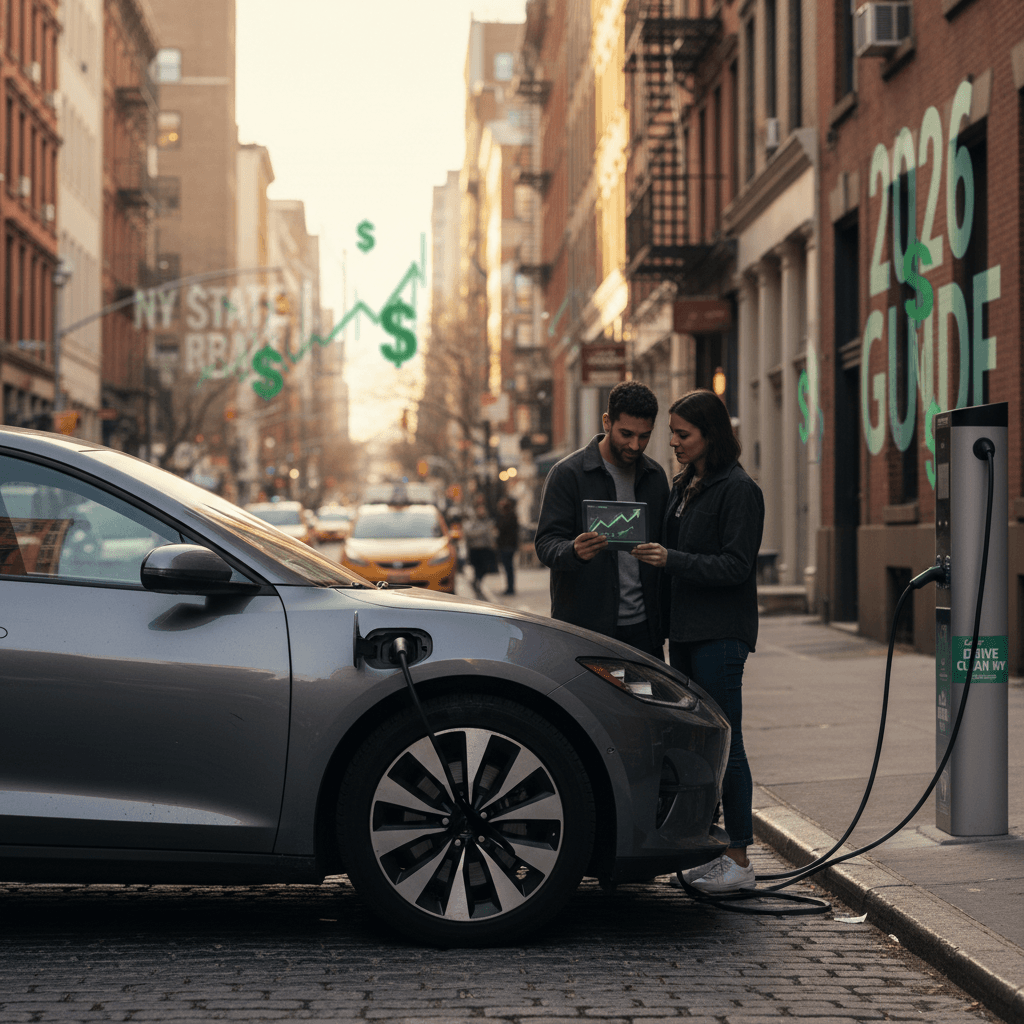
New York is not a typical car market. You’ve got **statewide rebates**, a dense used-EV supply in and around New York City, high gas prices, and now **congestion pricing in Manhattan’s central business district**. Those levers, plus the fact that many New Yorkers drive fewer miles, change the math on what you should buy and how you should value an EV versus a gas car.
How EV economics are shifting in New York
Used market is your friend
Understand the New York incentive stack
Before you talk price with any seller, you want a clear picture of what incentives actually apply in 2026. The federal layer has changed dramatically; the state and local layers have not, and those are now doing more of the savings heavy lifting.
Key EV savings programs for New Yorkers in 2026
What still exists, what ended, and how each incentive affects your bottom line when buying an EV in New York.
| Program | Level | Applies to | Status in 2026 | How you save |
|---|---|---|---|---|
| NY Drive Clean Rebate | State | New EVs bought or leased at participating NY dealers | Active with refreshed funding announced April 2025 | Dealer knocks up to ~$2,000 off the price at the point of sale, no waiting for tax time. |
| Federal EV Tax Credit (New & Used) | Federal | New and used EVs meeting IRA rules | Ended for purchases after Sept 30, 2025 | No longer available on 2026 purchases; don’t assume you’ll get $7,500 or $4,000 back. |
| Utility EV Programs (e.g., Con Edison SmartCharge New York) | Utility | EV owners charging within specific territories | Active but territory‑specific | Earn bill credits or cash for charging off‑peak; lower ongoing cost of ownership. |
| NYC Congestion Pricing Structure | City / State | Drivers entering Manhattan CBD | Active since Jan 2025 | EVs may get more favorable toll treatment than older gas vehicles; check current rules when calculating commute costs. |
| Local Perks (HOV lanes, reduced registration in some states) | State / Regional | EVs statewide | Evolving | Often modest dollar value but can improve daily convenience and time savings. |
Always confirm current program terms on official state, city, or utility websites before you sign a purchase agreement.
Don’t rely on old federal-credit advice
Shift your strategy now that federal credits ended
New EV buyers: think like a value shopper
Without a federal tax credit, paying full MSRP on a new EV in New York is harder to justify unless you’re getting a **large state rebate**, strong trade‑in value, and real congestion‑pricing or fleet‑use benefits. Focus on:
- Models that still qualify for the **full NY Drive Clean Rebate**.
- Dealers with transparent pricing and minimal add‑ons.
- Lower trims with practical options instead of fully loaded builds.
Used EV buyers: target the sweet spot
With no active federal used‑EV credit, your savings come from **vehicle selection** and smart sourcing. The best value zone in 2026 is often:
- EVs that are **2–4 years old**, off lease or early trade‑ins.
- Mid‑range battery sizes (not the largest, not the smallest).
- Models with strong reliability and battery‑health data.
That’s where Recharged focuses, curated used EVs with verified battery health and pricing tied to real New York‑area market data, not guesswork.
Save big with used EVs in New York
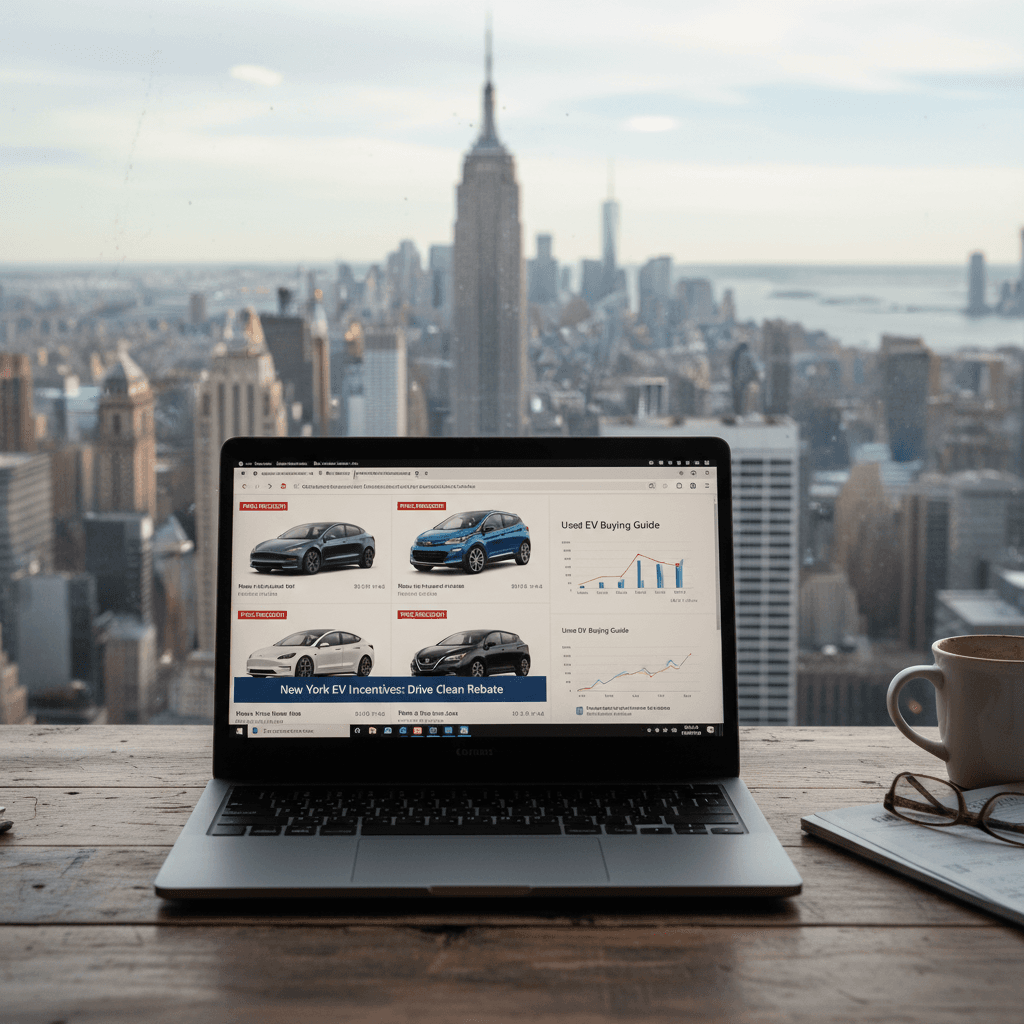
If your priority is saving money rather than owning the latest badge, **used EVs are the best play in New York right now**. They sidestep the steep early depreciation that hit many new EVs sold in 2022–2024, and they’re finally available in volume, Teslas, Hyundai Ioniq 5/6, Kia EV6, Chevy Bolts, VW ID.4 and more.
Why used EVs make financial sense in New York
Three angles that matter more here than in most states
1. Depreciation is your ally
Early EV buyers absorbed the steepest price drops. In 2026, you can often buy a **3‑year‑old EV for 30–40% less than its original MSRP**, while still getting most of the tech and range.
2. Battery data reduces risk
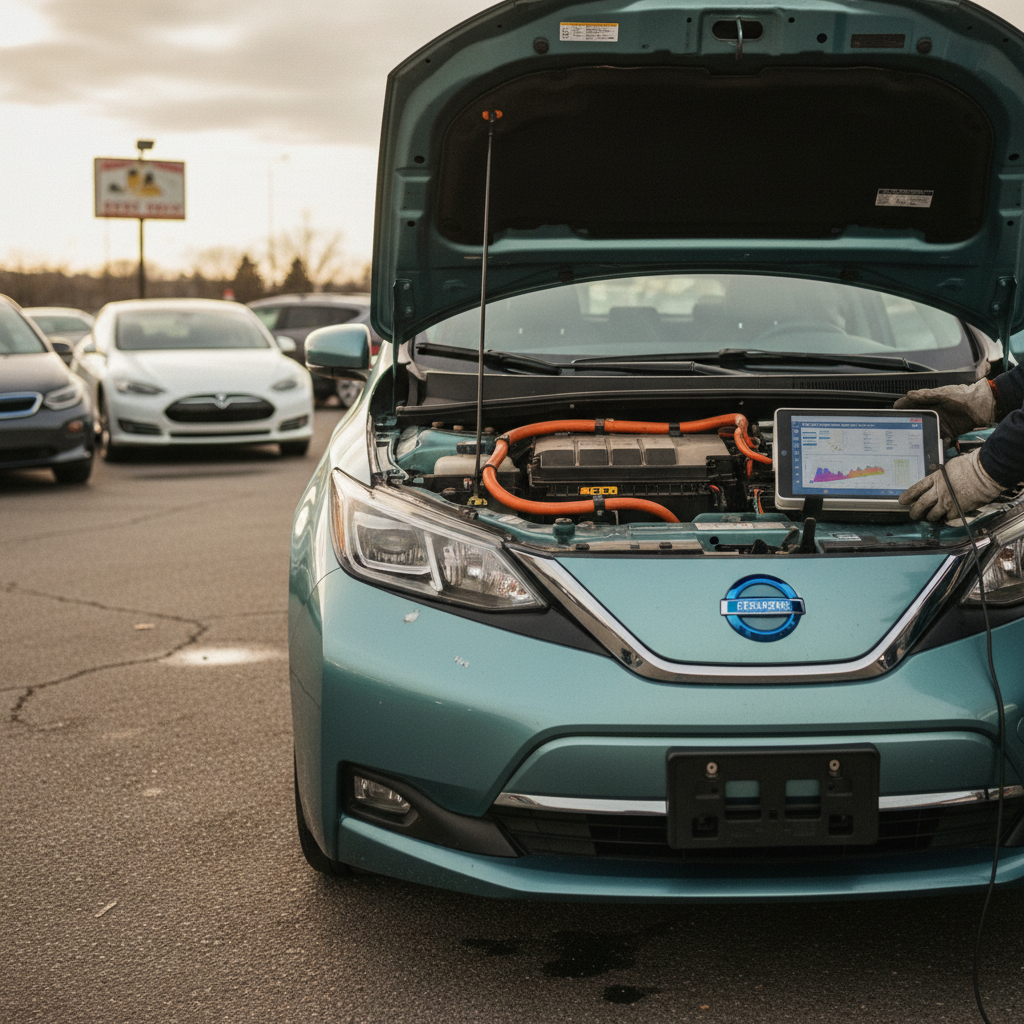
The old fear was, “What if the battery is toast?” With modern diagnostics, like the Recharged Score battery report, you see **measured battery health**, not guesses, before you commit.
3. City driving favors EVs
Short city trips and stop‑and‑go driving are easier on EVs than road‑tripping at 80 mph. Many New York drivers simply don’t rack up enough miles to justify a brand‑new EV when a used one will do the job for far less.
Watch out for bargain traps
Time your EV purchase like a pro
In a volatile EV market, when you buy in New York can matter almost as much as what you buy. Dealers, fleets, and remarketers make decisions on a calendar; if you align with those cycles, you can pick up real savings.
Best timing windows to save on an EV in New York
1. Shop at the end of the month and quarter
Franchise dealers often chase monthly and quarterly volume targets baked into factory bonuses. If they’re behind, they’re far more flexible on EV pricing in the last few days of March, June, September, and December.
2. Watch for model‑year changeovers
When a new model year arrives, or a refreshed EV hits the lot, dealers get motivated to clear remaining prior‑year inventory. That can mean aggressive discounts on **new-old-stock EVs** and softer pricing on trade‑ins of the outgoing model.
3. Track lease‑return waves
Large metro areas like NYC see **lease returns hit in waves**, especially on popular EVs leased two or three years ago. Working with a marketplace focused on used EVs lets you tap those vehicles before they scatter across dozens of storefronts.
4. Align with your own tax and budget calendar
Even without federal credits, your personal cash‑flow still matters. Many New Yorkers do better buying **after bonuses, refunds, or major life events**, so they can put more down and finance less at today’s higher interest rates.
Beat dealer pricing and fees in New York
Whether you’re buying new or used, many New York shoppers lose money not on the vehicle price itself, but on **how** they buy: unnecessary add‑ons, marked‑up interest rates, and doc or “market adjustment” fees that don’t stand up to scrutiny.
Know where dealers pad the deal
- Market adjustment fees: Extra thousands added “because EVs are in demand.” In 2026, that story is stale. Push back or walk.
- High APR financing: Dealers can mark up loan rates. Always compare with independent pre‑qualification offers before you sit down in F&I.
- Add‑ons you don’t need: Paint protection, VIN etching, nitrogen in tires. In New York, these can quietly add $1,000+ to the final paperwork.
Why digital EV marketplaces change the math
A digital‑first platform like Recharged removes much of that friction:
- Transparent, market‑based pricing with no surprise “market adjustments.”
- Upfront detail on taxes, fees, and delivery costs to New York.
- Built‑in financing tools, so you see how changes in down payment or term affect your monthly cost before you commit.
You still get support from EV specialists, but without the traditional back‑and‑forth that can add hours and dollars to the transaction.
Leverage pre‑qualification
Use charging and ownership programs to lower total cost
Saving money on an EV in New York is about more than just the purchase price. Over a few years, what you pay for **charging, parking, tolls, and maintenance** can easily outweigh a one‑time rebate. That’s especially true if you commute into or within New York City.
Ongoing savings levers New York EV owners often miss
Stack these with a smart purchase and the economics look much better than the sticker suggests.
Off‑peak and smart charging
Programs like Con Edison’s SmartCharge New York reward you for **charging overnight and off‑peak** in NYC and Westchester. Combined with time‑of‑use electric rates, that can cut your fueling bill sharply compared with daytime fast‑charging or gas.
Parking and garage perks
Some garages and employers offer **discounted or reserved spots for EVs**, especially where Level 2 charging is installed under Charge Ready NY or private programs. That can offset higher monthly parking rates in Manhattan.
Lower routine maintenance
EVs skip oil changes and have fewer moving parts. In stop‑and‑go city driving, **regenerative braking** also reduces brake wear, another quiet savings line compared with a gas car in the same traffic.
Do a New York‑specific cost‑of‑ownership comparison
How Recharged helps New Yorkers save on used EVs
Used EVs are where New Yorkers can save the most money in 2026, but only if you can trust the battery and the price. That’s the gap Recharged is built to close, especially for shoppers who’d rather do the hard parts online than in a dealer’s F&I office.
Ways Recharged can lower your real EV cost
From battery transparency to financing, each piece aims at your total out‑of‑pocket, not just the sticker.
Recharged Score: verified battery health
Every vehicle on Recharged comes with a Recharged Score Report, a battery‑health and vehicle condition snapshot based on diagnostics, not just odometer readings. In New York’s climate, that’s critical; it lets you compare two similar EVs and pay the right price for the one with more battery life left.
Instead of wondering whether a car has been fast‑charged to death on I‑95, you see objective battery data before you buy.
Digital, transparent buying with New York delivery
Recharged is a **fully digital marketplace** for used EVs, with EV‑specialist support and nationwide delivery, including to New York. You shop online, review inspection and battery reports, line up **financing or trade‑in**, and schedule delivery to your door or a convenient handoff point.
That saves time, cuts down on surprise fees, and helps you compare multiple vehicles side‑by‑side without trekking across the tri‑state area.
Ready to find your next EV?
Browse VehiclesIf you’re already driving a car you’re ready to replace, Recharged can also help you **trade in or get an instant offer**. In a high‑cost market like New York, putting every available dollar of equity into your replacement EV is one of the cleanest ways to drive your monthly payment down.
Checklist: how to save money buying an EV in New York
Step‑by‑step savings plan for New York EV shoppers
1. Decide new vs. used based on real math
Run a simple 3–5‑year cost comparison that includes monthly payment, fuel/charging costs, parking, tolls, and expected maintenance. For many New Yorkers, a **used EV with good battery health** wins easily.
2. Confirm which incentives still apply
Check the current NYSERDA Drive Clean Rebate list for eligible new models, confirm any utility EV programs in your service area, and understand today’s congestion‑pricing rules if you drive into Manhattan.
3. Get pre‑qualified for financing
Secure a **no‑obligation pre‑qualification** so you know your rate and budget. Use the offer as a benchmark when evaluating dealer financing or marketplace offers.
4. Shop used EVs with battery‑health data
Prioritize vehicles that come with **independent battery diagnostics**, like a Recharged Score Report, so you’re not overpaying for a car that’s quietly lost a chunk of its real‑world range.
5. Time your purchase around dealer and lease cycles
Aim for end‑of‑month and end‑of‑quarter windows and watch for lease‑return waves on popular EV models in your price range.
6. Scrutinize every fee and add‑on
Ask for an out‑the‑door price breakdown before you sign anything. Challenge market adjustments, skip fluff add‑ons, and keep the focus on price, taxes, unavoidable fees, and realistically useful products only.
7. Lock in a low‑cost charging setup
If you have off‑street parking, price out a basic Level 2 charger and any available installation rebates. If you don’t, map out public and workplace charging options and consider utility rewards programs for off‑peak use.
8. Think beyond this car
Choose an EV with **solid resale potential** and battery‑health transparency. In three to five years, you’ll be in a better position to trade or sell into the next wave of EV tech without taking an unnecessary loss.
FAQ: saving money on EVs in New York
Frequently asked questions about saving on EVs in New York
New York has become one of the most complex, but potentially rewarding, EV markets in the country. The easy federal money is gone, but **state incentives, used‑EV depreciation, and local ownership perks** still tilt the math in your favor if you’re willing to look beyond the showroom floor and think in total‑cost‑of‑ownership terms. By pairing New York’s remaining rebates and utility programs with a **data‑driven, transparent used‑EV marketplace like Recharged**, you can get into an electric car that fits your life, and your budget, without falling for outdated assumptions or dealership games.