If you’re wondering how to save money buying an EV in California right now, you’re not alone. Incentives have changed, prices have shifted, and there’s a real difference between a deal that just looks good on paper and one that actually cuts your monthly costs. The good news: if you understand today’s mix of federal credits, California programs, and the rapidly growing used EV market, you can still save thousands, especially if you’re open to buying used.
Quick context for 2026
Why California EV buyers need a strategy in 2026
California EV market snapshot
There are two big realities California shoppers need to recognize. First, sticker prices don’t tell the whole story, fuel and maintenance savings can make a slightly higher monthly payment the cheaper option over 3–5 years. Second, the incentive landscape has become more targeted: middle‑ and higher‑income buyers have fewer direct rebates, while income‑qualified buyers have more support than ever, especially on used EVs.
Important timing note
Start with your budget and total cost of ownership
Look beyond the monthly payment
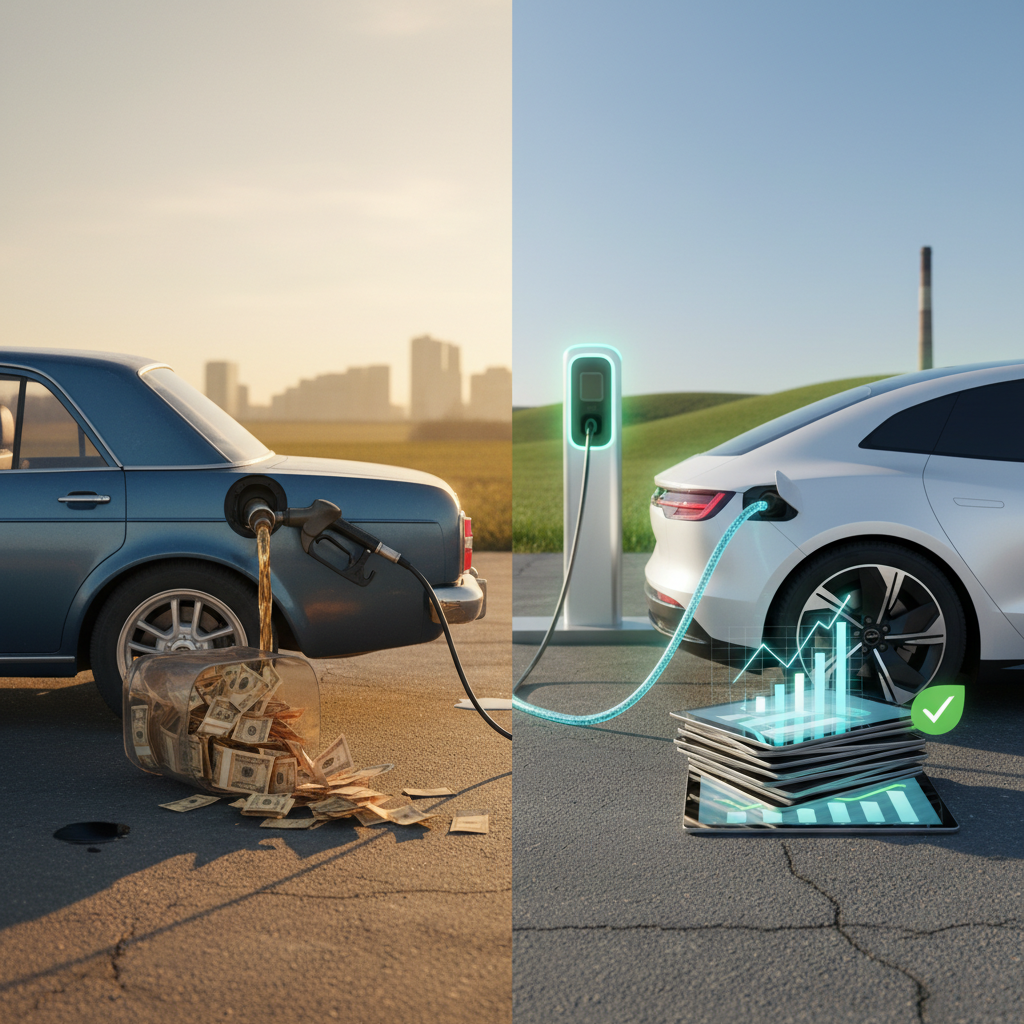
A low monthly payment on a gas car can still cost you more than a slightly higher payment on an EV once you factor in fuel and maintenance. In much of California, switching from a 25‑mpg gas car to a reasonably efficient EV can easily save $80–$150 per month in fuel alone, depending on your commute and electricity rates.
Estimate your real EV costs
- Electricity vs. gas: Compare your current fuel bill to a simple EV charging estimate. Many utilities offer calculators, and home Level 2 charging on off‑peak rates is often dramatically cheaper than gas.
- Maintenance: EVs eliminate oil changes and have fewer moving parts. Over several years, that matters.
- Insurance and registration: Get quotes up front. Some EVs cost a bit more to insure; others don’t.
Use a simple rule of thumb
Leverage federal tax credits (and key 2025 deadline)
California’s state‑level incentives are powerful, but you should start by understanding what the federal government can do for you, especially on used EVs. Under the Inflation Reduction Act, there are two big federal programs that matter for California shoppers: the New Clean Vehicle Credit and the Previously Owned (Used) Clean Vehicle Credit.
Key federal EV credits for California buyers
Always confirm current IRS rules before your purchase, these programs can change.
| Credit | Typical Maximum | Key Requirements (high level) | Timing notes |
|---|---|---|---|
| New Clean Vehicle Credit (30D) | Up to $7,500 | New EV from a dealer, MSRP and income caps apply, final assembly and battery rules must be met | Rules and eligible models change often, verify eligibility on the IRS and DOE sites before purchase. |
| Previously Owned Clean Vehicle Credit (25E) | Up to $4,000 | Used EV bought from a dealer for $25,000 or less, at least 2 model years old, buyer income caps apply, first transfer only | Current law ends this credit for vehicles purchased after Sept. 30, 2025 unless Congress extends it. |
Summary of major federal EV credits relevant to California shoppers in 2024–2026.
How the used credit works in practice
Many dealers can now apply federal credits at the point of sale, effectively knocking thousands off your out‑the‑door price. If you’re shopping used, this is one reason to stay under that $25,000 federal price cap, you might save more by buying a slightly older car that qualifies for the credit than by stretching to a higher price that doesn’t.
Stack California state and local EV incentives
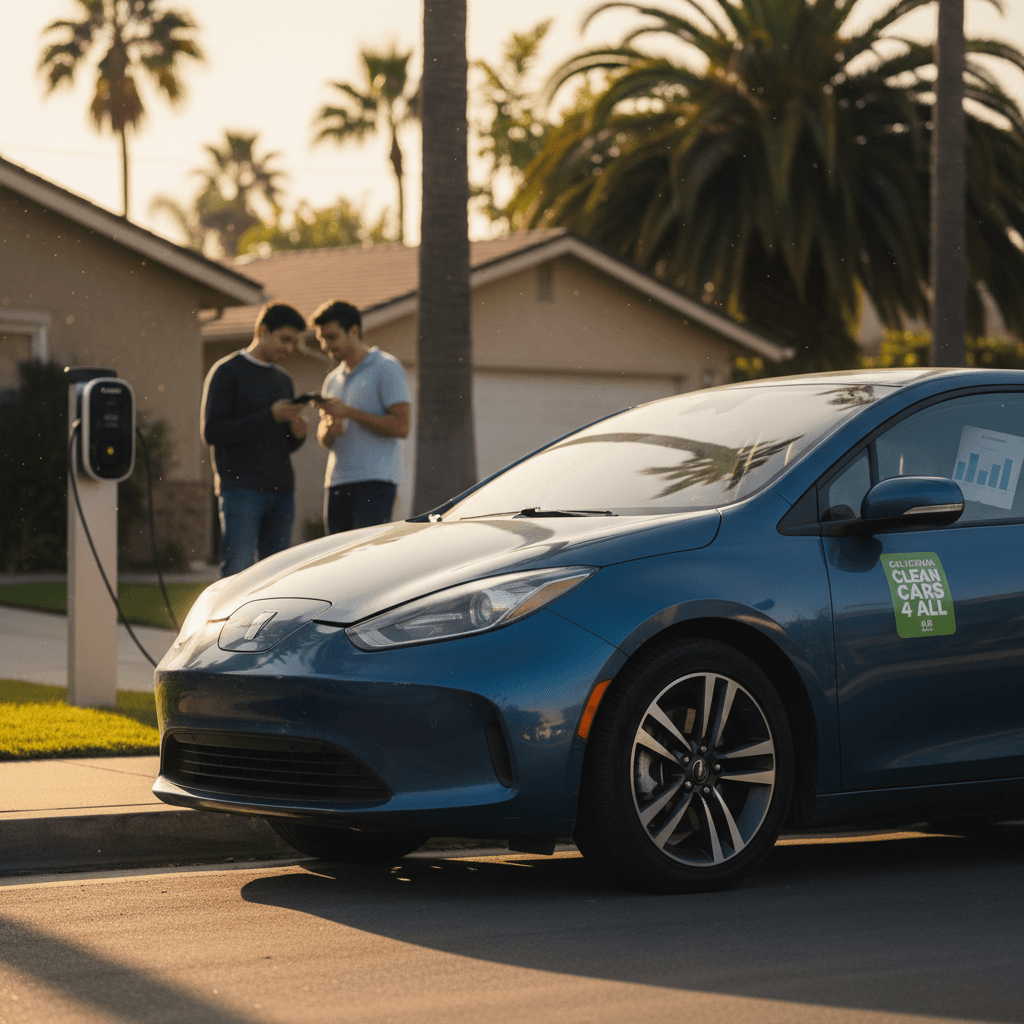
California ended its broad Clean Vehicle Rebate Project, but replaced it with deeper, more targeted help. If your household income is low or moderate, you may be able to pair federal credits with California grants that directly reduce your purchase price or down payment, especially when you junk an older, high‑polluting vehicle.
Major California programs that can cut your EV cost
Availability and amounts vary by income, location, and funding, always check program websites before you shop.
Clean Cars 4 All (CC4A)
Regional programs run by major air districts (Bay Area, South Coast, San Joaquin Valley, Sacramento, San Diego) that pay you to scrap an older, high‑emitting car and replace it with a cleaner vehicle.
- Grants up to around $12,000 toward a new or used EV or PHEV for the lowest‑income households, sometimes plus charging support.
- Must live in a participating air district and meet income limits.
Driving Clean Assistance Program (DCAP)
A statewide, needs‑based program that extends CC4A‑style support beyond the big air districts.
- Provides grants and financing assistance to income‑qualified buyers of new or used clean vehicles.
- Higher amounts for replacing an older vehicle, smaller grants if you’re not scrapping a car.
Utility & local rebates
Many utilities and cities offer rebates for buying an EV or installing home charging.
- Examples include rebates for used EVs, bill credits, or $500–$1,000 for a Level 2 charger.
- Check your ZIP code on statewide tools like DriveClean’s incentive search and your utility’s EV page.
Do this before you visit a dealer
Why buying a used EV in California can save you thousands

Because California adopted EVs earlier than almost any other state, the used market here is unusually rich: off‑lease Teslas, Chevy Bolts, Nissan Leafs, and a growing mix of Hyundai, Kia, and Ford models. That depth lets you be picky, and it’s where a lot of the real savings live today.
- Depreciation hits EVs hard in the first 3–4 years, so a car that sold new for $45,000 might be available in the low‑to‑mid‑$20,000s, right in range for the federal used credit window.
- Insurance on a lower‑priced used EV is often cheaper than on a brand‑new one.
- You can still get modern safety and comfort features, adaptive cruise, lane keeping, big touchscreens, without paying new‑car prices.
Where Recharged can help
Ready to find your next EV?
Browse VehiclesSave more by choosing the right model and battery
Match range to your real driving
California buyers routinely pay for range they never use. If your daily driving is 40–60 miles and you take one or two long road trips per year, you probably don’t need 330 miles of range. A used EV with 220–260 miles of EPA range can be plenty, and that one decision can trim thousands from the purchase price.
For mostly urban driving in places like the Bay Area or LA, even shorter‑range EVs (150–200 miles) can be perfectly practical, and significantly cheaper, if you have reliable home or workplace charging.
Focus on battery health, not just mileage
Miles tell only part of the story on a used EV. How the car was charged and driven matters. Look for:
- Battery health data: A report like the Recharged Score quantifies usable capacity so you know whether that “250‑mile” EV still offers 235 miles, or just 190.
- Charging history clues: Frequent DC fast‑charging can accelerate wear; a car mostly charged at home on Level 2 may have a healthier pack.
- Warranty coverage: Many EVs carry 8‑year battery warranties. A 5‑year‑old car may still have several years of coverage left.
Avoid this common budget mistake
Lower your payment with smart financing and trade‑in moves
Once you’ve identified the right vehicle and incentives, the way you structure the deal can either lock in your savings or quietly give them back to the lender or dealer. California buyers, especially in high‑cost regions, often stretch loan terms just to “make the payment work.” That’s risky with any car, EV or not.
Financing moves that actually save you money
1. Get pre‑qualified before you shop
Knowing your approved rate and budget up front lets you negotiate on price instead of monthly payment. Recharged can help you <strong>pre‑qualify for EV financing with no impact to your credit</strong>, so you walk into the process with clear numbers.
2. Keep loan terms realistic
72‑ and 84‑month loans can look affordable, but they keep you upside‑down longer. Aim for the shortest term that gives you a comfortable payment, especially if you’re buying a model that’s still depreciating quickly.
3. Use incentives as down payment leverage
If a federal credit or California grant effectively knocks several thousand off the price, consider how much of that you want to treat as down payment versus paying down higher‑interest debt elsewhere. The goal: minimize total interest paid over the life of the loan.
4. Get a real trade‑in value, not just a number
In California’s competitive used‑car market, dealers’ first trade‑in offer is rarely their best. Get an instant offer from a marketplace like Recharged or other online buyers so you know whether the dealer is lowballing you.
Trade‑in vs. private sale in California
Dealer tactics and timing: how to avoid overpaying
Whether you’re shopping at a traditional franchise dealer, an independent lot, or an online EV retailer, the fundamentals are the same: separate the price of the car from everything else. That’s how you keep a “great deal” from getting eaten up by add‑ons and fees.
Common dealer tactics that cost California EV buyers money
Know these in advance so you can say no with confidence.
Payment‑only talk
Sales staff steer the conversation to “What monthly payment are you looking for?” instead of the actual price.
How to respond: “Let’s agree on the sale price and trade‑in value first. Then we can talk about payment.”
Unnecessary add‑ons
Paint protection, nitrogen in tires, VIN etching, and markups on extended warranties can quietly add $1,000–$3,000.
How to respond: Ask for an itemized buyer’s order before you sign anything. Decline add‑ons you don’t want.
“Today only” pressure
End‑of‑month or “today only” deals are common. In reality, if a price works for the dealer now, it likely works tomorrow.
How to respond: Be willing to walk. There are many EVs on the California market, and new inventory arrives daily.
California‑specific fee watchouts
Step‑by‑step: how to maximize savings on a used EV
Step‑by‑step game plan for California shoppers
1. Confirm your incentive eligibility
Check your income against federal thresholds and use California tools (Clean Cars 4 All, DCAP, DriveClean) to see which programs you may qualify for. If possible, start applications before you shop so you know your grant amount.
2. Set a realistic, incentive‑informed budget
Decide your target out‑the‑door price, then back into a pre‑tax vehicle price that fits federal caps (like $25,000 for the used credit) and any program limits. That keeps you from falling in love with cars that blow up the math.
3. Choose 2–3 target models
Pick a short list of EVs that fit your range needs, charging situation, and budget, say, a Chevy Bolt EUV, a Kia Niro EV, and a Tesla Model 3 RWD in certain model years. That focus makes comparison shopping much easier.
4. Shop multiple sources at once
Compare franchise dealers, used‑car superstores, and EV‑focused marketplaces like <strong>Recharged</strong>. On Recharged, you’ll see battery health and pricing transparency up front, which helps you spot outliers a traditional listing might hide.
5. Lock in financing and trade‑in numbers
Get pre‑qualified for financing and at least one instant offer for your current car. With those in hand, work dealers against each other on price instead of squinting at four‑square worksheets in the F&I office.
6. Inspect, test‑drive, and verify battery health
Always test‑drive and review a third‑party or platform‑provided battery report. For higher‑mileage cars, consider having an independent EV‑savvy mechanic examine the vehicle. A slightly more expensive car with a healthier pack is often the better deal.
Frequently asked questions about saving money on an EV in California
California EV savings FAQ
Bottom line: making a California EV deal that actually saves you money
Saving money on an EV in California in 2026 isn’t about finding a single magic rebate, it’s about lining up a series of smart decisions. Start by understanding how federal credits and California’s income‑based programs apply to you. Then focus on the sweet spot of the used market, where 3–6‑year‑old EVs offer modern tech at down‑to‑earth prices, and insist on clear battery‑health data so you’re not guessing about range. Finally, control the deal structure: get pre‑qualified, separate price from payment, and push back on unnecessary extras.
If you do those things, an EV can be one of the few big purchases that genuinely lowers your monthly cost of living in California instead of raising it. And if you want a partner to walk you through the numbers, Recharged offers used EVs with verified battery health, fair‑market pricing, financing help, trade‑in options, and even nationwide delivery, so you can focus on the savings, not the stress.