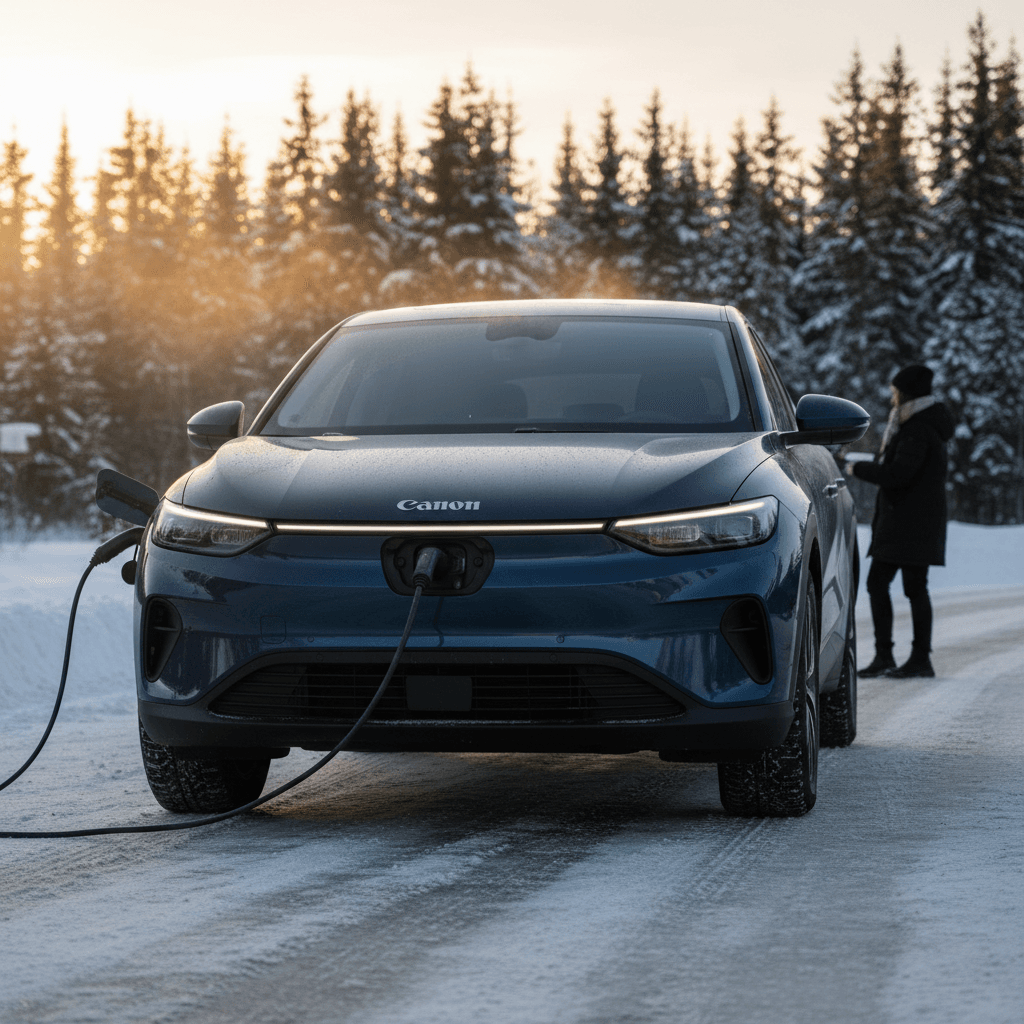
If you’ve watched your electric car’s range tumble as temperatures drop, you’re not imagining it. Cold weather thickens battery chemistry and makes cabin heating expensive in energy terms, so winter can easily shave 15–30% off your indicated range, and sometimes more. The good news is that with a few smart habits, you can maximize EV range in winter without turning every drive into a science project or freezing yourself in the process.
Good news for winter EV drivers
Why EV range drops in winter (and how much to expect)
Understanding what’s happening under the floor helps you pick the right tactics. A lithium-ion battery is happiest in a moderate temperature band, roughly 60–80°F (15–27°C). In winter, several things stack against range:
- Colder battery chemistry slows the movement of ions, which reduces how much power the pack can deliver and how efficiently it charges and discharges.
- Cabin heat is energy-hungry. Unlike a gasoline car that uses waste engine heat, an EV often has to generate heat from the battery, which can pull 2–6 kW continuously at highway speeds.
- Thicker air and higher rolling resistance from cold tires and slushy roads mean the car works harder to move.
- Short, stop‑and‑go trips never let the battery and cabin fully warm up, so you’re always in the least efficient part of the curve.
What winter does to typical EV range
Plan around the worst day, not the best
Winter EV range strategy at a glance
Four pillars of maximizing EV range in winter
Focus on these areas and you’ll feel the biggest difference.
1. Precondition smartly
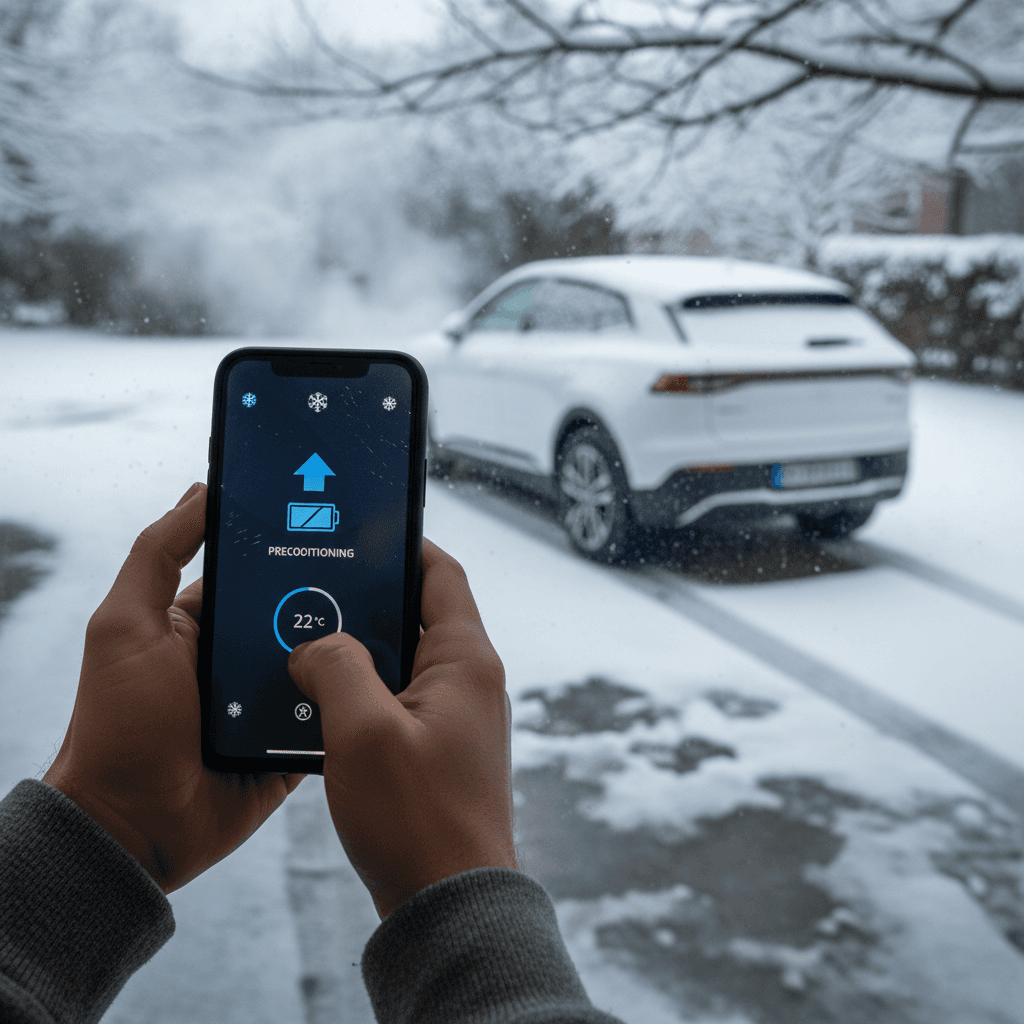
Warm the battery and cabin while plugged in. Use your app or in‑car schedule so you start driving with a warm pack and windows already defrosted.
2. Heat efficiently
Rely on heated seats and steering wheel first, then moderate cabin heat. Avoid max-defrost and high cabin temps running for long stretches if you’re tight on range.
3. Drive smoothly
Use Eco mode, lower speeds, and gentle acceleration. Think train, not rocket launch. Smooth driving can save as much energy as any hardware feature.
4. Plan charging
Leave bigger buffers on cold days, pre‑warm the battery before DC fast charging, and pick stations near amenities so slow winter charging is less painful.
The 80/20 rule for winter range
Precondition your battery and cabin while plugged in
If your EV and charger support it, preconditioning is your winter superpower. That means warming (or cooling) the cabin and, in many cars, bringing the battery closer to its ideal temperature before you drive or fast‑charge.
How to use preconditioning effectively
1. Heat the cabin from the wall, not the pack
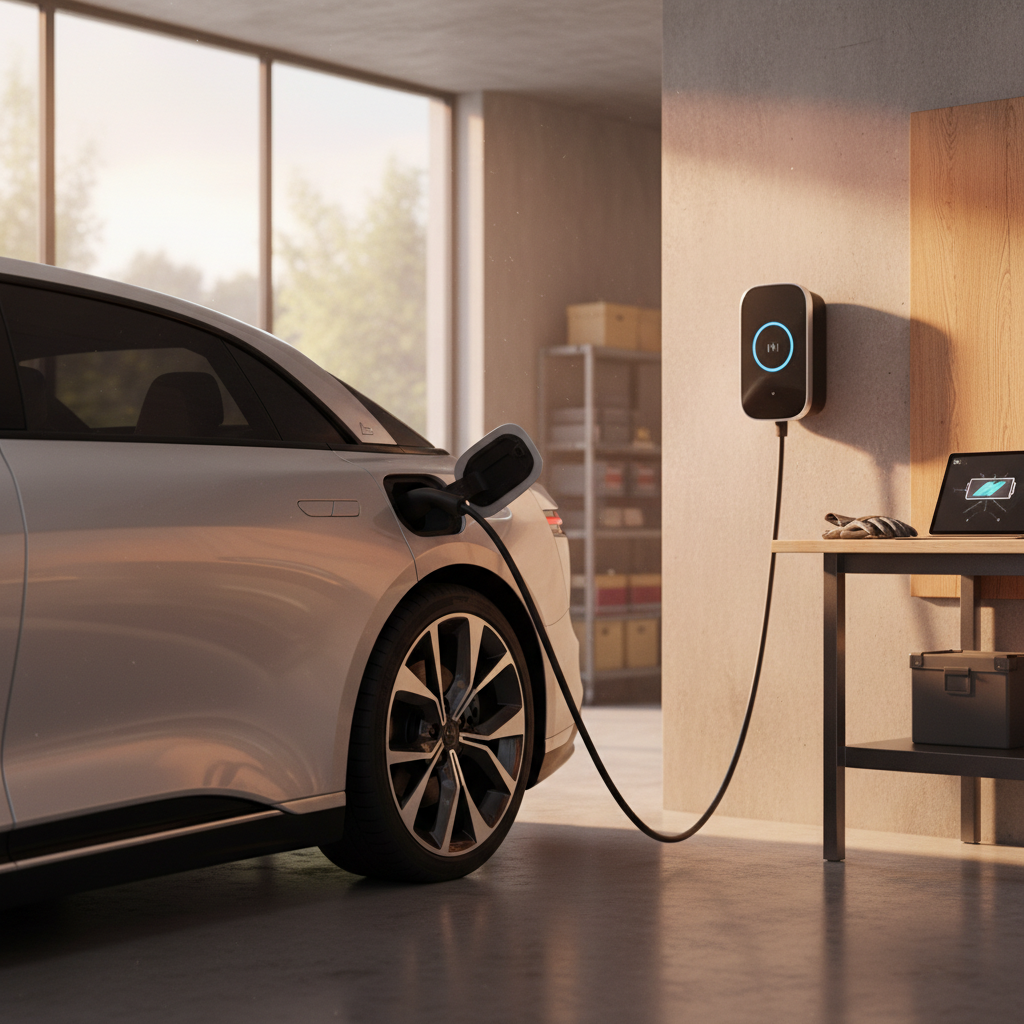
Use your app or in‑car scheduler to start cabin preheat 15–30 minutes before departure while the car is still plugged into Level 2. You arrive at the car to a warm interior and full battery instead of burning your first 10–20 miles of range on heat.
2. Schedule regular commute departures
If you leave for work at roughly the same time every day, set a repeating departure time in your car’s settings. Many EVs will automatically condition the pack and cabin to be ready right when you unplug.
3. Pre‑warm the battery before DC fast charging
On newer models, entering a fast charger as your destination in the built‑in navigation triggers battery preconditioning. That can dramatically improve charging speed in cold weather and reduce time spent at the station.
4. Avoid fully charging a frozen battery
If your car has sat unplugged in sub‑freezing temps, let it warm up a bit, ideally by driving gently, before you hammer it with repeated DC fast charges or 100% Level 2 top‑offs.
Not every EV preconditions the same way
Use climate controls the smart way
Heating the cabin is often the single biggest winter energy draw after propulsion, especially at highway speeds. You don’t have to shiver to save range, but you should use the tools your EV gives you strategically.
Smarter ways to stay warm without killing range
Small changes in how you use HVAC can add miles back to your estimate.
Prioritize seat heaters
Heated seats sip energy (often under 100 W per seat) compared with 2–6 kW for full cabin heat. Run them on low or medium and you can keep the cabin set a few degrees cooler.
Use the heated wheel
A heated steering wheel keeps your hands comfortable with very little draw. Many drivers find they’re fine at 66–68°F cabin temps when wheel and seats are warm.
Avoid “max” unless needed
Max‑defrost and full‑blast HVAC are range killers. Use them to clear fog or ice, then step down to a lower fan speed and temp once visibility is good.
- Start each trip with clear glass using preconditioning so you don’t need max-defrost for long.
- If your EV supports eco HVAC modes, enable them; they cap compressor and heater output to preserve range.
- Aim for a comfortable but efficient cabin setpoint (for many drivers, 66–70°F in winter with seat and wheel heat on).
- Turn off rear-seat climate zones and rear vents if you’re driving alone; there’s no point heating air no one is breathing.
Safety beats range every time
Drive for efficiency in cold weather
The way you drive matters more in winter because the battery is already starting from a less efficient state. Think of yourself as the energy manager, not just the driver.
Speed: your biggest lever
Highway speed is one of the strongest predictors of real‑world EV range. In cold air, aerodynamic drag goes up and the pack is less efficient, so pushing 75–80 mph can dramatically shorten your effective range.
- On a cold day, backing down from 75 mph to 65 mph can easily save you 10–20% energy over a long highway leg.
- If you’re cutting it close to the next charger, lower your speed first before turning off cabin heat.
Acceleration and braking
Smooth, predictable driving lets your car’s software make the most of regenerative braking and keeps the battery from seeing big spikes in power draw.
- Use Eco or efficiency mode for gentler throttle mapping and stronger regen, if traction allows.
- Avoid repeated full‑throttle launches and late, hard braking. In winter, they’re not only inefficient, they’re less safe.
On‑road habits that add winter range
Use Eco mode on slippery days
Eco modes typically soften throttle response and may reduce peak power, which both saves energy and makes it easier to avoid spinning the tires on snow and ice.
Watch real‑time efficiency
Most EVs show kW draw or mi/kWh on the dash. When you see numbers spike, experiment with slightly lower speeds or smoother inputs and watch them come back down.
Coast where regen is limited
In very cold conditions, regenerative braking may be restricted. Where that happens, lift off the accelerator earlier and coast to stops so you’re not relying solely on friction brakes.
Avoid unnecessary weight and drag
Take the ski box or empty bike rack off when you’re not using it and clean out the trunk. Extra weight and aero drag are both amplified in winter conditions.
Plan your charging and routes for winter
Energy use is simply less predictable in January than in June, so your summer habits may need an upgrade. Instead of trusting a single range number, think in buffers and options.
How much buffer to leave in winter
These are conservative guidelines; adjust based on your car and experience.
| Trip Type | Outside Temp | Suggested Arrival Buffer | Notes |
|---|---|---|---|
| Short city errand | Above 25°F | 15–20% | Plenty if you can plug in at home afterward. |
| Daily commute (round trip) | 10–32°F | 25–30% | Aim to end the day with at least this remaining. |
| Highway trip to fast charger | 0–25°F | 20–30% | Cold packs charge slower; don’t arrive nearly empty. |
| Remote charger with limited backups | Below 10°F | 30–40% | Leave room for detours, queues, or an out‑of‑service station. |
Use these as starting points when planning around public chargers in cold weather.
Planning tools that make winter driving easier
Let software do some of the worrying for you.
Use EV‑aware navigation
Built‑in EV route planners in many newer cars automatically adjust for elevation, speed, and temperature. Third‑party apps can do the same if your car’s nav is basic.
Filter by working chargers
Public charging apps often show real‑time status and recent user check‑ins. In winter, favor locations with multiple stalls and good reliability history.
Charge where it’s comfortable
If possible, choose chargers near restrooms, coffee, or shopping. DC fast charging is slower in the cold; you might as well be warm while your battery warms up too.
Think in segments, not the whole trip
Tires, tire pressure, and aerodynamics
Your EV only has four hand‑sized contact patches with the road, and winter affects all four. Getting your tires right improves both safety and efficiency.
- Use proper winter or all‑weather tires if you regularly face snow and ice. Modern low‑rolling‑resistance winter tires are far more efficient than they were a decade ago, and the safety benefits dwarf a few miles of range change.
- Check pressures monthly. Cold air drops tire pressure roughly 1 psi for every 10°F. Under‑inflated tires increase rolling resistance and hurt range. Set pressure when tires are cold, to your door‑jamb spec.
- Consider wheel size. If your EV offers a smaller‑diameter winter wheel and tire package, it can slightly improve efficiency compared with very wide, large‑diameter summer wheels.
- Watch for snow build‑up in wheel wells and underbody panels. Packed snow adds weight and drag; it’s worth knocking off when it’s safe to do so.
Never trade grip for a mile or two of range
Protect battery health in cold weather
Maximizing winter range is one goal; preserving long‑term battery health is another. Fortunately, most of the same habits help with both.
Cold‑weather habits that help your battery last
Avoid constant 0–100% swings
It’s fine to charge to 100% before a big trip, but living between roughly 20–80% for daily driving puts less stress on the pack, especially in extreme hot or cold.
Keep the car plugged in when parked
Most EVs use shore power to maintain battery temperature and offset vampire drain when plugged in. That’s easier on the pack than letting it sit for days in deep cold at a very low state of charge.
Be gentle when the battery is cold
Until the pack has warmed up (you’ll often see a snowflake icon or reduced regen), avoid repeated full‑throttle acceleration or towing heavy loads.
Don’t panic about temporary range loss
Cold‑weather range reduction is mostly reversible. As temperatures rise and the battery warms, apparent capacity comes back. What you’re seeing is chemistry, not necessarily permanent degradation.
What if you see a snowflake icon?
Used EVs: Winter range questions to ask before you buy
If you’re shopping the used market, winter is exactly when you’ll discover whether a car’s range and charging behavior fit your life. A little homework here can save you a lot of frustration later.
Questions to ask the seller or dealer
- What real‑world winter range do you see? Ask for their typical commute and how much battery it uses on the coldest days.
- Does this model have a heat pump? In many lineups, higher trims or newer years added heat pumps that significantly help winter efficiency.
- How quickly does it fast‑charge in the cold? Some older EVs slow dramatically at DC fast chargers in winter; knowing that ahead of time is critical if you road‑trip often.
How Recharged can help
At Recharged, every used EV comes with a Recharged Score Report that includes verified battery health and pricing grounded in real‑world data, not guesswork.
- Battery diagnostics give you confidence about long‑term capacity, not just today’s range estimate.
- EV‑specialist advisors can talk through what winter driving looks like for a given model in your climate.
- With nationwide delivery and trade‑in options, you can shop for the right winter‑friendly EV without being limited to local inventory.
Sizing your winter range correctly
Frequently asked questions about EV range in winter
Winter EV range: your top questions answered
Key takeaways: How to maximize EV range in winter
Winter driving exposes the weak spots in any vehicle, gas or electric. The difference with an EV is that you see the impact immediately on your range display, and you have more tools to manage it. If you precondition while plugged in, heat yourself more than the air, drive a bit more gently, keep your tires and pressures in good shape, and plan your charging with a healthy buffer, you’ll find that your EV is a perfectly willing winter partner.
If you’re still shopping for the right electric car, especially a used one, think about winter range as part of the match, not a deal‑breaker. Look for models with efficient heat pumps, solid real‑world winter reviews, and battery health you can verify. That’s exactly what Recharged’s battery diagnostics and expert EV advisors are designed to help you evaluate, so when the temperature drops, your confidence doesn’t.