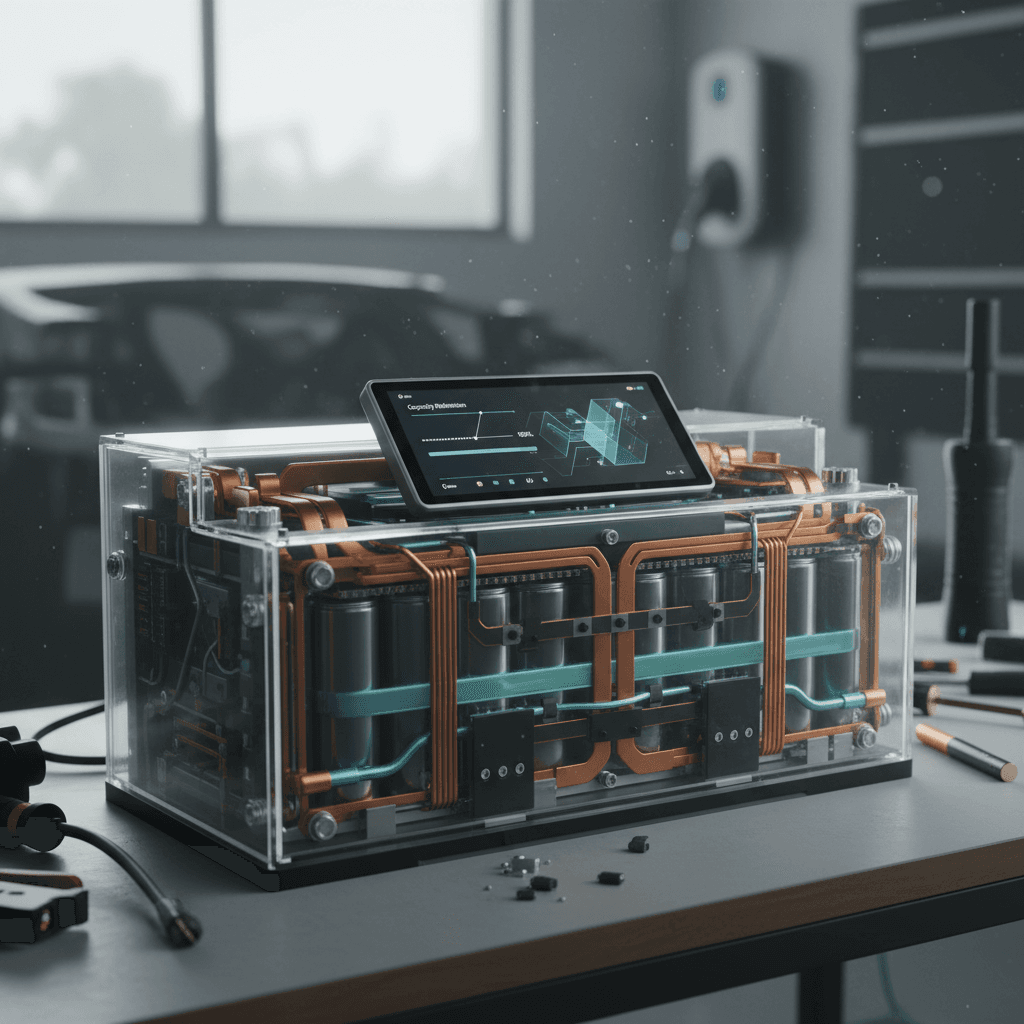
If you’re shopping for a used electric car, EV battery health is the one thing you absolutely can’t afford to ignore. Knowing how to check EV battery health before buying can be the difference between a great deal and a five‑figure headache a few years down the road.
The short version
Why battery health matters so much in a used EV
In a modern electric vehicle, the traction battery is its single most valuable component. It can represent 30–40% of the car’s original cost, and it directly controls your real‑world range, charging speed and resale value. While most EV packs only lose around 1–2% of capacity per year on average, poor care, hot climates or heavy DC fast charging can accelerate that degradation.
Used EV battery health at a glance
Unlike an engine in a gas car, you can’t “listen” to a pack on a test drive and know how healthy it is. That’s why you need a structured approach: simple checks you can do yourself, plus objective diagnostics from the car’s own battery management system or a professional report like the Recharged Score you get with every vehicle on Recharged.
Key battery health terms: SOH, SOC and degradation
Core EV battery health concepts
Understand these three metrics before you look at any report or app
State of Health (SOH)
SOH (%) compares the pack’s current usable capacity to when it was new.
- 100% SOH = factory‑fresh.
- 85–95% = normal on a 3–6‑year‑old EV.
- Below ~75% often triggers concern or warranty review.
State of Charge (SOC)
SOC (%) is how full the battery is right now, like a fuel gauge.
- 20–80% SOC is ideal for testing.
- Testing at 100% or 0% SOC can skew results.
Degradation
Degradation is the loss of usable capacity over time.
- Driven by age, miles, temperature and charging habits.
- Most modern packs lose ~1–2% per year.
Every method for checking EV battery health ultimately tries to answer one question: how much usable capacity is left compared with new? SOH is the clearest way to express that, but you can also estimate it from the car’s maximum displayed range or from a detailed diagnostic report.
Pro tip
Quick health check: using range and on‑screen data
Your first pass doesn’t require special tools. Most EVs give you enough data on the dashboard or central screen to do a quick gut check on battery health. This won’t replace a full diagnostic, but it can quickly reveal cars you shouldn’t waste time on.
- Charge the car close to 100%. Ask the seller or dealer to start with a full or near‑full charge before you arrive.
- Check the estimated range at 100% SOC. Note the number shown on the instrument cluster or central display.
- Compare it to the original EPA range. Divide the displayed range by the official rating (for example, 230 ÷ 259 miles ≈ 89% health for a Chevy Bolt).
- Look for built‑in battery health readouts. Some brands (including Tesla, certain Hyundai/Kia and others) offer a battery health or SOH screen in the vehicle or app.
- Review energy and charging screens. Scan for warnings, repeated DC fast‑charging sessions, or unusual temperature messages.
Watch the “guess‑o‑meter”
Digging deeper with apps and OBD diagnostics
To go beyond rough estimates, you can read the battery management system directly with an inexpensive OBD‑II adapter and a vehicle‑specific app. This is usually the most cost‑effective way for a private buyer to see precise SOH numbers, cell balance and temperature data before committing.
Popular EV‑specific OBD apps and tools
Always confirm compatibility with the exact model year before you buy hardware or software.
| Brand / Platform | Example apps or tools | What you can typically see |
|---|---|---|
| Nissan Leaf | Leaf Spy | SOH %, degradation bars, cell balance, temperature |
| Tesla | Scan My Tesla (with compatible adapter) | Pack and module data, temperatures, charge stats |
| Hyundai / Kia | Car Scanner ELM OBD2, EVNotify | SOH estimate, voltage, temperatures, charge power |
| VW, Ford, GM, others | Brand‑agnostic OBD apps | Basic battery metrics, fault codes, temperature ranges |
Where a brand offers an official battery report, that should be your first choice. Apps are a strong backup when OEM tools are limited.
What you need to get started
When you pull data, focus on three things: overall SOH percentage, whether any individual cells or modules look far weaker than the rest, and whether the pack is operating at sensible temperatures. A healthy used EV shows consistent cell voltages and temperatures with no big outliers.
Professional battery reports and the Recharged Score
If you’re spending serious money, or you simply don’t want to gamble, professional diagnostics are worth it. Dealers and EV specialists can run factory‑level tests that consumer apps can’t match, and newer services are emerging that specialize in independent EV battery reports based on real‑world driving data.
Ways to get a professional EV battery assessment
Use at least one of these for any high‑value purchase
OEM or EV specialist diagnostic
Most franchised dealers and EV‑focused shops can run a full battery health test using factory tools.
- Typical cost: roughly the price of a standard inspection.
- Best for: newer, higher‑value used EVs or anything near warranty limits.
Recurrent & similar battery reports
Some dealers now include third‑party battery history reports (similar to a Carfax but for EV packs).
- These aggregate charging, mileage and temperature data.
- Great for spotting fast‑charge‑heavy or high‑stress usage patterns.
How Recharged handles battery health
Ready to find your next EV?
Browse VehiclesIf you’re buying a used EV from a private seller or a generalist dealer, consider arranging an independent EV inspection that includes a written battery report. On a $25,000 car, spending a couple hundred dollars for an expert’s eyes is cheap insurance.
Reading the results: what is “good” EV battery health?
How to interpret SOH and range results
These are general guidelines. Always factor in age, miles, climate and how you plan to use the EV.
| Battery health | Typical SOH range | What it usually means | Buying guidance |
|---|---|---|---|
| Excellent | 95–100% | Very recent or lightly used EV; minimal degradation. | Safe to pay close to strong‑market pricing if the rest of the car checks out. |
| Very good | 90–95% | Normal aging for a 2–4‑year‑old EV with moderate miles. | Good balance of price and longevity for most buyers. |
| Good / acceptable | 85–90% | Common on 4–6‑year‑old EVs or vehicles with higher mileage. | Still solid, but negotiate based on reduced range and future degradation. |
| Borderline | 80–85% | Noticeable range loss, especially on lower‑range models. | Only proceed if heavily discounted and you’re comfortable with shorter trips. |
| High‑risk | <80% | Significant degradation; warranty claim or future pack work likely. | Treat as a project car; most buyers should walk away. |
A slightly lower SOH isn’t a deal‑breaker if the price reflects it and the remaining range still fits your daily needs.
Don’t ignore the use case
Red flags in charging history and vehicle history
Battery health isn’t just about one number; it’s also about how the car has been used. The history behind those miles can tell you whether the pack had an easy life or a brutal one.
- Heavy dependence on DC fast charging (for example, a prior life as a rideshare or long‑distance commuter) can accelerate degradation and strain thermal systems.
- Long periods parked at 100% charge in hot weather are tough on lithium‑ion chemistry.
- Frequent exposure to very hot or very cold climates without proper thermal management takes a toll over time.
- Any accident or insurance record involving the battery area should trigger close scrutiny or a professional structural inspection.
- Missing or thin service history, especially for coolant service or battery‑related recalls, suggests poor overall care.
Salvage and rebuilt titles
Test‑driving and test‑charging the EV
Numbers on a screen are important, but nothing beats seeing how the car behaves on the road and at a charger. Your goal is to confirm that the EV delivers the range and charging behavior you expect, without hidden fault codes or hardware issues.
On‑road test
- Start with at least 60–70% SOC so you can watch how the range estimate drops.
- Drive a mix of city and highway miles over 20–30 minutes.
- Watch for sudden, non‑linear drops in remaining range that could suggest cell issues.
- Check for any power‑limiting warnings or thermal alerts.
Charging test
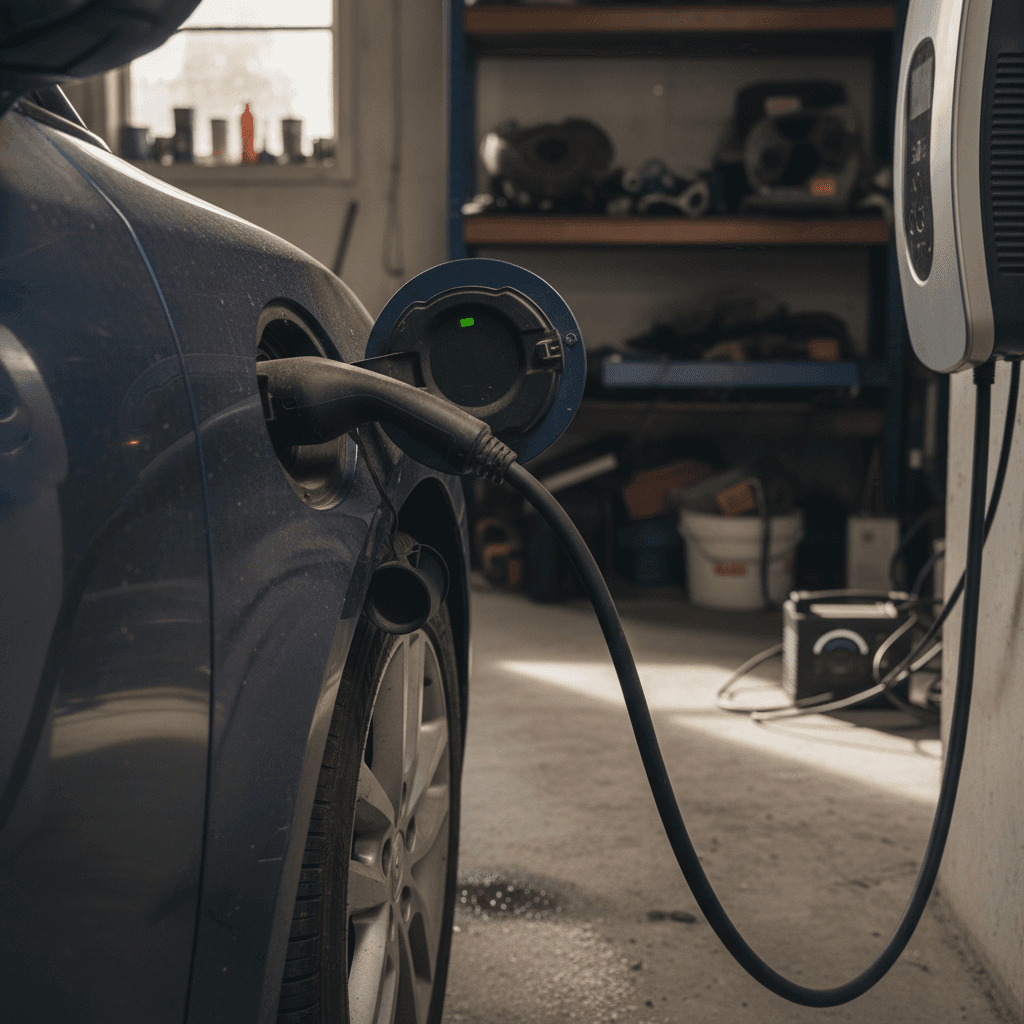
- If possible, plug into a Level 2 charger and confirm the car starts charging cleanly.
- On DC fast chargers, verify the EV reaches a reasonable power level for its model, then tapers normally past ~80% SOC.
- Inspect the charge port and cables for damage, corrosion or poor fit.
Make the most of limited time
Battery warranty coverage and transfer
In the U.S., EV buyers benefit from a strong baseline: federal rules require at least an 8‑year / 100,000‑mile battery warranty on new EVs, and many brands match that with a promise to repair or replace the pack if it falls below about 70% capacity during the term. Some automakers go further with 10‑year or higher‑mileage coverage.
- Confirm the in‑service date so you know when the 8‑year clock started.
- Check whether the battery warranty is transferable to you as the next owner (it usually is, but read the fine print).
- Ask whether any battery warranty claims have already been made and how they were resolved.
- Use the VIN to confirm warranty status through the automaker or an authorized dealer.
Warranty is a safety net, not a guarantee
Step‑by‑step checklist before you buy
Used EV battery health checklist
1. Gather the basics
Look up the EV’s original EPA range and battery size, plus the in‑service date and current mileage. This gives you a baseline for any health numbers you see.
2. Do a dashboard range sanity check
Charge near 100%, record the displayed range and compare it to the original spec. Roughly translate that into an implied SOH percentage.
3. Pull battery data if possible
Use a compatible OBD‑II adapter and app, or ask the seller for an official battery health report or third‑party EV battery report.
4. Review history and usage patterns
Examine service records, charging habits, climate exposure and any collision history involving the battery or underbody.
5. Test‑drive and test‑charge
Drive a realistic route, then plug into Level 2 (and DC fast if you can) to confirm normal behavior and charging speeds with no warning lights.
6. Check warranty status
Verify remaining battery warranty in years and miles, and make sure it’s transferable. Factor this into your risk tolerance.
7. Compare price to battery health
If SOH and range are lower than expected, the sale price should reflect that. A weaker pack isn’t automatically a deal‑breaker, but it should never command top‑tier money.
FAQ: battery health before buying a used EV
Frequently asked questions about checking EV battery health
Bottom line: how to buy a used EV with confidence
Checking EV battery health before buying doesn’t have to be mysterious. Combine a simple range sanity check, targeted diagnostics (through apps or professional tools), a careful look at charging and accident history, and clear warranty verification. When you put those pieces together, you’ll quickly separate strong candidates from cars that will frustrate you in a year or two.
If you’d rather not build that process from scratch, you can let Recharged do the heavy lifting. Every used EV we sell comes with a Recharged Score battery health report, fair pricing guidance, financing options, trade‑in support, and even nationwide delivery, plus EV‑specialist advisors who speak this language every day. However you choose to shop, make sure battery health is front and center. Your future range, resale value, and peace of mind depend on it.