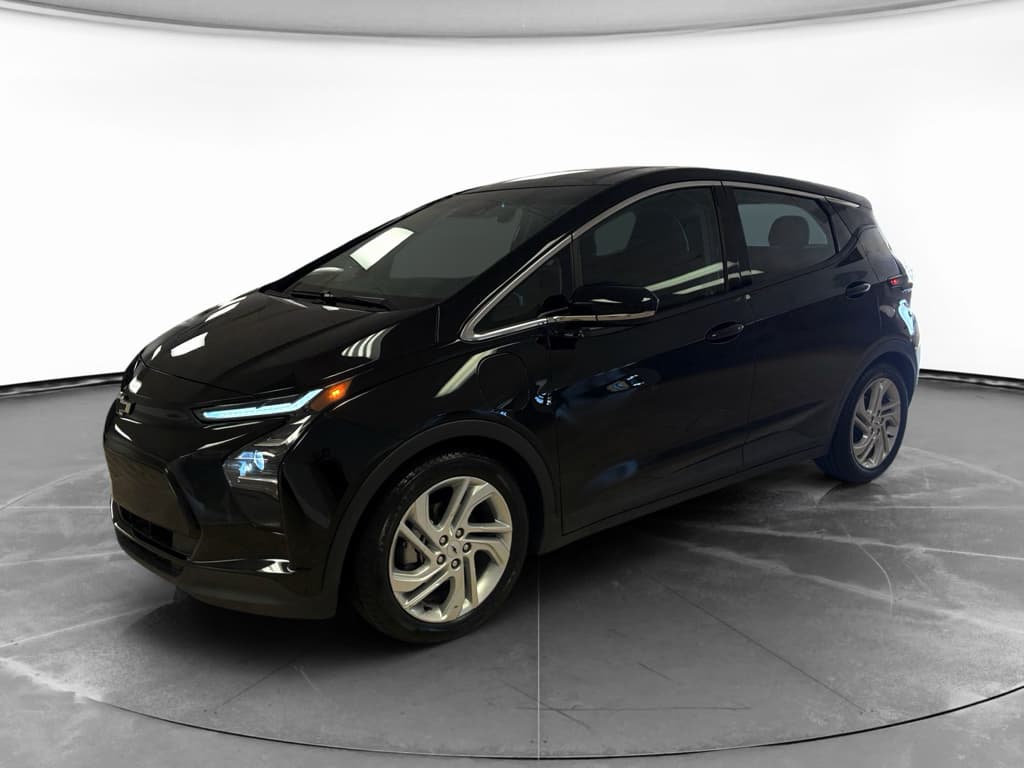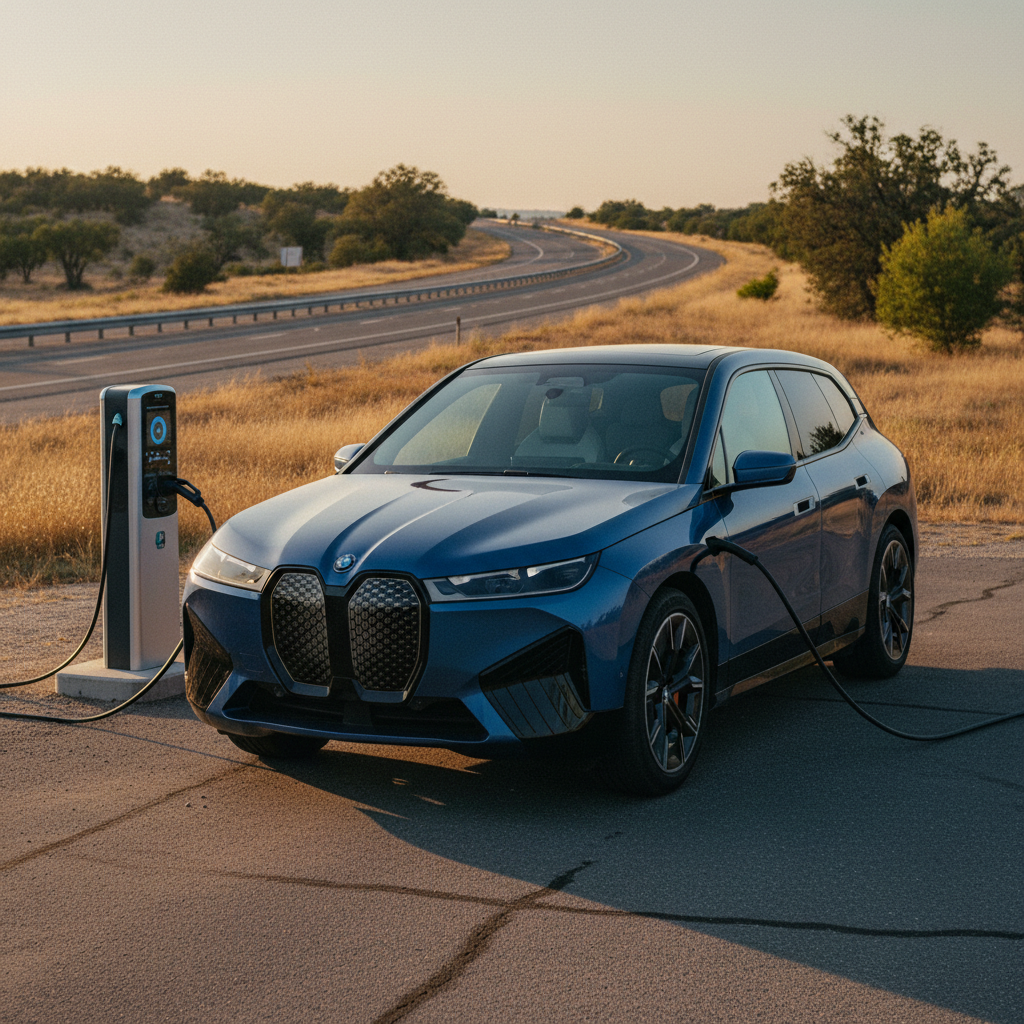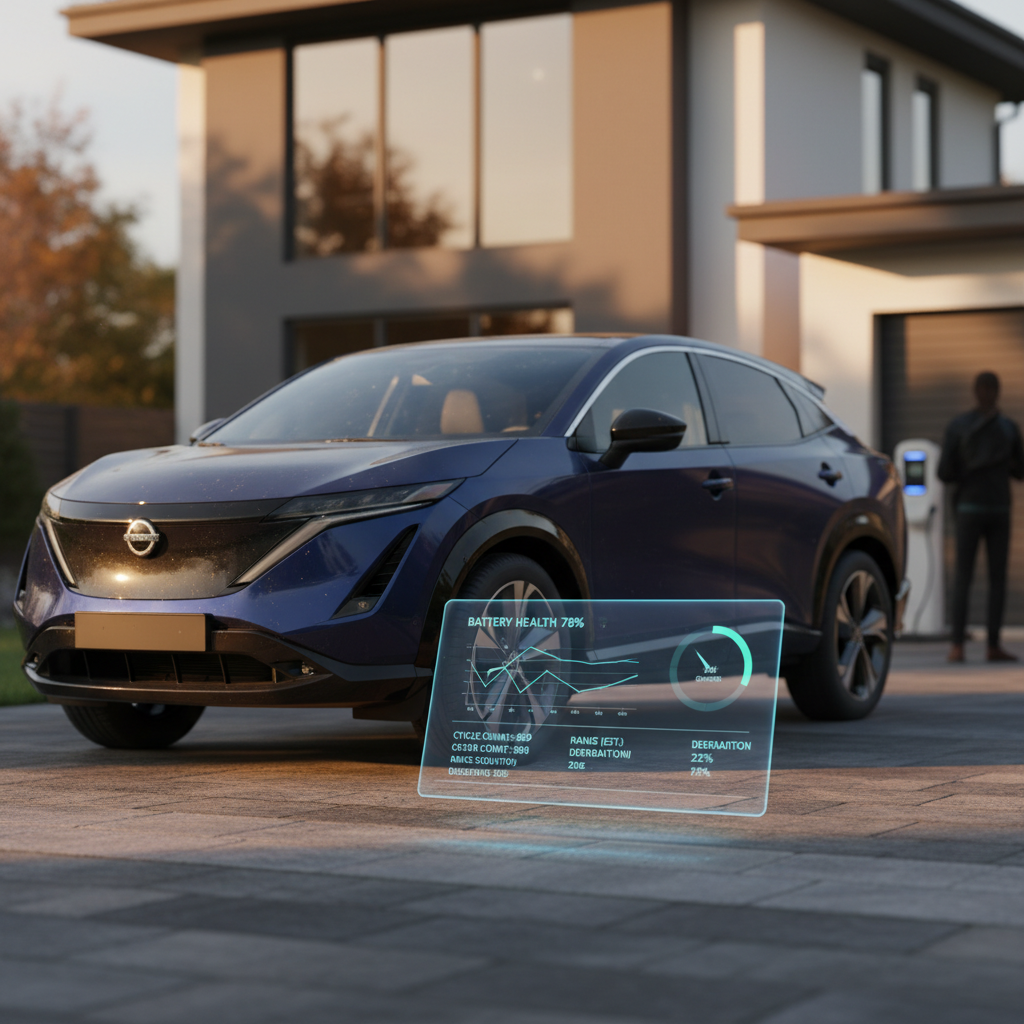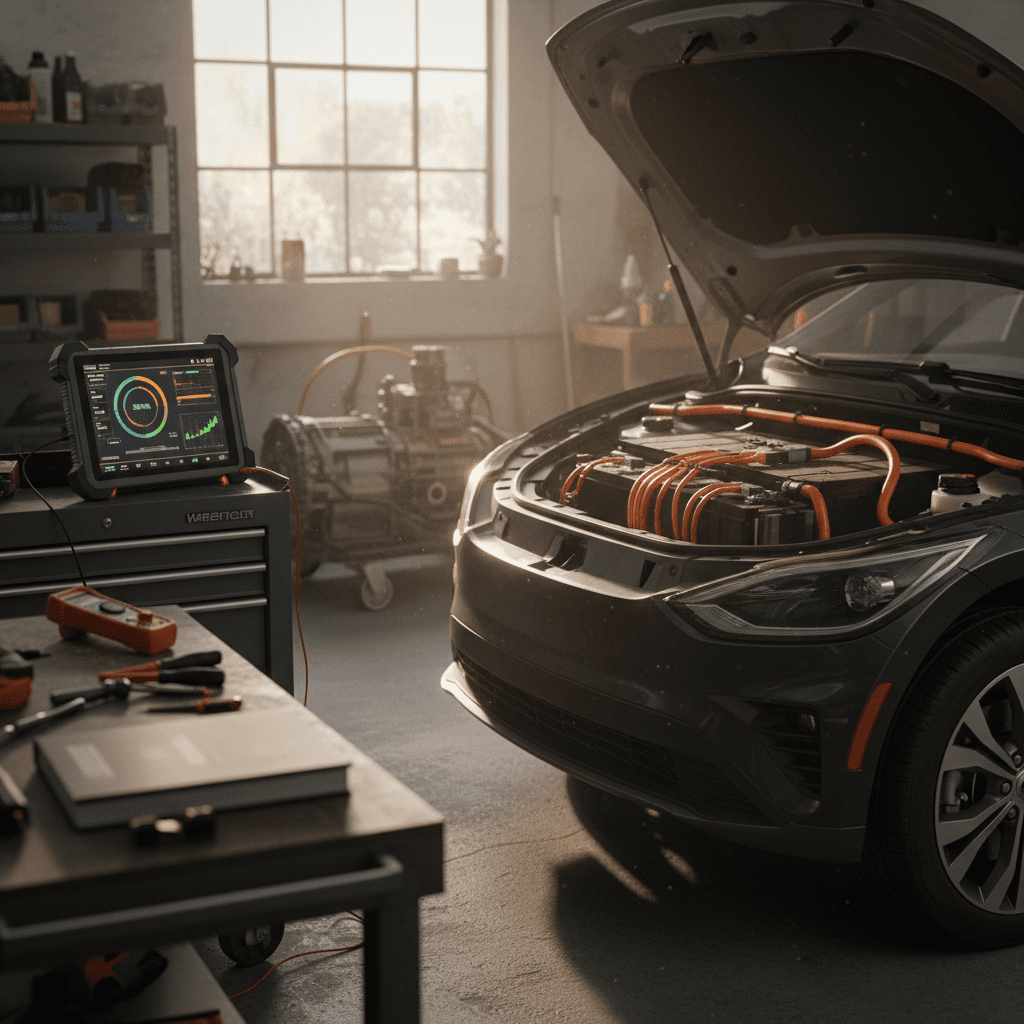
If you remember only one thing about buying a used EV, make it this: the deal lives or dies on the battery. Learning how to check EV battery health before buying used isn’t a nerdy extra, it’s the difference between years of cheap, quiet motoring and funding someone else’s science experiment.
The EV used-car twist
Why battery health matters so much in a used EV
The high‑voltage pack is usually the single most expensive component in an electric car. Replace it outright and you’re often talking five figures; even module‑level repairs can erase any savings from buying used. Battery health also quietly dictates how the car feels to live with: how far you can actually go on a charge, how fast you can DC fast‑charge on road trips, how confident you feel in winter, and what the car will be worth when you sell it.
- Stronger battery health = more real‑world range and easier road trips.
- Better health = faster, more consistent DC fast‑charging.
- Healthy packs support higher performance modes without throttling.
- Buyers and lenders increasingly price used EVs around verified battery condition, not just mileage.
The good news: modern packs age more slowly than early EVs, and most 3–6‑year‑old cars show modest degradation when they’ve been treated decently. The bad news: you rarely get the full story in the listing. You have to ask the right questions and run a few simple tests.
What “battery health” really means: SoH, range and degradation
Battery‑health terms you actually need
Jargon translated into buyer language
State of Health (SoH)
Think of SoH as a percentage of original capacity. A pack at 92% SoH can hold about 92% of the energy it had when new.
Usable range
The real‑world miles you can drive on a charge in your conditions. This is what your daily life runs on, not the window‑sticker number.
Degradation
The loss of capacity over time, usually described as a percentage (for example, “about 8% down from new”). Some early miles are lost quickly, then the curve usually flattens.
You’ll see manufacturers, apps and reports talk in these terms. Your job as a used‑EV shopper is to connect the dots: what does this battery’s current health mean for my commute, my road trips and my ownership horizon?
Watch the units
Quick screening: battery clues in the listing before you go
Before you burn a Saturday driving across town, you can learn a lot about a used EV’s battery from the listing itself. Most shoppers skip this step and end up test‑driving obvious duds.
5 battery questions to answer from the listing
1. Does the ad mention battery health at all?
Phrases like “recent battery health report,” “XX% SoH,” or “certified with battery test” are a good start. Vague language like “battery is fine” without numbers is not a substitute.
2. Do photos show the dash at a high charge level?
A clear photo of the instrument cluster at, say, 80–90% charge with the estimated range visible gives you a first sanity check when you compare it with the EPA rating.
3. Is there a big discount vs. similar cars?
An unusually low price for the year, mileage and trim can signal hidden issues, including a tired pack. It might be a bargain, or it might be a battery someone wants to offload.
4. Any mention of fast‑charging habits?
Heavy DC fast‑charging isn’t automatically bad, but an ex‑fleet car that lived on fast chargers in hot weather deserves extra scrutiny.
5. Does it mention battery warranty?
Look for remaining 8‑year / 100,000‑mile (or more) EV battery warranty coverage and whether any battery work has already been performed under warranty.
Listing red flag
Step 1: Check what the dash is already telling you
Once you’re with the car, don’t rush straight to the test drive. Start with the free data on the instrument cluster and infotainment screen. Modern EVs tell on themselves if you know where to look.
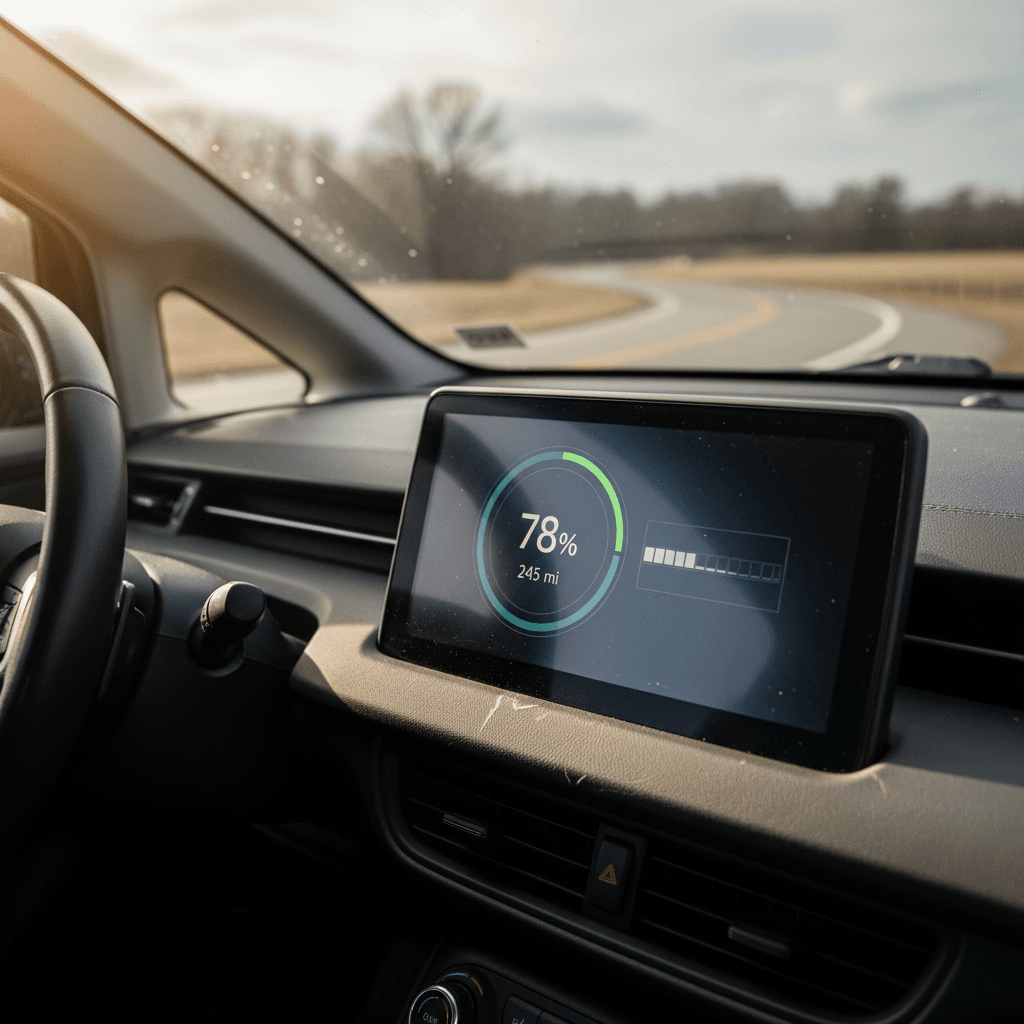
- Ask the seller to charge the car to at least 80% before you arrive, so range estimates are meaningful.
- Note the state of charge (SoC) percentage and the estimated remaining range. For example: 82% and 210 miles.
- Compare that to the car’s original EPA range. If this model was rated at 260 miles new, 210 miles at ~80% can be perfectly normal once you factor in temperature, terrain and tires.
- Check for warning lights related to the high‑voltage system, reduced‑power modes or charging faults.
- Poke around the energy or battery menu for any built‑in battery health or capacity display. Some brands now expose SoH or “usable capacity” in settings.
A quick mental math trick
Step 2: Do a simple real‑world range test
You don’t need a lab or a PhD to sense whether a used EV’s battery is behaving. A modest, controlled drive can tell you if the range display is honest or just optimistic fiction.
- Start with the car at 60–80% charge. Note the exact SoC and estimated range.
- Drive a 30–40‑mile loop that mixes city and highway, staying near the speed limit and avoiding aggressive acceleration.
- Turn off extreme HVAC use for the test: no full‑blast defrost, no sauna‑level heat, aim for typical comfort.
- At the end, record the new SoC and estimated range.
- Compare the percentage of charge used to the miles actually driven.
If you drive 35 miles and the battery drops around 15–20% with range falling by roughly the same amount, that’s consistent. If you drive 20 miles and lose 35% of the battery on a mild day at normal speeds, you either hit unusual conditions, or the pack isn’t in great shape.
Adjust for weather and terrain
Step 3: Use apps or an OBD tool for deeper data
If you’re serious about a particular car, or shopping in a private‑party jungle, an inexpensive OBD‑II dongle plus a good EV app can pull battery data the dashboard hides. This is where you move from vibes to numbers.
DIY battery health tools most shoppers can use
A small investment that can save thousands
OBD‑II Bluetooth dongle
Think $30–$70 for a reputable adapter that plugs into the car’s diagnostic port. Look for devices known to work well with EV‑specific apps.
EV‑aware apps
Apps built for specific brands (like Nissan Leaf tools) or general EVs can read pack capacity, cell balance, fast‑charge history and more, when the car exposes that data.
Battery‑health apps & services
Newer services specialize in battery‑health reports for used EVs, often combining OBD data with model‑specific degradation curves. Great for comparing multiple candidates before you buy.
The catch: not every automaker exposes clean SoH numbers to third‑party apps, and readings can be inconsistent across brands. Treat DIY data as one more input, not holy scripture. If your app says 82% SoH and the car drives like it, you’re in the right ballpark.
Don’t brick the deal over a sketchy dongle
Step 4: Ask for a professional battery health report
This is where the adults in the room show up. A professional EV battery health report pulls data directly from the car’s battery management system (BMS) using factory or specialist tools, then interprets it against what’s normal for that model and mileage.
Common sources of battery health reports
Not all “reports” are created equal. Here’s what they usually are, and how much weight to give them.
| Source | Who provides it | What you typically get | How to use it |
|---|---|---|---|
| OEM dealer report | Brand dealership service department | Print‑out or PDF showing pack capacity, SoH estimate, fault codes, temperature history. | Best when recent (last 3–6 months). Great baseline, but ask the service advisor to walk you through the numbers. |
| Independent EV specialist | Third‑party EV shop or mobile inspection service | Deeper scan plus model‑specific interpretation and a written opinion on remaining life and risk factors. | Excellent for peace of mind on out‑of‑warranty cars or sketchy history. |
| Generic pre‑purchase inspection | Traditional used‑car inspection service | Usually focuses on brakes, tires, bodywork, fluids; EV battery often treated as a black box. | Useful for everything except the high‑voltage pack. Combine with a separate battery test. |
| Handwritten “battery is fine” note | Seller or non‑EV dealer | No data, just vibes. | Not worth much. Keep asking for numbers, not adjectives. |
Ideally, your deal includes at least one of the options in the top two rows.
Ideally, you want a recent, data‑backed report that calls out SoH, usable capacity and any recorded battery faults. If a seller or dealer refuses to provide anything beyond a shrug, either negotiate the price as if the battery is unknown, or walk.
What you get from Recharged
Ready to find your next EV?
Browse VehiclesStep 5: Verify battery warranty and recall status
Even if the pack shows some degradation, the remaining battery warranty and recall history can turn a borderline deal into a smart one, or expose a future headache.
- Most EVs sold in the U.S. carry at least an 8‑year / 100,000‑mile battery warranty, sometimes more.
- Some brands define warranty failure as dropping below a certain SoH or range (for example, 70% of original capacity) within the warranty period.
- Battery‑related recalls or software updates can significantly change how the pack behaves over time.
- A clean CARFAX or similar report doesn’t guarantee battery health, but it can surface prior battery work or high‑voltage incidents.
Do the VIN homework
How much degradation is “normal” on a used EV?
Battery degradation isn’t a flat line. Many packs lose a few percent early, then settle into a slow fade. What’s acceptable depends on the model, age, climate and how long you plan to keep the car, but there are some broad lanes.
Very rough, model‑agnostic degradation ballpark
Those aren’t promises, they’re context. Some early EVs degrade faster; some modern packs with good thermal management hardly budge in the first 80,000 miles. What matters is whether this specific car’s health lines up with what’s typical for its model, and whether the price reflects reality.
Red flags that should make you walk away
Battery‑related dealbreakers to treat very seriously
No data, lots of pressure
The seller refuses to share any report, won’t let you take dash photos, and pushes you to “decide today.” That’s not how good batteries or good deals behave.
Severe range loss vs. peers
Your test drive suggests dramatically less range than similar cars of the same model and year, in similar conditions, with no obvious explanation like huge wheels or roof boxes.
Frequent high‑voltage faults
The car has a history of high‑voltage errors, reduced‑power modes, or charging failures, and there’s no clear documentation that the root cause was fixed.
Unverified third‑party pack swap
An off‑brand or undocumented battery replacement with no paperwork, no warranty and no way to confirm specs is a science project, not a used car deal.
SoH far below market norms
Independent or OEM reports show SoH significantly below what’s typical for that model and mileage, and the price doesn’t fully reflect the future risk.
Don’t fall in love with a bad pack
Brand‑specific shortcuts and quirks
Every automaker hides and reveals battery data differently. A full brand‑by‑brand breakdown could fill its own guide, but here are a few high‑level patterns you’ll run into.
Brands that surface more data
- Some newer EVs now show more honest usable capacity or SoH‑like numbers in the infotainment settings.
- Owner apps increasingly display long‑term battery stats, especially after 2024–2025 software updates.
- Certified pre‑owned programs from EV‑focused brands sometimes include a formal battery test as part of the inspection.
When a brand gives you tools, use them: screenshot app data, save PDFs, and keep everything with your purchase records.
Brands that stay opaque
- Some mainstream automakers still treat the high‑voltage pack as a sealed mystery box.
- Dealer “battery certificates” can gloss over actual SoH, focusing instead on “passes self‑check” language.
- You may need dealer‑level tools or independent specialists to get hard numbers, especially on older models.
In opaque ecosystems, lean harder on test drives, OBD tools, and professional inspections, or choose a car from a brand that believes you deserve the data.
FAQ: Used EV battery health
Frequently asked questions about checking used EV batteries
Bottom line: make the battery prove it
There’s nothing magical or mysterious about checking EV battery health before buying used. You’re doing what savvy gas‑car shoppers have always done with engines and transmissions, only now the numbers are digital, and the stakes are higher. Look for evidence in the listing, read what the dash is telling you, do a simple range test, lean on the right tools, and don’t be afraid to walk when the battery’s story doesn’t add up.
If you’d rather skip the detective work, shop through Recharged. Every car comes with a Recharged Score battery health report, fair pricing that accounts for pack condition, and experts who live and breathe EVs, not just whatever’s on the lot this week. However you shop, make the battery prove it before you sign. Your future self, stuck at a charger or gliding past it, will thank you.