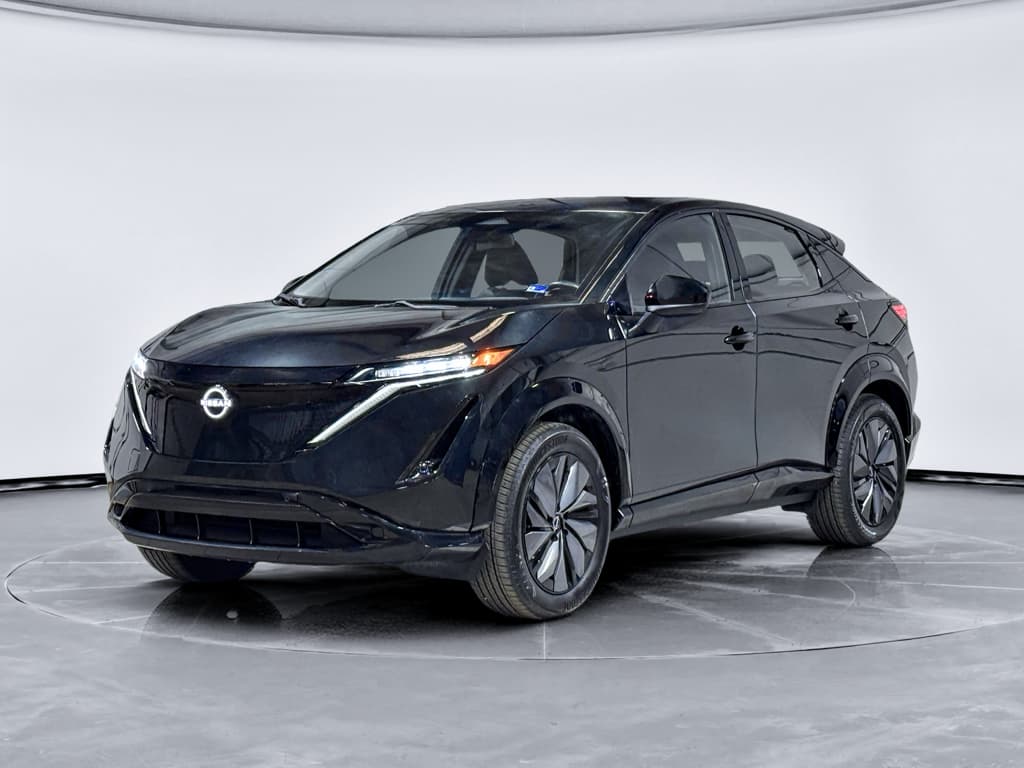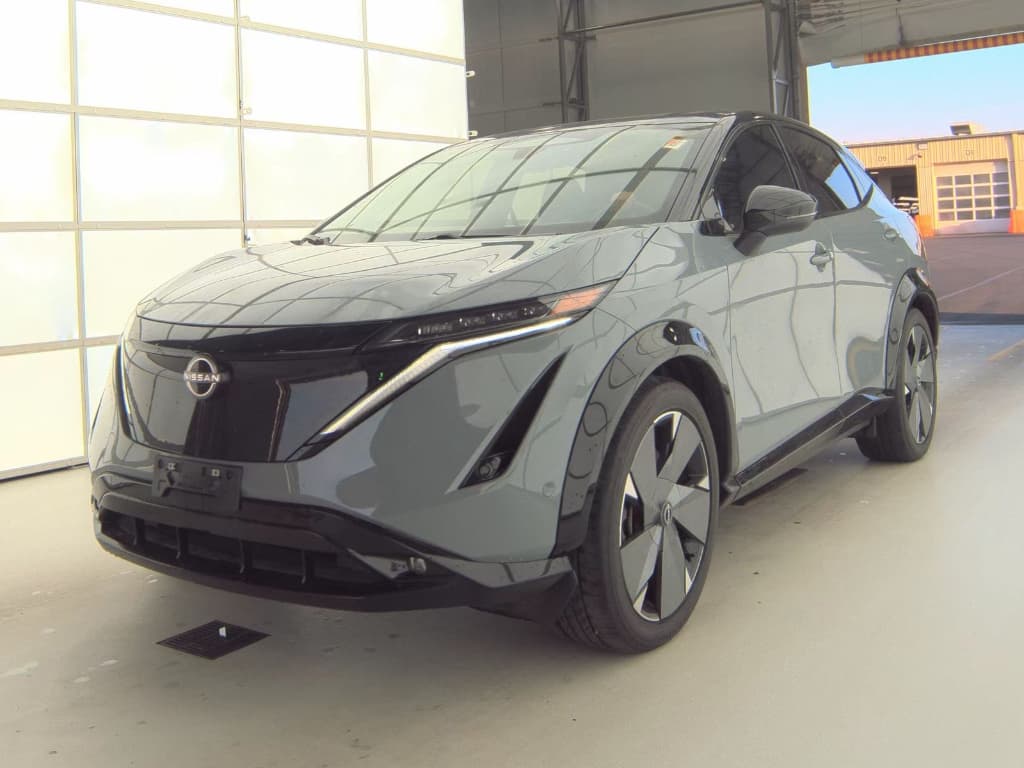
If you’re searching for a Nissan Ariya long term review in 2026, you’re probably looking at a used one rather than building a new order. That’s because Nissan has confirmed the Ariya will bow out of the U.S. lineup after the 2025 model year, even as a refreshed version continues in Japan and other markets. That twist makes the Ariya an unusually interesting used EV: a well-rounded electric SUV with a finite supply and some important long‑term questions around battery life, charging behavior, and resale value.
Quick snapshot
Why a Nissan Ariya long-term review matters in 2026
When the Ariya finally reached U.S. dealers for the 2023 model year, it was late to the party but hardly an afterthought. It rode on a new EV platform, offered two battery sizes and optional all‑wheel drive, and was clearly positioned as Nissan’s upmarket electric sibling to the Leaf. Fast‑forward to 2026 and the picture has changed: Nissan is pivoting U.S. volume toward a new, SUV‑like Leaf and pausing Ariya production for this market after the 2025 model year. For you as a used‑EV shopper, that means two things:
- You’ll only ever be shopping 2023–2025 U.S. cars, mostly coming off early leases or first owners trading up.
- Pricing and availability will increasingly reflect used‑market dynamics, not factory incentives or fresh lease deals.
How Recharged can help
Model overview and what changed by 2025–2026
The Ariya launched globally in 2020 and reached U.S. customers as a 2023 model, slotted as a compact‑to‑midsize two‑row electric SUV. All U.S. cars use Nissan’s CMF‑EV platform and a liquid‑cooled battery pack, with either single‑motor front‑wheel drive or dual‑motor e‑4ORCE all‑wheel drive.
Key Nissan Ariya configurations (U.S. 2023–2025)
Approximate specs for the most common U.S. Nissan Ariya variants. Always verify exact equipment on a specific used vehicle.
| Configuration | Drive | Battery (usable kWh approx.) | EPA range (mi, new) | Power (hp) |
|---|---|---|---|---|
| Engage FWD (small pack) | FWD | ~63 | ~215–216 | ~214 |
| Venture+/Evolve+/Empower+ (big pack) | FWD | ~87 | ~289–304 | ~238 |
| Engage e‑4ORCE (small pack) | AWD | ~63 | ~205 | ~335 |
| Evolve+ / Platinum+ e‑4ORCE (big pack) | AWD | ~87 | ~265–289 | ~389 |
The Ariya is most appealing in its larger‑battery trims, especially for highway‑heavy drivers.
For U.S. shoppers in 2026, the practical takeaway is that you’ll mostly be choosing between early‑build 2023s and mildly updated 2024–2025 models. Nissan made only incremental visible changes, trim reshuffles and standard wireless phone charging for 2025, before deciding to discontinue the Ariya here. A more thorough facelift with a cleaner front end and Google‑based infotainment is being reserved for Japan and other regions, at least for now.
Don’t confuse "no 2026 model" with "orphaned"
Battery packs, range and real‑world efficiency
Nissan Ariya long‑term battery and range snapshot
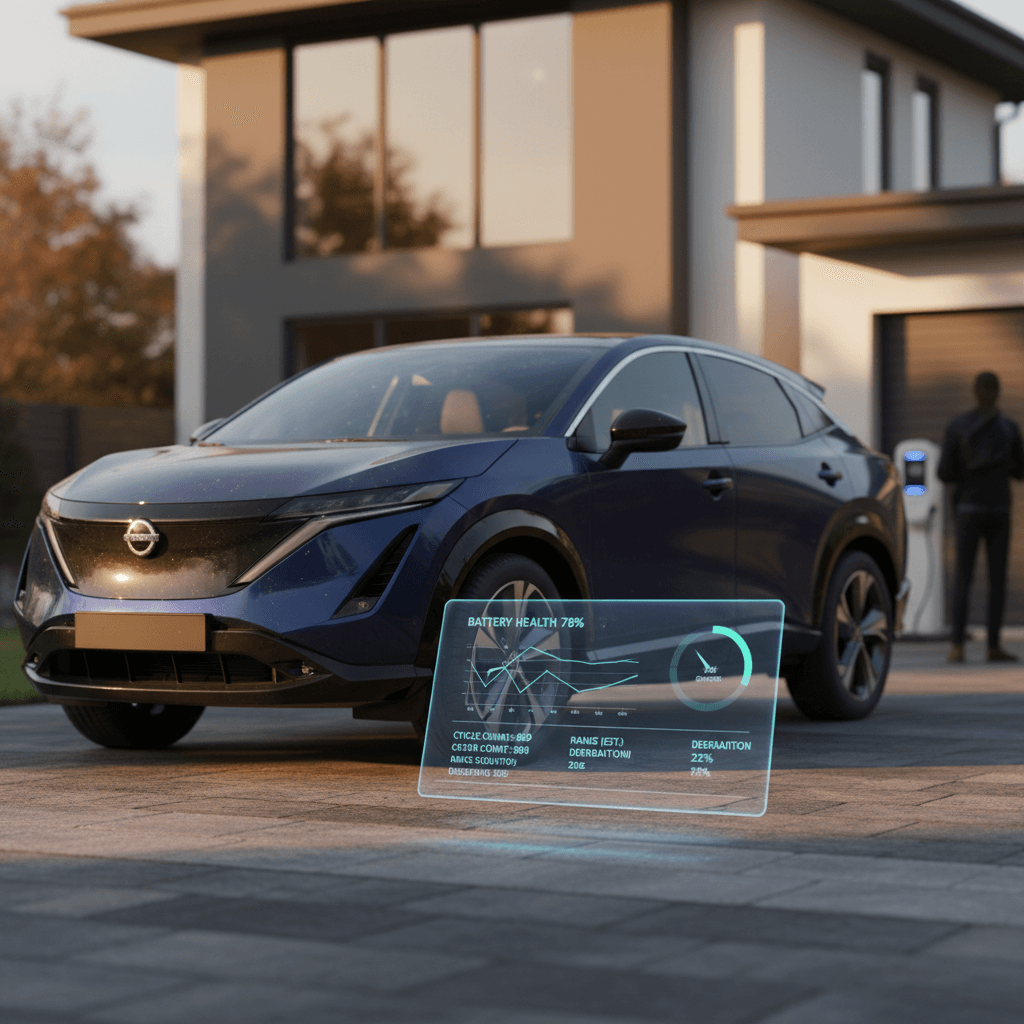
One of the biggest long‑term questions around any used EV is whether the main battery is holding up. The Ariya has engineering on its side here: liquid cooling, a modern chemistry, and conservative power outputs relative to pack size. Early owner reports through 2025 haven’t surfaced a systemic battery‑health problem. Most cars with typical mileage are still delivering close to their original range numbers, especially the larger‑pack versions.
Understanding real‑world range
Small pack ("63 kWh" class)
These lower‑range trims are fine for urban and short‑commute duty but are more sensitive to degradation. Losing 10–15% of capacity over many years bites harder when you start around 210 miles of EPA range.
Best for: Low‑mileage city commuters who can charge at home and rarely road‑trip.
Big pack (~87 kWh)
The larger pack gives a more comfortable buffer for aging, cold weather, and DC fast‑charging. Even if you lose a slice of capacity over 8–10 years, you’re still in practical road‑trip territory.
Best for: Mixed city/highway drivers, regular weekend trips, households with just one car.
How to gauge an Ariya’s battery health quickly
Charging experience: home and DC fast charging
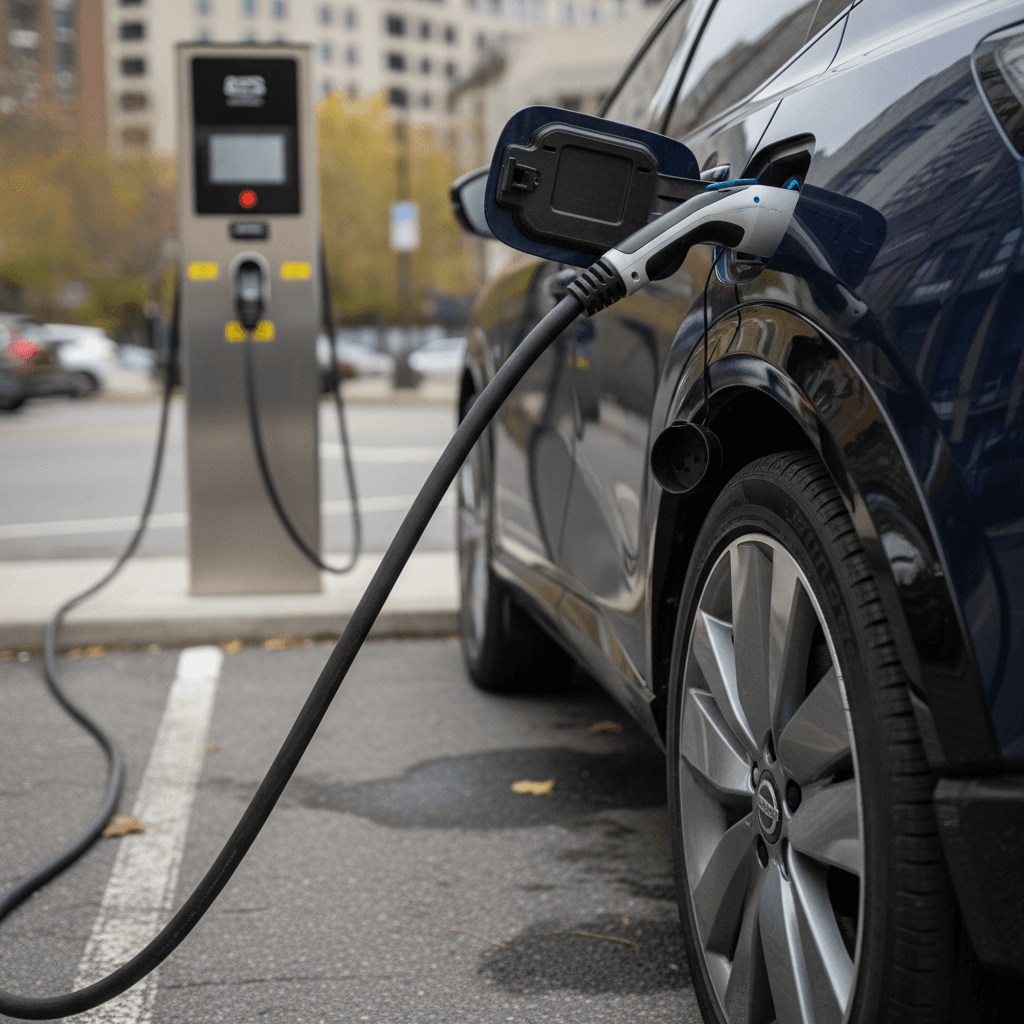
The Ariya is straightforward to live with if you mainly charge at home. All trims support typical North American Level 2 charging, and with the larger pack you can comfortably top up overnight on a 40‑amp or 48‑amp EVSE. Efficiency isn’t class‑leading, but the quiet, relaxed character makes up for an extra stop on very long drives.
How the Ariya charges in the real world
What long‑term owners should know about home and DC fast charging
Home Level 2
On a 40‑amp Level 2 charger, expect roughly 25–30 miles of range per hour of charging, depending on temperature and trim. That’s easily enough to refill a typical commute overnight.
DC fast charging
The Ariya can accept competitive peak DC rates, but its curve is conservative compared with the latest Hyundai/Kia or Tesla designs. Plan road trips around 30–35 minute stops from low state of charge to ~80%.
Nissan’s cautious guidance
The owner’s manual and some Nissan communications encourage minimizing frequent DC fast charging, which many owners interpret as a warranty hedge. Occasional road‑trip use is fine; using DC as your primary fuel up is less ideal long‑term.
Watch for mixed messaging on DC fast charging
If you’re coming from a Tesla or the newest Hyundai/Kia 800‑volt platforms, the Ariya’s charging experience will feel a step behind on long trips. If your baseline is a first‑gen Leaf or plug‑in hybrid, it will feel like night and day. The right comparison set matters.
Reliability and common issues so far
The Ariya doesn’t yet have the decade‑plus track record of the Leaf, but by 2026 we have several model years and a meaningful owner base to learn from. Overall, it’s landed in the "solid but not flawless" bucket: fewer horror stories than some early‑adopter EVs, but not entirely free of gremlins either.
Known Nissan Ariya long‑term trouble spots (early years)
Patterns from owner forums, service reports, and early reliability data
12‑volt battery and electronics issues
Multiple owners have reported 12‑volt battery failures or warning lights in the first year or two of ownership, sometimes accompanied by drivetrain or charging system errors. In many cases the fix has been straightforward, replacing the 12‑volt battery or a related component, but it’s a reminder that EVs still depend on this conventional part.
Cooling components & error messages
There have been scattered reports of coolant‑pump or sensor issues triggering "service EV system" messages. These haven’t risen to the level of a major recall wave so far, but on a used Ariya you want to scan for stored fault codes and confirm any related work was done by a Nissan dealer.
What we’re *not* seeing yet
Because the Ariya is built in relatively low volumes compared with mass‑market ICE crossovers, individual problem stories can sound scarier than the statistical reality. The key when buying used is to focus less on anecdotes and more on the specific car in front of you: service history, open recalls, and an independent health report.
Leverage diagnostics, not vibes
Interior comfort, tech and practicality
If you spend a lot of time commuting or road‑tripping, the Ariya’s interior is one of its biggest long‑term strengths. Nissan went for a calm, almost lounge‑like cabin with a low cowl, open floor, and available sliding center console. Noise levels are low even at highway speeds, and the seats are some of the more comfortable in this class, particularly in the higher trims with upgraded materials.
Space and practicality
- Plenty of rear‑seat legroom for adults, helped by the long wheelbase.
- Cargo space is competitive with other compact EV SUVs; the sloping rear roofline eats into vertical space but most families will be satisfied.
- No front trunk (frunk), so storage flexibility isn’t quite at Tesla Model Y levels.
Tech and interfaces
- Dual screens with mostly intuitive layouts, though some touch‑panel controls can feel more like concept‑car gimmicks than ergonomic wins.
- Wireless Apple CarPlay/Android Auto in later model years, plus standard wireless phone charging by 2025.
- ProPILOT Assist driver‑assist suite is competent but not class‑leading; it’s a good lane‑keeping and adaptive‑cruise helper, not a semi‑autonomous system.
Screen aging and software support
Driving experience and performance
On the road, the Ariya skews toward comfort rather than sport. Even the e‑4ORCE dual‑motor versions focus more on smoothness and traction than neck‑snapping launches. That’s actually a plus for long‑term livability: you get quiet, confident acceleration in everyday driving without constantly tempting yourself to annihilate range with full‑throttle blasts.
What it’s like to drive an Ariya years down the road
Comfort‑first tuning with enough punch when you need it
Ride & refinement
The Ariya rides on the firmer side of comfortable, and some early reviews criticized its composure on sharp impacts. Nissan has hinted at tuning tweaks in other markets, but in U.S. cars the overall impression is still of a stable, quiet highway cruiser.
Performance
Single‑motor FWD trims feel adequately quick. Dual‑motor e‑4ORCE versions cross into genuinely quick territory, especially at city speeds, while still being easy to modulate in traffic or slippery conditions.
One‑pedal feel
Regeneration is configurable but doesn’t create quite the same one‑pedal driving experience as some rivals. For long‑term comfort, that’s subjective: some drivers prefer more coast‑like behavior, others want stronger regen.
If you’re chasing maximum back‑road thrills, a Kia EV6 GT or Tesla Model Y Performance offers sharper responses. If you prioritize arriving relaxed rather than exhilarated, the Ariya’s character is more aligned with that mission.
Depreciation and used‑market value in 2026
EV depreciation has been a moving target, especially as new‑EV price cuts and federal‑credit changes ripple through used values. The Ariya occupies an interesting middle ground. It doesn’t have Tesla’s brand gravity or charging‑network halo, but it also hasn’t been battered by the same scale of headline‑grabbing price cuts.
How the Ariya fits into the 2026 used‑EV value picture
Qualitative comparison of resale positioning vs. key rivals, based on observed used‑market trends into 2026.
| Model | Brand pull | Used‑price volatility | Charging advantage | Perceived tech edge |
|---|---|---|---|---|
| Nissan Ariya | Moderate | Moderate | Average (CCS/NACS adapter) | Moderate |
| Tesla Model Y | Very high | High | Strong Supercharger access | High |
| Hyundai Ioniq 5 | High | High | Fast charging, solid networks | High |
| VW ID.4 | Moderate | High | Average | Moderate |
| Ford Mustang Mach‑E | High | High | Improving with NACS access | Moderate–High |
The Ariya trades on comfort and battery stability more than hype, which can work in your favor as a shopper.
Why the Ariya can be a value sweet spot
By 2026, the U.S. new‑car market has moved on, but that’s exactly why the Ariya gets more interesting as a used proposition. You’re no longer competing with factory subvented lease deals on the same model; you’re simply asking whether this specific EV, at this specific price, matches your needs better than the alternatives in your search results.
Who the Nissan Ariya suits best
Is a used Nissan Ariya aligned with your life?
Best‑fit owners
You commute a moderate distance and can charge at home most nights.
You value a quiet, comfortable ride over sharp handling or wild acceleration.
You want a liquid‑cooled battery and mainstream service network rather than bleeding‑edge tech.
You’re happy using CCS public networks (and NACS via adapter where available) instead of relying solely on Tesla Superchargers.
Borderline fit
You road‑trip frequently in rural areas where CCS coverage is still patchy.
You expect to live on DC fast charging because you can’t install home Level 2.
You want the absolute quickest charging or most connected infotainment experience on the market.
Poor fit
You’re chasing track‑toy performance and sharp handling in your EV SUV.
You expect Tesla‑style software cadence and autonomous‑driving marketing.
You’re uncomfortable buying a model that’s been discontinued new in your market, even with ongoing support.
Used‑buying checklist for a Nissan Ariya
10 steps to a smarter long‑term Ariya purchase
1. Confirm battery size and drivetrain
Verify whether you’re looking at the small or large pack and FWD vs e‑4ORCE AWD. Range, performance, and long‑term flexibility all hinge on this choice.
2. Review battery health
Ask for a recent battery‑health report. On Recharged, the Recharged Score report quantifies estimated remaining usable capacity and flags unusual fast‑charging patterns.
3. Check DC fast‑charging history
A handful of long DC sessions on road trips is fine; hundreds of very high‑power sessions on a high‑mileage ex‑fleet car deserve a closer look at degradation and warranty coverage.
4. Inspect 12‑volt battery and records
Look for replacement records or test results for the 12‑volt battery, and ask whether the car has ever thrown "service EV system" or charging‑system warnings.
5. Scan for software and TSB updates
Have a dealer or specialist check for any outstanding technical service bulletins (TSBs) related to charging, cooling, or infotainment, and confirm they’ve been applied.
6. Test all driver‑assist features
On your test drive, verify adaptive cruise, lane centering, parking cameras, and parking sensors work smoothly. Glitches here can hint at prior minor accidents or calibration needs.
7. Evaluate tire and brake wear
EVs are heavy and hard on tires. Uneven wear can hint at alignment issues; heavily worn tires on low miles can hint at aggressive driving or frequent hard regeneration.
8. Check for water leaks and odors
Inspect carpets, trunk, and underfloor storage for moisture or musty smells. As with any SUV, water intrusion can create long‑term electrical headaches.
9. Confirm charging compatibility
If you’re planning to use specific public networks or a NACS adapter, do a real test session if possible. Better to discover a flakey connector or account issue before you buy.
10. Stress‑test the infotainment
Pair your phone, run navigation, switch between apps, and play with settings. A system that feels slow or glitchy in a 3‑year‑old car is unlikely to feel better at year eight.
FAQ: Nissan Ariya long‑term ownership
Common questions about long‑term Nissan Ariya ownership
Bottom line: Is the Ariya a smart buy in 2026?
Looked at through a 2026 lens, the Nissan Ariya is neither a future classic nor a cautionary tale. It’s a thoughtfully executed electric SUV that arrived a bit late and left the U.S. new‑car market a bit early, but which quietly checks a lot of long‑term boxes: liquid‑cooled battery, calm and comfortable cabin, competent driver‑assist tech, and range that remains useful even after years of real‑world use.
If you crave headline‑grabbing charging speeds, over‑the‑air party tricks, or track‑day bragging rights, other EVs will scratch that itch better. But if you’re looking for a used EV you can live with every day for many years, and you can buy an Ariya with clean history, solid battery‑health data, and sensible pricing, it’s an undervalued contender. Working with a specialist platform like Recharged, where every Ariya gets a Recharged Score report, fair‑market valuation, and end‑to‑end EV support, helps tilt the odds further in your favor, so you spend your time driving instead of worrying about what’s happening inside the battery pack.