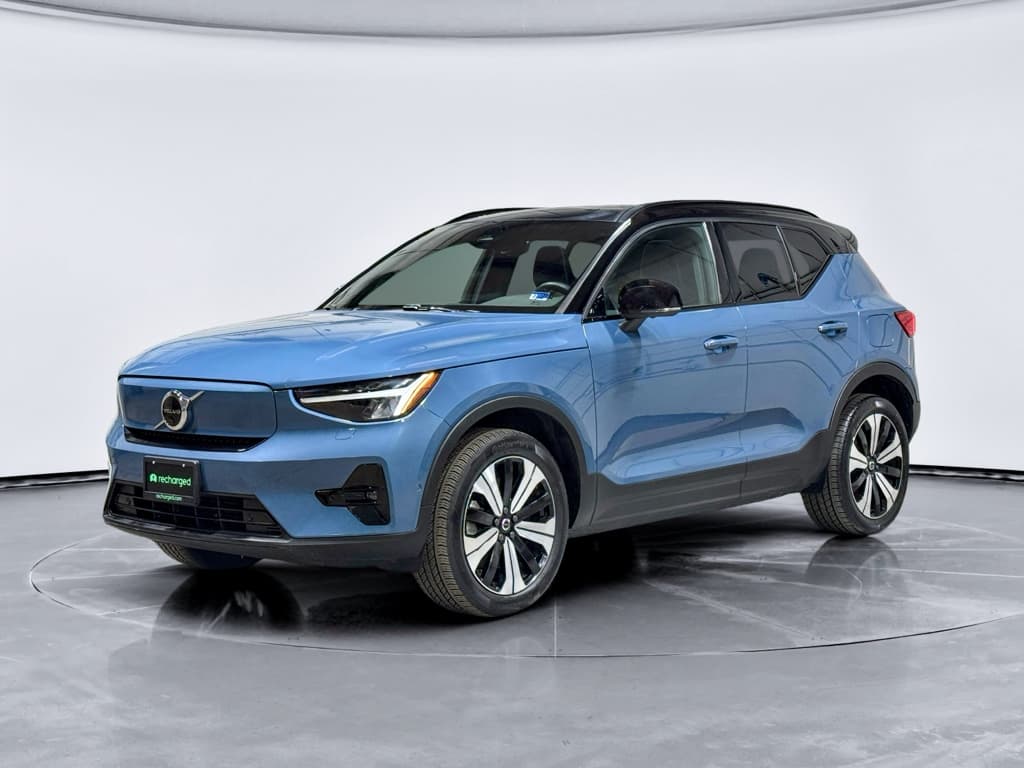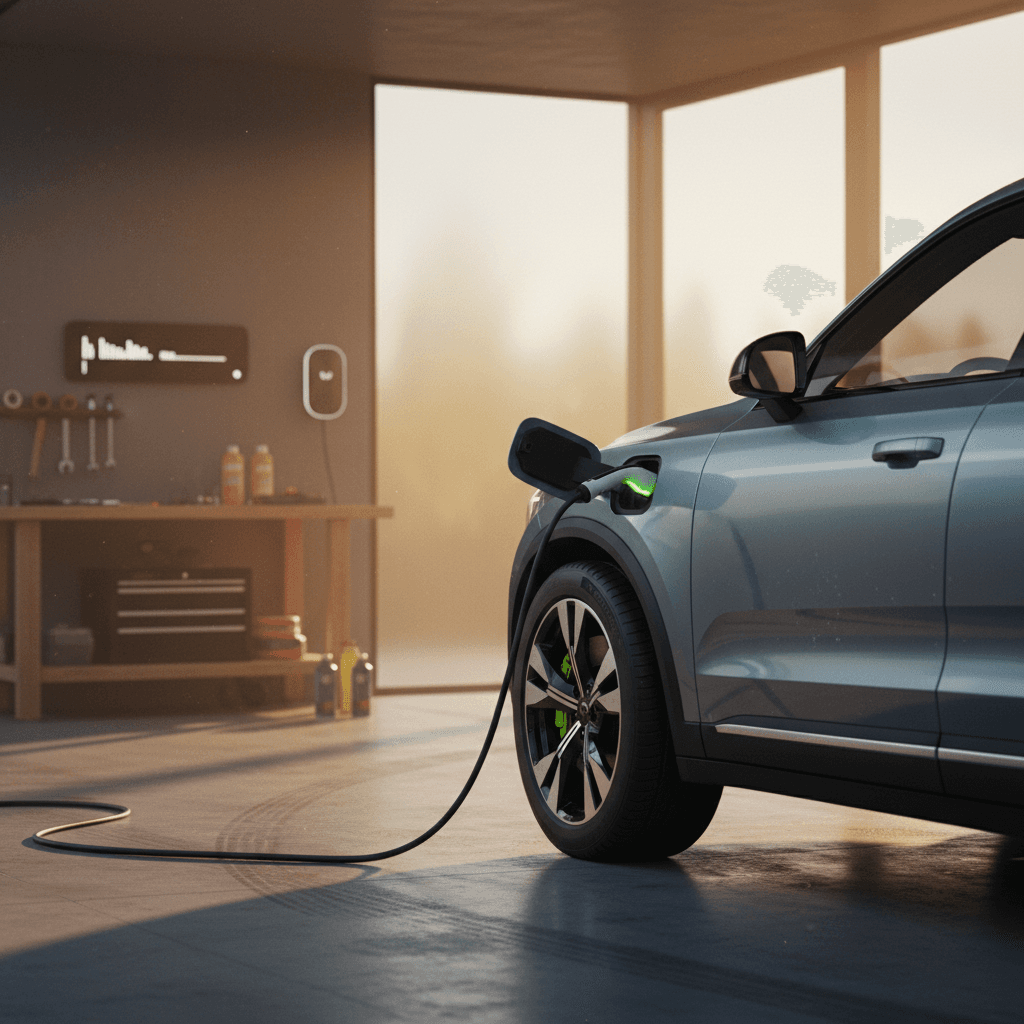
If you’re bringing home a Volvo EX90, home charging is where the real magic happens. The big battery, three-row space, and safety tech only shine when you can plug in easily at night. This guide walks you through exactly how to charge a Volvo EX90 at home, from outlets and equipment to charging times, costs, smart settings, and a few pitfalls current owners have already discovered so you don’t have to.
Quick take
Volvo EX90 home charging basics
Let’s start with how the EX90 actually charges. At home, you’ll almost always be using AC charging, either from a regular household outlet (Level 1) or a 240V circuit (Level 2). The SUV’s own onboard charger then converts that AC power into DC to fill the high-voltage battery.
- Connector: U.S.-spec EX90s use the new NACS charge port, the same physical connector Tesla uses for home and DC fast charging.
- Onboard AC charger: rated up to 11 kW on most current EX90 trims, which is what limits your maximum home charging speed, not the wallbox alone.
- Battery: roughly 107 kWh usable capacity on dual‑motor models, with a nominal capacity around 111 kWh depending on trim year.
- Public DC fast charging (up to 250 kW) is great for road trips, but your day‑to‑day life will be much easier if you can handle most charging at home.
Always follow the owner’s manual
Volvo EX90 battery size and onboard charger explained
Understanding the EX90’s battery and onboard charger helps you make smart decisions about your home setup, and avoid overspending on hardware you’ll never fully use.
Volvo EX90 battery & charging quick facts
The key idea: your EX90 can accept up to about 11 kW on AC. Buying a 19 kW home charger won’t make it charge any faster than an 11 kW‑capable unit, because the car itself is the bottleneck. That’s why most EX90 owners are best served with a 40–48 amp Level 2 charger on a 50–60 amp circuit.
Level 1 vs Level 2: which home charging option is right?
Level 1: Standard 120V outlet
Think of Level 1 as your emergency plan or temporary solution.
- Uses a regular household outlet (120V).
- Charging rate: ~2–4 miles of range per hour.
- Roughly 2–3 full days to go from near‑empty to full on an EX90.
- Works well if you drive very little or are waiting on a proper install.
Level 2: 240V home charging
This is what makes a big‑battery SUV like the EX90 easy to live with.
- Requires a 240V circuit (like an electric dryer or range).
- Charging rate: commonly 25–35 miles of range per hour for EX90.
- Full charge from low to 100% typically overnight.
- More efficient and better aligned with the EX90’s 11 kW onboard charger.
What most EX90 owners should do
Choosing the right home charger for your Volvo EX90
With the basics out of the way, let’s talk about hardware. You have two main pieces to think about: the charger or wallbox and the actual circuit behind it. The EX90’s 11 kW onboard charger and NACS port set the rules of the game, and the rest is about fit and features.
Home charging options for Volvo EX90 owners
Match the charger to your driving and your panel, not just the brochure numbers.
Portable Level 1/2 unit
Good if your panel is far, you rent, or you want flexibility.
- Plugs into a 120V or 240V outlet (NEMA 14‑50, 6‑50, etc.).
- Often adjustable amperage (e.g., 16A, 24A, 32A).
- Usually cheaper than hard‑wired wallboxes.
Hard‑wired Level 2 wallbox
Best choice if you own your home and plan to stay put.
- Clean install with concealed wiring.
- Common ratings: 32A, 40A, 48A.
- Many add Wi‑Fi/app control and load management.
“Smart” connected charger
Great if your utility offers time‑of‑use rates.
- Schedules charging in the app.
- Tracks energy use per session.
- Some work with demand‑response or utility rebates.
Aim for 40–48 amps, not more
If you’re shopping used, remember that the charger itself isn’t married to the car. A quality J1772 or NACS Level 2 unit in a listing on Recharged is a nice bonus, but the real value is knowing the EX90’s battery can actually take full advantage of home charging. That’s where the Recharged Score battery health report earns its keep.
Installation, electrical, and outlet requirements
Now we’re under the skin of the house, not the car. Your EX90 doesn’t really care whether the electrons come from a pretty wallbox or a plain outlet, as long as the wiring and protection are correct. This is where doing it right once saves you headaches for years.
Key decisions before you install a home charger
1. Check your main electrical panel
Find the service rating (often 100A, 150A, or 200A). A big SUV like the EX90 pairs best with a 40–48A charger, which usually needs a 50–60A breaker. An electrician can do a load calculation to be sure you have headroom.
2. Pick an appropriate circuit size
Common choices are 40A (on a 50A breaker) or 48A (on a 60A breaker). Remember, the National Electrical Code typically requires derating continuous loads like EV charging to 80% of the breaker rating.
3. Decide on plug‑in vs hard‑wired
A NEMA 14‑50 outlet with a plug‑in charger is flexible and easier to replace later. A hard‑wired wallbox is slightly cleaner and is sometimes preferred by local code. Your electrician and local rules should guide you here.
4. Plan charger location and cable reach
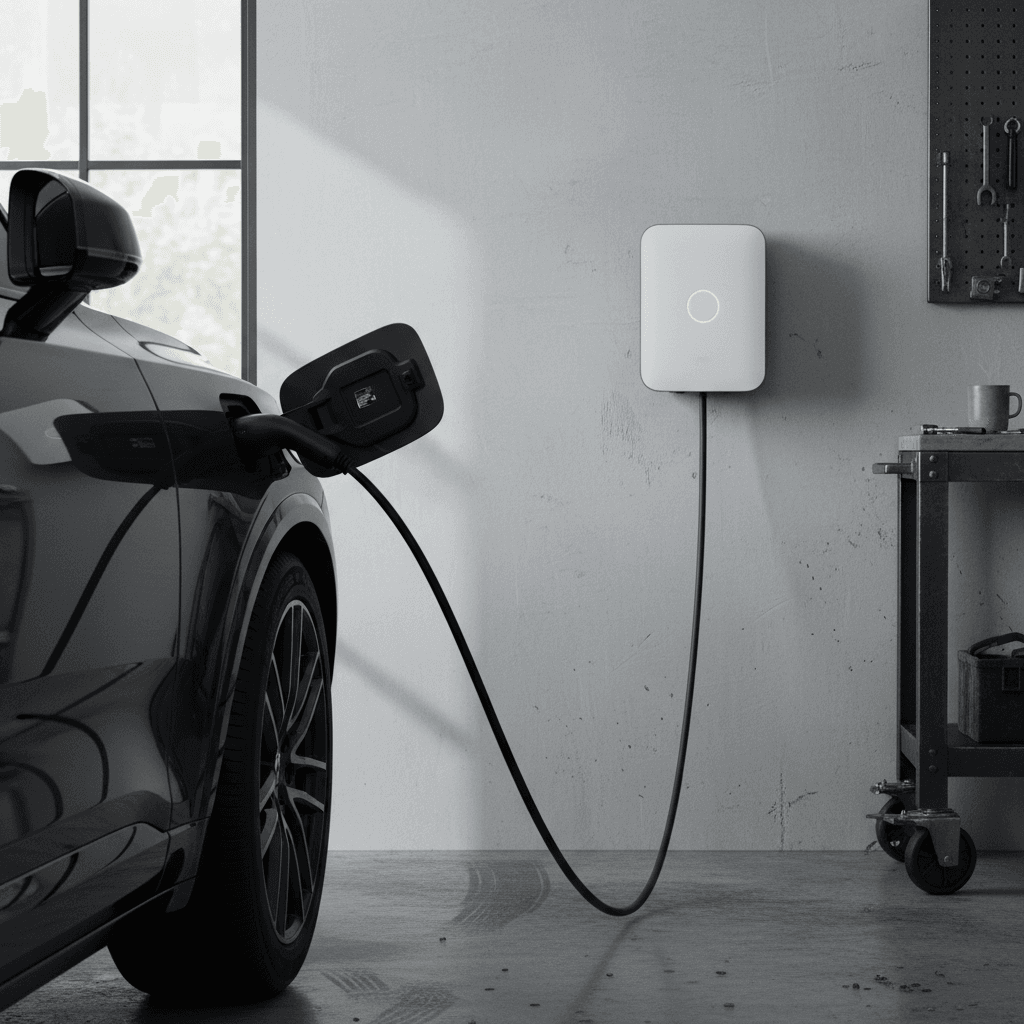
You want the charge connector to reach the EX90’s port comfortably with a bit of slack. In practice that means thinking through how you park, where the cable will rest, and whether guests might also need to plug in.
5. Confirm permits and rebates
Many U.S. cities require a permit for a new 240V circuit in the garage, and your utility may offer rebates for specific UL‑listed smart chargers. An electrician who’s done EV work before will know the local drill.
Don’t DIY the high‑voltage work
How long does a Volvo EX90 take to charge at home?
Exact times depend on your wiring, ambient temperature, and how full the battery is when you plug in. But with a usable battery around 107 kWh and an 11 kW onboard AC charger, we can give you realistic ballpark numbers.
Approximate Volvo EX90 home charging times
Assuming a ~107 kWh usable battery and typical North American voltage. Real‑world times can vary.
| Home setup | Approx. power to car | Range added per hour* | 0–100% time | 20–80% time |
|---|---|---|---|---|
| Level 1, 120V, 12A (~1.4 kW) | ~1.4 kW | 3–4 mi/hr | 60–70 hours | 35–40 hours |
| Level 2, 240V, 16A (~3.8 kW) | ~3.8 kW | 9–12 mi/hr | 28–30 hours | 16–18 hours |
| Level 2, 240V, 32A (~7.7 kW) | ~7.7 kW | 20–25 mi/hr | 14–15 hours | 8–9 hours |
| Level 2, 240V, 40A (~9.6 kW) | ~9.6 kW | 25–30 mi/hr | 11–12 hours | 6–7 hours |
| Level 2, 240V, 48A (~11 kW) | ~11 kW (onboard max) | 30–35 mi/hr | 9.5–11 hours | 5.5–6.5 hours |
In daily life, you’ll mostly be adding 20–70% in one go, not charging from 0–100% every night.
Because you’re rarely at 0% and don’t need 100% every day, even a 32A Level 2 setup is perfectly livable for many EX90 owners. But if you’re towing, road‑tripping, or running a long commute, you’ll appreciate the extra headroom of 40–48 amps.
How much does it cost to charge a Volvo EX90 at home?
To estimate cost, multiply the EX90’s usable battery size by your electricity rate. We’ll assume about 107 kWh usable and a typical U.S. residential rate of $0.15 per kWh. Adjust the math with your own rate from your utility bill.
Ballpark energy cost per full charge
- 107 kWh × $0.15/kWh ≈ $16.00 from near empty to full.
- If your rate is $0.20/kWh, that’s roughly $21.00 for a full charge.
- Most owners charge from ~30–70% or 40–80%, so think in the $8–$14 range per typical session.
What that looks like per mile
- If your EX90 averages ~2.5–2.7 mi/kWh, that’s roughly 260–290 miles of usable highway‑mixed range on a full charge.
- At $0.15/kWh, you’re spending about $0.06 per mile.
- Even at higher electricity prices, home charging usually beats fueling a comparable gasoline SUV on cost per mile.
Off‑peak rates can cut costs dramatically
Smart charging settings in your Volvo EX90
Your EX90 isn’t just a big battery on wheels; it’s also pretty smart about when and how it charges. A few minutes in the settings menu can save you money, protect the battery, and keep your daily routine seamless.
EX90 settings worth turning on for home charging
These features are your friends if you care about cost, convenience, and long‑term battery health.
Charge scheduling
Tell the EX90 when to charge, not just where.
- Set a start/end time (for off‑peak hours).
- Great when paired with time‑of‑use electricity plans.
Daily charge limit
Many owners set a daily limit around 70–80%.
- Helps reduce long‑term battery stress.
- Bump to 90–100% ahead of a road trip.
Preferred charging locations
Save your home as a preferred location.
- So the EX90 knows when it’s “home.”
- Can automatically apply different rules vs public stations.
Software updates matter
Using a Tesla/NACS home charger with your EX90
Because the EX90 uses the North American Charging Standard (NACS) port, many owners naturally ask: can I just plug into a Tesla Wall Connector at home? In many cases, yes, with some nuances.
- A modern Tesla Wall Connector with NACS plug can physically fit the EX90’s port.
- You may need to update both the Tesla charger firmware and your EX90’s software for best compatibility.
- Some owners have reported initial amperage limits or “initializing” issues that improved after software updates or by manually lowering the charger’s max current and stepping it up later.
- If you’re using an adapter between J1772 and NACS, pick a reputable, UL‑listed unit designed for continuous high current.
Check compatibility before you rely on it
Charging a used Volvo EX90: what to watch for
If you’re eyeing a used Volvo EX90, home charging is where its history really shows. Two EX90s can have identical window stickers yet very different realities when you plug in at home.
Battery health and real‑world range
- High mileage or lots of fast‑charging can slightly reduce usable capacity.
- A healthy EX90 battery means faster effective home charging and fewer “near empty” moments.
- The Recharged Score battery health report on a used EX90 gives you data instead of guesses.
Charging behavior and history
- Ask how the previous owner charged: mostly home Level 2, or constant DC fast charging?
- Verify that the car takes a full 32–48A at home without dropping out or faulting.
- On Recharged, every car is road‑tested and evaluated so surprise charging issues are far less likely to show up after you sign.
When you buy through Recharged, you also get guidance on picking a home charging setup that fits your service panel, your commute, and your budget, plus nationwide delivery if your ideal EX90 is sitting in someone else’s driveway across the country.
Volvo EX90 home charging setup checklist
Before you call it “done,” run through this list
Confirm your daily driving needs
Roughly how many miles do you drive on a typical day? If it’s under 50, even a modest Level 2 setup is more than enough. If you’re pushing 100+ miles, 40–48A is worth it.
Review your electrical panel and future plans
Have an electrician look at your panel, available breaker spaces, and any planned additions like an induction stove or heat pump. It’s cheaper to think holistically now than to re‑do your work later.
Choose a quality, UL‑listed charger
Look for a reputable brand, NACS or J1772 plus a good adapter, and at least 32A output. Wi‑Fi and app features are nice but secondary to basic reliability and safety certifications.
Decide your parking and cable management
Visualize where the EX90 will sit, which way it will face, and where the cable will hang. A tidy setup is easier to live with, and less tempting for kids to treat like a jump rope.
Set up schedules and charge limits in the EX90
Once install is complete, take ten minutes to set your daily charge limit (often 70–80%) and overnight charging window. Then let the car handle the boring stuff.
Do a shakedown week
For the first week, watch how much energy you add per night and how quickly you refill from low states of charge. If it feels tight, talk to your electrician about safely raising the amperage or adjusting settings.
Volvo EX90 home charging FAQ
Frequently asked questions about charging a Volvo EX90 at home
Bottom line: make your EX90 easy to live with
The Volvo EX90 is a serious piece of hardware: a big battery, three rows of seats, and road‑trip capability baked in. To make it feel effortless day to day, home charging has to be more than an afterthought. A well‑planned Level 2 setup, sized around the EX90’s 11 kW onboard charger and your home’s electrical reality, turns “range anxiety” into “I woke up full again.”
Take the time to size the circuit correctly, choose a reliable charger, and dial in your EX90’s charge limits and schedule. If you’re still shopping, or looking at a used EX90, a Recharged listing with a full Recharged Score battery and charging report plus expert guidance on home charging can save you from expensive surprises. Get the garage right once, and your EX90 will quietly do its job in the background while you sleep.