If you’re planning to haul bikes, kayaks, a cargo box or even a roof‑top tent on your Kia EV9, understanding the **roof rack weight limit** is just as important as knowing your towing rating. Overloading the roof can hurt handling, efficiency and, worst case, safety. Let’s walk through what Kia actually allows on the EV9 roof and how that translates into real‑world setups.
The short answer
Kia EV9 roof rack weight limits at a glance
EV9 roof rack ratings (from Kia)
Kia’s own documentation for the EV9 roof rack is unusually clear. The **Kia roof rack can support up to 880 lb (400 kg) when the vehicle is parked**, but Kia also states that you should **never drive with more than 220 lb (100 kg) of cargo and accessories on the roof racks**. Those numbers apply to the genuine Kia rack system and assume the load is evenly distributed front‑to‑back and side‑to‑side.
Dynamic vs. accessory limits
Dynamic vs static roof load on the EV9
Dynamic roof load (while driving)
This is the **roof weight limit the EV9 can safely carry at speed**. For the Kia EV9, that’s 220 lb (100 kg) of cargo and accessories on the rack while you’re driving.
- Affects handling, rollover risk and emergency maneuvers.
- Includes everything on top: crossbars, box, mounts, bikes, kayaks, etc.
- Should be treated as a hard cap, not a suggestion.
Static roof load (while parked)
This is the **maximum load the parked vehicle’s roof structure can support**. Kia rates the EV9 roof rack at 880 lb (400 kg) when the vehicle is stationary and the load is evenly spread.
- Relevant for roof‑top tents and camping setups.
- Must also stay within the EV9’s overall GVWR and axle load limits.
- Still limited by the weakest part of your system (crossbars, tent base, etc.).
Easy rule of thumb
Kia EV9 roof rack weight limit for common setups
It’s one thing to know the official numbers; it’s another to translate them into bikes, kayaks, ski boxes or a family camping kit. Here’s how the **Kia EV9 roof rack weight limit** plays with typical accessories.
Example EV9 roof rack setups vs. limits
Approximate weights to help you sanity‑check your EV9 roof load. Always confirm the actual weights of your specific gear.
| Setup | Typical accessory weight | Cargo weight (example) | Approx. total on roof | Within 220 lb driving limit? |
|---|---|---|---|---|
| Ski / snowboard box | 45 lb cargo box | 80 lb skis & boots | ~125 lb | Yes, with margin |
| Two bikes on roof | 35 lb rack + trays | 2 × 35 lb bikes = 70 lb | ~140 lb | Yes, with margin |
| Four bikes on roof | 50 lb quad rack | 4 × 35 lb bikes = 140 lb | ~190 lb | Close to limit, check accessory rating |
| Two sea kayaks | 50 lb bars + cradles | 2 × 55 lb kayaks = 110 lb | ~160 lb | Yes, but watch crosswind stability |
| Small cargo basket + gear | 35 lb basket | 150 lb camping gear | ~185 lb | Under limit, but center weight low |
| Roof‑top tent (hard shell) | 130 lb tent + mounts | 2 occupants @ 170 lb each | ~470 lb static | OK while parked; far under 880 lb static limit |
All figures are illustrative; your exact accessories will vary. Stay below the lowest rated component and under 220 lb total when driving.
Don’t forget accessory weights
OEM vs aftermarket crossbars on EV9
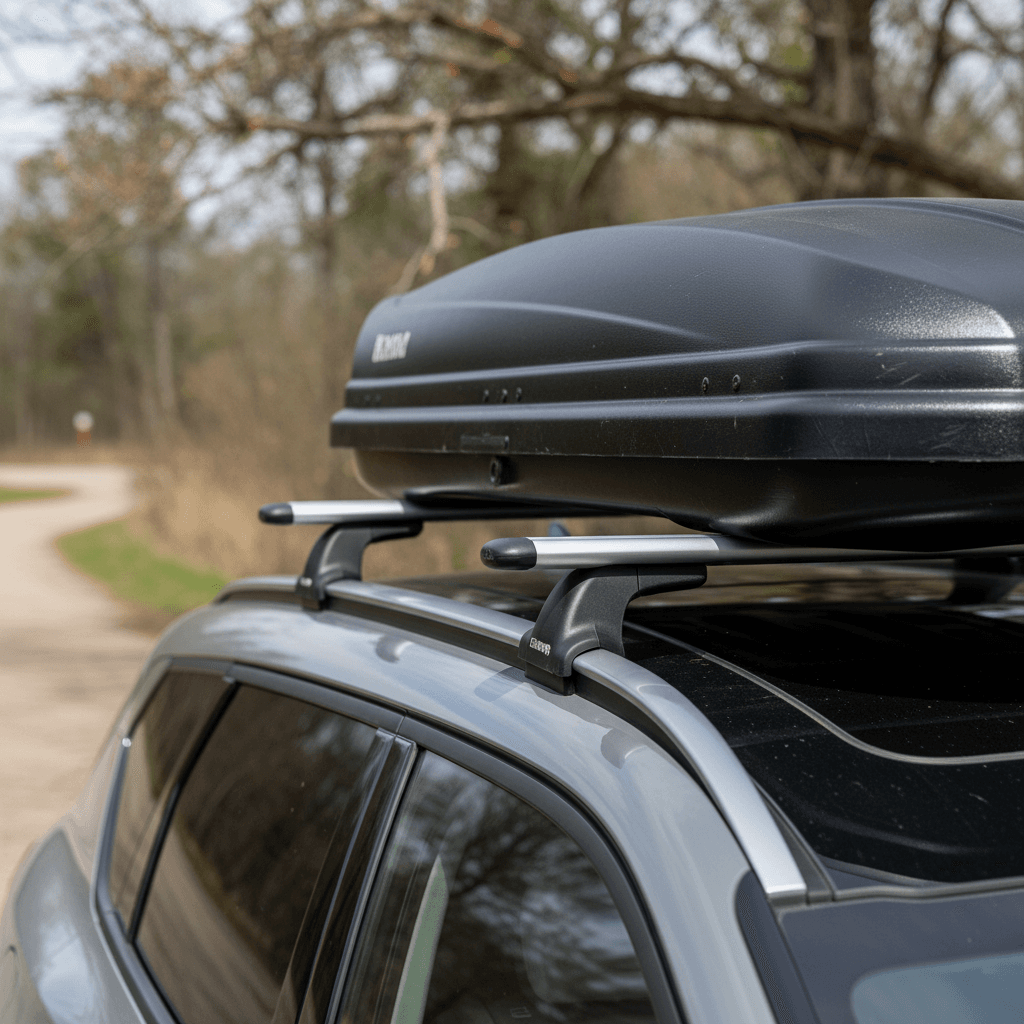
The EV9 is sold globally with a **bridge‑type roof rack** and, in some trims, **raised roof rails** (for example, GT‑Line in the U.S.). From there you can either use **genuine Kia cross bars** or go aftermarket with brands like Thule, Yakima or Green Valley.
Choosing crossbars for your EV9
How OEM and aftermarket options affect usable roof load
Genuine Kia crossbars
- Designed and tested specifically for the EV9 roof geometry.
- Weight limit aligned with Kia’s own 220 lb dynamic rating.
- Usually integrate best with sunroof clearance and noise tuning.
- Often more expensive than generic bars but easiest choice for warranty peace of mind.
Aftermarket bars (Thule, Yakima, etc.)
- Often rated around 165–220 lb dynamic load.
- Give you flexibility in bar length and profile (aero vs square).
- Some EV9 builds share hardware with Telluride‑style rails; others use dedicated kits.
- You must follow the **lower** of Kia’s 220 lb limit or the bar manufacturer’s rating.
Sunroof and fitment cautions
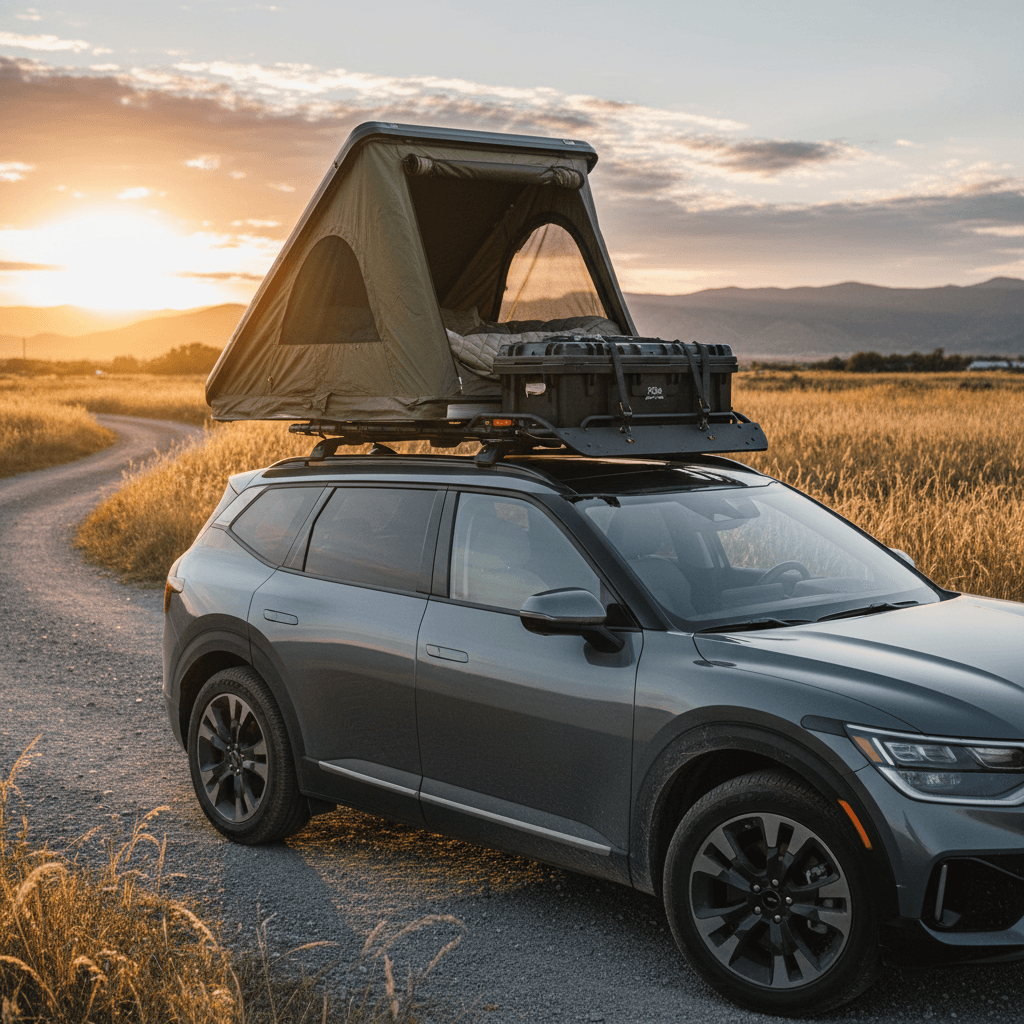
Can the Kia EV9 run a roof-top tent?
This is the big question for a lot of EV9 shoppers. Thanks to the EV9’s **high static roof rating (880 lb)**, it’s structurally capable of supporting many **two‑ or even three‑person roof‑top tents**, at least on paper. The key is to respect the **whole system**, not just the vehicle rating.
- Tent base and hardware weight (many popular hard‑shell RTTs weigh 120–180 lb).
- Crossbars and mounting feet (often 25–60 lb depending on style).
- Occupants and bedding (two adults plus gear can easily add 350–450 lb).
- Any extra cargo you strap on top of the tent shell.
In a typical EV9 camping configuration you might have **~160–220 lb of hardware** (tent + bars + mounts) and **300–450 lb of people and bedding**, for a total static load well under Kia’s 880 lb rating. That gives you a healthy margin, but only if your **crossbars and tent manufacturer** also approve that load on your exact vehicle.
Roof-top tent sanity check
1) Confirm the tent maker explicitly supports your bar spread and vehicle type.
2) Verify the crossbar system’s static load rating, not just dynamic.
3) Run the math on tent + bars + people to stay at least 10–20% under Kia’s 880 lb static spec.
Practical loading tips to stay within limits
Seven steps for a safe EV9 roof setup
1. Add up every component
Include the weight of crossbars, feet, racks, boxes, bikes, kayaks, tents and even locks. If it’s bolted or strapped to the roof, it counts against your limit.
2. Obey the lowest rating
Compare Kia’s 220 lb dynamic limit with the ratings printed on your crossbars and accessories. Your real‑world limit is the **lowest number in the chain**.
3. Keep heavy items inside
High, heavy weight hurts handling and wind stability. Store dense items (tools, water, recovery gear) in the EV9’s cabin or cargo area rather than on the roof.
4. Distribute weight evenly
Center the load left‑to‑right and keep it between the front and rear crossbars. Avoid big overhangs or all the weight on one side of the rack.
5. Check torque and hardware regularly
After the first drive with a new setup, re‑torque all fasteners. Add a quick visual and tug test every time you fast‑charge or stop for a break on trips.
6. Slow down and watch the wind
Even if you’re under 220 lb, tall cargo like bikes and kayaks can catch crosswinds. Leaving a buffer and backing off the throttle is cheap insurance.
7. Mind clearance and height
An EV9 with a box or tent can be significantly taller. Double‑check garage doors, parking structures and car washes before you commit.
Roof rack and range: how weight hits EV9 efficiency
From a physics standpoint, the **aero drag of a rack and cargo box** matters more to your EV9’s range than raw weight, at least at highway speeds. Still, both factors add up.
What hurts range the most
- Empty crossbars: modest hit, but noticeable at 70+ mph.
- Large cargo box: often costs 5–15% range depending on size and speed.
- Bikes on upright racks: some of the worst aero penalty; don’t be surprised by a 10–20% drop on fast freeway segments.
How to minimize the damage
- Remove bars and boxes when you’re not using them.
- Pack the EV9’s cargo area before turning to the roof.
- Use low‑profile, aero crossbars and cargo boxes.
- Drop your cruising speed a few mph on long highway legs.
Why this matters for road trips
Buying a used EV9? Roof-carrying checklist
If you’re shopping the **used Kia EV9 market**, including vehicles listed on Recharged, roof‑rack readiness may be a deciding factor. Here’s what to look for if bikes, skis or a tent are in your future.
Used EV9 inspection for roof use
1. Inspect roof rails and paint
Look for scratches, stress marks or bent trim around the rails. Heavy past use isn’t a dealbreaker, but it’s good to know the history.
2. Confirm rail type and trim
GT‑Line models in North America come with raised rails from the factory; other trims may have flush rails or require additional hardware. This affects which crossbars you can run.
3. Ask about existing rack history
If the seller used a roof‑top tent or heavy cargo box, ask what system they used and whether they ever exceeded 220 lb while driving.
4. Check for wind noise complaints
Persistent wind noise could point to a mis‑fitted or budget rack system. In some cases, switching to a better bar set solves it; in others, it could indicate prior damage.
5. Leverage the Recharged Score
Every EV Recharged sells comes with a <strong>Recharged Score Report</strong> that covers battery health and vehicle condition. If you’re planning big trips with roof cargo, that extra insight into the EV9’s overall health is invaluable.
FAQ: Kia EV9 roof rack weight limit
Frequently asked questions about EV9 roof loads
Key takeaways on EV9 roof loads
If you remember nothing else, remember this: the **Kia EV9 roof rack weight limit is 220 lb (100 kg) while driving and 880 lb (400 kg) when parked**, assuming an evenly distributed load and appropriate hardware. Whether you’re mounting a family‑size cargo box or heading into the backcountry with a roof‑top tent, build your setup around the **lowest rating in your system** and give yourself a healthy safety margin.
For many owners, the EV9’s big roof and strong ratings are a gateway to road‑trip flexibility that rivals large gas SUVs, without the tailpipe. If you’re considering a **used EV9** or comparing it with other three‑row EVs, Recharged can help you understand how roof‑rack needs fit into the bigger picture of range, charging and ownership costs. Every vehicle we list comes with a Recharged Score Report, so you know the battery and vehicle are up for the adventures you’re planning on top.