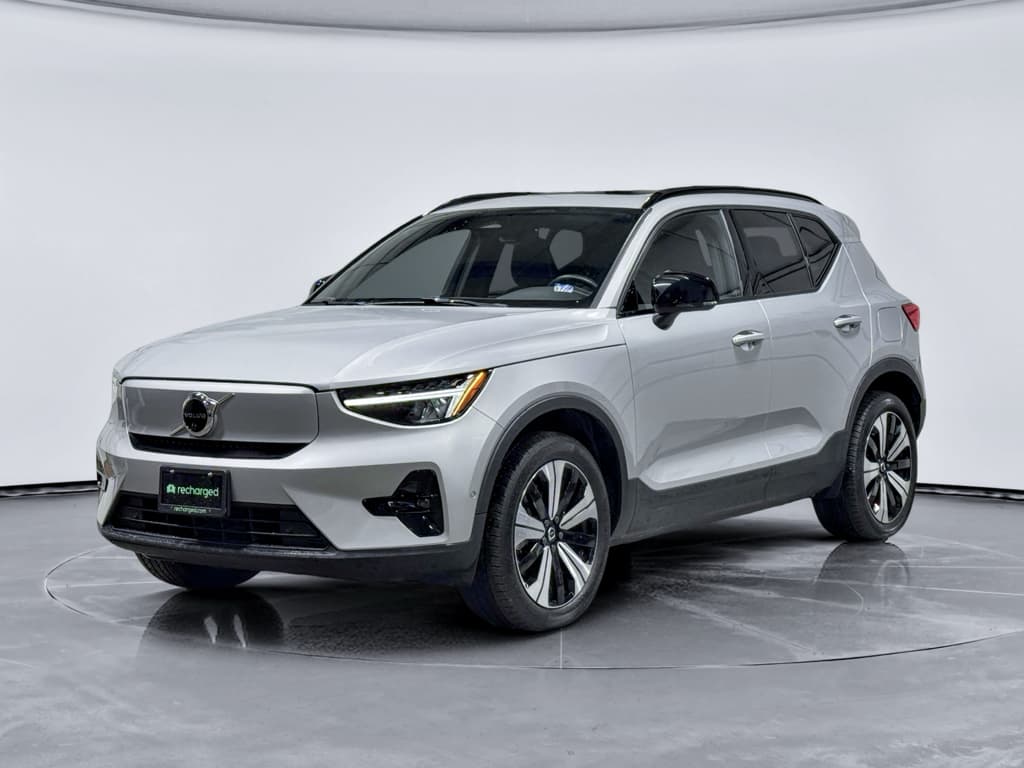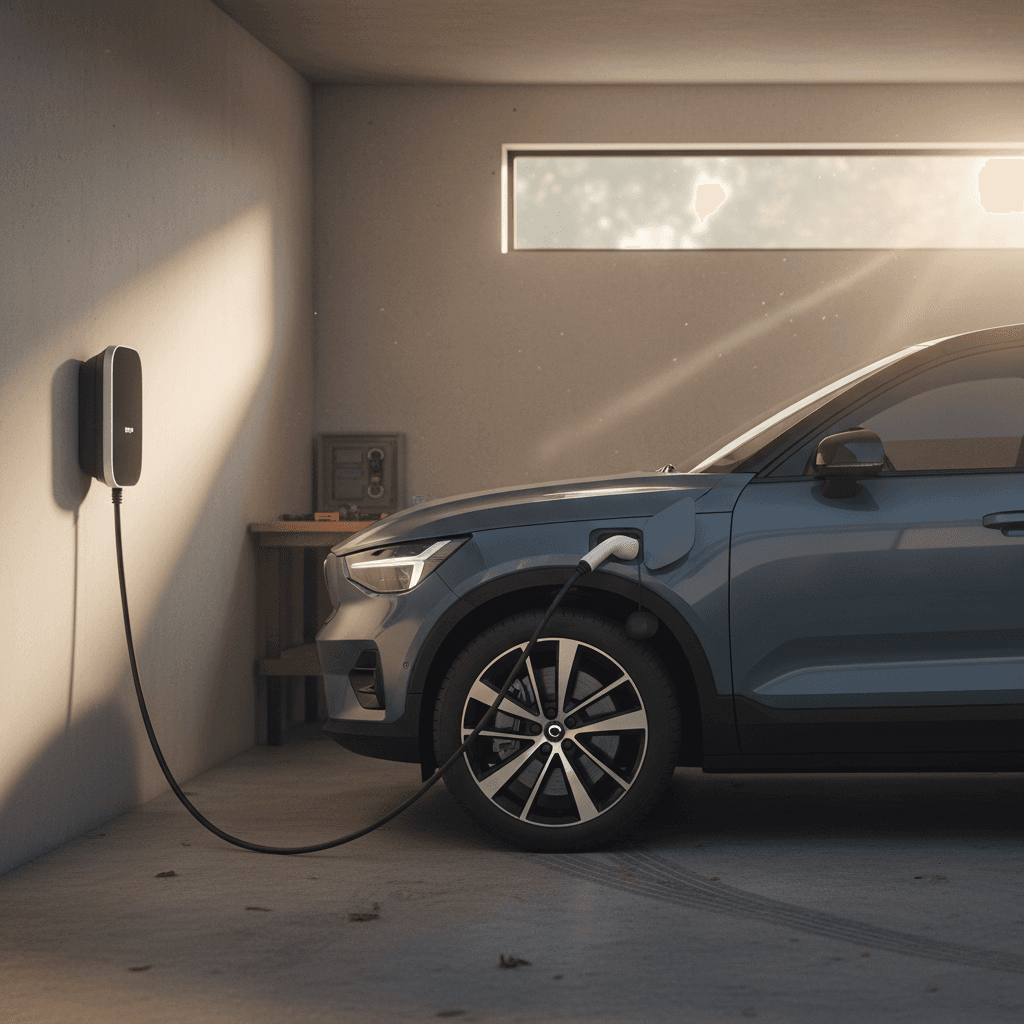
You bought a Volvo EX30 because you wanted a small, sharp‑handling electric SUV you can live with every day, not a science project parked in the driveway. To get there, you need one thing dialed in: how to charge your Volvo EX30 at home, reliably, safely, and without wrecking the battery or your electric bill.
What this guide covers
Volvo EX30 home charging basics
Under the Scandi minimalism, the EX30 is just like any modern EV: a lithium‑ion battery under the floor, an 11 kW onboard AC charger (in North America) and a charge port that accepts standard J1772 for AC and CCS for DC fast charging. At home, you’ll be using the AC side only, either a slow 120V trickle, or a much faster 240V Level 2 wallbox.
- Battery: roughly mid‑60 kWh usable capacity depending on trim, enough for about 220–260 EPA miles of range.
- Onboard AC charger: 11 kW, which is the upper limit of how fast the car can take power at home.
- Connector in North America: J1772 for AC Level 1 and Level 2, CCS combo for DC fast charging.
- Best practice: use home charging for 0–100% overnight refills; save DC fast charging for road trips and real emergencies.
Daily target, not full all the time
Charging options: 120V vs 240V for your EX30
In a U.S. home, you really have two ways to charge your EX30: a standard 120V outlet (Level 1) or a 240V circuit (Level 2). The car doesn’t care which you choose; it automatically negotiates with the charger. But your lifestyle absolutely cares.
Two main ways to charge a Volvo EX30 at home
Level 1 will keep you moving; Level 2 makes the car feel nearly "always full".
Level 1 (120V household outlet)
What it is: The same kind of outlet you use for a lamp or laptop.
- Power: about 1.2–1.4 kW (12–15 amps at 120V).
- Typical rate: ~3–4 miles of range added per hour.
- Good for: very short commutes (20–30 miles/day), garage or driveway with easy access to an outlet.
- Downside: a near‑empty EX30 can take well over 30 hours to recharge.
Level 2 (240V home charger or wallbox)
What it is: A dedicated 240V circuit, like an electric dryer or oven, feeding a wall‑mounted or portable EVSE.
- Power: typically 7.2–11.5 kW at home, depending on amp rating.
- Typical rate: roughly 25–35 miles of range per charging hour.
- Good for: most EX30 owners, overnight, full refills even from low state of charge.
- Downside: requires a dedicated circuit and usually an electrician visit.
Avoid extension cords
How long does a Volvo EX30 take to charge at home?
Volvo’s own guidance and independent testing converge on the same ballpark: with the 11 kW onboard charger, the EX30 goes from near empty to full overnight on a decent Level 2 setup. The exact time depends on the circuit you give it.
Typical Volvo EX30 home charging times
Approximate 0–100% charge times from near empty under mild conditions. Real‑world times vary with temperature, state of charge, and equipment.
| Home charging setup | Voltage & amps | Power (approx.) | 0–100% time | Best for |
|---|---|---|---|---|
| Standard wall outlet (Level 1) | 120V / 12A | ~1.3 kW | 40–48 hours | Occasional or emergency top‑ups |
| NEMA 6‑20 or 20A 240V circuit | 240V / 16A | ~3.8 kW | 14–18 hours | Light daily driving, overnight top‑ups |
| 40A wallbox on 50A circuit | 240V / 32A | ~7.7 kW | 8–11 hours | Typical suburban owner, overnight full refills |
| 48A wallbox on 60A circuit | 240V / 40A–48A* | 9.6–11.5 kW | 6–8 hours | Heavier use, multiple drivers, no time to spare |
Use these times as planning tools, not promises, the last 10–20% always slows down to protect the battery.
Why the last 20% is slower
Choosing the right home charger for your Volvo EX30
Because the EX30 tops out at 11 kW AC charging, there is a hard ceiling on how much it can use. Throwing a 19 kW monster wallbox at it is like installing a fire hose on a garden tap, the car will only drink so fast. The sweet spot is a properly wired 32–48 amp Level 2 charger on a 240V circuit.
What size Level 2 charger does an EX30 really need?
Match the wallbox to your wiring, not just the brochure headline.
32A (on 40A circuit)
Pros:
- Often easiest and cheapest to install.
- Delivers ~7.7 kW, enough to refill the EX30 overnight from low SOC.
- Pairs well with older panels or limited capacity homes.
Who it fits: Single‑driver households under ~60 miles/day.
40–48A (on 50–60A circuit)
Pros:
- Lets the EX30 use close to its 11 kW AC limit.
- Shortens 0–100% charge windows to roughly 6–8 hours.
- Future‑proof if you later add a larger‑battery EV.
Who it fits: Multi‑driver homes, high mileage, or no‑slack schedules.
Smart, app‑connected chargers
Look for:
- Scheduling for off‑peak utility rates.
- Energy monitoring per session.
- Load‑sharing if you’ll have two EVs.
- Optionally, solar integration if you have PV on the roof.
Think whole‑house, not just the car
Quick checklist for picking an EX30 home charger
Confirm you have off‑street parking
A garage or a dedicated spot next to the house makes Level 2 practical. Street parking plus an extension cord is a non‑starter from both a safety and common‑sense standpoint.
Check your electrical panel capacity
Take a photo of your panel labels and, ideally, have a licensed electrician, or a service coordinated through a retailer, confirm what amperage you can safely support.
Choose J1772 with enough cable length
The EX30’s charge port is on the left rear quarter. Pick a charger with a cable long enough to reach comfortably without stretching across walkways.
Decide how smart you need it to be
If your utility has time‑of‑use rates, a smart charger with scheduling can pay for itself. If not, a simpler 32A unit may be all you need.
Factor in installation cost, not just hardware
The wallbox price is half the story. Long wire runs, panel upgrades, or trenching can easily cost more than the charger itself.
Step‑by‑step: how to charge your Volvo EX30 at home
Once your outlet or wallbox is in, daily charging is supposed to be boring, in the best way. Here’s what the routine looks like for most EX30 owners.
- Park with the charge port accessible. The EX30’s port is on the left rear corner, so back in or pull forward accordingly.
- Make sure the car is in Park and turned off. You don’t need to power the car down completely; just shift into Park and exit as usual.
- Wake the charger, if needed. Some wallboxes sleep their displays. A button press, an app tap, or simply lifting the connector usually wakes them.
- Open the charge port door. Either tap the button on the flap, use the center screen, or press the unlock button on the fob to wake the car if it’s asleep.
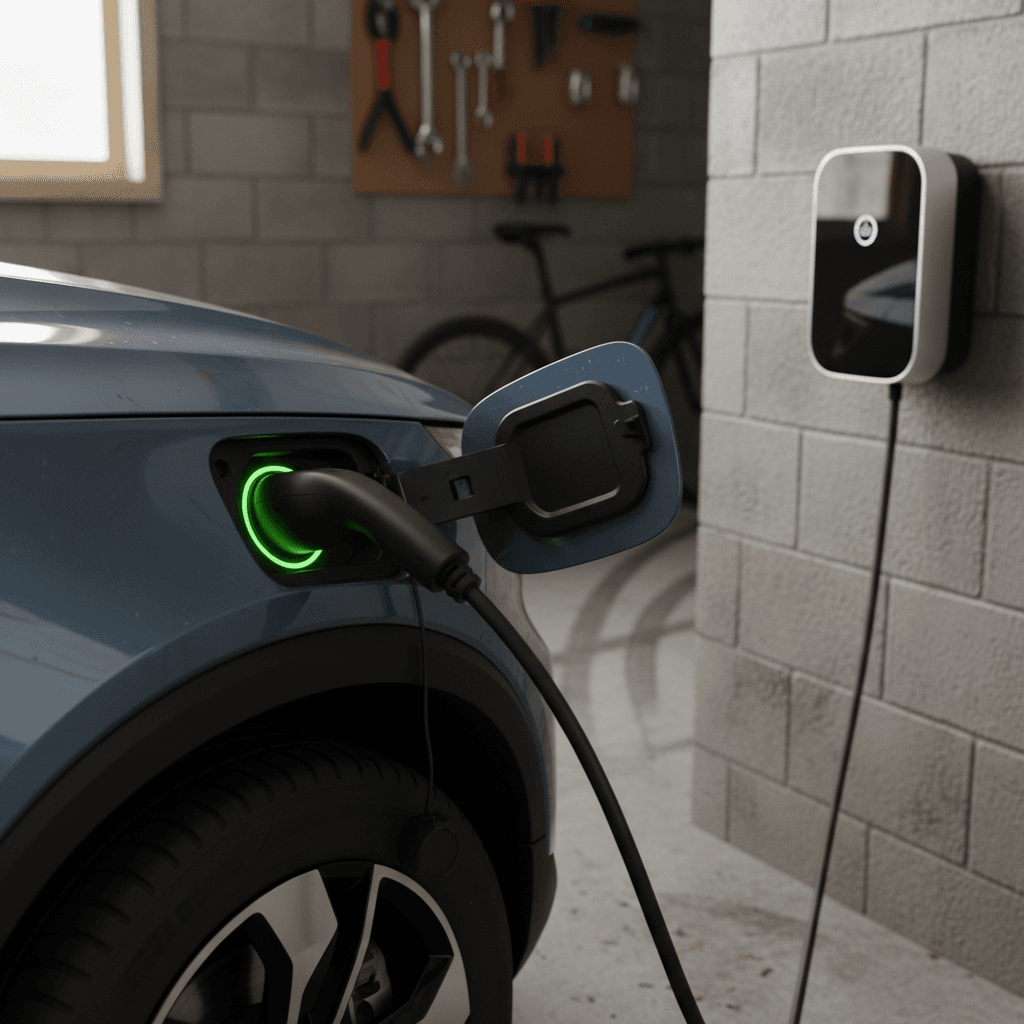
- Insert the connector until it clicks. Push the J1772 plug firmly into the EX30’s port. The car will latch it and run a quick handshake with the charger.
- Watch for confirmation. The charge light ring near the port should pulse and the center screen or app should confirm charging and show an ETA.
- Set your schedule and limit. In the EX30’s charging menus, set your preferred departure time, charge limit (e.g., 80%), and any off‑peak hours.
- Walk away. The car will automatically start or delay charging to meet your settings and then stop when it hits the limit. Unlocking the car or pressing the handle button will release the connector.
What “normal” looks like
Protecting your EX30 battery with smart home charging
The EX30’s battery is the single most expensive part of the car. Home charging is where you either treat it kindly for a decade…or beat it up needlessly. Fortunately, the kinder path mostly involves restraint and a few menu taps.
Battery‑friendly home charging habits for EX30 owners
These small tweaks pay off in long‑term range and resale value.
Avoid living at 100%
For everyday use, cap the battery at 70–80%. Charge to 100% only before longer trips and start driving soon after reaching full so the pack doesn’t sit at max charge for hours.
Mind temperature extremes
Extremely hot or cold garages are rough on cells. In winter, schedule charging so it finishes near your departure time; the pack will be warm and more efficient.
Use gentle overnight charging
There’s almost never a need to hammer the battery at maximum power at home. If your charger or car lets you cap amperage, you can even dial things back a little when time allows.
Why this matters for used EX30 buyers
Troubleshooting common EX30 home charging issues
EX30 forums are full of charging gripes, and not all of them are the charger’s fault, or the car’s. The good news is that most at‑home problems follow familiar patterns. Work through them in order instead of randomly replacing hardware.
If your Volvo EX30 won’t charge at home, check these first
1. Confirm the outlet or circuit is actually live
Plug in another high‑draw device, like a hair dryer or space heater, into the same outlet. If it trips the breaker or doesn’t power on, you have a house wiring issue, not a Volvo issue.
2. Inspect for GFCI trips or breaker faults
Many outdoor and garage outlets are protected by GFCI. If the test/reset button is popped, reset it. Also check the breaker in your panel; a weak breaker can trip under an EV’s continuous load.
3. Try the Volvo‑supplied portable charger
If the car charges with the OEM 120V cable but not a third‑party wallbox, or vice versa, you’ve narrowed the suspect list dramatically. Document which combos work before calling anyone.
4. Check charge limits and schedules in the car
Make sure you haven’t set a schedule that tells the EX30 not to charge yet, or a very low charge limit that it has already reached. It sounds trivial, but it catches plenty of owners.
5. Test another location or public Level 2
If the car charges normally at a public AC station, your onboard charger is probably fine and the problem lies with your home equipment or wiring.
6. Update software and call the dealer
If nothing else explains it, your EX30 may need a software update or component check. Keep photos of charger screens and error codes ready; they help the service advisor get to the point faster.
When to stop and call a pro immediately
Volvo EX30 home charging FAQ
Frequently asked questions about charging a Volvo EX30 at home
Is home charging right for you?
Charging a Volvo EX30 at home isn’t an exotic Nordic ritual; it’s plumbing for electrons. Give the car a decent 240V circuit, a trustworthy J1772 charger, and a sensible charge limit, and it will quietly top itself off while you sleep. Level 1 will limp along in a pinch, but Level 2 is what transforms the EX30 from "cool little SUV" into effortless, low‑drama transportation.
If you’re shopping used, or trying to decide whether an EX30 fits your home and panel, that’s where Recharged earns its keep. Every vehicle on the platform comes with a Recharged Score battery health report, fair‑market pricing, and EV‑savvy specialists who can talk you through home‑charging options, financing, and even trade‑ins, so when you park an EX30 in your driveway, the charging piece is already solved.