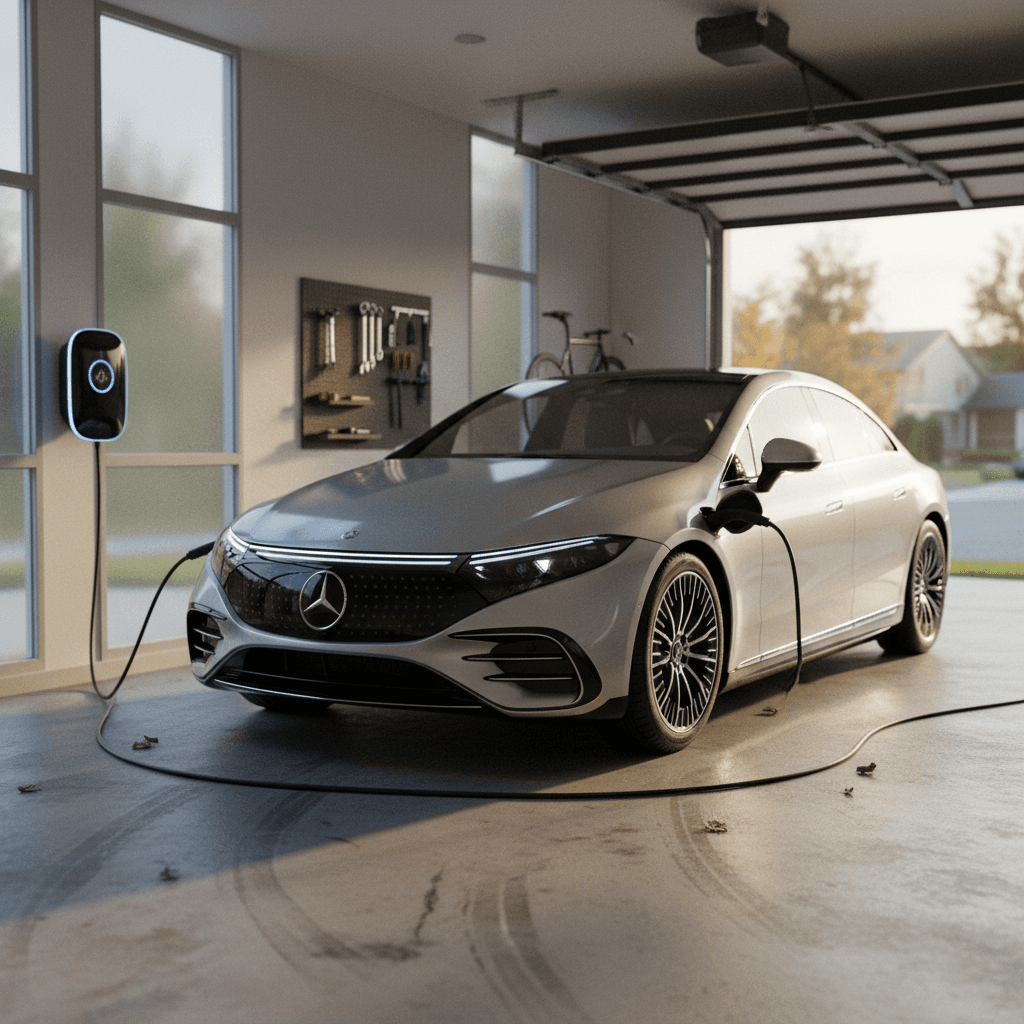
If you’re moving into a Mercedes EQS, figuring out how to charge your EQS at home is just as important as picking the right trim or color. The good news: once your home setup is dialed in, you’ll wake up every morning with a full “tank,” spend less than you would on gas, and visit public chargers only when you choose to, not because you have to.
Quick answer
Why home charging matters for your Mercedes EQS
The Mercedes EQS is a long‑range luxury EV, with battery packs in the ~90–120 kWh neighborhood depending on model year and variant. That big battery is a selling point on the highway, but it means you want a consistent, reasonably fast way to recharge at home. With the right setup, you can easily add a full day’s driving, often 35–40 miles of range per hour of charging, while you sleep.
Mercedes EQS home charging fast facts
Think like a smartphone
Mercedes EQS charging basics: ports, power and terms
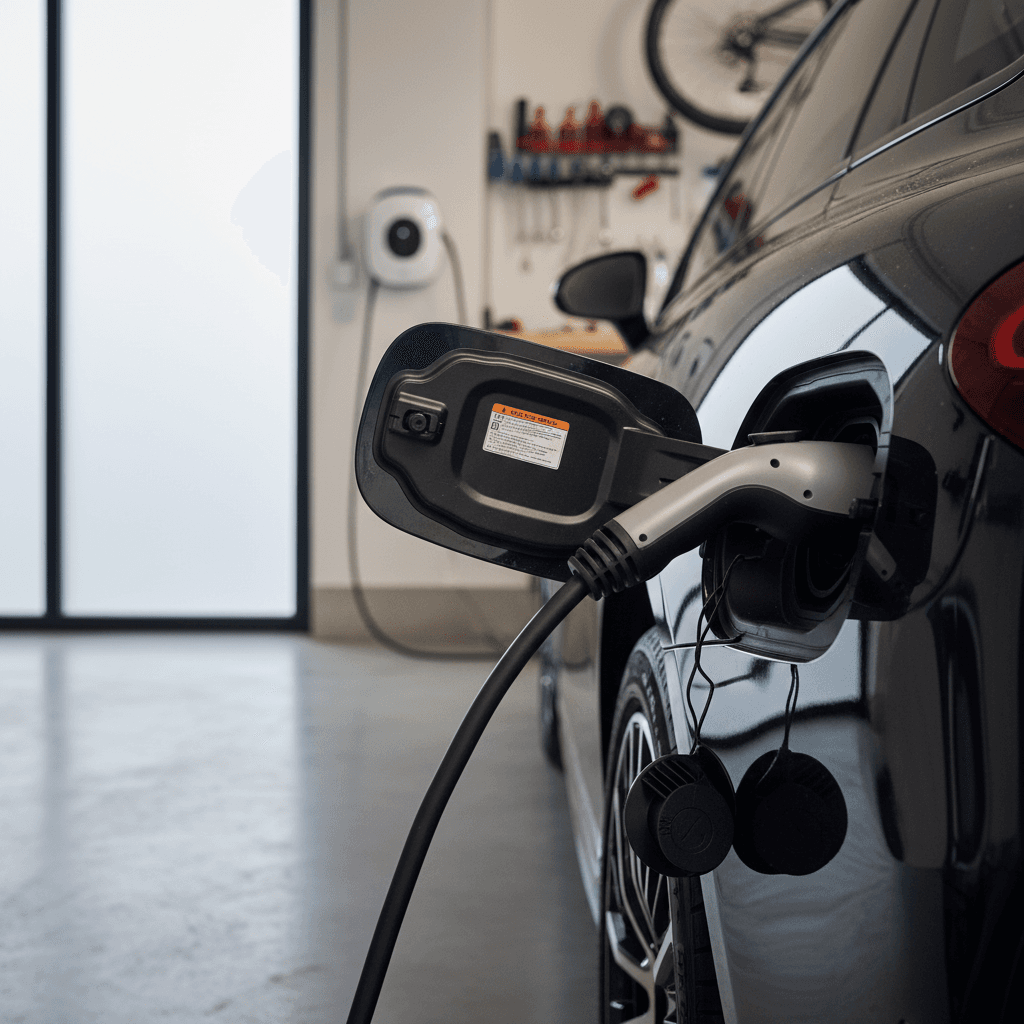
Before you decide how to charge at home, it helps to know what the EQS expects. The Mercedes EQS sold in the US uses a CCS combo DC port for fast charging on the road and the standard J1772 connector shape for AC charging at home or at public Level 2 stations. Home charging is always AC; the car’s onboard charger converts AC from your house to DC for the battery.
- Level 1 charging (AC, 120V): Uses a regular household outlet. Very slow but works anywhere.
- Level 2 charging (AC, 240V): Uses a dryer‑style outlet or dedicated circuit. This is the sweet spot for home charging an EQS.
- DC fast charging: High‑power public stations (often 150 kW+). Great on road trips, not something you install at home.
Watch your circuit load
Three ways to charge a Mercedes EQS at home
Home charging options for your EQS
From “plug and wait” to “plug and sleep,” here are your choices
1. Standard 120V outlet (Level 1)
Use the portable charger that typically comes with the car (or an equivalent).
- ~2–4 miles of range per hour
- Works in almost any home outlet
- Best for very light daily driving or short‑term use
2. 240V dryer/RV outlet (plug‑in Level 2)
Pair a 240V outlet (NEMA 14‑50 or similar) with a plug‑in Level 2 charger.
- ~20–30+ miles of range per hour
- Often recharges overnight
- Flexible, charger can move with you
3. Hard‑wired wallbox (Level 2)
A dedicated wall‑mounted Level 2 charger on its own circuit.
- Cleanest, most reliable solution
- Good for long‑term homeownership
- Often supports smart scheduling and load management
Most EQS owners choose Level 2
Step‑by‑step setup for Level 2 home charging
Level 2 home charging checklist for EQS owners
1. Confirm your daily driving needs
Look at how many miles you actually drive on a typical day. Many EQS owners find that adding 40–60 miles overnight is plenty, which a mid‑power Level 2 charger can easily handle.
2. Inspect your electric panel
Check your main panel’s amperage (often 100A, 150A, or 200A in US homes). If you’re unsure what’s available for a new circuit, ask a licensed electrician, especially in older homes.
3. Choose outlet vs. hard‑wired
If you have or can add a 240V outlet in a convenient location, a plug‑in Level 2 charger can be simple and flexible. If the charger will be outdoors or used heavily, a hard‑wired unit is often better.
4. Size the circuit and charger
Many EQS owners are well‑served by a 40‑amp circuit and a charger set to 32A. That delivers strong overnight charging without pushing your home’s electrical system too hard.
5. Hire a licensed electrician
240V work is not DIY territory for most people. A pro can pull permits, size wire correctly, install a new breaker, and ensure everything is up to code and safe for long‑term use.
6. Configure smart features
Once installed, set charging schedules in your charger app or the Mercedes me Charge app to take advantage of off‑peak electricity rates and keep the car at a preferred charge level (often 80–90% for daily use).
Safety first
How long does it take to charge an EQS at home?
Charging time depends on three things: the size of your EQS battery, how empty it is, and how much power your home charger actually delivers. Because these numbers can get abstract, let’s keep it practical and talk about real‑world times EQS owners see at home.
Approximate Mercedes EQS home charging times
Typical times from low state‑of‑charge to near full, assuming a large EQS battery and healthy home electrical system. Your exact results will vary based on conditions.
| Home setup | Approx. power | Miles of range added/hr | Time from 10–80% |
|---|---|---|---|
| Level 1, 120V outlet | 1–1.4 kW | 2–4 mi/hr | 2–3 nights of charging |
| Low‑power Level 2 (16–24A) | 3–5 kW | 10–20 mi/hr | 10–15 hours |
| Typical Level 2 (32A) | 7 kW | 20–30 mi/hr | 7–10 hours (overnight) |
| Higher‑power Level 2 (40–48A) | 9–11 kW | 25–35+ mi/hr | ~6–8 hours |
Use these figures as ballpark estimates, not promises. Focus on whether your setup reliably covers your daily driving, not on hitting a specific number.
You rarely charge from 0%
What does it cost to charge a Mercedes EQS at home?
Home charging costs come down to two things: your electricity rate and how many kWh you add to the battery. In many parts of the US, residential electricity runs in the ballpark of $0.12–$0.25 per kWh, with off‑peak rates often lower. Multiply that by the number of kWh you charge, and you have your cost.
Simple way to estimate
Suppose your EQS uses about 30 kWh for a typical day’s driving (that’s a rough example, not a guarantee). If your rate is $0.15 per kWh, that day of driving cost you:
30 kWh × $0.15 = $4.50
Compare that with what you were spending on a tank of premium gasoline each week, and the appeal of home charging starts to stand out.
Per‑mile perspective
If that 30 kWh moved you, say, 90 miles, your cost per mile is:
$4.50 ÷ 90 ≈ $0.05 per mile
Gasoline luxury sedans often run two to three times that per mile in real‑world conditions.
Ask about EV rate plans
Choosing the right home charger for your EQS
The EQS doesn’t care much about brand names. It cares about safe, consistent power and a J1772 connector. Still, the charger you buy will affect your experience every single day, so it’s worth a careful look.
What to look for in an EQS home charger
Four key decision points before you hit “Buy now”
Amperage & speed
Match the charger’s max current (amps) to what your panel can support. For many EQS owners, 32–40A is the sweet spot.
Smart features
Wi‑Fi/Bluetooth, scheduling, usage tracking, and app control make it easier to line up charging with off‑peak rates.
Durability & weather rating
If the charger will live outside, look for robust enclosures, good cord management, and solid weather ratings.
Installation flexibility
Some units can be either plug‑in or hard‑wired. That’s handy if you might move and want to take the charger with you.
Don’t oversize without checking your panel
Practical tips to make home charging smoother
- Set a daily charge limit. For battery longevity, many EQS owners cap daily charging at 80–90% and reserve 100% for road trips.
- Use departure timers. Pre‑conditioning the cabin while plugged in means you’re using grid energy, not your battery, to heat or cool the car.
- Route the cable thoughtfully. In a tight garage, mount the charger where the cable won’t be a trip hazard and can comfortably reach the EQS charge port.
- Label the breaker. Make sure the charger’s breaker is clearly labeled in your panel for future electricians and emergency shut‑offs.
- Check GFCI requirements. EV chargers in garages and outdoors typically need GFCI protection; your electrician should plan for this.
Battery health and partial charging
Home charging and used Mercedes EQS buyers
If you’re shopping for a used Mercedes EQS, home charging should be part of your buying checklist, not an afterthought. You want to know not just how the previous owner treated the battery, but also how you’re going to keep it charged once it’s in your driveway.
Questions to ask the seller
- How was the EQS usually charged, mostly home Level 2, Level 1, or DC fast charging?
- Was a wallbox or 240V outlet already installed at their home?
- Do they include the original portable charging cable?
Answers here give you clues about both battery usage patterns and what you’ll need to budget for at your own home.
How Recharged can help
Every EV sold through Recharged comes with a Recharged Score Report that includes verified battery health and fair market pricing. Our EV specialists can walk you through what that means for real‑world range and suggest a home charging setup that fits your panel, your driving, and your budget.
If you’re trading in a gas car or another EV, Recharged can also provide an instant offer or consignment option, plus financing and nationwide delivery, so your EQS can arrive ready for its first overnight charge in your driveway.
FAQ: Mercedes EQS home charging
Frequently asked questions about charging an EQS at home
Bottom line: setting up home charging for your EQS
Living with a Mercedes EQS is easiest when home charging is handled up front. A basic 120V outlet will work in a pinch, but most owners quickly gravitate to a proper 240V Level 2 setup that turns overnight into all the charging time they’ll ever need. Start by understanding your panel, your daily miles, and your budget, then size the charger accordingly and let a licensed electrician do the heavy lifting.
If you’re stepping into a new‑to‑you EQS, especially a used one, pairing that purchase with a solid home charging plan is the smart move. With tools like the Recharged Score, expert EV guidance, financing, trade‑in options, and even nationwide delivery, Recharged can help you go from “thinking about an EQS” to quietly charging one in your driveway, without any guesswork about how to keep it powered every day.