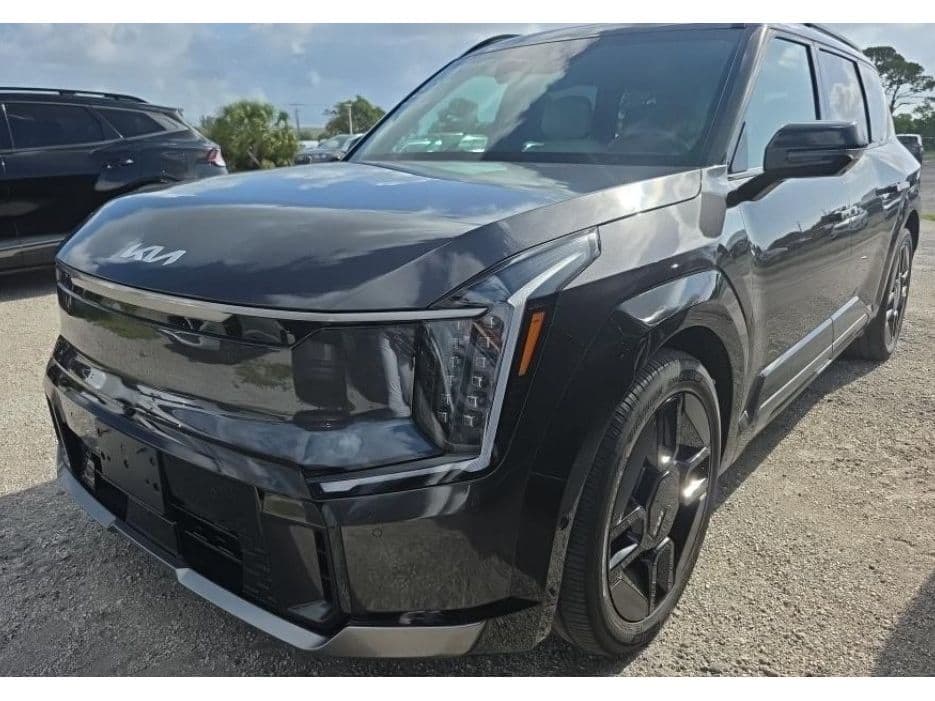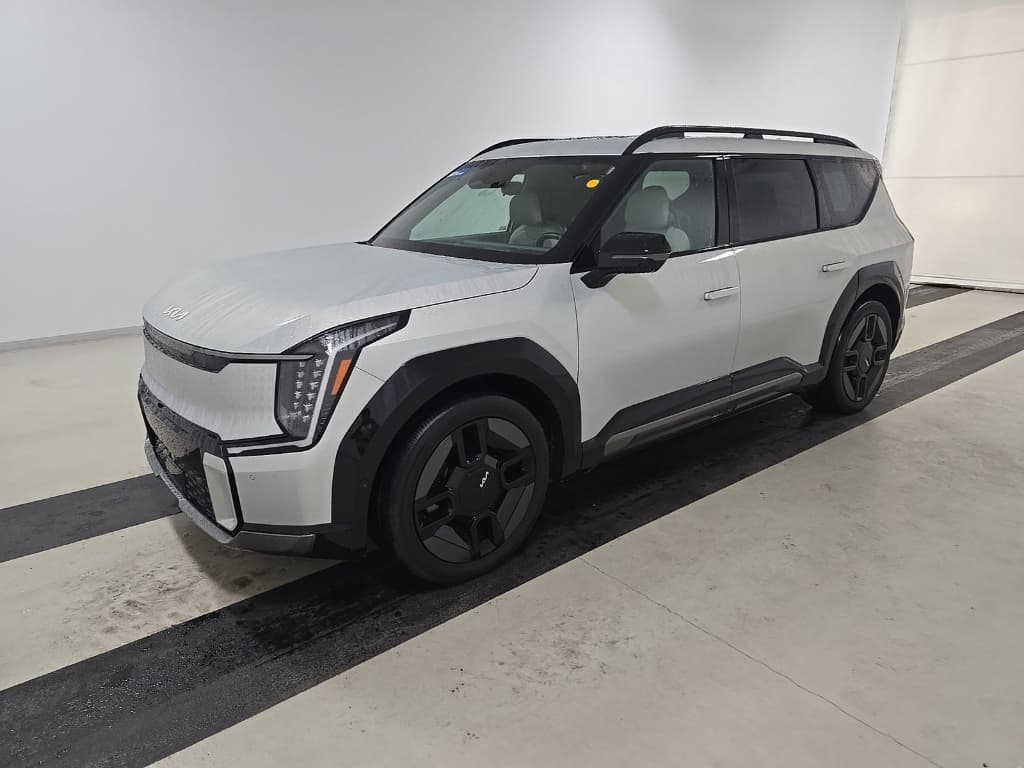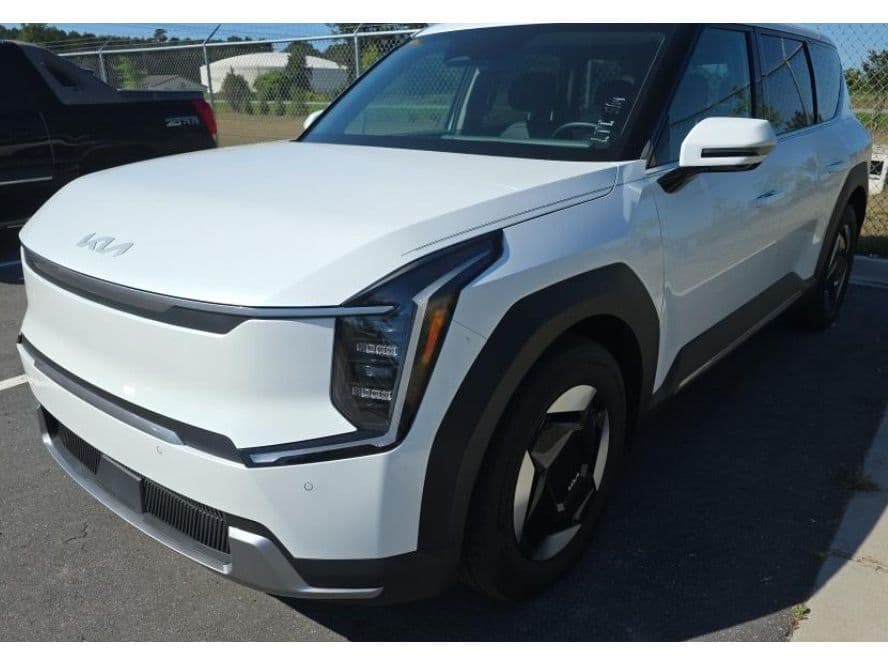
If you just brought home a Kia EV9, the first big question is usually **how to charge your Kia EV9 at home** without wasting money on the wrong hardware. The EV9’s big battery and 11 kW onboard AC charger make it a perfect candidate for home Level 2 charging, if you set things up correctly. This guide walks you through equipment, wiring, real‑world charge times, costs, and the settings inside the car so home charging feels boring, in a good way.
Quick answer
Kia EV9 home charging basics
- Battery sizes: most U.S. EV9s use a ~99.8 kWh battery (there’s also a smaller ~76 kWh pack in some trims).
- Maximum AC charging power: about 10.9–11 kW on Level 2, the same for all trims.
- DC fast charging: up to ~210 kW on public fast chargers, but this guide focuses on home AC charging.
- Included cable: many EV9s ship with a portable cord set that can plug into a standard 120V outlet, and on some trims a 240V adapter as well, good for starting out, not for permanent daily fast charging.
Big battery, slow outlet
Understanding the EV9’s charging equipment and ports
In North America, the Kia EV9 uses the **SAE J1772 standard for AC charging** today, with support for the emerging NACS standard arriving via adapters and future hardware. For home charging, what matters is the AC side:
What your Kia EV9 uses for home charging
AC charging port
The EV9’s AC inlet accepts a J1772 plug today (or NACS in future‑proofed trims), which is what nearly all home Level 1 and Level 2 chargers use in the U.S.
Onboard AC charger
Inside the EV9 is an ~10.9–11 kW onboard charger. This is the real bottleneck for home charging speed: even if your wall unit can supply more, the EV9 will only take about 11 kW on AC.
Your wall‑mounted “charger” is technically just an **EVSE (Electric Vehicle Supply Equipment)**, a smart, safety‑tested switch that delivers AC power and talks to the car. The actual charging electronics live in the EV9.
Level 1 vs Level 2: How should you charge your Kia EV9 at home?
Kia EV9: Level 1 vs Level 2 home charging
Approximate numbers for U.S. 120V and 240V setups, assuming the larger ~99.8 kWh pack and typical efficiency. Real‑world results vary with temperature, battery state of charge, and energy losses.
| Setup | Voltage / Amps | Power (approx.) | Miles of range per hour | Use case |
|---|---|---|---|---|
| Level 1 – included cord | 120V / 12–15A | 1.4–1.8 kW | 3–5 mi/hr | Emergency or very light driving |
| “Slow” Level 2 | 240V / 16–24A | 3.8–5.8 kW | 10–17 mi/hr | Overnight top‑ups for modest commutes |
| Typical Level 2 | 240V / 32A | 7.7 kW | 22–25 mi/hr | Most EV9 daily‑driver households |
| Maxing out EV9 | 240V / 40–48A | 9.6–11.5 kW (car caps at ~11) | 28–30+ mi/hr | Fastest practical home charging |
Use this table to sense‑check what you’re seeing on your EV9’s charging screen.
How to decide
How long does it take to charge a Kia EV9 at home?
Let’s talk real numbers. With a ~99.8 kWh pack, “0–100%” sounds scary, but in everyday use you’re usually moving between 20% and 80%. Below are ballpark times from very low state of charge to nearly full at different home setups.
Approximate EV9 charging times at home
Why your numbers may differ
Choosing the right home charger (EVSE) for your EV9
Once you understand what the car can accept, the question becomes: **what size home charger actually makes sense for a Kia EV9?** You don’t have to buy the biggest, most expensive unit to get a good experience, but undersizing can leave a 3‑row SUV stuck on the driveway longer than you’d like.
Three common home charging paths for EV9 owners
Think in terms of how fast you need to refill, not just the sticker on the box.
1. Use the included cord
Cost: $0 upfront, no electrician if you already have a nearby 120V outlet.
- Good for: 10–20 miles/day, occasional use homes, apartment/condo parking with limited options.
- Downside: Very slow on a ~100 kWh pack; full charges take days.
2. 30–40A Level 2
Cost: Roughly $400–$800 for hardware plus installation.
- Good for: Most single‑EV households driving 30–60 miles/day.
- Delivers: 7–9 kW, which is a sweet spot between speed and panel load.
3. 48A Level 2 (maxing out EV9)
Cost: Typically the highest hardware + wiring cost.
- Good for: Heavy‑use families, frequent road trips, multiple EVs.
- Delivers: Up to ~11 kW, essentially the EV9’s AC ceiling for the quickest home charging.
Future‑proofing for your next EV
Before you buy, check if your local utility offers rebates for specific Level 2 chargers or off‑peak rate programs. Pairing a smart charger with a time‑of‑use plan can cut your overnight EV9 charging costs dramatically.
Home installation, wiring and amperage choices
Anytime you’re dealing with 240V, you want a licensed electrician. But you should still walk into that conversation knowing the basics so you’re not over‑ or under‑sold.
1. Match breaker, amps, and EVSE
- Continuous loads (like EV charging) are typically limited to 80% of the breaker rating.
- That means:
- 30A breaker → 24A continuous (≈5.8 kW).
- 40A breaker → 32A continuous (≈7.7 kW).
- 50A breaker → 40A continuous (≈9.6 kW).
- 60A breaker → 48A continuous (≈11.5 kW, essentially maxing the EV9).
- Make sure the EVSE’s max output and the breaker size line up with that 80% rule.
2. Think about where you park
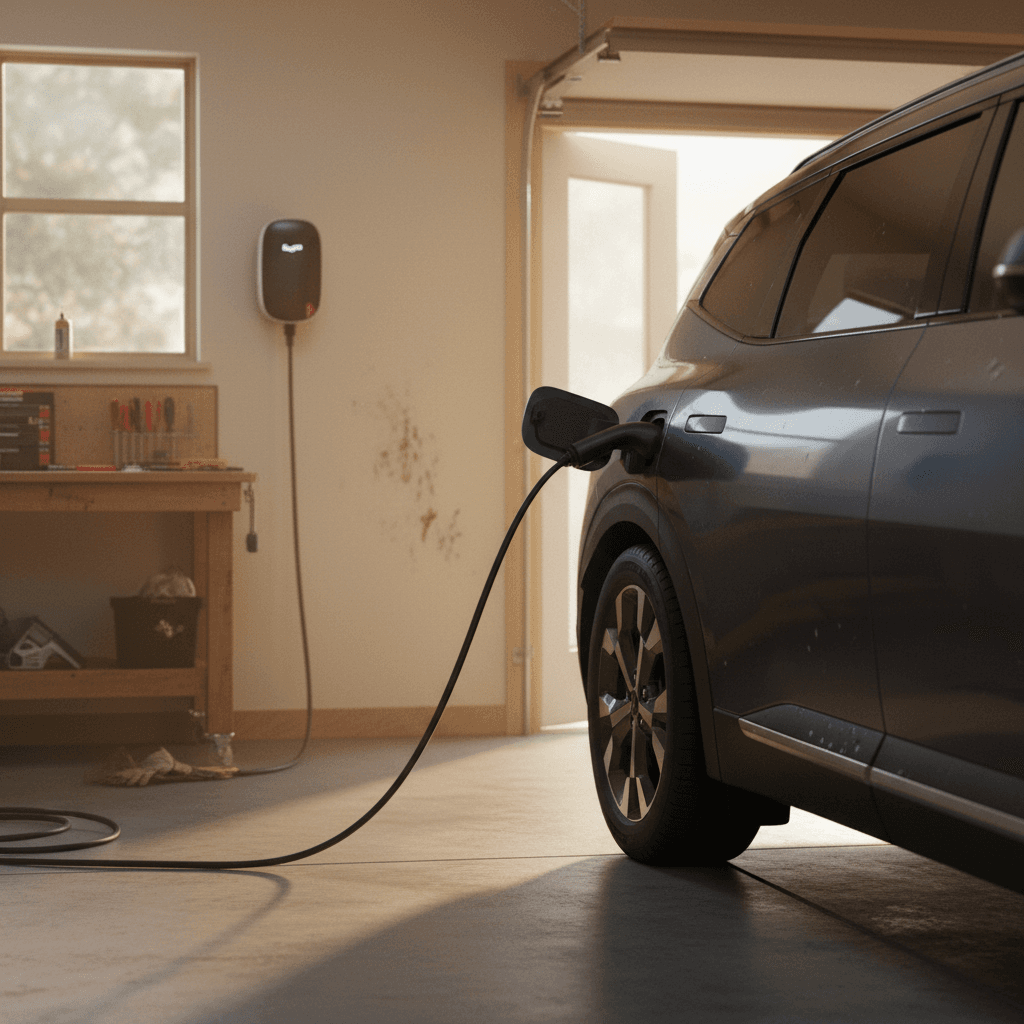
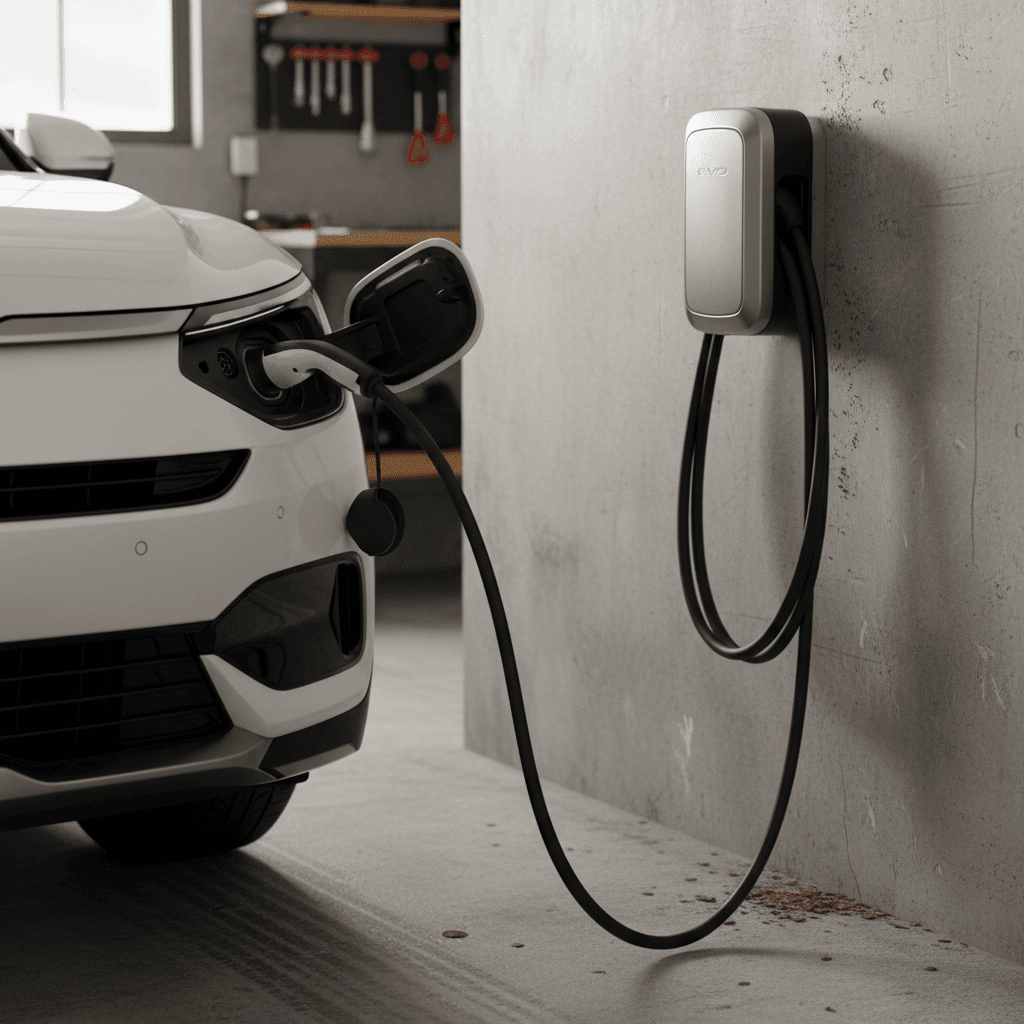
- Mount the EVSE so the cable comfortably reaches your EV9’s charge port without stretching across walkways.
- A 23–25 ft cable is common; longer is helpful if you occasionally park nose‑in.
- If you regularly back into a driveway or share a space with another car, plan cable routing so it doesn’t become a trip hazard.
Safety first
Setting up charging in your EV9 menus and app
Once your hardware is sorted, the last piece is teaching the EV9 when and how to pull power. Kia gives you a decent amount of control via the in‑car menus and the Kia app.
Step‑by‑step: configure home charging on your Kia EV9
1. Save your home location
In the Kia app, set your home address so the EV9 knows when it’s plugged in at home versus public stations. This lets you use different schedules and limits.
2. Set a charging schedule
If your utility has cheaper overnight rates, enable a <strong>start and end time</strong> (for example, 11:00 p.m. to 6:00 a.m.). Some smart EVSEs can also enforce this, which is handy if your car or app misbehaves.
3. Choose your target state of charge
For daily use, many owners stick to <strong>70–80%</strong> to protect long‑term battery health. Bump it to 90–100% the night before a long road trip, then hit the road soon after it finishes.
4. Check the AC charge limit
The EV9 lets you cap the maximum AC power it will pull. If you see weirdly low speeds at home (for example 3–4 kW on a 40A charger), dive into the charging settings and make sure the AC limit is set to 100%, not an eco mode.
5. Watch one full session
The first time you use a new setup, stay nearby, check the cable and plug for heat, and confirm the car’s dash and the EVSE agree on amperage and power.
Home charging costs and EV9 battery health
The great thing about a big‑battery SUV is flexibility; the downside is that you’re moving a lot of energy. Understanding costs and best practices will keep your monthly bill and your long‑term battery health in a good place.
What it costs to charge an EV9 at home
- The usable pack is around 95–100 kWh. Multiply that by your per‑kWh rate to estimate a full charge.
- At $0.15/kWh: a 0–100% refill is roughly $14–$15.
- At $0.30/kWh: closer to $28–$30.
- Most people don’t charge from 0; topping up 30–50 kWh at night is typically in the $5–$10 range even in pricier markets.
Habits that protect your EV9’s battery
- Daily target of 70–80% is a reasonable compromise between range and longevity.
- Avoid letting the pack sit at 0% or 100% for long periods; it’s fine to see those occasionally on trips, just don’t park that way for days.
- In extreme heat or cold, parking in a garage and using scheduled charging can help the battery stay closer to its happy temperature range.
Use the battery instead of the gas station
Troubleshooting slow or no charging at home
Because the EV9 is new to many households, a lot of “problems” turn out to be settings or expectations. Here are the most common issues owners run into when figuring out how to charge a Kia EV9 at home.
Common EV9 home charging issues and fixes
Charging is way slower than expected
Check the <strong>screen in the EV9</strong> for voltage, amps, and kW. If you’re on 120V or a 15–20A 240V circuit, 3–6 kW may be totally normal. Also verify that the in‑car AC limit isn’t set below 100% and that your EVSE isn’t derated in its own app.
Charging never starts on schedule
Make sure only one device is controlling the schedule. If both the charger and the EV9 are enforcing time windows, they can “fight.” Try disabling scheduling in the charger and letting the car control timing, or vice versa.
Charging stops after a few minutes
Solid red lights or error codes on the wall unit usually point to a wiring, ground fault, or over‑temperature issue. In that case, call your electrician or the EVSE maker. If public chargers work fine, it’s almost never a problem with the EV9 itself.
Breaker keeps tripping
Your circuit may be undersized for the charger’s setting, or there could be another large load on the same circuit. Have an electrician confirm breaker size, wire gauge, and that the EVSE is set to the right maximum current.
Cable or plug feels hot
Warm is normal; uncomfortably hot is not. Stop charging and have the outlet, plug, and EVSE inspected. Loose or worn contacts can overheat under sustained high current.
When to involve the dealer
Kia EV9 home charging FAQ
Frequently asked questions about charging a Kia EV9 at home
Key takeaways for EV9 home charging
Living with a Kia EV9 is easy once your home charging is sorted. The car’s ~11 kW AC capability means it can take full advantage of a robust Level 2 setup, but you don’t have to go overboard to get a smooth overnight refill. Focus on a safe, properly sized 240V circuit, a reliable J1772 Level 2 charger, and sensible in‑car settings that aim for 70–80% on most days.
If you’re still shopping or considering a used Kia EV9, Recharged can help you understand battery health, real‑world range, and what kind of home charging setup makes sense for your driving. Every vehicle we sell includes a Recharged Score battery report and EV‑specialist support so you’re not guessing about whether your panel, driveway, and daily miles match the SUV you’re bringing home.