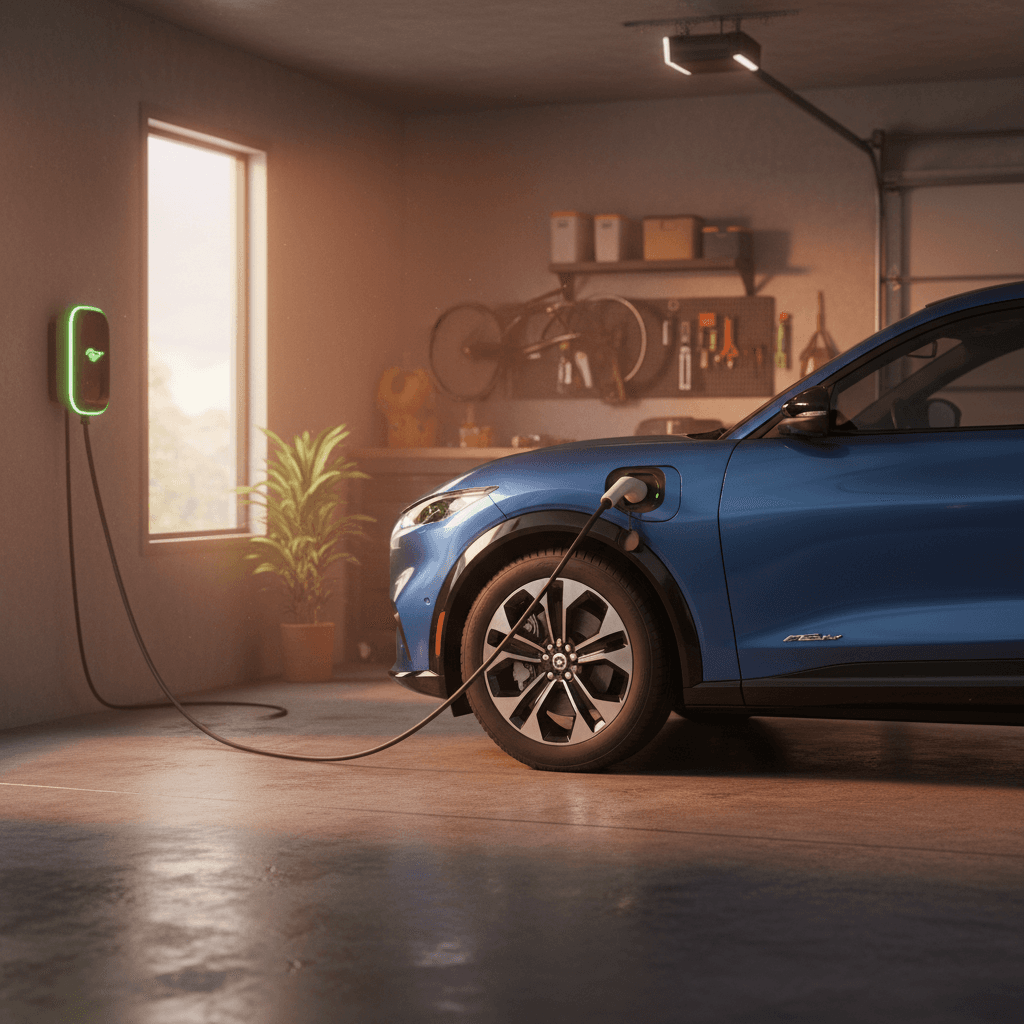
If you own, or are eyeing, a Ford Mustang Mach‑E, figuring out how to charge your Mach‑E at home is the difference between effortless EV life and constantly hunting for public stations. The good news: once you understand your options and get the right outlet or wallbox in place, living with a Mach‑E is remarkably simple.
Quick take
Why home charging matters for your Mustang Mach‑E
The Mach‑E is built to be home‑charged. Its battery pack ranges roughly from the mid‑60 kWhs to the high‑80s depending on trim, and while DC fast charging is great on road trips, it’s too expensive and inconvenient to rely on every day. Treat home charging like you once treated your weekly gas station run, except now it happens while you sleep and costs less per mile.
Mach‑E home charging by the numbers (typical U.S. setup)
Think in miles, not percentages
Mustang Mach‑E home charging basics
- Connector type: Every U.S. Mustang Mach‑E uses the J1772 connector for AC charging (home and most public Level 2). For DC fast charging, it uses CCS today and will support NACS at public stations going forward, but that doesn’t change how you charge at home.
- Onboard charger: Depending on model year and trim, the Mach‑E’s onboard AC charger can accept around 32–48A at 240V. Your home setup can’t charge faster than this limit, even if your wallbox supports more amps.
- What Ford includes: New Mach‑Es typically come with a mobile charge cord that can plug into a standard 120V outlet (Level 1). Earlier model years sometimes offered a dual‑voltage cord that can also use 240V with the right plug; check your owner’s manual or cord label.
- Best practice: Use Level 1 to get started and to understand your daily needs, but plan on Level 2 if you drive more than ~25–30 miles per day or live where winters are cold.
Safety first
Level 1 vs. Level 2: How fast will my Mach‑E charge?
Typical Mustang Mach‑E home charging speeds
Real‑world speeds vary by trim, temperature, and charger, but this gives you a practical ballpark.
| Charging type | Voltage & amps | Approx. power | Miles of range per hour | Best for |
|---|---|---|---|---|
| Level 1 (included cord) | 120V / 12A | ~1.4 kW | ~3–4 mi/hr | Very light driving, plug in any time you’re home |
| Level 2 (lower amp wallbox) | 240V / 24–32A | ~5.7–7.7 kW | ~18–26 mi/hr | Most owners; overnight top‑ups from 20–80% |
| Level 2 (higher amp wallbox) | 240V / 40–48A | ~9.6–11.5 kW | ~27–33 mi/hr | Heavier drivers, multiple EVs in household |
Approximate home charging rates for a Ford Mustang Mach‑E in the U.S.
What “10x faster” really means
Home charging options for the Mustang Mach‑E
Three main ways to charge a Mach‑E at home
From “just plug it in” to a full wallbox install.
1. Use the included Level 1 cord
Cost: Already in the trunk. May need a dedicated 120V outlet.
- Plug into a properly grounded 3‑prong outlet on a dedicated 15–20A circuit.
- Expect ~3–4 miles of range per hour.
- Great if you drive a few miles a day or can leave the car plugged in for long stretches.
Watch for hot outlets, loose plugs, or old wiring.
2. Add a 240V outlet + portable Level 2
Cost: Moderately priced; flexible.
- Have an electrician install a NEMA 14‑50 or similar 240V outlet.
- Use a portable Level 2 charger with a J1772 connector.
- Gives you ~7–9 kW depending on amperage and wiring.
Nice balance of cost, speed, and portability (you can take it when you move).
3. Install a hardwired wallbox
Cost: Highest up front, but the most seamless.
- Examples include Ford’s own Connected Charge Station or third‑party 40–48A units.
- Clean install, often with Wi‑Fi/app control and load management.
- Can maximize your Mach‑E’s onboard charger speed.
Best long‑term solution if you plan to keep an EV in the driveway.
Where Recharged fits in
Ready to find your next EV?
Browse VehiclesElectrical requirements and installation
Know your panel and circuits
- Service size: Many U.S. homes have 100A or 200A service. A 40–48A EV circuit is usually fine on 200A, but a 100A panel may need upgrades or compromises.
- Continuous load rule: Electrical code typically limits continuous loads (like EV charging) to 80% of breaker rating. That’s why a 50A breaker usually feeds a 40A charger, and a 60A breaker feeds up to 48A.
- Distance matters: Long wire runs add voltage drop and cost. Shorter runs = cheaper, more efficient installs.
Typical install scenarios
- Budget setup: Dedicated 120V outlet for Level 1, upgraded wiring if needed. Minimal electrical work.
- Sweet spot: 40A Level 2 on a 50A breaker near your garage or driveway.
- High‑amp wallbox: 48A on a 60A breaker, sized to the Mach‑E’s onboard charger and your service capacity.
- Complex homes: Older panels, detached garages, or condos may require load management devices or panel upgrades.
Checklist: Before you call an electrician
1. Decide where the car will live
Pick the parking spot you’ll use 90% of the time. Short, direct wiring routes from panel to charger keep costs down and reliability up.
2. Gather basic info about your Mach‑E
Have your model year and trim handy. The electrician doesn’t need every spec sheet, but knowing the max AC charging rate and your driving habits helps size the circuit.
3. Check your electric panel
Take a clear photo of the panel door (showing main breaker rating) and the inside with existing breakers. This helps the electrician quote without a site visit.
4. Ask for a permit and inspection
EV chargers are high, continuous loads. A permit and inspection make sure the work is safe, to code, and won’t cause problems if you sell your home.
5. Plan for future EVs
If you might add a second EV later, consider a slightly larger circuit or a smart load‑sharing wallbox now. It’s cheaper than re‑doing the entire install.
Skip the sketchy shortcuts
Step-by-step: How to charge your Mach‑E at home
Daily charging routine for a Mustang Mach‑E
1. Set your charge target
In the vehicle settings or the FordPass app, set a daily charge limit, often <strong>80–90%</strong> is recommended for routine use. You can bump to 100% for road trips.
2. Add your “Home” location
In FordPass, save your home charging location. This lets you use location‑based preferences (like different limits or schedules at home vs. public chargers).
3. Plug in first, then walk away
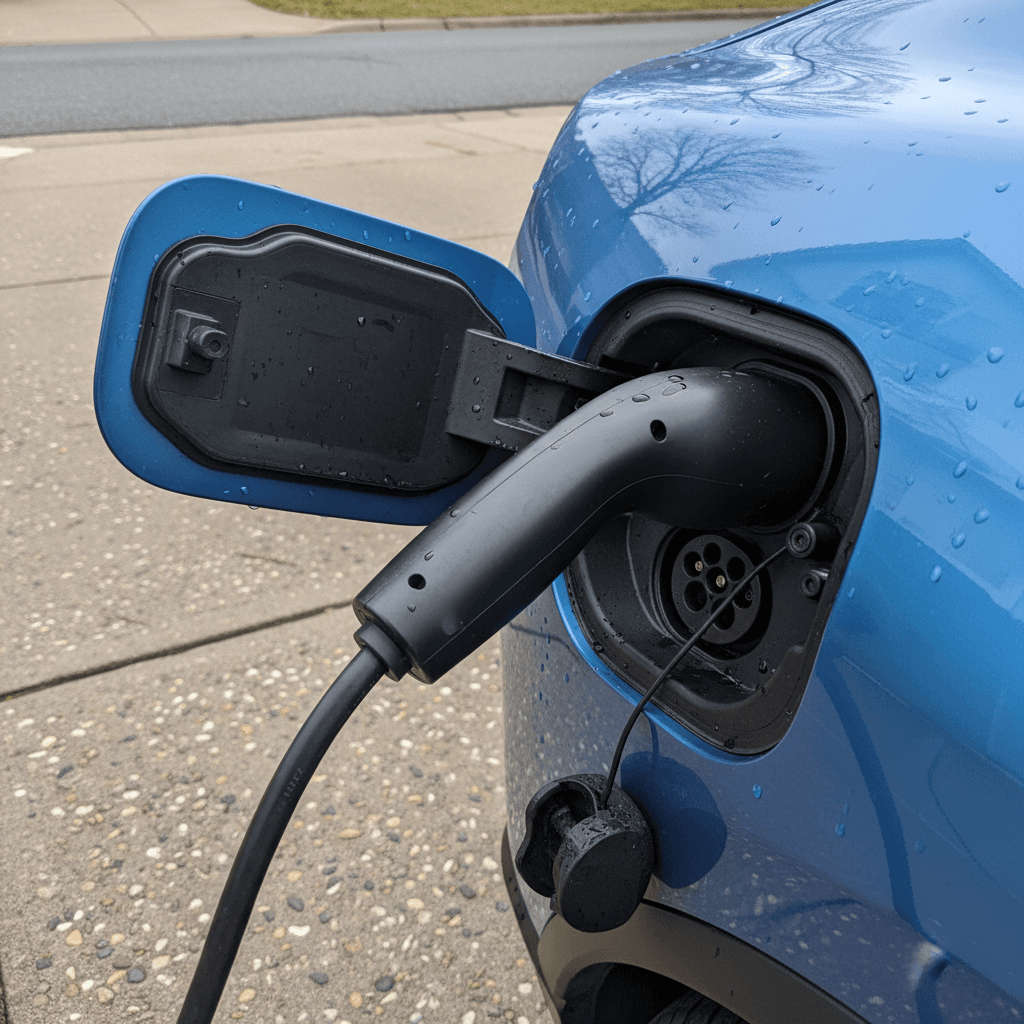
With the car in Park, open the charge port door, align the J1772 connector, and push firmly until you hear/feel the latch click. The light ring near the port should confirm charging or “waiting for schedule.”
4. Use scheduled or off‑peak charging
If your utility offers time‑of‑use rates, set a schedule, often something like 11 p.m. to 7 a.m. The car will delay drawing power until those times while still locking the cable in place.
5. Unplug safely in the morning
When you’re ready to leave, press the button on the charge handle and pull straight out. Close the port door. On wallboxes, hang the cable on its holster so it doesn’t get damaged.
6. Don’t obsess over zero
There’s no benefit to “running it down.” Top up whenever it’s convenient, your Mach‑E is happiest living between about 20% and 80% most days.
Use the car as your referee
Optimizing costs and battery health
Keep your home charging costs low
- Use off‑peak rates: Many U.S. utilities offer cheaper overnight pricing. Pair that with your Mach‑E’s schedule settings.
- Avoid habitually fast‑charging: DC fast charging is pricey and harder on the pack. Save it for road trips and emergencies.
- Dial back the amps if needed: If your panel is tight, some wallboxes and portable chargers let you cap amperage in their apps.
- Track kWh, not “gallons”: Your utility bill shows kWh. Multiply by your rate (e.g., $0.15) to get per‑charge costs.
Be kind to your Mach‑E’s battery
- Moderate daily charge level: Living at 50–80% for daily use is a comfortable middle; save 100% for trips.
- Don’t fear frequent top‑ups: Unlike old phones, modern EVs like being plugged in. The BMS manages the details.
- Watch extreme heat and cold: If possible, park in a garage. Very hot or very cold temps slow charging and can increase energy use.
- Use preconditioning: On cold mornings, pre‑heat the cabin while plugged in so energy comes from the grid, not the battery.
How Recharged helps with battery transparency
Troubleshooting common home charging issues
Common Mach‑E home charging quirks, and fixes
When in doubt, start with the basics: outlet, breaker, charger, then car settings.
Car won’t start charging
- Make sure the connector is fully seated and the ring light isn’t showing a fault color.
- Check if you’ve set a delayed charging schedule; the car may be “waiting for start time.”
- Try toggling schedule off to see if immediate charging works.
- Confirm the outlet or breaker hasn’t tripped.
Very slow charging
- On Level 1, 3–4 mi/hr is normal. If it’s worse, check for shared circuits or long extension cords.
- On Level 2, verify the charger’s amp setting and the car’s onboard limit.
- Cold batteries charge more slowly; precondition in winter if possible.
Breaker keeps tripping
- You may be overloading the circuit or sharing it with other large loads.
- Reduce charger amperage in the app, or move to a dedicated circuit.
- If trips continue, call an electrician, don’t just “keep flipping it back on.”
Error codes or warning lights
- Note the exact message in the dash or FordPass.
- Try another outlet or charger to isolate whether it’s the car or the EVSE.
- If the car faults on multiple chargers, schedule service with a Ford EV‑certified dealer.
Apartment & condo realities
Home charging tips when you’re shopping used
Used Mustang Mach‑Es are some of the best EV values on the market right now, but only if charging fits your life. Before you fall in love with a specific car or color, make sure what’s behind your breaker panel won’t be the limiting factor.
Smart home‑charging questions for used Mach‑E buyers
Ask the seller about their charging routine
Did they mostly charge at home on Level 2, rely on DC fast charging, or trickle‑charge on Level 1? Heavy fast‑charging use isn’t a deal‑breaker, but it’s good context for long‑term battery health.
Confirm which charging cable comes with the car
Make sure the <strong>Ford mobile charge cord</strong> (and any adapters) are included. Replacing them isn’t cheap, and you’ll want them on day one while you plan your permanent setup.
Inspect the charge port and cable
Look for bent pins, cracked housings, or home‑grown repairs. Charging hardware takes abuse; damage can cause intermittent faults or unsafe operation.
Check utility rates at your address
Before you sign, look up your local electric rates and whether you qualify for off‑peak EV plans. That will shape whether you push hard for a Level 2 install or lean more on public charging.
Factor charger costs into your budget
If you’re moving from gas to your first EV, treat a Level 2 install like part of the purchase price. The long‑term fuel savings often pay it back in a few years.
Leverage battery health data
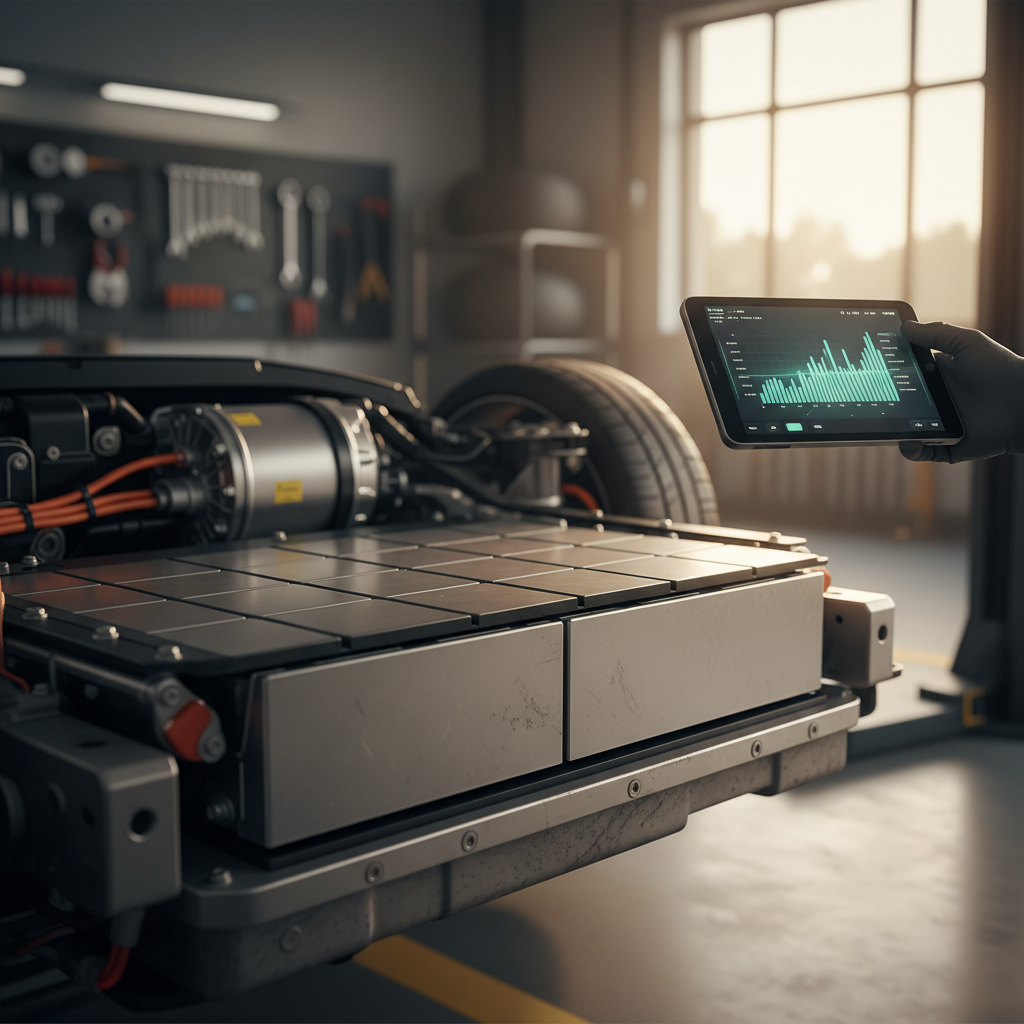
On Recharged, the <strong>Recharged Score Report</strong> gives you quantified battery health and charging behavior data so you’re not guessing how the previous owner used the car.
Mustang Mach‑E home charging FAQ
Frequently asked questions about charging a Mach‑E at home
Bottom line on charging a Mach‑E at home
Living with a Ford Mustang Mach‑E is easy once your home charging is sorted. The included Level 1 cord and a solid 120V outlet are enough to get started and cover light use. But for most owners, a properly installed 240V Level 2 setup, either a NEMA 14‑50 plus portable charger or a hardwired wallbox, turns the Mach‑E into a plug‑in, forget‑about‑it appliance that quietly refills while you sleep.
If you’re already a Mach‑E owner, your next move is simple: audit your daily miles, talk to an electrician about your panel, and decide whether a modest Level 2 install will pay for itself in convenience. If you’re shopping used, make sure home charging is part of the conversation from day one. On Recharged, our specialists can walk you through charger options, financing, and the battery‑health story behind every car, so your first night with a Mach‑E at home is as simple as plug, charge, drive.