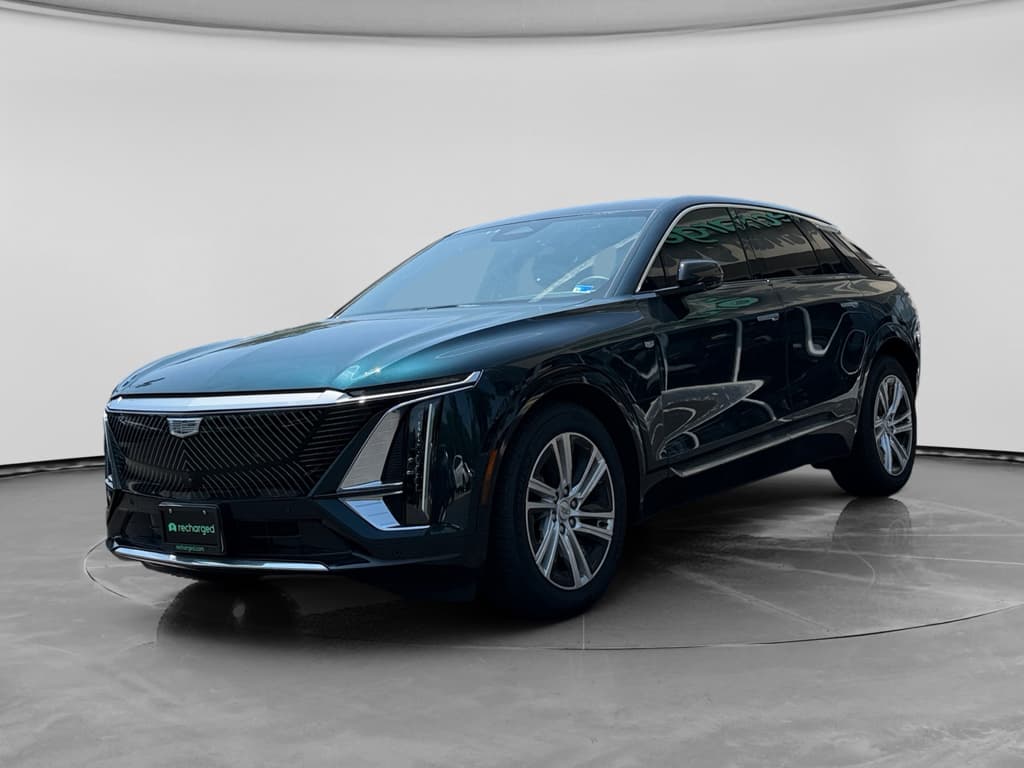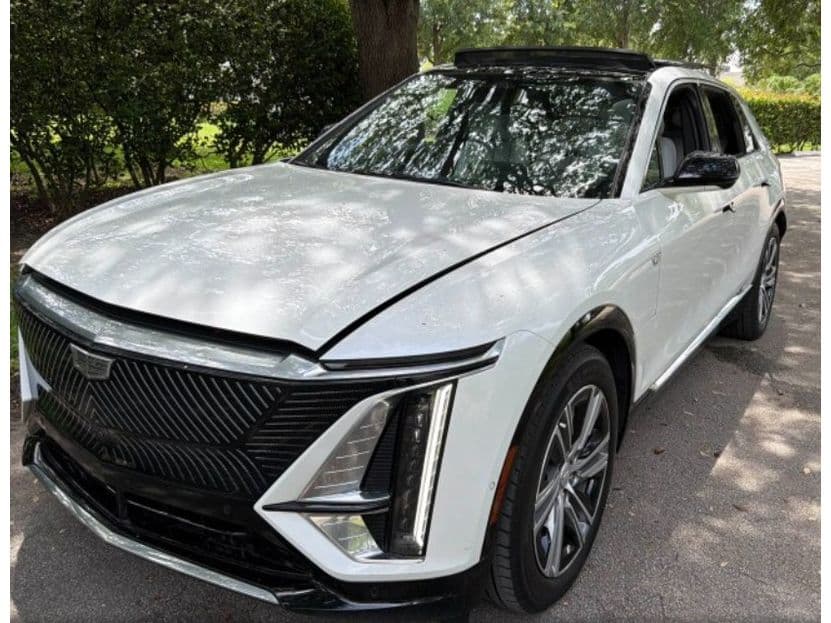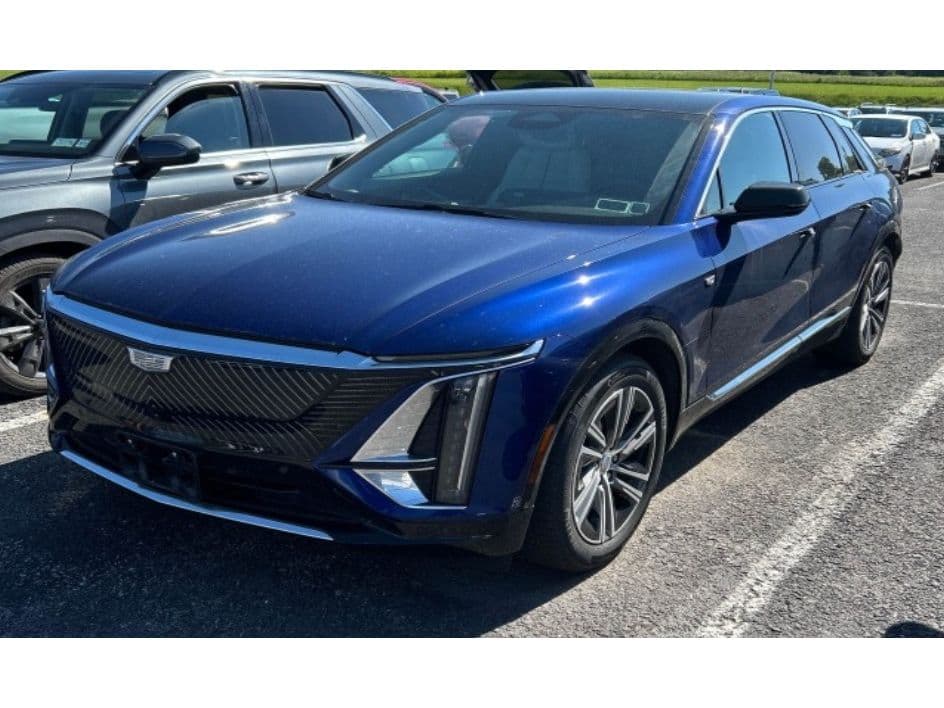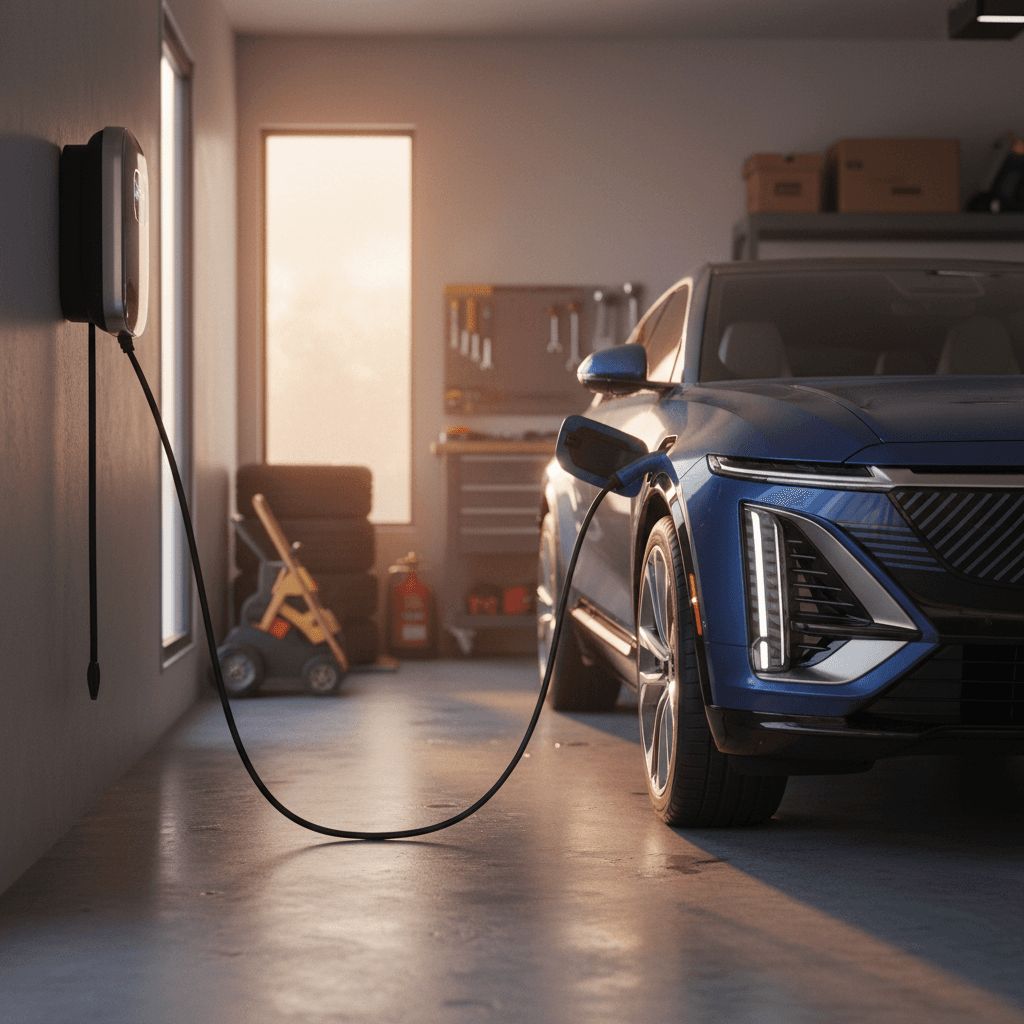
If you’ve just bought a Cadillac Lyriq, or you’re shopping for a used one, the first practical question is simple: how do you charge a Cadillac Lyriq at home in a way that’s fast, safe, and affordable? The good news is that every Lyriq ships with home‑charging capability out of the box, and with a bit of planning you can treat your garage like your own personal “gas station” that refills while you sleep.
Quick Lyriq charging snapshot
Cadillac Lyriq home charging basics
At home, your Lyriq uses the same J1772/NACS style AC inlet for both slow and fast AC charging. You have two main options: Level 1 (120V) using a standard household outlet with the dual‑level portable cord that comes with the vehicle, and Level 2 (240V) using either a higher‑power outlet (like NEMA 14‑50) or a hard‑wired wall charger. Level 1 works in a pinch, but Level 2 is what makes daily EV ownership feel effortless.
Cadillac Lyriq home‑charging capabilities at a glance
Know which onboard charger you have
Level 1 vs Level 2: What actually works for a Lyriq
Level 1: 120V household outlet
Level 1 uses a regular three‑prong 120V outlet and the dual‑level portable cord that comes with the Lyriq. It typically adds only a few miles of range per hour. That can work if you drive very little, or as a temporary solution while you wait for a Level 2 install, but relying on 120V long‑term for a ~100 kWh battery gets old fast.
- Power: roughly 1.3–1.9 kW
- Use case: emergency or low‑mileage drivers
- Pros: no electrician required, works anywhere
- Cons: painfully slow for a large‑battery SUV
Level 2: 240V home charging
Level 2 uses a 240V circuit, similar to an electric dryer or range. It can deliver roughly 7.7–11.5 kW of power on a typical residential setup, and up to 19.2 kW if your Lyriq is optioned for it and your electrical service can support it. This is the sweet spot for daily ownership.
- Power: usually 7.7–11.5 kW at home
- Use case: daily driving, overnight refills
- Pros: 25–40+ miles of range per hour of charging
- Cons: needs a dedicated 240V circuit and professional installation
Think twice before living on Level 1
Choosing the right home charger for your Lyriq
Common Lyriq home‑charging setups
Match your daily miles and electrical panel to the right solution.
Use the included dual‑level cord
Every Lyriq ships with a dual‑level portable charger that can plug into either a 120V household outlet or a 240V outlet (like NEMA 14‑50) with the right plug.
- Best for: renters, short‑term solution
- Up to ~7.7 kW on a 240V outlet
- Portable – take it on road trips
Dedicated wall‑mounted Level 2
A hard‑wired 40A–80A Level 2 wall box (GM’s Ultium Home unit or a third‑party charger) is the “set it and forget it” option.
- Best for: homeowners, high‑mileage drivers
- Clean installation, fixed cable management
- Supports scheduled charging and smart features
Shared or lower‑amp circuits
If your panel is tight, a 30A–40A charger may still give you 20–30 miles of range per hour, which covers most commutes.
- Lower installation cost than 60A–100A
- Often fits in older panels with fewer upgrades
- Still feels almost like “waking up full” daily
The right choice depends on three things: how many miles you drive in a day, whether your Lyriq has the standard 11.5 kW or optional 19.2 kW onboard charger, and what your home’s electrical panel can handle. For many drivers, a 40A–48A Level 2 (on a 50A–60A breaker) is the sweet spot: fast, relatively affordable, and widely compatible with the Lyriq’s onboard charger.
Future‑proof if you can, but don’t overspend
Electrical requirements and installation basics
Home EV charging isn’t just a fancy extension cord, it’s a continuous high‑load electrical appliance. For a Cadillac Lyriq, a typical Level 2 setup uses a 40A–80A dedicated 240V circuit, depending on the charger and whether you’re targeting the standard 11.5 kW AC rate or going after the full 19.2 kW capability available on some trims.
Home electrical checklist before you install
1. Check your main service size
Look at your electrical panel label or ask an electrician whether you have 100A, 150A, or 200A service. A Lyriq on a big Level 2 charger plus an electric range and HVAC can quickly max out a small panel.
2. Decide on an amperage target
For most households, a 40A or 48A charger (on a 50A or 60A breaker) delivers plenty of overnight range. Only consider 80A / 19.2 kW if your Lyriq supports it and your service and budget justify the upgrade.
3. Plan charger location and cable reach
Mount the charger where the cable comfortably reaches the Lyriq’s charge port without stretching across walkways. Remember the Lyriq’s port is on the driver’s‑side front fender.
4. Hire a licensed electrician
Even if you’re handy, 240V circuits and continuous loads are not DIY territory for most people. A licensed electrician will size the breaker and wire correctly and pull any required permits.
5. Consider load management or panel upgrades
If your panel is near capacity, ask about load‑sharing chargers or smart load centers that can avoid a full service upgrade while still supporting a healthy charging rate.
Safety first with 240V circuits
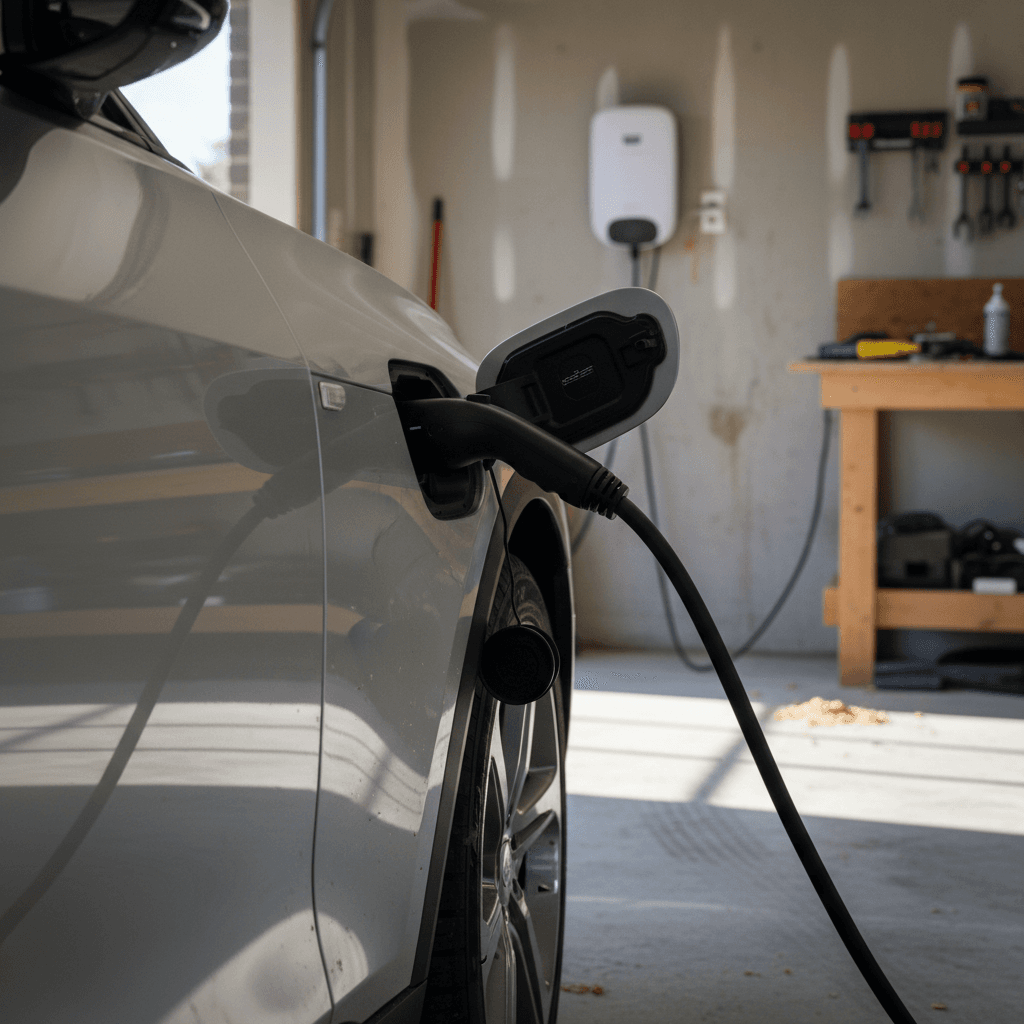
Step‑by‑step: how to plug in and charge at home
- Park your Lyriq and shift into PARK, with the driver’s‑side front fender accessible to your charger cable.
- Press on the rear edge of the charge‑port door, or, on some trims, tap the illuminated emblem, to open it.
- If you’re using the included dual‑level cord, plug the wall‑side connector into your outlet first (120V or 240V), then wait for any indicator lights to confirm it’s ready.
- Insert the handle firmly into the Lyriq’s charge port until you feel and hear it click; the vehicle should confirm connection with exterior lights and an in‑cluster message.
- Check the charging status on the center display or in the myCadillac / GM Energy app to confirm you’re charging now or are scheduled to start later.
- When you’re done, press the release button on the handle, remove the connector, stow the cable, and close the port door. You don’t need to wait for a full charge to unplug.
Set your charge target first
How long a Cadillac Lyriq takes to charge at home
Because the Lyriq’s battery is roughly 100–102 kWh usable, charge time depends heavily on how powerful your home setup is. You rarely charge from 0–100% in the real world, but it’s a helpful way to compare hardware.
Approximate Cadillac Lyriq home‑charging times
Real‑world times vary with temperature, state of charge, and efficiency, but these ballpark numbers help you right‑size your home charging.
| Home charging setup | Power to car (kW) | Miles of range per hour* | 0–80% time (hrs) | 0–100% time (hrs) |
|---|---|---|---|---|
| Level 1 – 120V outlet (portable cord) | 1.4–1.9 | 3–5 | 40–60+ | 50–70+ |
| Level 2 – 30A circuit (~24A charging) | 5.7 | 15–18 | 10–12 | 12–14 |
| Level 2 – 40A circuit (~32A charging) | 7.7 | 22–25 | 8–10 | 10–12 |
| Level 2 – 48A circuit (~11.5 kW onboard limit) | 11.5 | 30–35 | 6–7 | 7–9 |
| Level 2 – 80A / 19.2 kW (optional onboard charger) | 19.2 | 45–50+ | 4–5 | 5–6 |
Assumes a ~102 kWh battery and typical charging efficiency. You’ll usually charge over a smaller window, say 30% to 80%, which is faster than the full‑pack numbers below.
You almost never need 0–100% at home
How much it costs to charge a Lyriq at home
Home charging is one of the places EV economics shine. Using recent estimates for the Lyriq’s ~102 kWh battery and US average residential electricity rates, a full charge from nearly empty typically costs in the $12–$16 range, depending on your local kWh price and how efficient your driving is.
Sample Lyriq home‑charging cost scenarios
Adjust the kWh rate to match your own utility bill.
Standard residential rate
$0.15/kWh and a 102 kWh pack implies about $15 for a full charge from ~10% to 100%.
For many drivers, that’s a week or more of commuting for less than a typical gas fill‑up.
Off‑peak EV rate plan
Some utilities offer off‑peak EV rates around $0.08–$0.10/kWh overnight. That can bring a full charge closer to $8–$10.
Scheduling your Lyriq to charge during that window is often the single biggest lever to cut fuel costs.
Compared to gasoline
If you’re replacing a luxury SUV that gets 20 mpg and pay $3.75/gal, 300 miles costs about $56 in gas.
The same 300 miles in a Lyriq, at $0.15/kWh and ~3 mi/kWh, costs roughly $15. That’s where EVs start to pay you back.
Check for utility rebates and time‑of‑use rates
Using schedules, apps, and smart charging features
Cadillac and GM know that electricity prices swing wildly between afternoon peaks and overnight lows. The Lyriq’s in‑car Charging app and the myCadillac / GM Energy apps let you define preferred charge times, charge limits, and home vs. away behavior so you’re not wasting money charging during expensive hours.
Set up smart home charging in your Lyriq
1. Save your home location
In the vehicle’s Charging settings, set your current parking spot as “Home.” This lets the car behave differently at home (for example, respecting scheduled charging) than at public stations.
2. Pick a daily ready‑by time
Instead of guessing a start time, set a “ready by” time that aligns with your departure, say 7:00 a.m. The Lyriq will back‑calculate when to start charging based on your charger’s power.
3. Align with your utility’s off‑peak window
If your cheapest rate is, for example, 9:00 p.m. to 7:00 a.m., make sure your ready‑by time and charge window fall inside those hours so most kWhs are billed at the lower rate.
4. Enable cabin preconditioning while plugged in
Use the app or in‑car settings to heat or cool the cabin while your Lyriq is still plugged in. That energy comes from the grid instead of your battery, preserving range and comfort.
5. Keep the charger firmware updated
If you use a smart wall box (GM Ultium Home, ChargePoint, etc.), update its firmware and connect it to Wi‑Fi. That keeps utility integrations and load management features working smoothly.
Scheduled vs. immediate charging can be confusing
Battery‑health tips for daily home charging
Ultium‑platform batteries like the Lyriq’s are engineered for long life, but how you charge at home still matters. You don’t need to obsess, but adopting a few simple habits can help preserve range and value, especially important if you ever plan to sell or trade your Lyriq in on a site like Recharged.
Simple home‑charging habits that help your Lyriq’s battery age gracefully
None of these cost you performance day‑to‑day, but they can pay off over years of ownership.
Use 70–80% as your daily limit
Set your default charge limit to around 70–80% for everyday use. Save 90–100% charges for road trips or days when you really need max range. High state of charge for long periods is tougher on lithium‑ion chemistry.
Avoid frequent deep discharges
Try not to let the pack live between 0–10% all the time. It’s fine occasionally, but if your daily routine drains the Lyriq that low, consider a higher‑amp Level 2 charger so you can comfortably keep a mid‑pack buffer.
Schedule charging to finish near departure
Instead of charging immediately to 80% and sitting there all night, use scheduled charging so the car reaches your target shortly before you leave. That keeps the pack at moderate states of charge while it’s parked.
Precondition in extreme weather
In very hot or cold climates, let the car precondition while plugged in. You arrive at the pack with a stabilized temperature and preserve both comfort and effective range.
Why this matters for used Lyriq shoppers
Ready to find your next EV?
Browse VehiclesCommon Lyriq home‑charging mistakes to avoid
- Using a cheap, unlisted adapter to plug a high‑power charger into an undersized outlet.
- Mounting the charger so the cable has to stretch across a walkway or tight turn, inviting trip hazards or strain on the connector.
- Running the portable dual‑level cord on a long, thin extension cord that overheats under continuous load.
- Ignoring a warm or buzzing outlet, breaker, or charger, these are warning signs to stop and call an electrician.
- Assuming any 19.2 kW wall box will give you 19.2 kW if your Lyriq only has the 11.5 kW onboard charger.
- Leaving the charge limit at 100% for months even if you never need the full range.
If anything smells hot or looks discolored, unplug immediately
Cadillac Lyriq home‑charging FAQ
Frequently asked questions about charging a Cadillac Lyriq at home
Charging a Cadillac Lyriq at home isn’t complicated once you separate the marketing noise from the underlying physics. A thoughtfully installed Level 2 charger matched to your onboard hardware and electrical panel turns your driveway into a predictable, low‑cost fuel source, and a few smart habits with charge limits and scheduling keep the battery happy for years. If you’re cross‑shopping or looking at a used Lyriq, platforms like Recharged can help you compare configurations, understand real‑world charging behavior, and see verified battery health before you commit.