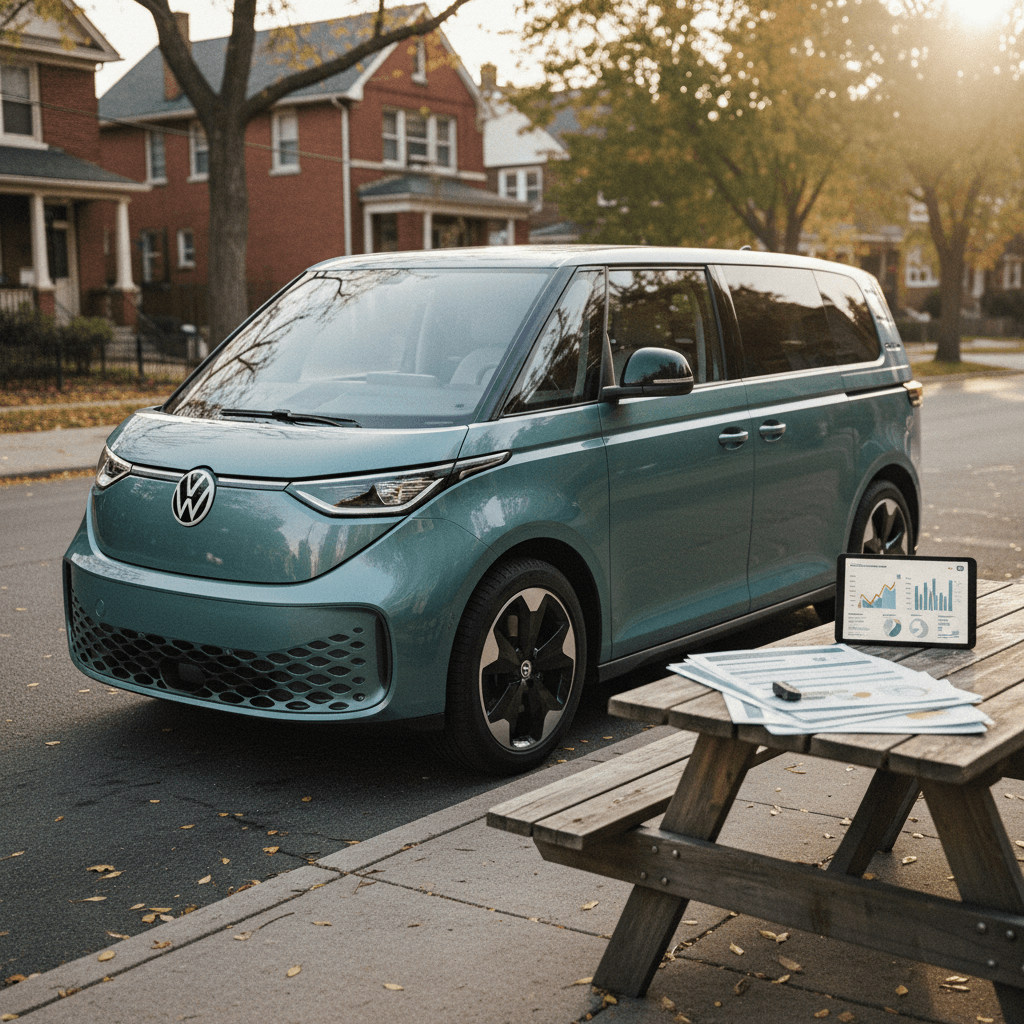
If you’re eyeing Volkswagen’s retro‑cool electric van, you’re probably also wondering: how much is insurance on a Volkswagen ID. Buzz? With EV premiums running higher than gas cars, it’s a smart question to ask before you fall in love with two-tone paint and swivel seats. Let’s break down what you’re likely to pay in 2025–2026, why the numbers look the way they do, and how to keep your insurance costs under control, especially if you’re considering a used ID. Buzz on Recharged.
Context: insurance has cooled off, but EVs are still pricey
VW ID. Buzz insurance: the short answer
Volkswagen ID. Buzz insurance at a glance (2025–2026)
Real‑world early quotes shared by ID. Buzz owners suggest that insurance often lands a bit above typical compact EVs like the VW ID.4, but meaningfully below high‑end models like a Tesla Model X. In plain language: you should budget for an above‑average premium, but not an eye‑watering one, especially if you have a solid driving record.
Ballpark, not a binding quote
Why EV insurance (including the ID. Buzz) is higher than average
To understand how much insurance is on a Volkswagen ID. Buzz, you first need to understand why EVs as a group frequently carry higher premiums than gasoline vehicles, even if they’re safer and driven by relatively careful owners.
- Repair costs are higher. EVs pack expensive battery packs, high‑voltage components, and intricate sensors. A moderate crash that might mean bodywork on a gas van can turn into a far more expensive repair, or even a total loss, on an EV if the battery, floorpan, or high‑voltage wiring is compromised.
- Parts and trained shops are less common. Many collision centers still aren’t fully tooled up for EV repairs, which can mean longer cycle times and higher labor charges. That gets priced into your premium.
- Weight works against you. EVs like the ID. Buzz carry a heavy battery. Higher mass can increase damage to whatever you hit, even if your own passengers remain well‑protected.
- Advanced driver‑assistance systems are a mixed bag. The ID. Buzz’s safety tech can prevent crashes, but when the hardware (radars, cameras, sensors in the bumper or windshield) is damaged, calibrating or replacing it adds to repair bills.
How the ID. Buzz compares to the average EV
9 factors that shape your ID. Buzz insurance rate
Even if you and a friend buy identical ID. Buzz vans, your premiums can look radically different. Here are the biggest levers insurers pull when they answer the question, “How much is insurance on a Volkswagen ID. Buzz for *you*?”
Personal vs. vehicle factors for ID. Buzz insurance
Both who you are and which Buzz you buy matter
1. Your driving record
2. Where you live and park
3. Age, experience, and credit
4. Trim level and MSRP
5. Annual mileage and use case
Insuring an ID. Buzz as a low‑mileage family hauler is different from using it as a high‑mileage commercial shuttle or delivery van. More miles usually equals more risk, though some usage‑based telematics programs can reward smooth, predictable driving even at higher mileage.
6. Coverage levels and deductibles
Choosing higher liability limits or lower deductibles provides more protection but also raises your bill. For a relatively expensive EV like the Buzz, it’s usually wise to keep robust liability and uninsured motorist coverage, then use deductibles to fine‑tune the premium.
7. Bundles and discounts
Multi‑car, home/auto bundles, telematics, defensive‑driving courses, and even some EV or “green vehicle” discounts can all take the edge off a high base premium. Don’t assume discounts are automatic, ask what’s available.
8. Ownership vs. lease or loan
Leasing or financing an ID. Buzz often means the lender requires full coverage and sometimes higher minimum limits. Lease‑end coverage add‑ons like gap or “new car replacement” can increase your effective insurance cost but may be worth it on a high‑value EV.
9. New vs. used Buzz
A used ID. Buzz with a lower market value can be cheaper to insure than a brand‑new one because there’s less to replace if it’s totaled. On Recharged, every used Buzz comes with a battery health report, which can make it easier to decide whether you still want full coverage or are comfortable dialing back certain protections over time.
Use quotes as a shopping tool
How the ID. Buzz safety record helps your premium
On the risk side, the ID. Buzz is an expensive, heavy EV. On the reward side, it’s also one of Volkswagen’s safest models to date, with top ratings from major crash‑test programs in both Europe and North America. That balance is part of why its insurance costs are elevated but not extreme.
- Excellent crash performance. The ID. Buzz has earned the highest available overall ratings in leading crash‑test programs, reflecting strong occupant protection in front, side, and rollover scenarios.
- Robust active safety tech. VW’s IQ.DRIVE system layers adaptive cruise control, lane centering, automatic emergency braking with pedestrian detection, blind‑spot monitoring, and rear cross‑traffic alerts. All of this helps avoid crashes before they start.
- Family‑first packaging. The Buzz’s boxy cabin, good visibility, and abundant airbags make it an inherently friendly environment for families hauling people and cargo every day.
- Fleet‑friendly design. The cargo versions of the ID. Buzz have also been engineered with commercial duty in mind, which tends to correlate with strong crash‑avoidance and durability characteristics.
Why safety matters for insurance

7 smart ways to save on Volkswagen ID. Buzz insurance
You can’t change the fact that the ID. Buzz is a large, fairly expensive EV, but you *can* control how you insure it. Here are practical levers to pull if your first quotes feel higher than you’d like.
ID. Buzz insurance savings playbook
1. Decide how much coverage you really need
Make sure you’re not over‑insuring. A brand‑new Buzz with a loan probably deserves full coverage and high liability limits. A future used Buzz that you own outright might justify a higher deductible or even dropping comprehensive and collision if its value falls.
2. Right‑size your deductibles
Raising your comprehensive and collision deductibles from, say, $500 to $1,000 can meaningfully cut your premium, just be sure you can comfortably cover that out‑of‑pocket hit if something happens.
3. Ask specifically about EV and telematics discounts
Many insurers quietly offer green‑vehicle credits, low‑mileage discounts, or app‑based telematics programs that reward gentle driving and lower annual miles, perfect for a family Buzz that mostly sees school runs and weekend trips.
4. Bundle home, renters, and other vehicles
If you’re bringing an ID. Buzz into a household that already has a home, renters, or another vehicle insured, quoting them all together can unlock multi‑policy and multi‑car discounts that soften the EV premium bump.
5. Compare at least three insurers
Different carriers price EV risk very differently right now. One company may paint all electric vans with a high‑risk brush, while another leans on the Buzz’s safety performance and offers a much more reasonable number.
6. Think carefully about add‑ons
Gap coverage, accident forgiveness, OEM‑parts endorsements, and custom‑equipment coverage (for camper conversions, wraps, or aftermarket wheels) all add cost. Decide what’s truly important rather than automatically checking every box.
7. Use Recharged tools when shopping used
If you’re considering a used ID. Buzz on Recharged, start by checking the Recharged Score and battery health report. A clean vehicle history and transparent battery condition make underwriting easier and can support better quotes, especially when you’re comparing multiple used Buzzes.
What *not* to do to save money
Insurance costs: new vs. used ID. Buzz
Because the Volkswagen ID. Buzz is still relatively new to the U.S. market, most of the buzz (pun intended) has been around new or nearly new vans. But as more examples shift into the used market, the insurance picture will start to bifurcate between new and used ownership.
How new vs. used affects ID. Buzz insurance
General tendencies, your exact numbers will depend on age, mileage, condition, and market value of the van you’re insuring.
| Scenario | Vehicle value | Typical coverage choice | Likely premium impact |
|---|---|---|---|
| Brand‑new ID. Buzz, financed | Highest (full MSRP) | Full coverage, lower deductibles, gap/new‑car replacement coverage recommended | Highest premiums; lender may require specific coverage levels. |
| 2–3‑year‑old ID. Buzz, bought used | Lower than new but still substantial | Full coverage with moderate deductibles | Premiums drop somewhat vs. new due to lower replacement cost. |
| Older used ID. Buzz with high miles | Significantly lower market value | Owner may raise deductibles or drop comp/collision | Total premium can fall meaningfully as you insure less value. |
| Lightly used ID. Buzz from Recharged | Below new‑car pricing; verified battery health | Full coverage, tuned to your risk tolerance and TCO goals | Balanced approach: some savings vs. new with the peace of mind of a vetted EV. |
Why a used Volkswagen ID. Buzz can be cheaper to insure than a new one, even with the same driver.
How Recharged can help on the used side
How insurance fits into ID. Buzz total cost of ownership
Insurance is just one slice of Volkswagen ID. Buzz ownership cost, but it has quietly climbed the ranks over the last few years. For many new‑car buyers, it now rivals or even exceeds fuel or charging costs over five years. That’s especially true for EVs.
Where insurance sits in the cost stack
For a typical U.S. driver, annual insurance on an ID. Buzz might easily land in the low‑to‑mid $3,000s. Over five years, that’s $15,000–$18,000, without a single at‑fault accident. Put differently, your insurance spend can approach or exceed what you’ll spend on electricity, registration, and maintenance combined.
That’s why it’s worth doing the somewhat boring, spreadsheet‑style work up front rather than treating insurance as an afterthought.
Why used often wins on total cost of ownership
A well‑chosen used ID. Buzz can give you most of the same practicality and charm with:
- A lower purchase price
- Reduced depreciation hit
- Potentially lower comprehensive and collision premiums, if you choose higher deductibles and insure closer to actual market value
On Recharged, you can view a Buzz’s Recharged Score, battery health, and pricing in one place, then layer in realistic insurance quotes to see the full picture before you commit.
ID. Buzz insurance checklist before you buy
If you’re serious enough about the ID. Buzz to be reading about insurance costs, you’re already ahead of most shoppers. Use this quick checklist to sanity‑check the numbers before you sign anything at a dealer, or click “Buy” on a used Buzz online.
Pre‑purchase Volkswagen ID. Buzz insurance checklist
Confirm your exact trim and options
Insurance systems rate vehicles down to specific trims and packages. Get your VIN or spec sheet, then quote against that exact configuration instead of a generic “ID. Buzz” entry.
Quote at your real garaging address
Don’t use your parents’ ZIP code or a hypothetical future move. Insurers price risk block by block; you need realistic numbers where you’ll actually park and drive.
Test different deductibles
Run at least two scenarios, say $500 and $1,000 deductibles, to see how much premium you save relative to the extra risk you’d take on in a claim.
Decide on must‑have add‑ons
Figure out ahead of time whether you want gap coverage, OEM‑parts endorsements, rental reimbursement, or roadside assistance so you’re not making impulsive decisions on a call with an agent.
Compare at least three insurers
Get quotes from a mix of national carriers and, if available, strong regional players. EV pricing is still volatile; the spread between the cheapest and most expensive quote on an ID. Buzz can be surprisingly large.
If shopping used, review the vehicle’s history and battery health
For used Buzzes, combine insurance quotes with objective information like accident history and a battery health report. The Recharged Score was built for exactly this kind of decision‑making.
Volkswagen ID. Buzz insurance: FAQ
Common questions about Volkswagen ID. Buzz insurance
Key takeaways on ID. Buzz insurance
Insurance on the Volkswagen ID. Buzz isn’t cheap, but it also isn’t in the nosebleed category some EV horror stories might have you expecting. For many drivers in 2025–2026, realistic full‑coverage premiums will sit in the low‑to‑mid $3,000s per year, higher than gas minivans, but generally below luxury EV crossovers and performance models. The Buzz’s strong safety ratings keep it from being an outlier, while its size, weight, and repair complexity keep it firmly above the national average.
The real opportunity is in how you shop. If you treat insurance like a line item to be optimized, quoting multiple carriers, calibrating deductibles, and thinking critically about add‑ons, you can take a meaningful bite out of your ID. Buzz premium without sacrificing the protection a modern family EV deserves. And if you’re open to a used VW ID. Buzz, platforms like Recharged give you transparent battery health and pricing data, so you can weigh insurance, depreciation, and financing together rather than in isolation. That’s how you turn a fun, nostalgic EV into a financially rational daily driver.