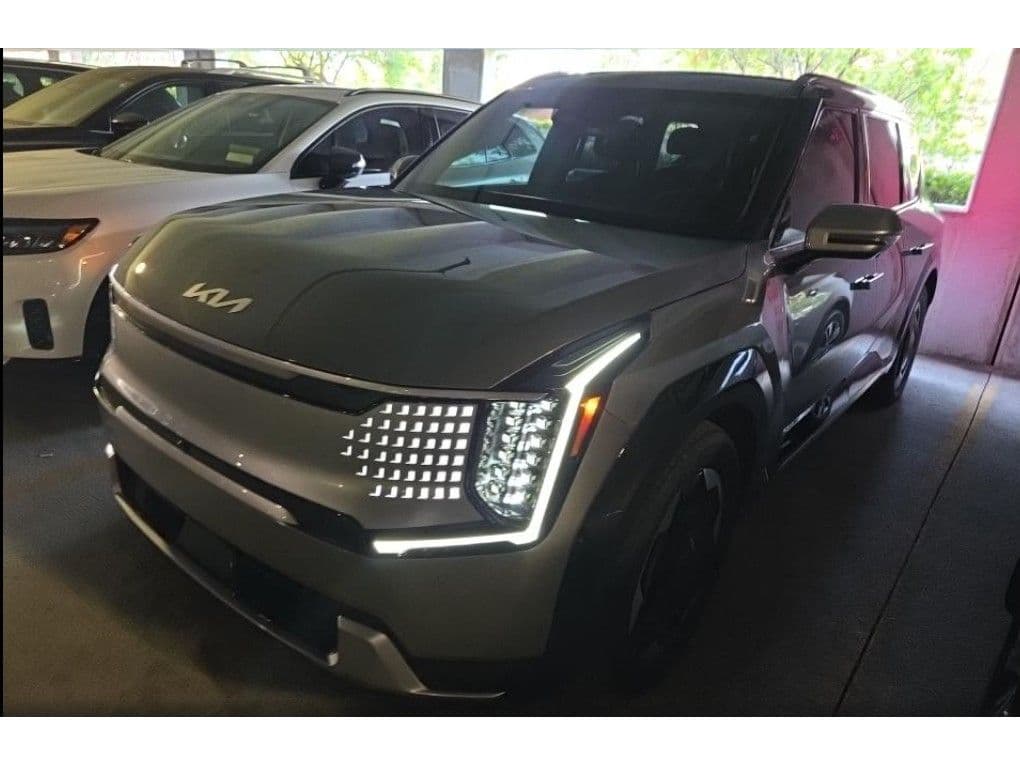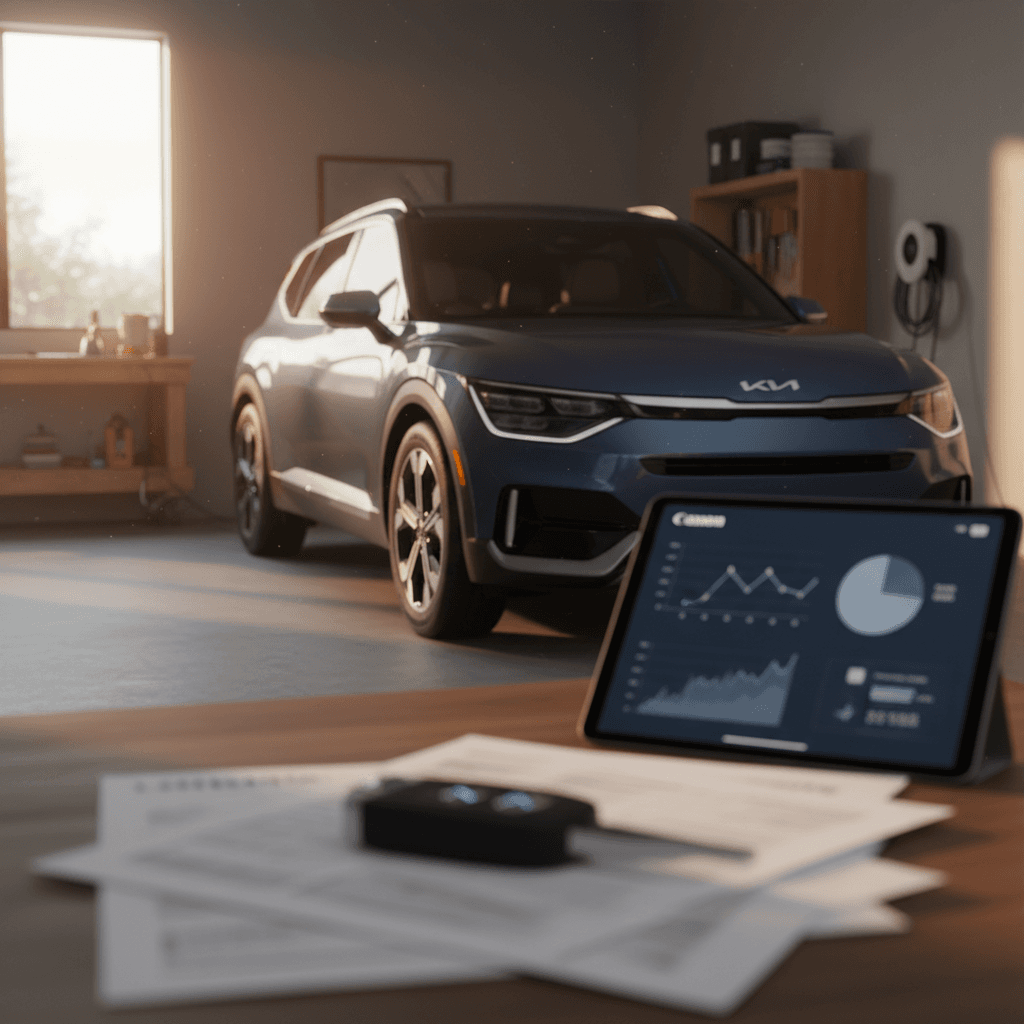
If you’re eyeing a three‑row electric SUV, one of your first questions is naturally, “How much is insurance on a Kia EV9?” The answer: more than a typical gas SUV, but often less than some luxury EV rivals. In 2026, understanding why EV9 insurance looks the way it does can help you budget smarter, and find real savings, especially if you’re considering a used EV9.
Quick context: car insurance is up everywhere
Kia EV9 insurance at a glance
Typical Kia EV9 insurance snapshot (2026, U.S.)
Real‑world EV9 owners in U.S. forums report full‑coverage premiums anywhere from about $1,200 per year on the low end (multi‑car, clean record, lower‑risk state) up to $3,500–$4,000 per year in higher‑risk markets or with spottier histories. That’s a huge spread, which is why you should treat any single “average EV9 insurance price” as a starting point, not a guarantee.
Your rate can be an outlier
So how much is insurance on a Kia EV9?
Most U.S. drivers asking, “How much is insurance on a Kia EV9?” are looking for a ballpark. Based on 2025–2026 rate data for Kias and other EVs plus owner reports, here’s a reasonable framework for full‑coverage insurance (liability, collision, and comprehensive) on a new EV9:
Estimated annual Kia EV9 insurance cost ranges (full coverage)
Illustrative ranges for U.S. drivers in 2026. Your actual quote will depend heavily on state, credit, mileage, and household details.
| Driver profile | Typical annual range | How that usually looks monthly | What’s driving the number |
|---|---|---|---|
| Excellent record, 35–55, suburban/low‑risk state | $1,600–$2,200 | $135–$185 | Clean history, good credit, stable address, bundled with home/other cars |
| Good record, mixed‑risk state or small city | $2,200–$2,900 | $185–$240 | Average mileage, normal commute, a few minor tickets or claims in the past |
| Younger driver (under 30) or dense urban area | $2,900–$3,800 | $240–$320 | Higher perceived risk, more traffic, higher theft and repair costs locally |
| High‑risk (recent at‑fault accidents, poor credit) | $3,800+ | $320+ | Insurer is pricing for both EV repair costs and higher individual risk |
These are directional ranges, not guaranteed quotes. Always compare live offers.
Reality check: quoted high? Don’t panic yet
Why Kia EV9 insurance isn’t cheap (but isn’t the worst, either)
The Kia EV9 is a large, tech‑heavy, three‑row SUV with a starting price that can easily climb into luxury territory when optioned up. That combination, high vehicle value, complex electronics, and a big battery pack, gives insurers plenty to think about.
- High purchase price: A $60,000–$75,000 EV9 simply costs more to replace than a $40,000 gas SUV, so comprehensive and collision coverage are priced accordingly.
- Battery and repair complexity: EV batteries and high‑voltage components are expensive, and many independent shops are still catching up on training. Claims involving these parts can be thousands of dollars more than on an equivalent gas model.
- Weight and performance: Like other large EVs, the EV9 is heavy and has strong acceleration. Insurers factor in the potential for more damage when a heavy vehicle is involved in a collision.
- Industry learning curve: Many insurers are still refining their EV loss models. Until repair data becomes more predictable, they tend to price in a cushion for risk.
Where the EV9 has an edge
Key factors that change your EV9 premium
When you look past the EV9 badge, insurers mostly care about the same fundamentals they use for any vehicle. With a big electric SUV, though, some of these dials move more dramatically.
Don’t skip coverage just to fight the price
Kia EV9 vs. other EVs and three‑row SUVs
It’s easier to judge Kia EV9 insurance when you compare it with similar vehicles. While published averages vary by source, a few patterns show up consistently:
EV9 vs. other electric SUVs
- Versus smaller EVs like the Kia EV6 or Hyundai Ioniq 6, the EV9 typically costs more to insure because it’s larger and more expensive.
- Versus some luxury EVs (certain Tesla models, high‑end European EV SUVs), the EV9 can actually be cheaper to insure despite a similar or slightly lower purchase price.
- Industry studies still show EVs in general can cost substantially more to insure than their gas siblings, but that gap has been shrinking as repair data improves.
EV9 vs. gas three‑row SUVs
- A Kia Telluride or Honda Pilot will usually be cheaper to insure than an EV9 with comparable equipment, primarily because of lower repair and replacement costs.
- However, some owners report EV9 premiums that are only about 10–20% higher than older gas SUVs when bundled under the same policy.
- In high‑risk areas, or with a younger primary driver, the gap can widen, so it’s worth pricing both gas and EV options if you’re still deciding.

How EV9 safety ratings help your insurance costs
The good news for your insurance bill is that the Kia EV9 doesn’t just look like a safe family hauler, it’s tested like one. The EV9 has earned Top Safety Pick awards from the Insurance Institute for Highway Safety (IIHS), and newer model years have moved up to the coveted Top Safety Pick+ tier as headlight and crash‑test performance improved.
- Advanced driver‑assistance features (lane‑keeping, automatic emergency braking, blind‑spot monitoring) can reduce both the frequency and severity of crashes.
- A strong crash structure and good head restraint and seat ratings cut down on injury‑related claim costs, something insurers watch closely.
- Top safety scores make it easier for underwriters to justify more competitive EV9 rates compared with large SUVs that don’t perform as well.
Ask your agent to apply safety discounts
7 ways to lower your Kia EV9 insurance bill
You can’t change the fact that the EV9 is a pricey, tech‑heavy EV. But you do have meaningful control over how insurers see your overall risk. Here are practical steps that actually move numbers.
Practical EV9 insurance savings playbook
1. Get quotes from at least 3–5 insurers
Some big national carriers price EVs cautiously, while others are aggressively courting EV drivers. Independent agents and online comparison tools can surface outliers willing to write more competitive EV9 policies.
2. Adjust deductibles thoughtfully
If you can comfortably afford a higher out‑of‑pocket hit after a claim, moving from a $500 to a $1,000 deductible on collision and comprehensive can trim your premium. Just avoid raising deductibles so high you’d struggle to pay them in an emergency.
3. Bundle your EV9 with home or renters coverage
Multi‑policy discounts are still one of the simplest ways to cut costs. If you’re switching from a different brand or buying your first EV, revisit your bundling options, especially if one carrier is particularly EV‑friendly.
4. Use telematics or safe‑driver programs
Many insurers now offer smartphone or plug‑in programs that track mileage, braking, and time of day. Careful EV9 drivers who mainly run suburban errands often qualify for meaningful discounts via these tools.
5. Optimize how, and how much, you drive
If you can document lower annual mileage, say you’re charging at home and don’t commute every day, make sure your policy reflects that. The fewer miles you drive, the less exposure the insurer has.
6. Clean up your coverage mix
Review add‑ons like rental reimbursement or roadside assistance you might already have through another service. Don’t strip valuable protections, but do eliminate duplicate benefits you’re paying for twice.
7. Re‑shop at renewal after the first year
EV pricing models are evolving quickly. A carrier that quoted you high in 2024 or 2025 may have sharpened its pencil by 2026. Put a reminder on your calendar to compare rates before each renewal, especially in the first few years.
Pair insurance shopping with vehicle shopping
Insuring a used Kia EV9: what changes?
As EV9s move from new‑car lots into the used market, buyers are understandably asking whether a used Kia EV9 is cheaper to insure than a brand‑new one. In many cases, yes, but not always by as much as you’d think.
Why a used EV9 can cost less to insure
- Lower actual cash value (ACV): As the EV9 depreciates, the maximum check an insurer might have to write shrinks, softening comprehensive and collision premiums.
- More repair data: By 2026, insurers have more real‑world loss history for early EV9 model years, which can reduce the uncertainty markup built into early pricing.
- Older trims, simpler options: A used EV9 with fewer expensive options (like panoramic roofs or high‑end audio) can be cheaper to fix after a claim.
Why the difference isn’t huge
- Battery and electronics still dominate: Even on a three‑year‑old EV9, high‑voltage components and sensors are costly.
- General market inflation: Repair labor and parts costs have climbed sharply since 2020, muting some of the savings from depreciation.
- State and driver factors dominate: Your ZIP code, record, and credit score typically matter more than whether the EV9 is new or a few years old.
Where Recharged fits in for used EV9 buyers
Is Kia EV9 insurance worth it for you?
Insurance on a Kia EV9 is rarely “cheap,” but for many owners it’s not the deal‑breaker they feared either. If you’re budgeting in 2026, planning on roughly $2,400–$3,000 per year for full coverage is a reasonable starting point, with plenty of room to land lower or higher depending on your situation. The EV9’s strong safety scores and growing repair data are helping narrow the EV insurance penalty that made headlines a few years ago.
The key is to treat insurance as part of your total cost of ownership, not an afterthought. If you’re shopping for a new or used EV9, compare quotes early, adjust your coverage intelligently, and take advantage of EV‑friendly carriers and discounts. And if you’re exploring a used EV9, a marketplace like Recharged, with battery health diagnostics, fair‑market pricing, financing, and trade‑in options, can help you line up the right vehicle and a realistic insurance plan before you ever sign the paperwork.