If you grew up buying gas cars, you were trained to fear the odometer. Pass 100,000 miles and the value fell off a cliff. With electric vehicles, the question is more nuanced: how much does mileage actually affect EV value, and when is "high mileage" too high? In 2026, we finally have enough real‑world data to answer that with more than a shrug.
The short answer
Why mileage matters differently for EVs
On a gas car, higher mileage usually means more wear on hundreds of moving parts, pistons, valves, transmissions, exhaust systems. An EV drivetrain has a fraction of those pieces, and they tend to last a very long time. So when you’re looking at a used EV, mileage is really a proxy for two things: battery wear and overall use (suspension, brakes, interior).
- The electric motor itself can often run for hundreds of thousands of miles with minimal degradation.
- The big unknown is the traction battery, its state of health (SoH) determines how much range you actually get.
- Software, infotainment and safety tech age with time, not just miles, so a low‑mileage but older EV might still feel dated.
Think "miles of useful range," not just miles driven
How EV batteries actually wear with miles
Lithium‑ion EV packs don’t suddenly fall off a cliff at some magic mileage number. Thousands of cars across brands now show a consistent pattern: a bit of faster loss in the first few years, then a long, slow glide. Multiple large studies and fleet reports cluster average long‑term degradation around 1.8–2.5% per year under normal use, or roughly 10–15% capacity loss by 100,000–150,000 miles on a modern, liquid‑cooled pack.
What real‑world battery wear looks like
That said, not all miles are equal. A taxi or rideshare EV that lives on DC fast charging and spends its life at high states of charge in hot weather will lose capacity faster than a commuter car that’s mostly charged at home to 70–80%.
Early EVs are the exception
Mileage brackets and typical EV value impact
Used‑car guides love neat tables. Reality is messier, but there are patterns in how shoppers and lenders respond to EV mileage. Think in brackets instead of obsessing over a single number.
Common mileage brackets and what they usually signal
These aren’t hard rules. They’re practical ranges many dealers, lenders, and shoppers use when thinking about EV value in 2026.
| Odometer range | How buyers read it | Typical value impact vs. "low‑mile" comp | What to look for |
|---|---|---|---|
| 0–20,000 miles | Nearly new | Baseline pricing | Verify warranty start date, early service or recalls. |
| 20,000–40,000 miles | Lightly used | -5% to -10% | Normal commuter miles, battery should be close to new. |
| 40,000–70,000 miles | Average used | -10% to -20% | Great value zone; focus on battery health report. |
| 70,000–100,000 miles | Higher but reasonable | -20% to -30% | Expect some range loss; discounts should reflect that. |
| 100,000–150,000 miles | High mileage | -30% to -45% | Needs strong battery test and maintenance records. |
| 150,000+ miles | Very high mileage | Heavily discounted, case‑by‑case | Only makes sense if price, battery health, and your use case all line up. |
Use this as a conversation starter, not a verdict. Battery health and service history can move a car up or down a bracket in value terms.
The sweet spot for many buyers
Battery health vs. odometer: which matters more?
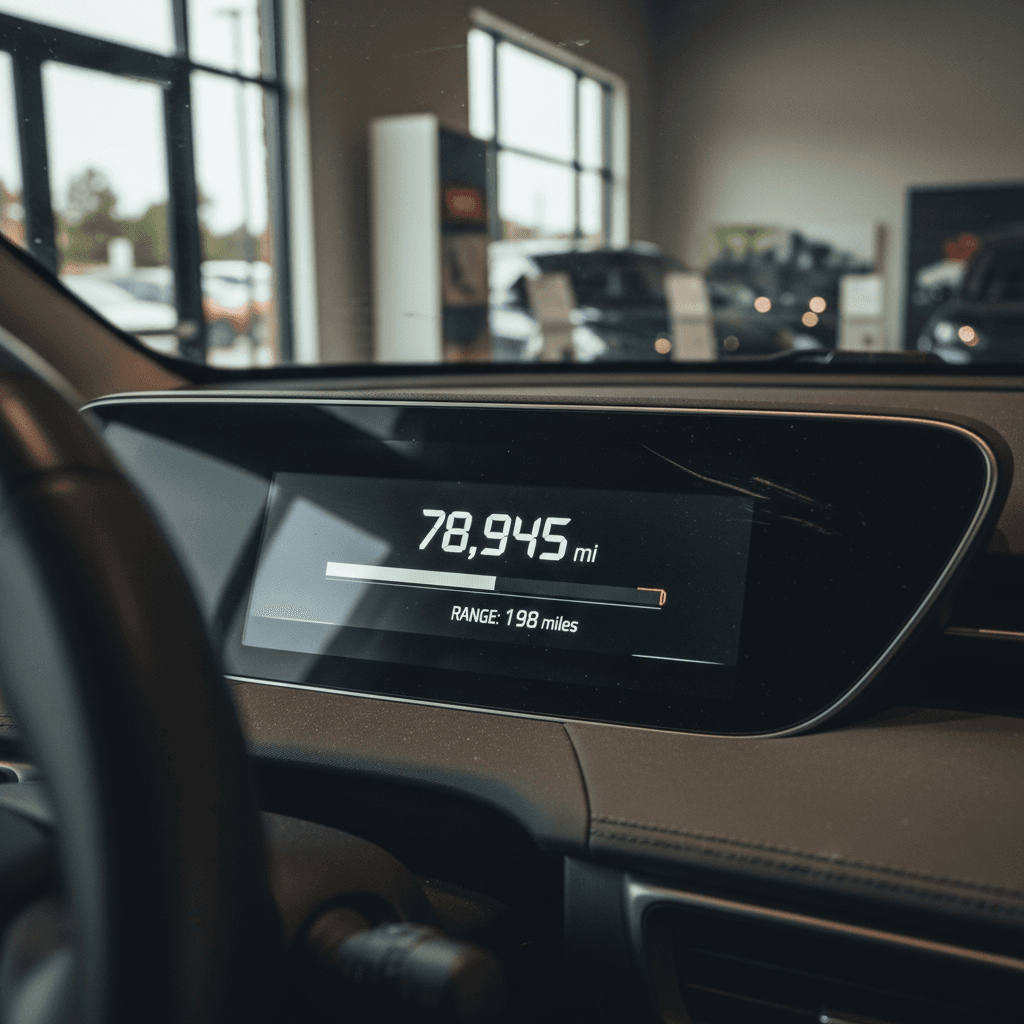
If you have to choose, battery health is a more precise clue to value than raw miles. A 60,000‑mile EV with 92% state of health (SoH) and a clean charging history is probably worth more than a 35,000‑mile car already down to 82%.
When battery health wins
- You care most about range and road trips.
- You’re comparing similar model years but different miles.
- The EV has a high‑quality battery report, like a Recharged Score.
- Warranty remaining is tied to years, not miles, so you’re still covered.
When mileage still matters
- You’re buying an early‑generation EV with known issues.
- You’re near the edge of powertrain or battery warranty mileage.
- The car did lots of hard service (fleet, delivery, rideshare).
- Suspension, seats and interior show heavy wear well beyond the odometer.
How Recharged approaches this
Driving and charging habits that change value
Two EVs can have identical odometers and wildly different futures. What happened between mile one and mile 80,000 shapes resale value as much as the number itself.
Miles aren’t just miles: habits that matter
Ask about these patterns when you’re buying, or highlight them when you’re selling.
Mostly home charging
Cars charged mainly on Level 1 or Level 2 at home, kept between ~20–80% state of charge, typically show gentler battery aging.
Heavy DC fast charging
Frequent charging to 100% on high‑power DC fast chargers, especially in hot climates, can accelerate degradation and should be reflected in price.
Climate and storage
Long‑term parking in blazing heat or at a constant 100% charge is harder on the pack than moderate climates and garages, even at the same mileage.
Smart questions to ask about past use
1. How was the car usually charged?
Listen for: "mostly at home on Level 2" versus "fast‑charged several times a week." Neither is an automatic deal‑breaker, but fast‑charge heavy histories should come with a lower price or exceptionally strong battery test.
2. What’s the current usable range?
Ignore the original window sticker. Ask what the owner actually sees on a full charge at highway speeds today, in the current season.
3. Has the battery ever been replaced or repaired?
A recent OEM battery replacement can be a huge <strong>value add</strong>, even on a higher‑mileage car, as long as the work was done by a reputable shop with documentation.
4. Any fleet or rideshare use?
Delivery and rideshare vehicles rack up miles quickly and often rely on DC fast charging. That doesn’t kill the deal, but it should absolutely affect value.
Gas vs. EV: how mileage impacts resale differently
On a traditional car, rising mileage nearly always means rising maintenance risk: timing belts, transmissions, exhaust, oil consumption. Electric powertrains dodge most of that, so the market is slowly learning to focus less on the odometer and more on the pack and software.
High‑mileage gas car
- Major components (engine, transmission) are wear items.
- Maintenance and repair risk spike after ~100,000 miles.
- Even if well‑maintained, buyers and lenders often penalize anything over 120,000 miles.
High‑mileage EV
- Electric motor and single‑speed gearbox have few moving parts.
- Primary question is battery health and range, not whether it "still shifts fine."
- Well‑cared‑for 120,000‑mile EVs can be excellent values if they still meet your daily range needs.
Use different mental yardsticks
How to evaluate a high‑mileage EV
Let’s say you’re staring down a tempting deal: a 2019 EV with 110,000 miles at a price that seems almost too good. Here’s how to sort smart buy from future headache.
High‑mileage EV inspection checklist
1. Start with a real battery health test
Don’t rely only on the dashboard guess. Look for an independent report, like the <strong>Recharged Score battery diagnostics</strong>, showing state of health, pack balance, and any error codes.
2. Compare range to your daily use
If you commute 40 miles a day, a car that still does 170–190 miles on a charge can serve you for years, even if it’s down 15–20% from new.
3. Check remaining warranty coverage
Some brands cover the battery to 8 years and 100,000–150,000 miles. If you’re close to that limit, build that risk into the price you’re willing to pay.
4. Look for even tire and brake wear
Uneven wear can hint at suspension issues or lots of hard driving. EVs often go through tires faster thanks to instant torque, especially performance models.
5. Scan for software and recall history
Make sure major software updates and safety recalls are done. Out‑of‑date software can hurt range and fast‑charging performance.
When to walk away
Tips for selling your EV with confidence
If you’re on the other side of the transaction, mileage can feel like a scarlet letter, especially if you’ve enjoyed your car and driven it a lot. You can’t turn back the odometer, but you can absolutely tell a better story about those miles.
Make your EV’s miles work for you
Highlight the parts of its history that matter to informed buyers.
Document the good habits
Keep records that show consistent maintenance, gentle daily charging, and any battery or software checks you’ve done.
Share your charging routine
If you mostly charged at home to 70–80% and rarely fast‑charged, say so. That’s a genuine selling point on a higher‑mileage EV.
Price to reflect reality
Look at comparable cars with similar miles and battery health, not just model year. Market‑correct pricing moves high‑mileage EVs quickly.
How Recharged can help you sell
Ready to find your next EV?
Browse VehiclesFAQs: mileage and EV resale value
Frequently asked questions about mileage and EV value
Key takeaways on mileage and EV value
Odometer mileage still matters for EVs, but it’s no longer the blunt instrument it was in the gas‑car world. What really determines value in 2026 is how those miles were accumulated, what they’ve done to the battery’s usable range, and how the car’s price compares to similar vehicles with verified health reports.
If you’re buying, don’t reflexively run from six‑figure odometers. Define the range you actually need, then shop for the EVs, at any mileage, that comfortably clear that bar with a clean battery report and a sensible discount. If you’re selling, lean into transparency: share your charging habits, maintenance, and any diagnostics you have so buyers can see why your miles aren’t scary miles.
And if you’d rather have the hard math done for you, shopping or selling through Recharged means every used EV comes with a Recharged Score, expert EV‑specialist support, and fair, market‑based pricing that already accounts for mileage and battery health. That way, the number on the odometer becomes one more data point, not a deal‑breaker.