If you’re looking at a Mercedes EQS, you’re probably expecting **S‑Class levels of comfort** without S‑Class fuel bills. The next question is obvious: how much does Mercedes EQS service cost, and does an all‑electric flagship still carry traditional Mercedes maintenance bills? The short answer: you will visit the dealer roughly every 1–2 years, and you should expect around $1,000–$1,600 per year on average in maintenance and wear items over a 5‑year span, with some expensive outliers if you’re not careful.
Context: what “service cost” really means
Mercedes EQS service cost at a glance
Mercedes EQS service cost snapshot (typical U.S. owner)
Independent ownership data and cost‑to‑own tools show **annual maintenance for a new EQS in the $1,300–$1,600 range**, averaging about **$8,000 over five years** just for maintenance, not counting repairs or tires. Some owners will land below that if they drive less, avoid potholes, and shop around; others will pay more if they rely on a single high‑priced dealer for everything.
Why ranges, not exact numbers
How often does a Mercedes EQS need service?
Even though the EQS is all‑electric, Mercedes still expects **regular, documented service**. The pattern will feel familiar if you’ve owned other Mercedes models, but instead of oil changes, the focus is on inspections, fluids, filters, and software checks.
- First service usually around 1 year or ~10,000 miles (whichever comes first).
- Subsequent services roughly every 1–2 years / 10,000–20,000 miles, alternating lighter and heavier visits.
- Brake fluid is often due about every 2 years.
- Coolant, high‑voltage system checks, and other deep inspections show up on multi‑year intervals (4+ years).
- Tires, wiper blades, and alignment are wear‑and‑tear items that depend heavily on how and where you drive.
Always follow your car’s service indicator
What do Service A and Service B include on an EQS?
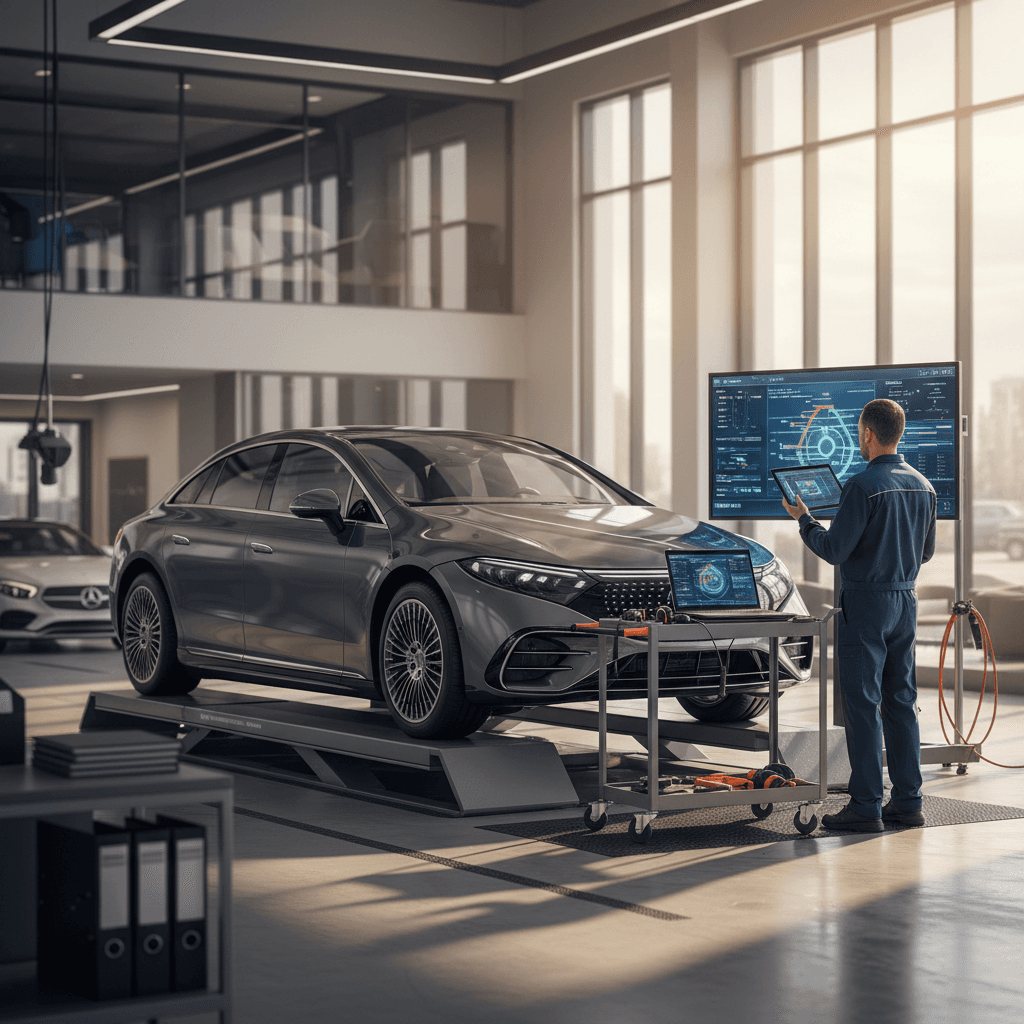
Mercedes still uses an A/B service pattern on its EQ models, but the content is different from a gas car. There’s no engine oil, spark plugs, or transmission service, yet the car is packed with sensors, brakes, cooling loops, and safety systems that need regular attention.
Typical EQS "Service A" (lighter visit)
- Multipoint inspection (suspension, steering, lights, wipers, HVAC).
- High‑voltage safety and charging system checks.
- Cabin/dust filter inspection or replacement.
- Software / telematics checks and updates.
- Tire rotation, pressure, and tread inspection.
Dealers label and price this differently (A1, A2, etc.), but the idea is a shorter visit focused on checks and a few consumables.
Typical EQS "Service B" (heavier visit)
- All items from a light service, plus more detailed inspections.
- Brake fluid exchange (often every ~2 years).
- More filters (e.g., activated charcoal cabin filter).
- Additional EV‑specific diagnostics of the drive unit and battery cooling.
- Any time‑ or mileage‑based items that fall due (e.g., coolant checks).
On some dealer menus, you’ll see codes like A2, B1, etc., these simply bundle specific tasks that happen to fall due at that mileage/time.
Complimentary vs paid maintenance
Typical dealer pricing for Mercedes EQS service
Real‑world EQS owners report dealer quotes that look very similar to a high‑end S‑Class, just without the engine‑related line items. Because there’s no national fixed price list, we have to talk in **ranges based on current 2024–2025 data and owner invoices**.
Typical U.S. dealer pricing for EQS services (out of warranty / post‑free maintenance)
These are ballpark figures for luxury‑brand dealers in major U.S. markets. Independent shops with EV experience may be 15–30% lower.
| Service type | What it usually includes | Typical price range |
|---|---|---|
| Light Service A–style visit | Inspection, basic diagnostics, tire rotation, cabin filter | $400–$900 |
| Heavier Service B–style visit | All of the above plus brake fluid, more filters, deeper diagnostics | $800–$1,500 |
| Standalone brake fluid flush | If done outside of a larger service | $200–$350 |
| Software / diagnostic session | If billed separately from a scheduled service | $150–$600 |
| 4‑wheel alignment | Important on heavy EVs with big wheels | $200–$350 |
Always get an itemized quote; "menu" prices can hide optional add‑ons you may not actually need.
Watch for upsells that balloon the bill
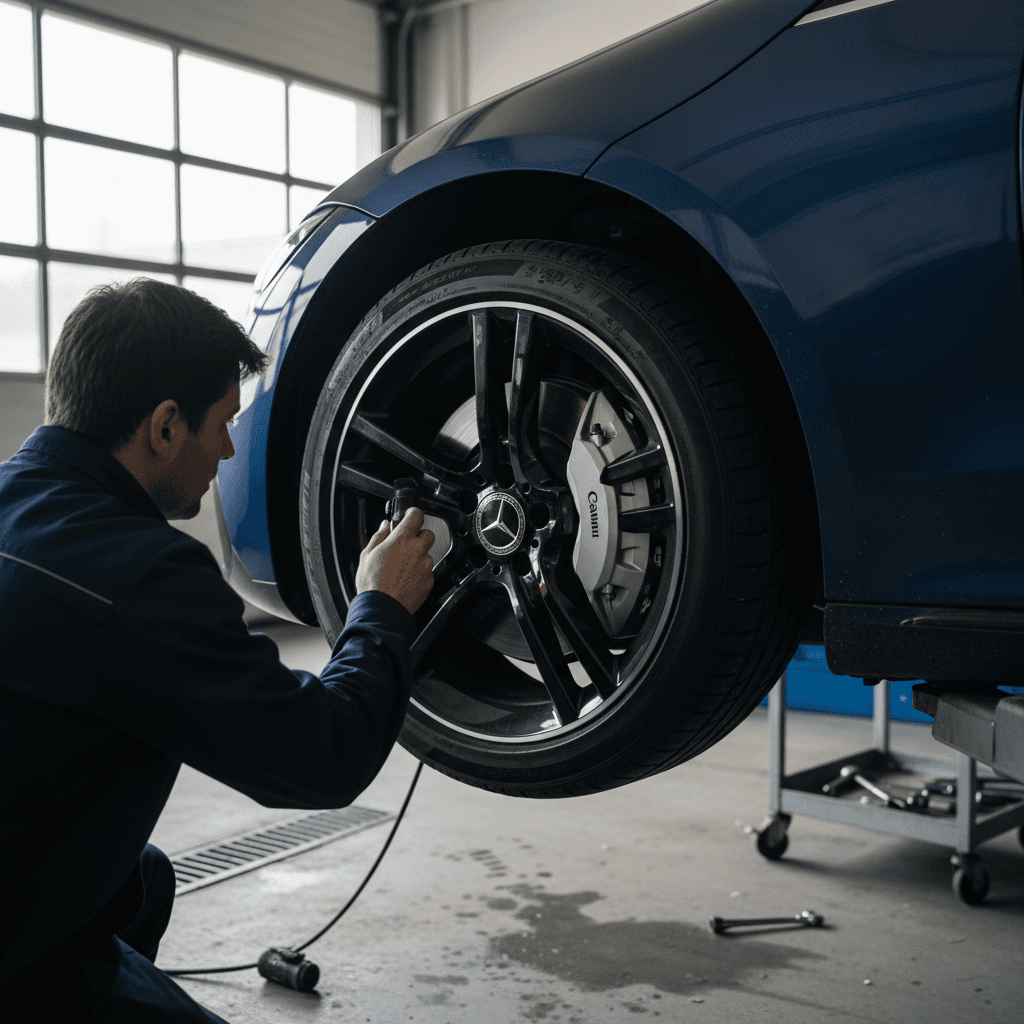
Five-year Mercedes EQS maintenance budget
Third‑party cost‑to‑own tools and EV ownership studies put a new Mercedes EQS in the **$1,300–$1,600 per year maintenance band**, or **roughly $7,000–$8,000 over five years** if you stick with dealer service. That’s higher than mainstream EVs but right in line with other German flagships.
Example 5‑year EQS maintenance budget
Assuming dealer service, average U.S. mileage, and no major out‑of‑warranty repairs.
Years 1–2
If you bought the car new, you may have complimentary service or discounted prepaid maintenance covering the first 20k–40k miles. Out of pocket can be as low as $0–$800/year during this period.
Years 3–4
Complimentary coverage typically ends and you’re paying full dealer menu prices. Expect closer to $1,200–$1,700/year including at least one major service and wear items.
Year 5
By now, you’ve likely had at least one set of tires and multiple brake fluid / filter services. Budget $1,300–$1,800 for a combination of service and wear‑and‑tear in year five.
Where used EQS buyers save the most
Big-ticket EQS items: tires, brakes, and battery
Routine EQS service visits are only part of the story. The real money is in **tires, brakes, and the high‑voltage battery system**, exactly where a heavy, powerful luxury EV lives or dies on total cost of ownership.
1. Tires
Most EQS sedans and SUVs ride on 20–22 inch performance tires. A full set can easily run $1,200–$2,000 installed at a dealer, sometimes more for top‑spec fitments.
- Heavy curb weight and instant torque = faster wear.
- Frequent rotation and alignment help them last.
- Road hazard plans can be worth it in pothole cities.
2. Brakes
Aggressive regen means pads and rotors often last longer than on a gas S‑Class, but when they do need replacement, **big Mercedes brakes are not cheap**.
- Expect four‑figure quotes for full pad/rotor jobs at a dealer.
- Rust from light use can be an issue if you only drive short, gentle trips.
- Occasional firm braking keeps discs cleaner and safer.
3. High‑voltage battery
The EQS battery pack is covered by an 8‑year / ~100,000‑mile warranty on new vehicles for defects and excessive degradation. Failures are rare but expensive outside warranty.
- Routine visits include health and thermal checks.
- Software updates can improve efficiency and longevity.
- Battery condition is critical to used EQS value.
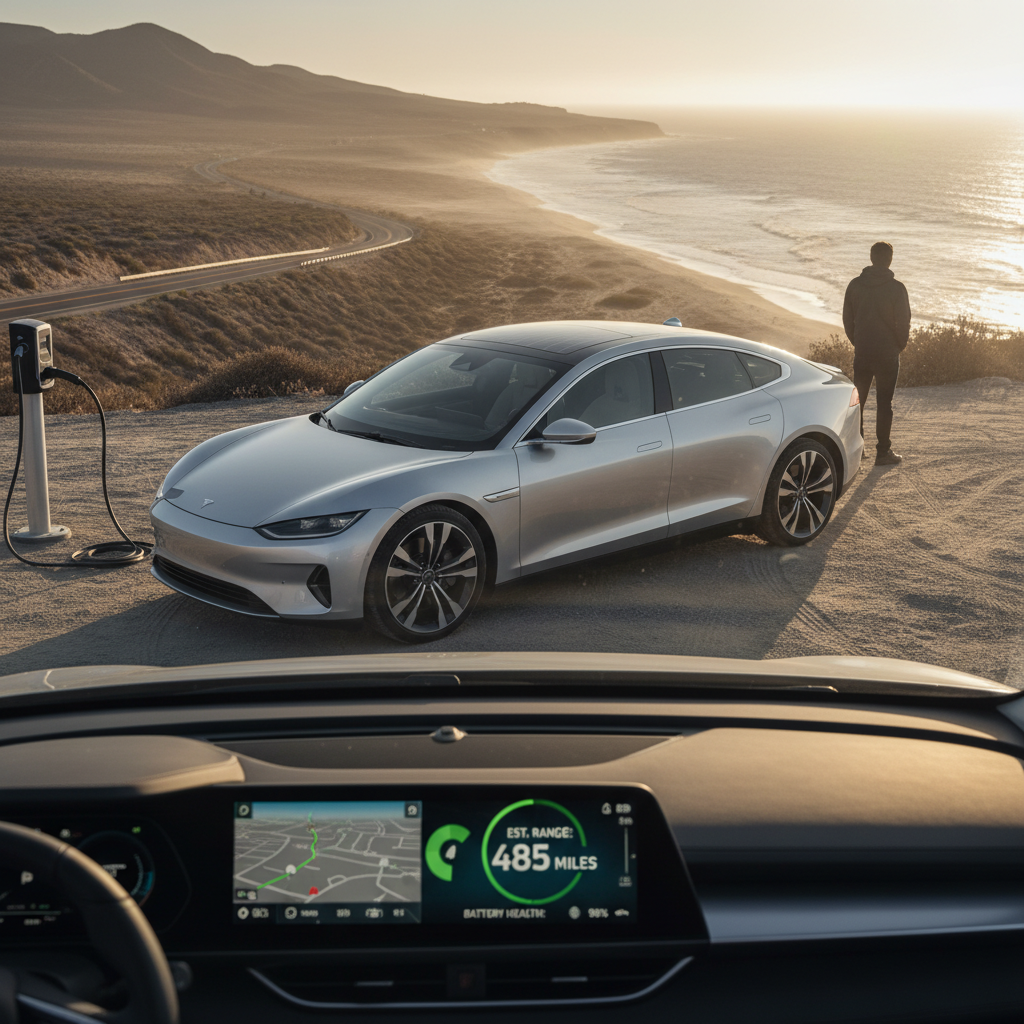
Why battery health reporting matters
How EQS maintenance compares to a gas S‑Class
A fair way to think about EQS service cost is to compare it to **what it replaces: a gasoline S‑Class**. You’re eliminating engine oil, spark plugs, and exhaust‑related work, but you’re still running a complex chassis, air suspension, 4MATIC hardware, and a lot of software.
EQS vs S‑Class: simplified maintenance comparison
This table focuses on maintenance and wear items only, not fuel or depreciation.
| Item | EQS (electric) | S‑Class (gas) |
|---|---|---|
| Engine oil & filters | None | $150–$300 per service, 1–2x per year |
| Spark plugs, belts, exhaust | None | Periodic, can add hundreds to thousands over several years |
| Tires & brakes | Similar or slightly higher (heavier EV, bigger wheels) | High but comparable for similar wheels |
| Software & diagnostics | More frequent and sometimes pricey, $150–$600 sessions | Less critical but still present on late‑model S‑Class |
| Overall maintenance (5 years) | ≈$7,000–$8,000 typical | Often higher once you add engine‑related work |
Exact numbers vary by region and spec, but the EQS generally trades engine costs for software and wear‑item costs.
EQS is cheaper than S‑Class to run, not cheap overall
Ways to lower your EQS service costs
You can’t turn an EQS into a Camry on maintenance, but you can keep costs predictable and avoid the worst‑case quotes by being strategic about how and where you service the car.
Practical ways to keep Mercedes EQS service affordable
1. Understand what’s actually required
Read the maintenance section of your owner’s manual and compare it to any dealer quote. Politely decline items that are purely “recommended” but not required for warranty or safety.
2. Use prepaid maintenance if it pencils out
If you’re buying new and know you’ll service at the dealer, a discounted prepaid plan can lock in today’s labor rates. Just compare the package price to what the first 3–4 services would cost individually.
3. Consider reputable independent EV shops
In some markets, independent Mercedes or EV specialists can perform out‑of‑warranty work at lower labor rates while still following the factory schedule. This is especially useful for simple inspections and brake service.
4. Take tires and alignment seriously
Check pressures monthly, rotate regularly, and fix alignment issues early. Stretching an extra 10,000 miles out of a $1,800 tire set is a very real cost saver.
5. Combine minor work into one visit
Instead of separate trips for wipers, cabin filters, and brake flushes, bundle them into scheduled service. You’ll pay once for the intake and minimize duplicated labor.
6. Keep documentation immaculate
Whether you service at Mercedes or a trusted independent shop, keep every invoice. A clean history helps preserve resale value and reassures the next buyer that the car has been cared for.
How Recharged helps on the used side
Ready to find your next EV?
Browse VehiclesBuying a used EQS: what to look for in service history
If you’re shopping used, the question isn’t just “what does EQS service cost” but **“what has already been done, and what’s coming next?”** A slightly higher asking price can actually be cheaper if the right work is already out of the way.
- Documented visits roughly every 10,000–20,000 miles, with brake fluid done on time.
- Evidence of tire replacements and alignments, particularly on 21–22 inch wheels.
- No gaps where the car went 3–4 years without any service despite normal mileage.
- Dealer or specialist notes showing high‑voltage system checks and software updates were performed.
- Any history of accident repairs that might affect alignment, wheels, or suspension.
“For EVs like the EQS, the battery and suspension tell you more about future costs than the infotainment or upholstery ever will.”
Be cautious with cars missing early services
FAQ: Mercedes EQS service cost questions
Frequently asked questions about EQS service costs
Key takeaways on Mercedes EQS service costs
Owning a Mercedes EQS won’t spare you from luxury‑car service bills, but it does reshuffle where the money goes. Instead of engine oil and exhaust work, you’re paying for inspections, diagnostics, big tires, and careful management of a very expensive battery pack. If you plan for **about $1,000–$1,600 per year on average**, and keep some extra cushion for tires and out‑of‑warranty surprises, you’ll be in the right ballpark.
Where you have real leverage is in **when** and **how** you buy. A 2–4‑year‑old EQS with clean battery health and a solid service record often delivers the best ratio of comfort to total cost. That’s exactly the slice of the market Recharged focuses on: used EVs with transparent battery data, fair pricing, and expert guidance, so your service costs are a planned expense, not an unpleasant surprise.