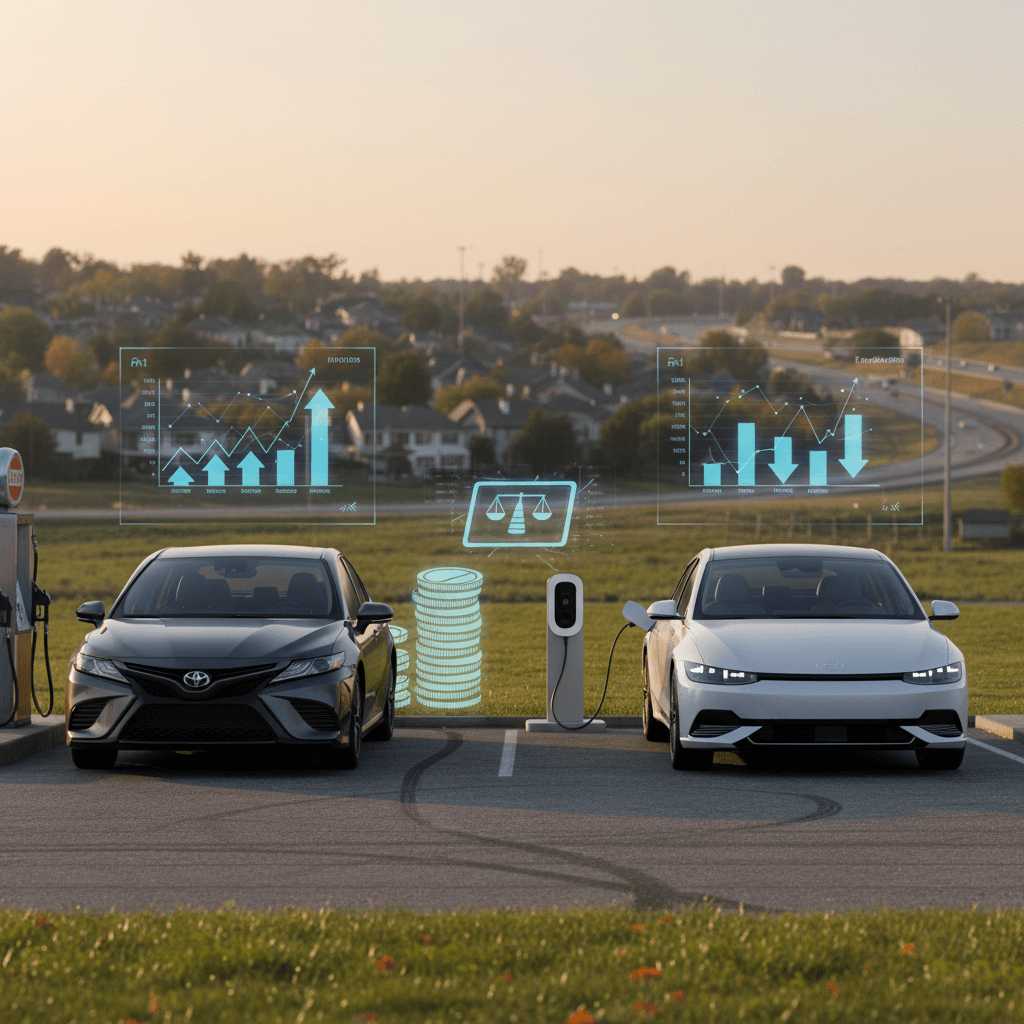
When you type “how much does a gas car cost” into a search bar, you’re not just asking about the price on the windshield. You’re really asking: what is this thing going to do to my bank account over the next few years, and is a gas car cheaper than an electric vehicle, or not?
Short answer
What people really mean by “how much does a gas car cost”
When people ask how much a gas car costs, they usually think of the sticker price, that big number in the window. But your bank account cares about something else entirely: total cost of ownership. That means everything you pay to buy, drive and keep the car on the road over time.
- Purchase price (or down payment + monthly payment)
- Sales tax, title, registration and documentation fees
- Fuel costs (gasoline)
- Routine maintenance (oil changes, filters, fluids, tires, etc.)
- Repairs (brakes, exhaust, engine issues as the miles stack up)
- Insurance
- Depreciation, the value the car loses every year
A gas car tends to look cheaper up front and more expensive over time. An electric vehicle often flips that script: you may pay similar money to get in, but you can spend dramatically less to keep it moving, especially if you choose a well-priced used EV with verified battery health from a marketplace like Recharged.
A simple rule of thumb
Sticker price: gas car vs used EV in 2025
Gas car prices vary wildly, but let’s ground this in the kind of vehicles most people actually buy, compact and midsize sedans and crossovers in the U.S. market.
Typical transaction prices in 2025 (U.S.)
If you walk into a dealer today looking for a new gas crossover, America’s favorite form factor, you’re often staring at something around $32,000–$38,000 before taxes and fees. A well-equipped compact sedan may come in a bit lower; a “bare bones” model a bit lower still.
Realistic new gas car example
- Advertised price: $27,995
- Dealer add-ons & destination: ~$1,500
- Sales tax & fees (8%): ~$2,400
- Out-the-door: around $31,900
Realistic used EV example
- Used EV listed price: $24,000
- Smaller doc & title fees: ~$1,000
- Sales tax (varies by state): ~$1,900
- Out-the-door: around $26,900
With a platform like Recharged, you also see a transparent Recharged Score with battery health, so you know what you’re paying for.
Don’t forget financing cost
Fuel costs: gasoline vs electricity per year
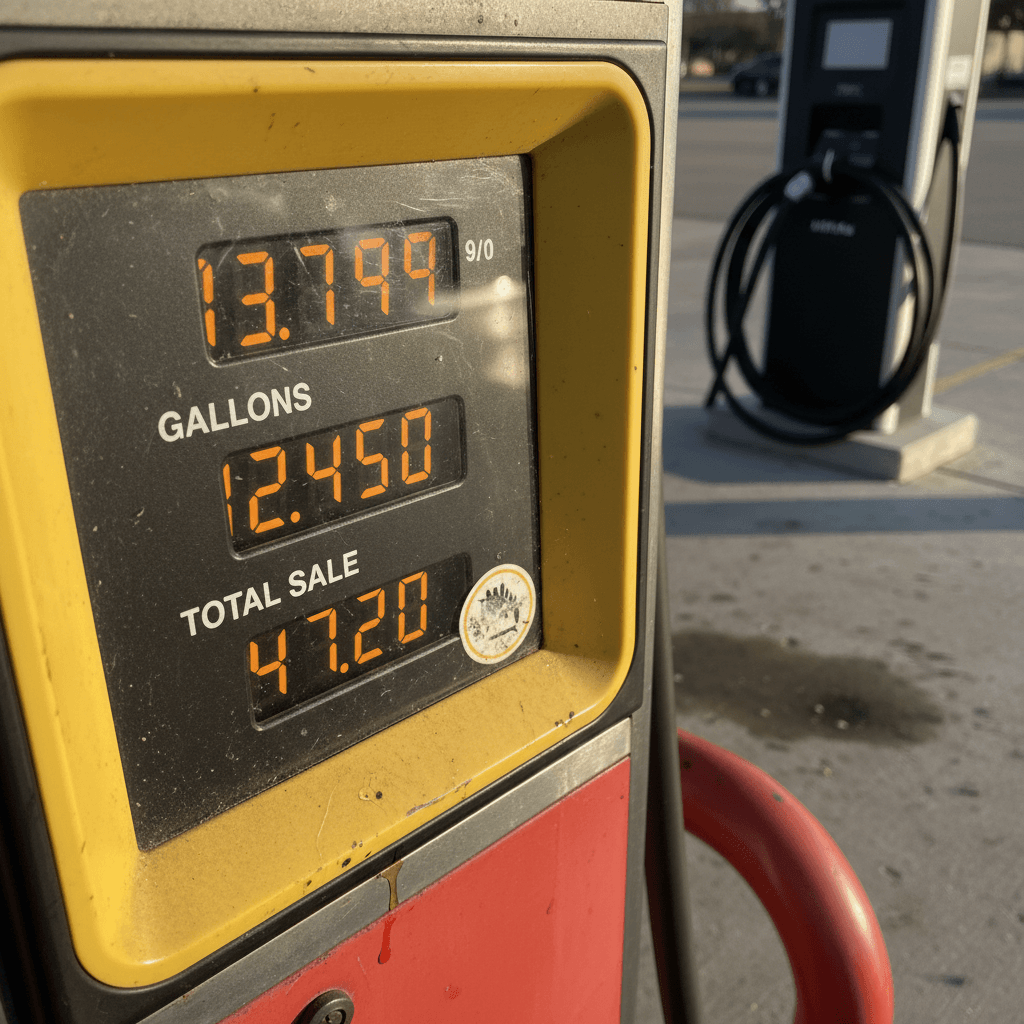
This is where gas cars quietly empty your wallet. A modern compact or small SUV might average 28–32 mpg combined. That sounds respectable, until you multiply it by how much you drive and what gas costs in your area.
Illustrative annual fuel cost: gas vs EV
Assuming 12,000 miles per year in mixed driving (about average for U.S. drivers).
| Vehicle type | Efficiency | Energy price | Annual miles | Estimated annual cost |
|---|---|---|---|---|
| Gas sedan (28 mpg) | 28 mpg | $3.75/gal | 12,000 | ≈ $1,600 |
| Gas crossover (25 mpg) | 25 mpg | $3.75/gal | 12,000 | ≈ $1,800 |
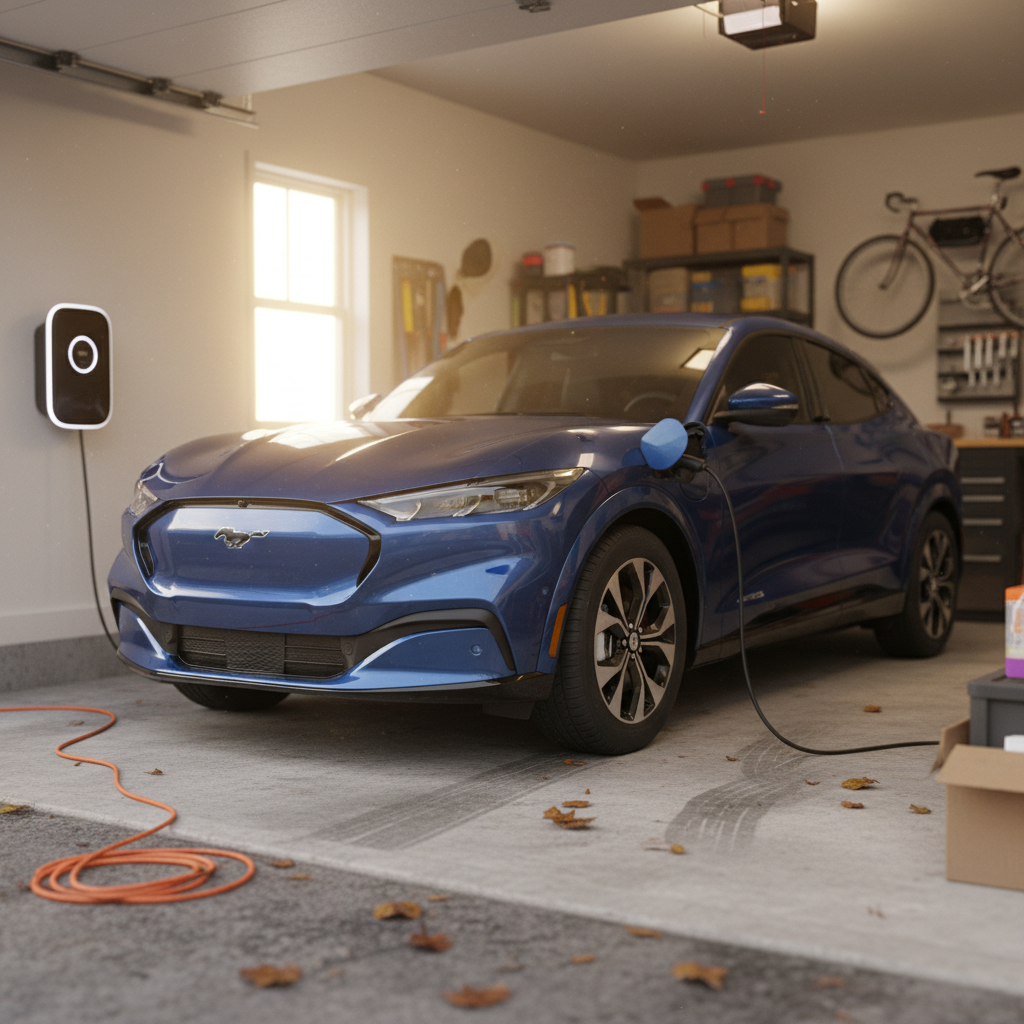
| Used EV (3.0 mi/kWh) home charging | 3.0 mi/kWh | $0.15/kWh | 12,000 | ≈ $600 |
| Used EV (3.0 mi/kWh) mixed home + public | 3.0 mi/kWh | $0.18–$0.20/kWh | 12,000 | ≈ $700–$800 |
Your numbers will vary based on your actual mileage, fuel prices and electricity rates, but the pattern tends to hold: EVs are cheaper to “fuel” if you can charge at home.
Why EV fuel costs are so low
For many households, the difference between $1,700 a year in gasoline and $700 a year in electricity is basically a car payment. Over five years, this gap alone can more than offset any small purchase-price premium for going electric.
Maintenance and repairs: where gas cars get expensive
Gas cars are little heat engines that spend their days meeting their own death. They burn fuel, generate heat, create vibration and rely on hundreds of moving parts to move you and your coffee down the road. That mechanical complexity eventually shows up on your repair bills.
Typical maintenance: gas car vs EV
These are broad patterns; your exact numbers depend on the model and how you drive.
Gas car: routine services
- Oil and filter changes 2–4x per year
- Transmission fluid, coolant, spark plugs
- Exhaust system, belts and hoses
Typical cost over 5 years: $3,000–$4,500.
Gas car: wear items
- Brake pads and rotors
- More frequent engine-related repairs as miles climb
- Potential emissions system repairs
It only takes one $1,200 repair out of warranty to blow your budget.
EV: what’s left
- No oil changes, timing belts, or exhaust
- Less brake wear thanks to regeneration
- Software updates instead of some mechanical fixes
Typical cost over 5 years: significantly lower for similar mileage.
The fear: EV battery replacement
With a gas car, the financial pain usually comes in the form of a drip-drip of small bills, occasionally interrupted by a $1,200 surprise. With an EV, it’s more about protecting yourself from the rare big-ticket event, something a good warranty and a proper battery health report go a long way toward doing.
Insurance, taxes and fees
Insurance doesn’t care whether your car drinks gasoline or electrons nearly as much as it cares about price, repair costs, safety ratings, theft rates and where you live. That said, there are a few patterns you’ll see comparing gas cars and EVs.
- New, higher-priced gas cars and EVs alike tend to cost more to insure than older, cheaper vehicles.
- Some EVs can cost a bit more to insure because of pricier parts and limited repair networks, though this is changing as more shops tool up for EVs.
- State and local taxes usually depend on purchase price, not fuel type, your $35,000 gas crossover and $35,000 EV are taxed similarly.
- A few states charge additional annual registration fees for EVs to make up for lost gas tax revenue; check your DMV website for details.
Shop insurance on real VINs
5-year cost comparison: typical gas car vs used EV
Let’s put it all together with a simple, realistic five-year scenario. Numbers will vary by state, but the relationship between the two tends to look similar.
Illustrative 5-year cost of ownership
Assuming 12,000 miles per year, moderate financing and average conditions.
| Category (5 years) | New gas crossover | Used EV (3-year-old compact) |
|---|---|---|
| Purchase + financing | ≈ $36,000 paid over loan | ≈ $30,000 paid over loan |
| Fuel / electricity | ≈ $8,500 | ≈ $3,500 |
| Routine maintenance | ≈ $3,000 | ≈ $1,500 |
| Repairs out of warranty | ≈ $2,000 | ≈ $1,000 |
| Insurance | ≈ $6,000 | ≈ $6,500 |
| Registration & fees | ≈ $1,000 | ≈ $1,000 |
| Total 5-year cost | ≈ $56,500 | ≈ $43,500 |
These are illustrative rounded figures, not quotes. Use them as a framework for your own numbers, not a substitute for a real calculator.
What this means in plain English
Who a gas car still makes sense for
There are still perfectly valid reasons to buy a gas car in 2025. The question is whether any of them apply strongly enough to you to justify the higher long-term cost.
You might still be a gas-car person if…
1. You regularly tow or haul heavy loads
If you’re pulling a boat, horses or a work trailer, and you’re far from fast charging, a traditional gas or diesel truck can still make practical sense, at least for now.
2. You live far from reliable charging
In some rural areas, public fast chargers are still thin on the ground. If your home or workplace can’t support charging, a gas car may be simpler in the short term.
3. You buy very cheap, very old cars
If you’re shopping for a $4,000–$7,000 beater to get you through the next couple of years, used EVs in decent condition haven’t quite reached that price bracket in most markets.
4. You drive unpredictable, long distances
If you frequently do last‑minute 600‑mile days through charger deserts, the refueling speed and ubiquity of gas stations are still hard to beat.
But be honest about your real use case
How Recharged helps you run the numbers
Picking between a gas car and a used EV shouldn’t feel like a blind bet. The problem is that traditional car buying hides most of the critical information, the real market value, the likely running costs and, in the case of EVs, the true health of the battery.
Why shoppers compare against gas cars on Recharged
Recharged is built to make EV ownership simple, transparent and financially sane.
Recharged Score battery health diagnostics
Fair market pricing & financing
Trade‑in and nationwide delivery
Ready to find your next EV?
Browse VehiclesPro move: compare monthly all‑in, not just sticker
FAQ: gas car costs vs EV costs
Frequently asked questions
Bottom line: what you should actually do next
Asking “how much does a gas car cost?” is like asking how much a puppy costs and only looking at the adoption fee. The sticker price is just the cover charge. For most modern drivers with access to home or workplace charging, a thoughtfully chosen used EV will quietly undercut the true 5‑year cost of a comparable gas car, often by thousands of dollars, while also being smoother, quieter and cleaner to live with.
If you’re EV‑curious but cost‑conscious, your next move isn’t to memorize every spec sheet. It’s to run the numbers on a few specific vehicles, gas and electric, using your real life: your commute, your electric rate, your risk tolerance. And if you want an easier way to put a price on battery health, fair market value and long‑term ownership, start browsing used EVs with Recharged, where every car comes with a Recharged Score Report, transparent pricing and EV‑specialist support from first question to final delivery.