You’re not the only one asking, “How many miles do electric cars last?” For years, shoppers have been told EVs are basically giant smartphones on wheels, great until the battery dies, then headed for the recycler. The reality in 2025 is far less dramatic: modern electric cars commonly run well past 150,000–200,000 miles, and plenty are on track to outlive their gas-powered neighbors.
In One Sentence
How Many Miles Do Electric Cars Last? The Short Answer
EV Lifespan at a Glance
If you want a simple rule of thumb: a well‑cared‑for electric car in the U.S. can easily last 150,000 miles and often 200,000 miles or more. That’s based on battery modeling from the U.S. Department of Energy and National Renewable Energy Laboratory, and real‑world fleet data that shows most EVs are still on their original pack long after the warranty runs out.
Think in Range, Not Just Miles
Battery Lifespan vs. Car Lifespan
Battery Lifespan
The pack is the star of the show. Modern lithium‑ion EV batteries are typically engineered for 1,000–2,000 full charge cycles. Spread across 250–300 miles of range, that pencils out to roughly 250,000–300,000 miles of use before reaching 70–80% of original capacity.
Studies from the U.S. Department of Energy and NREL now project 12–15 years of life in moderate climates, and slightly less, about 8–12 years, in very hot or very cold regions where batteries are stressed harder.
Entire Vehicle Lifespan
The car around the battery, the body, suspension, electronics, ages much like any modern vehicle. Most passenger cars in the U.S. retire somewhere around 175,000 miles and 12–13 years. EVs have an advantage: they have fewer moving parts, less vibration, and no oil changes, spark plugs, or exhaust system to fail.
The emerging pattern from fleets and early high‑mileage owners is that the battery usually outlives the rest of the car, not the other way around.
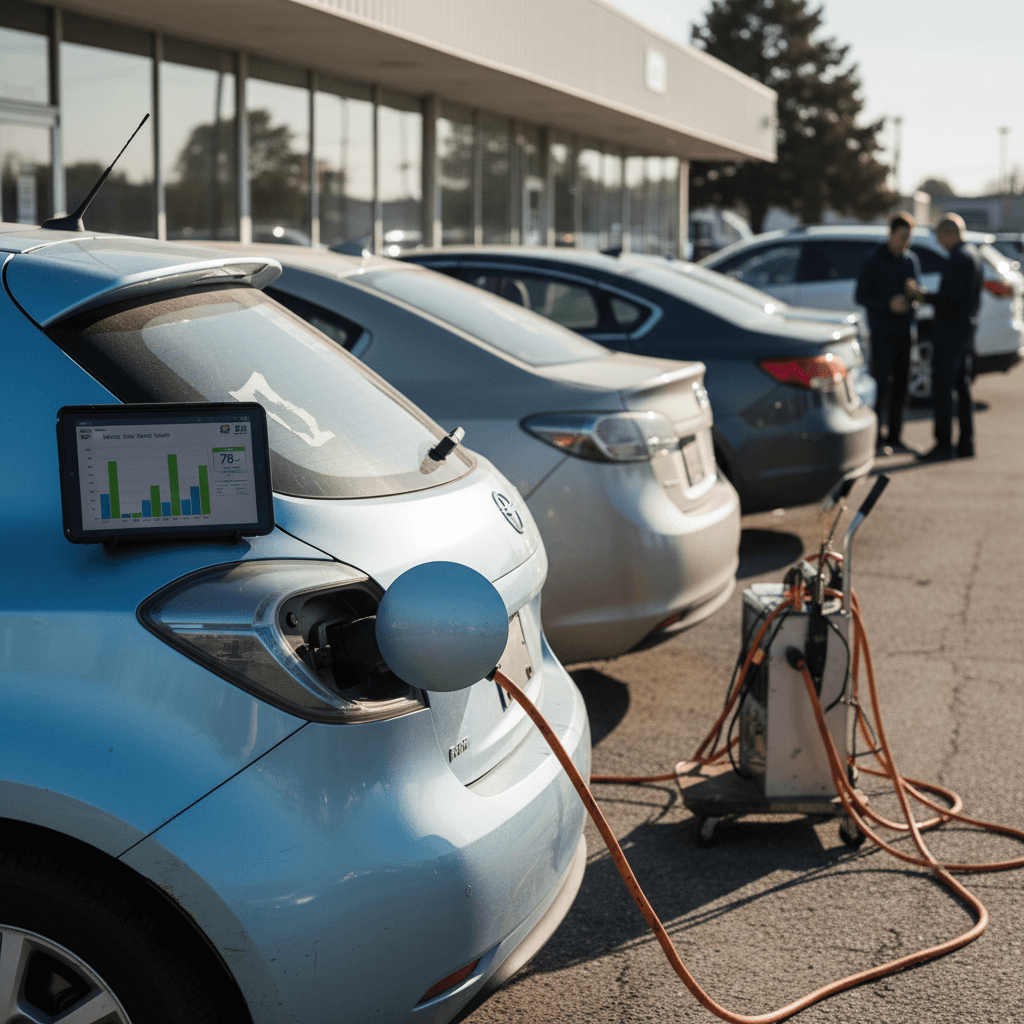
What Real‑World Data Says About EV Miles
Lab modeling is nice, but you probably care more about what’s actually happening out on the freeway. The picture is reassuringly boring:
- Large studies of thousands of EVs show around 1.5–2.3% capacity loss per year on average, meaning about 10–15% loss after 8–10 years, not a cliff at year five.
- A long‑term Volkswagen ID.3 test in Europe racked up roughly 107,000 miles in four years and still had about 91% of its original battery capacity, despite frequent DC fast charging and many 100% charges.
- Crowdsourced data from Tesla owners indicates around 5% battery degradation in the first 50,000 miles, then a slower decline, often staying above 80–85% capacity even near 200,000 miles.
- Independent analyses in 2024–2025 suggest EV batteries degrade at roughly 1.8% per year on average, which implies more than 80% capacity still available after 10 years of typical use.
In practice, battery degradation is slow and boring. The horror‑story failures are the exception, not the rule.
The Outliers Still Exist
Battery Warranties: 100,000 Miles and Beyond
If you’re trying to guess how many miles an electric car will last, follow the money. Automakers don’t warranty anything out of charity. In the U.S., EV batteries must be covered for at least 8 years or 100,000 miles, and many brands go well beyond that.
Typical EV Battery Warranty Coverage
Representative battery warranties for popular EVs sold in the U.S. (always check the fine print for your exact model and year).
| Brand / Model | Years | Miles | Capacity Guarantee (Typical) | Notes |
|---|---|---|---|---|
| Federal Minimum (U.S.) | 8 | 100,000 | Varies | Baseline requirement for most EVs. |
| Tesla Model 3 / Model Y | 8 | 100,000–120,000 | 70%+ | Coverage varies by pack size and drivetrain. |
| Hyundai / Kia EVs | 10 | 100,000 | ~70%+ | Some of the longest battery warranties in the industry. |
| Nissan Leaf | 8 | 100,000 | 70%+ | Later models add better thermal management vs. early Leafs. |
| Chevrolet Bolt EV | 8 | 100,000 | 70%+ | Recalled packs are replaced under separate programs. |
| Many Newer LFP‑Based EVs | 8–10 | 100,000–150,000 | 70%+ | Chemistry built for more cycles and higher mileage. |
Most warranties guarantee both time and mileage, and many promise at least 70% capacity retention over that period.
What “End of Life” Really Means
6 Factors That Change How Long an EV Lasts
What Really Controls EV Lifespan?
Same mileage, very different outcomes depending on how the car is used.
1. Climate
Heat is the battery’s natural enemy. Extremely hot climates accelerate chemical reactions inside the cells and can age a pack faster, especially if the car is parked in the sun at a high state of charge.
Cold slows things down rather than killing the pack, but it can temporarily reduce range in winter.
2. Charging Habits
Living on DC fast chargers is like living on espresso. It’s fine sometimes, but not as a diet. Frequent rapid charging and constant 0–100% cycles stress the battery.
Most manufacturers recommend keeping daily use between 20% and 80% and saving 100% charges for road trips.
3. Mileage and Drive Cycles
Stop‑start city traffic, steep hills, towing, and high‑speed highway blasts all change how hard the pack works.
Paradoxically, high‑mileage highway cars often age more gracefully than low‑mileage cars that sit unused for weeks at a time.
4. Battery Chemistry
Traditional nickel‑rich lithium‑ion packs offer long range with solid longevity.
Newer lithium iron phosphate (LFP) packs trade a little energy density for very long cycle life, they’re built for high‑mileage use and frequent charge cycles.
5. Thermal Management
Liquid‑cooled batteries maintain a Goldilocks temperature, never too hot, never too cold.
Early air‑cooled packs suffered in heat; nearly all serious modern EVs rely on sophisticated cooling to extend life.
6. Maintenance & Software
Regular tire rotations, suspension checks, and software updates all affect how efficient and stress‑free the car is to drive.
Over‑the‑air updates can refine battery management and even improve range and charging behavior over time.
How Many Miles Is “Too Many” for a Used Electric Car?
Here’s where the odometer starts to make people nervous. You’ll see perfectly good EVs in the used market with 80,000, 120,000, even 160,000 miles on them. Is that insane, or a smart buy?
How to Judge a High‑Mileage EV
1. Look at Remaining Range, Not Just Miles
Take a full‑charge test or review recent trip data. If the car started life at 270 miles and now does 235 on the same cycle, that’s only ~13% loss, quite healthy even at six figures on the odometer.
2. Check Battery Health Metrics
Many EVs show battery state‑of‑health (SoH) or at least a bar‑style display in their settings. Better yet, use a third‑party scan tool or a platform that reports aggregated battery data.
3. Review Charging History
A car that lived at a DC fast charger every day will often show more wear than one charged gently at Level 2 at home. Ask the seller how and where they charged.
4. Inspect Service & Recall History
Look for completed recalls (for example, early Bolt battery replacements), regular tire and brake service, and up‑to‑date software campaigns from the manufacturer.
5. Consider Use Case
A rideshare or delivery car with 140,000 highway miles may be in better shape mechanically and electrically than a low‑mileage city car that’s been abused on potholes and rarely serviced.
A Practical Rule of Thumb
Do Electric Cars Last Longer Than Gas Cars?
Electric Cars
- Average lifespan: Commonly projected around 180,000–200,000 miles and ~12 years, with many expected to exceed that.
- Key wear items: Suspension, tires, brake components, and cabin electronics; the drivetrain itself is relatively simple.
- Battery: Degrades slowly; often still in good shape long after the loan is paid off.
Gas Cars
- Average lifespan: Around 150,000–180,000 miles in the U.S., with the average vehicle age now about 12.5 years.
- Key wear items: Engine internals, transmission, exhaust system, fuel system, frequent fluid changes.
- Outcome: Many gas cars die of repair economics, the repair bill exceeds the car’s value, before the odometer physically stops spinning.
The Big Picture
How to Make Your EV Last 200,000+ Miles
You don’t have to baby an electric car, but you do have to be a little smarter than “plug it in and forget it.” Here’s how to stack the deck in your favor.
Habit Changes That Add Years to an EV
1. Charge Mostly on Level 2
Use a 240‑volt home or workplace charger for daily use. Reserve DC fast charging for road trips or emergencies. Slower charging is gentler on the pack and usually cheaper.
2. Avoid Living at 0% or 100%
Try to keep the battery between about 20% and 80% for daily driving. Constantly running the pack flat or leaving it parked at a full 100% accelerates wear.
3. Keep the Battery Cool
Whenever possible, park in shade or a garage, especially in hot climates. Many EVs let you schedule pre‑conditioning, so the pack is at an ideal temperature before driving or charging.
4. Stay on Top of Software Updates
Automakers continuously tweak battery management, thermal strategies, and range estimates. Let the car install updates, they’re often free longevity gains.
5. Maintain the “Boring” Stuff
Don’t neglect tires, alignment, dampers, and brakes. A car that drives straight and smooth is kinder to its components and your battery, because it wastes less energy just rolling down the road.
6. Drive It Regularly
EVs that sit untouched for months aren’t happy. Regular use keeps the pack, cooling system, and electronics in their intended operating rhythm.
What Will Kill an EV Early
How Recharged Checks EV Lifespan & Battery Health
If you’re shopping used, the real question isn’t just how many miles the electric car has already done, it’s how many good miles it has left. That’s exactly what Recharged is built to answer.
What the Recharged Score Tells You
Every EV we list comes with a transparent battery and lifespan report.
Verified Battery Health
We run diagnostic checks on the battery to estimate state of health, not just guess from mileage. You see how much capacity is left and how that compares to similar vehicles.
Fair Market Pricing
We factor in age, mileage, battery condition, equipment, and market trends so the price reflects the real remaining life of the car, not just its model year.
Expert EV Guidance
Our EV specialists walk you through what the numbers actually mean. If you’re eyeing a 110,000‑mile car, we’ll explain whether that’s a smart move based on its battery, not just its odometer.
Ready to find your next EV?
Browse VehiclesBecause the entire experience is digital, with optional in‑person visits at our Experience Center in Richmond, VA, you can compare multiple used EVs side by side, including their battery health and projected lifespan, without spending weekends hopping from lot to lot.
Why This Matters for You
FAQ: Electric Car Lifespan & Mileage
Frequently Asked Questions About EV Lifespan
The Bottom Line on How Many Miles EVs Last
Modern electric cars are not disposable tech toys on a five‑year timer. They’re engineered, from the cell chemistry up, to deliver hundreds of thousands of miles of service. If you treat the battery well and keep up with basic maintenance, an EV can realistically see 150,000–200,000 miles or more before range loss becomes a real limitation, and even then, the car isn’t automatically done.
If you’re considering a used EV, shift your mindset from “How many miles is too many?” to “How healthy is this battery for the miles it has?” Odometers don’t tell the whole story, battery diagnostics do. With Recharged, every vehicle comes with a Recharged Score Report showing verified battery health, fair pricing based on remaining life, and EV‑specialist support to help you pick the car that will go the distance for you.