When people ask, “How many miles can an electric car go?” what they really want to know is: will an EV fit my life without constant charging anxiety? In 2025, the short answer is that most modern electric cars comfortably cover daily driving on a single charge, and the longest‑range models can rival or surpass gas cars on highway trips.
Key takeaway
Electric car range in 2025 at a glance
EV range numbers you should know in 2025
So, how many miles can an electric car go?
Let’s start with the headline numbers, then we’ll unpack what they actually mean for your life.
- Entry‑level/older EVs: roughly 150–220 miles of EPA‑rated range
- Most current mainstream EVs: about 230–320 miles of range
- Long‑range trims and larger packs: 330–400 miles
- Flagship long‑range leaders: 400–516 miles of EPA range in 2025
At the very top end, vehicles like the Lucid Air Grand Touring are EPA‑rated at just over 500 miles on a single charge, and real‑world hyper‑efficient drives have pushed even further in controlled conditions. On the more attainable end, cars such as the Tesla Model 3 Long Range, Hyundai Ioniq 6, Chevrolet Equinox EV, and Kia EV6 all land in the 300‑plus‑mile band, which is already more than most drivers use in several days.
Range is only useful if you use it
Range tiers: city runabouts to cross‑country cruisers
Common EV range tiers and who they fit
From short‑hop commuters to frequent road‑trippers
Under 200 miles
Who it fits: Urban drivers, second cars, low‑mileage households.
- Often older or budget EVs
- Best if you have reliable home/work charging
- Great for short commutes and errands
Think of this as the modern equivalent of a city car: efficient, simple, and inexpensive, but not a road‑trip specialist.
200–280 miles
Who it fits: Most commuters and small families.
- Plenty for daily use with buffer
- Comfortable 2–3 hour highway stints
- Occasional road trips with planning
This is the sweet spot for many used EVs and value‑oriented new models.
280–400+ miles
Who it fits: High‑mileage drivers, frequent road‑trippers.
- Long legs between DC fast charges
- More flexibility in bad weather
- Often bundled with faster charging hardware
If you regularly drive 200–300 miles in a day, the comfort of these big packs is real.
EPA ratings vs real‑world EV range
Every new EV sold in the U.S. carries an EPA‑estimated range. This is based on a standardized test cycle, which is helpful for comparing vehicles, but it’s not a promise of what you’ll always see on the road.
What the EPA number means
- It’s a lab‑derived estimate of how far the car can go from 100% to near‑empty under mixed driving conditions.
- It lets you compare a Tesla Model 3 Long Range’s ~360 miles with, say, a Hyundai Ioniq 6 at ~340 miles on a level playing field.
- It assumes mild weather and moderate speeds, closer to 55–65 mph than the 75–80 mph many U.S. drivers use on interstates.
What drivers actually experience
- Highway‑heavy use at modern speeds typically delivers 10–20% less than the EPA label.
- Cold weather, big wheels, roof boxes, or aggressive driving can cut range further.
- On the flip side, slow city driving in mild weather can sometimes beat the EPA number.
Don’t plan trips to 0%
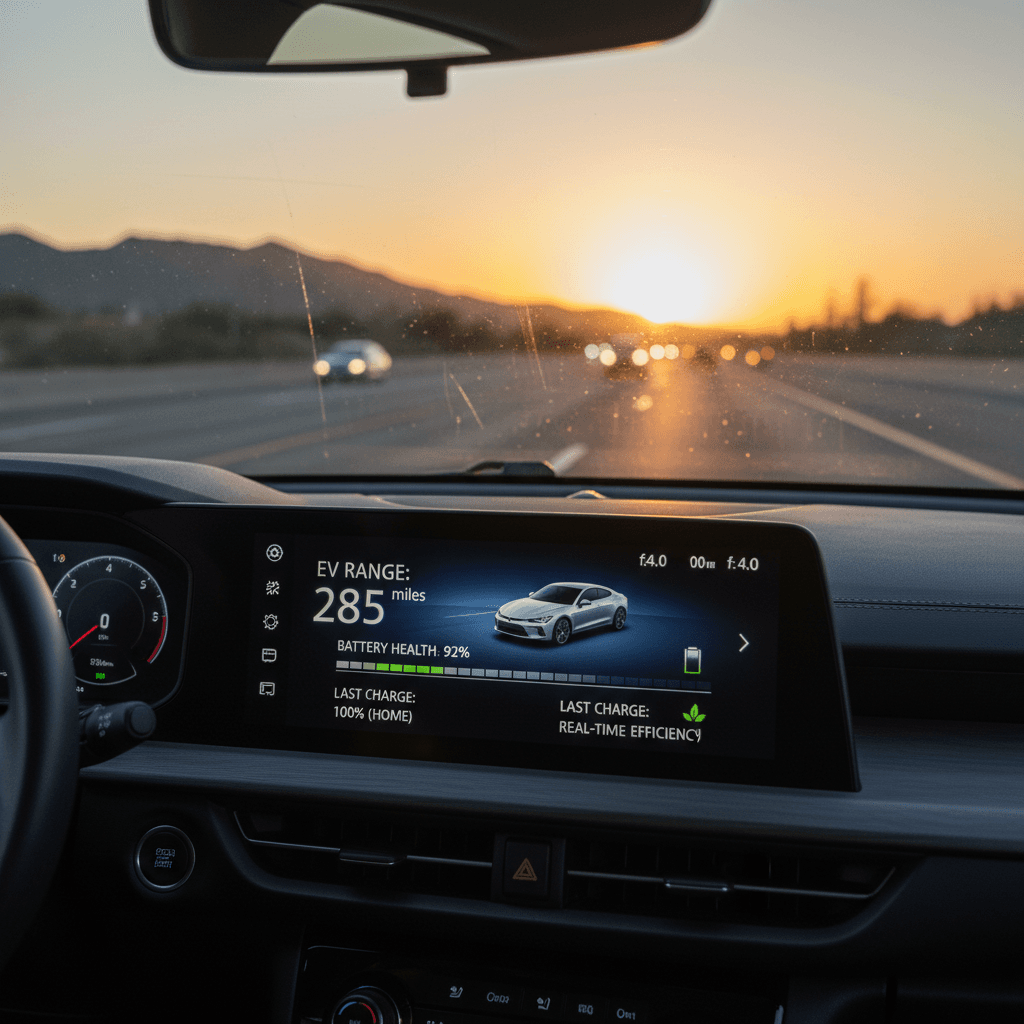
7 factors that really affect how far you can go
Two EVs with the same EPA range can behave very differently in your hands. Here are the biggest levers that determine how many miles your electric car can actually go on a charge.
- Speed: Above about 60 mph, aerodynamic drag climbs rapidly. Driving 80 instead of 65 can easily shave 15–25% off highway range.
- Temperature: Batteries prefer mild conditions. Very cold weather (below freezing) thickens battery chemistry and increases cabin heating loads; very hot weather pushes more energy into cooling. Either extreme reduces range.
- Driving style: Smooth acceleration and gentle braking let the car recapture more energy and stay in its efficient band. Full‑throttle launches and late braking burn range quickly.
- Terrain: Long climbs consume extra energy, and although you regain some coming back down, it’s never 100%. Mountain states will see more variance than flat coastal corridors.
- Vehicle load & accessories: Roof boxes, bike racks, oversized wheels, and heavy cargo all add drag or weight. Even HVAC settings matter, cranking cabin heat uses more energy than seat heaters, for example.
- Battery age & health: As packs age, maximum usable capacity shrinks, trimming range. We’ll dig into this next, because it’s critical when you’re shopping used.
- Charging habits: Regularly fast‑charging from low to 100% and storing the car at full charge in hot climates can accelerate degradation over many years, indirectly reducing how far you can go.
Battery degradation and buying a used EV
Range isn’t just about the number on a new‑car window sticker; it’s also about how that battery holds up over time. The good news: most modern EVs lose range gradually, not catastrophically, and many owners see only single‑digit percentage loss over the first 3–5 years. But the exact number matters when you’re buying used.
How much range loss is normal?
This is where transparency becomes crucial. Two used EVs of the same year and model can have very different real‑world range if one spent its life on gentle commuting and the other ran hard miles in a rideshare fleet.
How Recharged helps you see the real range
Ready to find your next EV?
Browse VehiclesHow much range do you actually need?
The most common mistake shoppers make is treating range like a high‑score list: more is always better. In reality, you pay for every extra kWh you carry around, whether you use it or not, both in purchase price and in efficiency. The right question isn’t just “How many miles can an electric car go?” but “How many miles do I need it to go?”
Matching EV range to your driving pattern
Use this as a starting point, then adjust for your climate and charging access.
| Driving pattern | Typical daily miles | Suggested minimum EPA range | Notes |
|---|---|---|---|
| Short urban commute | 0–25 miles/day | 160–200 miles | Plenty of buffer even with older/short‑range EVs; focus more on size and price. |
| Average suburban driver | 25–50 miles/day | 220–260 miles | Covers several days of driving; home charging makes this feel effortless. |
| Heavy commuter or sales | 50–90 miles/day | 260–300 miles | Still fine with overnight home charging; extra buffer helps in winter. |
| Frequent weekend getaways | Mixed, 150–250 mile trips | 280–320 miles | Enough for 2–3 hour highway stints between fast charges. |
| Regular long‑distance road‑tripper | 200+ miles in a day, often | 320–400+ miles | Prioritize both bigger packs and strong DC fast‑charging speed. |
Choose the first row that sounds like your life, then treat the range figure as a minimum target, not a cap.
Think in hours, not just miles
Can you road trip in an EV?
Yes, with the right expectations and a bit of planning. The combination of 250–350 miles of range and growing fast‑charging networks has made EV road‑tripping increasingly routine, especially on major U.S. corridors.
What makes an EV good for road trips
- At least ~250–280 miles of EPA range in the trim you’re buying.
- Fast DC charging (ideally 150 kW+ peak) so stops are 20–30 minutes, not an hour.
- Good route coverage from networks like Tesla Supercharger and major open‑network providers.
- Decent efficiency, big, brick‑shaped trucks will see more drop‑off at high speeds than sleek sedans.
What road‑tripping actually feels like
- Plan segments of 120–180 miles between fast chargers, especially in winter.
- Arrive at chargers around 10–20% state of charge; leave around 60–80% to stay in the fast part of the charging curve.
- Combine charging with meals and rest stops so downtime feels natural rather than wasted.
- Use route‑planning apps that factor in elevation, weather, and charger reliability.
Beware the towing penalty
Checklist: choosing the right range for you
Before you fixate on a specific number…
1. Map your real driving, not your fears
Look at a couple of months of odometer readings or use a smartphone app to log your actual daily miles. Most people overestimate how far they drive by a wide margin.
2. Be honest about road‑trip frequency
Do you truly take multi‑hundred‑mile trips monthly, or does it just feel that way? If it’s a handful of times per year, a slightly shorter‑range EV plus the occasional rented gas car might be cheaper and simpler.
3. Decide where you’ll charge most
Home or workplace charging radically lowers your range needs. If you’ll rely on public DC fast charging day‑to‑day, lean toward higher range and stronger charging hardware.
4. Factor in your climate
If you live in a region with harsh winters or scorching summers, build in extra buffer. That might mean targeting 20–30% more EPA range than your daily miles strictly require.
5. Consider future lifestyle changes
Are you planning a longer commute, a move to a different climate, or frequent kid‑ferrying duty? A bit of extra range headroom can keep the car feeling “right‑sized” longer.
6. If buying used, demand battery data
Don’t guess about degradation. Tools like Recharged’s <strong>Score Report</strong> quantify remaining battery health so you know how many miles that specific car can still deliver.
FAQ: Common questions about EV range
Frequently asked questions about how far EVs can go
The bottom line on how far EVs can go
In 2025, asking “How many miles can an electric car go?” is a little like asking how far a gas car can go, there’s no single number. Today’s EVs span everything from nimble city cars that comfortably cover 150–200 miles to long‑range flagships that cruise past 500 miles on a charge. What matters most is how those numbers intersect with your driving, your climate, and your charging options.
If you’re considering a used EV, the real question becomes: how many miles can this specific car still go? That’s exactly the gap Recharged is designed to close, with transparent battery health diagnostics, fair pricing, and EV‑savvy support from first click to delivery. When you match the right range to the way you actually drive, an electric car stops feeling like a science experiment and starts feeling like the most convenient vehicle you’ve ever owned.