If you’re thinking, “It’s time to sell my electric car in New Jersey,” you’re not alone. New Jersey has one of the highest EV adoption rates on the East Coast, but it also has unique sales tax rules, title requirements, and a fast‑moving used EV market. The good news: with a bit of prep and the right selling channel, you can move your car quickly without leaving thousands of dollars on the table.
New Jersey is an EV hotspot
Why selling an electric car in New Jersey feels different
EVs don’t behave like gas cars
With a gas car, buyers mostly care about mileage and service records. With an EV, shoppers in New Jersey obsess over battery health, DC fast‑charging speed, and winter range. Two identical‑looking cars can be worth very different amounts depending on how the battery was treated.
Policy and incentives keep changing
New Jersey used to exempt zero‑emission vehicles from sales tax entirely, then moved to a reduced 3.3125% rate starting October 2024, and by July 1, 2025 brought EV purchases back to the full 6.625% state sales tax. That affects how buyers think about total cost, and pushes more shoppers to the used market where pricing is sharper.
Don’t rely on old EV tax advice
Decide how you want to sell your EV in New Jersey
Four main ways to sell an electric car in New Jersey
Each option trades off money vs. time vs. hassle.
1. Private sale
Best for: Maximizing price if you have time.
- List on sites like Facebook Marketplace, Craigslist, and EV‑focused forums.
- You control the price, screening, and test drives.
- Requires meeting strangers, handling paperwork, and negotiating.
2. Trade‑in at a dealership
Best for: Fastest one‑and‑done transaction.
- Hand your EV to the dealer when buying your next car.
- Lower price than private sale, but minimal hassle.
- Dealers vary widely in how well they understand EV values.
3. Online instant‑offer sites
Best for: Convenience without stepping into a showroom.
- Submit photos and VIN online for quick offers.
- Pick‑up at home or local drop‑off.
- Some platforms still price EVs using gas‑car logic, be cautious.
4. EV‑specialist marketplaces like Recharged
Best for: EV‑savvy pricing plus strong buyer trust.
- Recharged focuses only on used electric vehicles.
- Our Recharged Score Report includes verified battery health and fair market pricing.
- Sell via instant offer or consignment, with nationwide EV‑interested buyers.
Mix strategies for the best outcome
How much is my electric car worth in New Jersey?
What’s happening in the used EV market
Your EV’s value in New Jersey will hinge on more than model year and mileage. Buyers care about charging speed, software features, and degradation. Here’s how to think about pricing:
- Battery health and DC fast‑charging behavior. A car that still charges close to its original peak rate at fast chargers is easier to sell than one that throttles early.
- Range in real New Jersey weather. Shoppers know winter on the Turnpike is not California. If your car holds range well in cold, that’s a selling point.
- Warranty and software. Remaining battery or drivetrain warranty and features like OTA updates or driver‑assist systems can add meaningful value.
- Brand perception. In New Jersey, Teslas, Hyundai/Kia EVs, and some plug‑in hybrids see especially strong demand; niche brands or first‑generation models may take longer to sell.
How Recharged estimates value
Paperwork you need to sell an EV in New Jersey
The legal process for selling an EV in New Jersey is basically the same as for any other car, but the state is strict about doing it at an MVC agency and getting the title right. Here’s what you’ll need as the seller for a typical private‑party sale:
New Jersey EV sale paperwork checklist (private sale)
1. Original New Jersey title, lien‑free
You must have the original Certificate of Ownership (title). Any liens must be paid off and released. If you’ve lost the title, apply for a duplicate (Form OS/SS‑52) before you try to sell, MVC will not complete the transfer without it.
2. Completed seller section on the back of the title
Fill out the seller area accurately: date of sale, odometer reading, buyer’s name and address, and your signature. Errors, cross‑outs, or missing fields are a common reason MVC clerks send people home.
3. Bill of sale with key details
While a properly completed NJ title will often suffice, a simple bill of sale is strongly recommended. Include both parties’ names and addresses, VIN, year/make/model, sale price, and date. It helps if there are later questions about sales tax or ownership.
4. Current New Jersey registration (recommended)
Bringing your registration makes it easier to match VIN and plate information. Once you sell the car, you should remove the plates and either transfer them to another vehicle or return them to MVC if you’re not using them.
5. NJ insurance for test drives
Keep your New Jersey insurance active until you’ve completed the sale and surrendered or transferred the plates. You’re still liable if something happens on a test drive before the paperwork is signed.
6. Valid photo ID
Bring your New Jersey driver’s license (or other acceptable ID) to the MVC office if you’re going with the buyer. While the buyer is the one registering the car, your ID may be requested if there are questions about the title.
All ownership transfers must go through MVC
Do I pay sales tax when I sell my electric car in NJ?
If you’re selling your own electric car in a private‑party sale in New Jersey, you don’t collect or pay sales tax. The buyer pays any applicable New Jersey sales tax when they register and title the vehicle at MVC.
How New Jersey sales tax works when your EV changes hands
Who pays what, and when, for different ways of selling your electric car.
| Scenario | Who pays tax | When it’s paid | What you should know |
|---|---|---|---|
| Private sale (you sell to another individual) | Buyer | At MVC when buyer titles/registers the car | You should never try to collect sales tax yourself; just agree on a sale price and document it on the title and bill of sale. |
| Trade‑in at a dealership | Buyer of the replacement vehicle | At the dealer, as part of the new deal | The trade‑in value of your EV reduces the taxable amount on the vehicle you’re buying, which can be a meaningful savings. |
| Selling via Recharged or another dealer acting as seller of record | End buyer | At registration (depending on structure) | If you consign through a dealer, the final retail transaction typically looks like a dealer sale from the state’s perspective. You receive your agreed settlement; the platform handles tax compliance. |
Sales tax rules here reflect the post‑July 1, 2025 environment, when EVs are treated like gas vehicles for New Jersey sales tax purposes.
Be honest about the sale price
Prepare your electric car to sell for top dollar
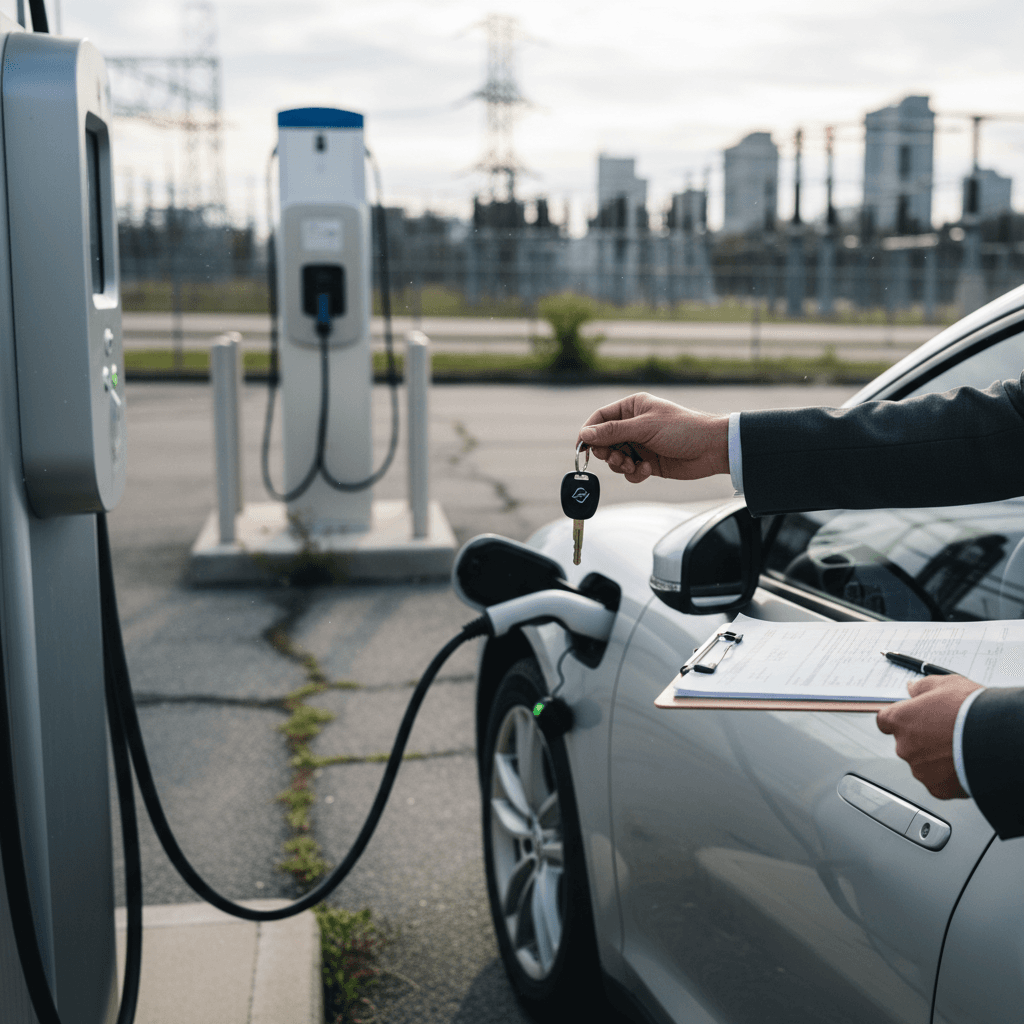
EV shoppers in New Jersey tend to be research‑heavy and detail‑oriented. A bit of prep before you list or trade your car can move it faster and justify a stronger price.
- Get a battery health report. This is the single biggest confidence‑builder for buyers. With Recharged, every vehicle gets a Recharged Score Report that shows verified battery health based on diagnostics, not guesswork.
- Charge the car before showings. Showing the car with 10% state of charge at a cold Wawa isn’t ideal. Try to meet buyers with at least 60–80% so they can test full performance and climate control.
- Fix obvious, inexpensive issues. Replacing wiper blades, topping washer fluid, fixing a cracked phone‑mount clip, or swapping a dead 12V battery can pay off many times over in perceived condition.
- Clean it like a dealer would. Vacuum thoroughly, wipe down touchscreens and glossy surfaces, clean door jambs, and remove personal data from infotainment systems. A fresh‑feeling cabin matters more in quiet EVs where squeaks and rattles are more noticeable.
- Gather charging accessories. Include the home charging cable, adapters (like J1772 or NACS connectors), and any wall‑mounted EVSE documentation if you’re leaving it behind. These are expensive new and increase your car’s appeal.
Turn your prep into a selling story
“Sell my electric car in New Jersey” step‑by‑step
Step‑by‑step timeline for selling your EV in NJ
1. Get your documents in order
Confirm the title is in your name, lien‑free, and locate your registration and basic maintenance records. If you’ve lost the title, request a duplicate from MVC before listing the car.
2. Understand your EV’s value
Check recent sales of similar EVs in New Jersey and the broader Northeast. Get at least one trade‑in quote and one instant online offer; use them as a floor when you price privately. With Recharged, you can also get an EV‑specific valuation informed by battery diagnostics.
3. Decide where and how to sell
Choose between private sale, trade‑in, instant‑offer, or an EV‑specialist marketplace. If time is more valuable than squeezing out the last $500, prioritize channels that handle marketing and paperwork for you.
4. Prep, photograph, and list your EV
Detail the car, charge it up, and take clear photos in daylight, exterior from multiple angles, interior, dashboard screens, tires, and charge port. In your listing, highlight battery health, charging behavior, and any remaining warranties.
5. Screen buyers and manage test drives
For private sales, meet in a public, well‑lit place, many New Jersey police stations and shopping centers are used‑car meetup spots. Check that the buyer has valid ID and insurance before handing over the keys for a test drive.
6. Close the deal and transfer ownership
Once you agree on a price, complete the title and bill of sale. Remove your plates, call your insurer to end or transfer coverage, and encourage the buyer to head straight to MVC to complete the transfer. If you’re selling through Recharged, we coordinate this process with the buyer for you.
Common pitfalls when selling an EV in New Jersey
Avoid these EV‑specific seller mistakes
Most of these are easy to prevent if you know to look for them.
Hiding charging quirks
Letting registration or inspection lapse
Not wiping personal data
Be extra careful with payment
How Recharged helps New Jersey drivers sell EVs
Recharged was built specifically around used electric vehicles, not gas cars with a plug bolted on as an afterthought. If you’re in New Jersey and want to sell your EV without becoming your own dealer for a month, we give you a few different ways to do it.
- Recharged Score battery health diagnostics. We test and verify your EV’s battery health and charging behavior, then package that into a Recharged Score Report that buyers can trust. That transparency often helps your car sell faster and at a stronger price.
- Instant offer or consignment. If you want speed and simplicity, you can accept an instant offer. If you’d rather aim for top‑of‑market value, consignment lets us market your car to EV‑interested buyers nationwide while you keep driving it until it sells in many cases.
- EV‑specialist support. Our team lives and breathes EVs, battery chemistry, charging standards, software quirks, all of it. We help you price, position, and answer buyer questions about real‑world range, charging at home in New Jersey, and more.
- Fully digital experience, plus a physical Experience Center. You can start, sign, and complete most of the process online, and we support nationwide delivery. For in‑person help, Recharged operates an Experience Center in Richmond, VA, which also serves many East Coast customers, including New Jersey.
- Financing, trade‑ins, and nationwide buyers. Because Recharged is a retailer and marketplace, your car isn’t limited to just local buyers who can pay cash. That broader pool is especially important as EV incentives and interest‑rate environments change.
FAQ: Selling an electric car in New Jersey
Frequently asked questions about selling an EV in New Jersey
Bottom line: The best way to sell an EV in New Jersey
Selling an electric car in New Jersey is a little different from selling a gas car: buyers are savvier, incentives and tax rules have shifted, and the real value of your vehicle lives inside the battery and software as much as the paint and wheels. If you collect your paperwork, tell the truth about the car’s condition, and lean on EV‑specific tools instead of generic gas‑car playbooks, you’ll be in a strong position.
Whether you ultimately choose a private sale, a dealer trade‑in, or a specialist like Recharged, the key is understanding what your EV is truly worth and presenting it clearly to the right buyers. Do that, and “sell my electric car in New Jersey” stops being a headache and becomes a clean, confident exit into whatever you’re driving next.