If you only read car company press releases, you’d think America is stampeding toward electric cars. The reality is more complicated. Yes, millions of Americans have already switched to EVs, but they’re still a clear minority on US roads. Understanding how many Americans are switching to electric cars, and how fast, will help you decide whether now is the right time for you to go electric, especially if you’re eyeing the growing used EV market.
Key takeaway at a glance
How many Americans are actually driving electric today?
EVs on US roads: from niche to noticeable
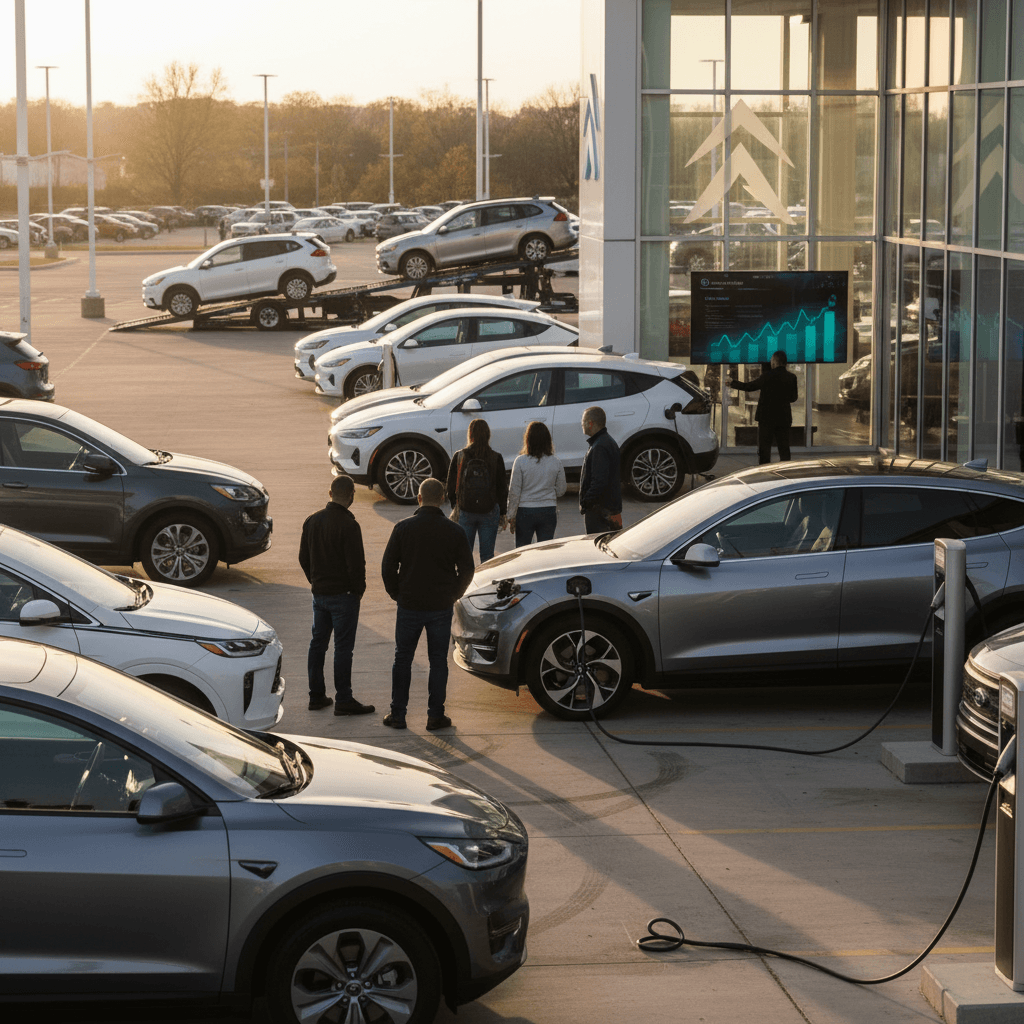
As of late 2024 and into early 2025, estimates from federal data and industry analysts put the number of plug‑in vehicles in the US at roughly five million. That includes both full battery‑electric vehicles (BEVs) and plug‑in hybrids (PHEVs). Compare that to nearly 290 million registered vehicles nationwide, and you see why the roads still look overwhelmingly gas‑powered.
That small share can be misleading, though. The growth rate is what matters: the EV fleet has grown by well over half in just a couple of years, and new EV sales have moved from rounding‑error status to a meaningful chunk of the market. EVs may be the future, but they’re still early‑adopter territory in most of the country.
What share of new US car sales are electric?
To understand how many Americans are switching to electric cars right now, you have to look at new‑car sales, not just vehicles on the road.
About those “EV slowdown” headlines
Zoom out and the story is clear: in just five years, EVs have gone from roughly 2% to around 10% of new‑car sales nationwide. That is a radical shift for such an entrenched, slow‑moving industry. At the same time, nine out of ten Americans buying a new vehicle today are still driving off in something that burns fuel.
Are Americans planning to switch to EVs?
Sales numbers tell you what people are doing. Surveys hint at what they might do next, and here the picture gets even more nuanced.
What Americans say about buying an EV next
Surveys show interest is real, but not overwhelming.
Serious consideration has softened
Near‑term intent is modest
Longer‑term plans are stronger
Why the survey numbers don’t always agree
That’s the split personality of the US EV buyer right now: curiosity is high, actual purchase intent is middling, and a lot of people are waiting for someone else to beta‑test the technology for them.
Why EV adoption is slower than the headlines suggest
1. Upfront price and financing
Even as battery costs fall, EV sticker prices and monthly payments still run higher than comparable gas cars, especially when interest rates are elevated and federal tax credits feel confusing or unreliable. Many households buy used, and new EV prices shape used EV prices with a lag.
2. Charging access and range anxiety
Public fast chargers are multiplying, but for a lot of Americans, especially renters and rural drivers, home charging isn’t straightforward, and the nearest DC fast charger might be dozens of miles away. That makes switching feel risky, even if daily commute miles are well within an EV’s range.
3. Information overload and trust
Battery degradation, software updates, different charging standards, shifting incentives, EVs ask shoppers to digest a lot of new information. Without clear, independent data on battery health and fair pricing, many buyers stick with what they know.
4. Politics and mixed messaging
In the US, EVs are caught in the culture war crossfire. Policy targets keep moving, automakers alternately trumpet and downplay their EV plans, and news cycles bounce between "EVs are the future" and "EVs are doomed." That noise makes cautious shoppers even more cautious.
How to cut through the noise as a shopper
Who’s switching fastest, and who’s holding back?
EV adoption in the US is not evenly distributed. It’s more like a heat map: blazing in a few regions, barely lukewarm in others.
Where and who is switching to EVs the quickest?
Location, income, politics, and home type matter more than you might think.
Coastal, urban, and West Coast drivers
Homeowners with garages or driveways
Higher‑income households
Younger and tech‑forward drivers
On the flip side, adoption is much slower in regions with cheap gas, fewer incentives, sparse charging, and extreme weather. Rural drivers who routinely tow or drive long distances off the interstate are understandably skeptical of a technology that still fits best inside a predictable daily mileage envelope.
Cold‑weather reality check
How fast could Americans switch to EVs by 2030?
Forecasts are moving targets, but most credible outlooks now see EVs taking somewhere in the neighborhood of 20–30% of new US vehicle sales by 2030, depending on how policy, incentives, and charging build‑out shake out. Some earlier forecasts were more aggressive; more recent ones have pulled back as the industry digests higher interest rates and political pushback.
- If total US light‑vehicle sales hover around 16–17 million per year and EVs reach even 25% share by 2030, that’s roughly 4 million EVs sold that year alone.
- Cumulatively, that could put the US somewhere in the ballpark of 15–20 million plug‑in vehicles on the road by the early 2030s, up from around five million today.
- Even in that scenario, the majority of vehicles on the road in 2030 will still burn gasoline or diesel; vehicle fleets turn over slowly.
Grid and charging are scaling toward that future
What this shift means for the used EV market
Here’s where things get interesting for everyday buyers: as more Americans choose EVs new, the used EV market explodes with inventory. And because EVs were heavily subsidized in their early years and technology is improving quickly, used EVs often depreciate faster than comparable gas cars.
Why used EVs are a sweet spot right now
But battery health is the make‑or‑break variable
This is exactly the gap companies like Recharged are built to fill. Every vehicle listed on Recharged comes with a Recharged Score, a battery‑first report that includes verified battery health, detailed range expectations, and fair‑market pricing. Instead of guessing whether an EV has lived an easy life on a Level 2 charger or spent years quick‑charging at 100% every day, you get transparent data up front.
As more Americans switch to electric cars new, the second‑owner market is where the real democratization happens. A family that can’t, or doesn’t want to, spend $50,000 on a new EV can still tap into cheap fuel (electricity), lower maintenance, and a modern driving experience by shopping smart in the used market.
How to decide if you should switch to an EV now
Whether you join the growing minority of Americans switching to electric in the next year comes down to a handful of practical questions, not ideology. Use this checklist as a sanity filter.
Should you be part of the next wave of EV adopters?
1. Map your real daily mileage
Track your driving for a couple of typical weeks. If you usually drive under 40–60 miles per day and only take a few long road trips a year, you’re a strong EV candidate.
2. Assess your home charging options
If you have a garage or driveway and can install at least a 240V outlet, EV ownership gets dramatically easier. Renters should look for workplace charging, nearby public Level 2 stations, or talk to landlords about upgrades.
3. Think through your worst‑case scenarios
Cold snaps, late‑night airport runs, last‑minute road trips, do you have a plan for those in an EV? That might mean a larger‑battery model, reliable DC fast charging along your routes, or access to a second gas vehicle.
4. Compare total cost, not just the payment
Factor in fuel savings, potential tax credits, maintenance differences, and insurance. Over three to five years, many EVs, especially used, can undercut similar gas cars on total cost of ownership even if the monthly payment is similar.
5. Decide if you’re comfortable with tech
EVs are software‑defined cars: over‑the‑air updates, apps, driver‑assist features. If that excites you, great. If it stresses you out, look for models with simpler interfaces and strong dealer or support networks.
6. For used EVs, insist on battery data
Before you buy used, look for a <strong>third‑party battery health report</strong>, like the Recharged Score, so you’re not taking a blind leap on the most expensive component in the car.
How Recharged helps you switch with confidence
Frequently asked questions about Americans switching to EVs
EV adoption FAQ
Bottom line: Are Americans really switching to electric cars?
Americans are switching to electric cars, but not yet in the sweeping, irreversible way some headlines imply. Roughly five million plug‑in vehicles now share US roads with hundreds of millions of gas cars, and about one in ten new vehicles sold is electric. Surveys show meaningful interest, especially among younger, urban, higher‑income, and tech‑friendly drivers, but also deep hesitation around price, charging, and politics.
If you’ve been waiting for proof that EVs are more than a fad, you can stop waiting; they’ve firmly entered the mainstream. The real question is whether now is the right time for you to switch. If your daily driving, home charging options, and budget line up, an EV, especially a well‑vetted used one, can already beat a comparable gas car on cost and convenience. That’s where companies like Recharged, with battery‑health‑first inspections, fair pricing, financing, trade‑ins, and even nationwide delivery, make it easier to join the growing minority of Americans who have already made the leap.