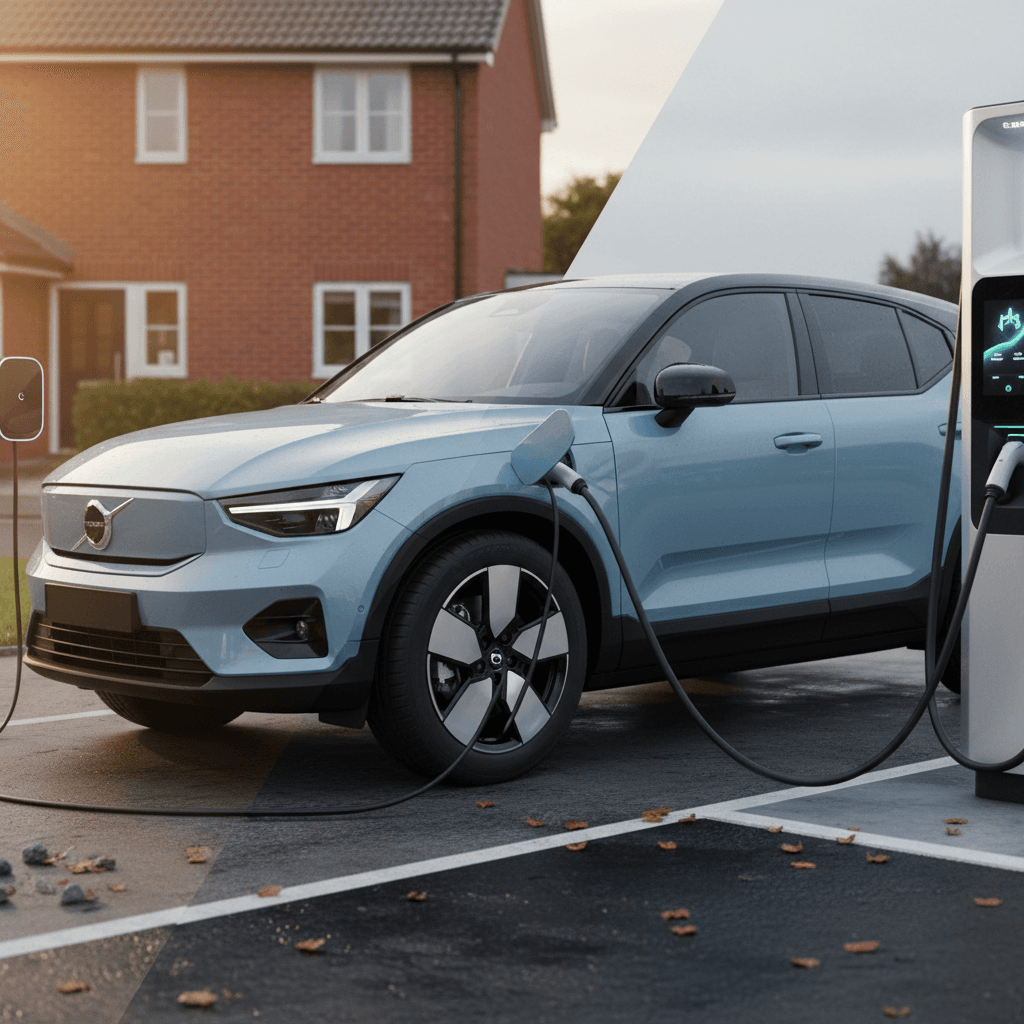
If you’re looking at a Volvo EX30, or you already have one, your first practical question is usually **how long it actually takes to charge**. The brochure might promise “10–80% in about 26 minutes,” but what does that look like in real life at home, at work, and on road trips? This guide breaks down Volvo EX30 charging times for Level 1, Level 2, and DC fast charging so you know exactly what to expect and how to charge smarter.
Key takeaway
Volvo EX30 charging time: quick overview
Typical Volvo EX30 charging times (U.S. real-world)
Those are the **headline numbers**. The rest of this article explains what’s behind them, battery sizes, on‑board charger limits, how weather or a cold battery can double your stop, and how to choose the right charging setup for your life.
Volvo EX30 battery size and charging basics
The Volvo EX30 is available with two battery sizes, depending on trim and market. In the U.S., most cars shipped so far use the **larger ~69 kWh pack**, but the global lineup also includes a smaller pack around **51 kWh**. What matters for charging is the **usable capacity** (what you can actually access) and the car’s built‑in charging hardware.
Volvo EX30 battery & charging specs (typical values)
Approximate specs for common EX30 variants. Exact numbers vary slightly by market and model year, but these are good planning figures.
| Item | Smaller battery EX30 | Larger battery EX30 |
|---|---|---|
| Usable battery capacity | ~49 kWh | ~64–69 kWh |
| On-board AC charger | 11 kW (Level 2) | 11 kW (Level 2) |
| Max DC fast-charge power | ~134 kW | ~150 kW (some newer cars up to ~153 kW) |
| EPA range (approx.) | Low 200s miles | Mid‑ to high‑200s miles, depending on trim and wheels |
Battery size and charging hardware set the ceiling for how fast your EX30 can realistically charge.
AC vs. DC, Level 1 vs. Level 2
- **Level 1 (120V)**: Standard household outlet using the portable cordset. Slow but simple.
- **Level 2 (240V)**: 240V home or public station, what most EX30 owners rely on for daily charging.
- **DC fast charging (CCS)**: Highway or corridor chargers adding big chunks of range in 20–40 minutes.
How long to charge a Volvo EX30 at home
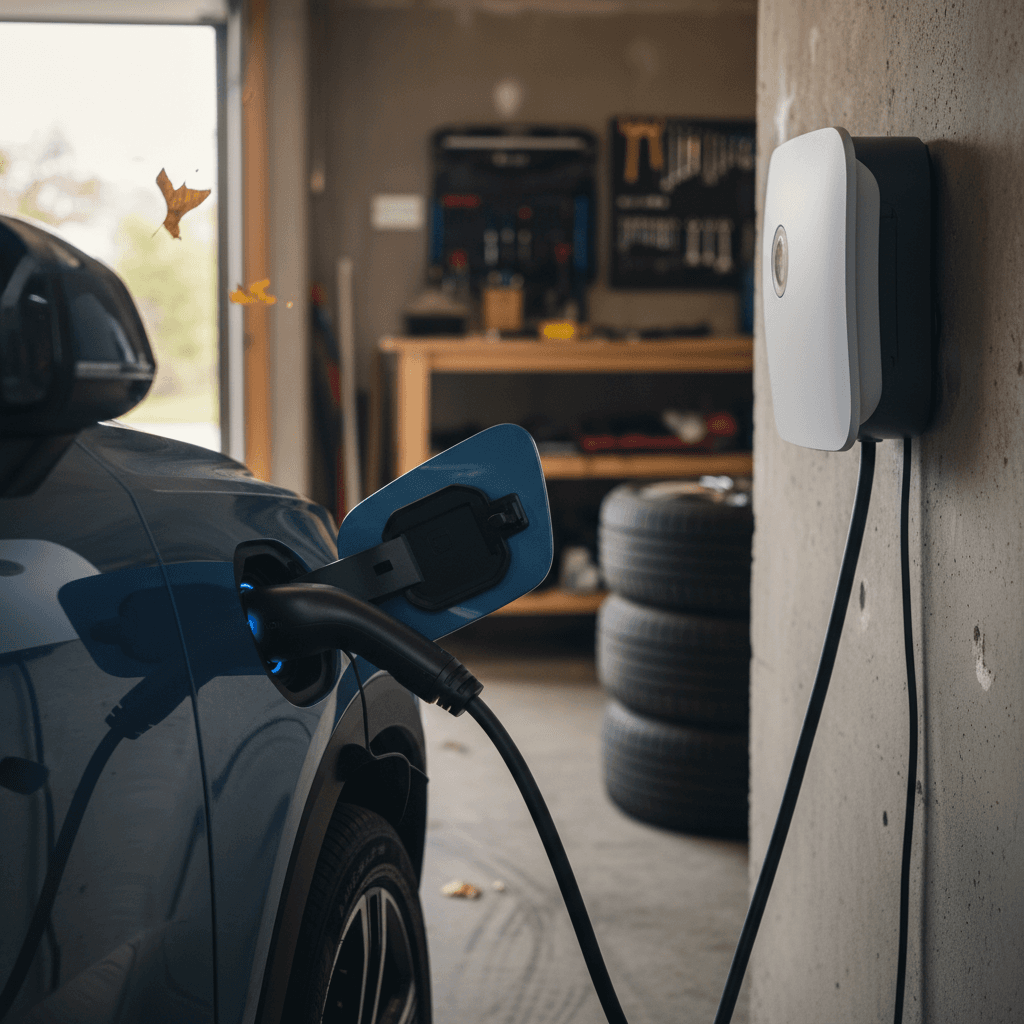
For most owners, **home Level 2 charging** is where the EX30 really makes sense. You plug in at night and wake up to a “full tank” without thinking much about minutes or kilowatts. Still, it’s helpful to know roughly how long different home setups take.
Volvo EX30 home charging times by setup
From crawling on 120V to practical overnight 240V charging.
Standard 120V outlet (Level 1)
Good for: Apartment dwellers with no 240V option, very light daily driving.
- Power: ~1.2–1.4 kW
- Typical rate: ~3–4 miles of range per hour
- 0–100% time: ~44–58 hours on a larger‑battery EX30
Level 1 can work if you only drive 20–30 miles a day and plug in every night, but it’s marginal if you regularly run the battery low.
240V Level 2 – 32A circuit
Good for: Most single‑family homes and many townhomes.
- Breaker: 40A (continuous output ~32A)
- Power: ~7.2 kW
- 0–100% time: ~9–11 hours (larger battery)
- Daily top‑ups (30–80%): ~4–5 hours
This is a sweet spot for cost and performance: plenty to refill an EX30 overnight without upgrading every part of your electrical panel.
240V Level 2 – 40–48A circuit
Good for: Heavier driving, two‑EV households.
- Breaker: 50–60A (continuous output 40–48A)
- Power: up to the EX30’s 11 kW onboard limit
- 0–100% time: ~7–9 hours (larger battery)
- Daily top‑ups (20–80%): ~3–4 hours
Because the EX30 battery isn’t huge, a **40A or 48A charger is more than enough** to comfortably refuel overnight.
Watch your amp settings
In everyday use, most EX30 drivers don’t charge from 0–100%. Instead you’ll arrive home with, say, 30–50% remaining and charge to 80–90% overnight. On a 240V Level 2 setup, that’s easily within a **3–6 hour window**, which is why the EX30 works so well for commuting and errands.
How long to charge a Volvo EX30 on DC fast charging
Road trips are where **DC fast charging** matters. Here, the EX30 punches above its weight: the battery isn’t huge, so when you can feed it ~150 kW, it fills quickly. The catch is that you only see headline speeds when the **battery is warm, the charger is strong, and you stay in the 10–80% sweet spot**.
Typical Volvo EX30 DC fast‑charging times (ideal conditions)
Approximate times on a healthy charger, moderate weather, and a preconditioned battery.
| Charge window | Smaller battery EX30 | Larger battery EX30 | What it means in real life |
|---|---|---|---|
| 10–80% | ~22–26 minutes | ~26–30 minutes | A bathroom break and a snack, your best target window on the highway. |
| 20–80% | ~18–22 minutes | ~22–26 minutes | Arrive slightly higher, still leave with plenty of range. |
| 10–100% | ~40–60 minutes | ~45–70 minutes | The last 20% is much slower; avoid unless you truly need every mile. |
| 20–60% | ~12–15 minutes | ~15–18 minutes | Quick top‑up on shorter hops, good for adding ~70–100 miles. |
Plan your stops around 10–80% sessions for the best balance of time and battery health.
Use navigation to the charger
Best case: warm battery, strong station
- Arrive at 10–20% state of charge.
- Use a 150 kW or faster CCS station.
- Battery already warm from at least 20–30 minutes of driving.
- Navigation set to the charger so the car preconditions.
In this scenario, your EX30 will usually hit triple‑digit kW speeds quickly and complete a 10–80% session in the **mid‑20‑minute** range.
Realistic worst case: cold or shared charger
- Arrive at the station with a cold battery (after a short drive or in winter).
- Use an older 50–75 kW charger or share power with another car.
- No preconditioning, or you arrive above ~60–70% state of charge.
Now the same 10–80% session may stretch to **35–45 minutes**, which still works, but it’s no longer the quick espresso stop the brochure suggests.
Cold‑weather reality check
6 factors that change how long your EX30 takes to charge
What really controls your Volvo EX30 charging time
1. Battery size & starting charge
A nearly empty larger‑battery EX30 will take the longest; topping up the smaller pack from 40–80% is much quicker. Think in terms of **energy added (kWh)**, not just percentages.
2. Charger power and wiring
A Level 2 station on a 20A circuit can’t feed your EX30 as fast as one on a 50–60A circuit. On DC, an older 50 kW unit simply can’t match a modern 150 kW or 350 kW site.
3. Battery temperature
The EX30’s pack is happiest around room temperature. Too cold or too hot, and the car will **throttle charging speed** to protect itself. That’s where preconditioning helps.
4. State of charge window
EVs charge fastest when they’re low. From 10–50% the EX30 can pull serious power; above ~70–80%, the rate tapers off sharply. That’s why **10–80% is the standard DC benchmark**.
5. Charger sharing & reliability
If your station is sharing power with another car, or the site is suffering from derating and errors, your charge may crawl no matter how capable your EX30 is on paper.
6. Software limits & settings
Charge‑current limits in the car, scheduled charging, battery health protections, or even temporary recalls and software updates can all adjust how fast your EX30 will accept energy.
Choosing the right charger and strategy for your EX30
Instead of obsessing over exact charge times, it’s more helpful to design a **charging strategy that fits your life**. The EX30’s moderate battery size and strong DC capability give you a lot of flexibility.
Charging strategies for different Volvo EX30 owners
Match your routine, not somebody else’s spreadsheet.
City commuter, 20–40 miles/day
Best setup: 240V Level 2 (32A) at home or work.
- Plug in most evenings.
- Charge target: 40–80% or 50–90%.
- Time: 2–5 hours per session.
You’ll rarely see 0–100%. The car will simply be ready every morning.
Weekend road‑tripper
Best setup: Level 2 at home + reliable DC along your routes.
- Home to 80–90% before departure.
- Plan highway stops 10–60% or 10–70%.
- Time: 15–30 minutes per stop.
Use navigation to the charger so the car can precondition and hit its best speeds.
Apartment dweller with public Level 2
Best setup: Mix of workplace and public Level 2.
- Sessions: 1–3 longer charges per week.
- Time: 3–6 hours while you work, shop, or sleep.
With the EX30’s modest battery, a couple of solid Level 2 sessions each week usually cover urban driving.
High‑mileage or rideshare driver
Best setup: Robust Level 2 at home, DC fast when needed.
- Overnight Level 2: 0–100% in 7–9 hours.
- Mid‑shift DC top‑ups: 20–70% in ~20 minutes.
Here, charger reliability and low electricity rates matter as much as raw speed.
Where Recharged fits in
Ready to find your next EV?
Browse VehiclesCharging tips to protect your EX30’s battery
Fast charge times are great, but your EX30’s battery is the most expensive component in the car. A few simple habits can help you **keep those quick charging speeds longer into the car’s life**.
Smart charging habits for long‑term EX30 battery health
1. Live between about 20–80% for daily use
The battery is most comfortable in the middle of its range. Use 100% only when you need the extra miles right away, and try not to sit at 0% either.
2. Don’t DC fast charge every single day
The EX30 is built for fast charging, but **constant DC use**, especially high‑power sessions to a full 100%, adds heat and wear. Lean on Level 2 at home when you can.
3. Use preconditioning on cold days
Preconditioning doesn’t just speed up DC charging; it also keeps the pack closer to its ideal temperature window, which is healthier in the long run.
4. Set sensible charge limits
If your commute is short, set your regular charge limit around 70–80% in the Volvo app or on the center screen. Bump it up before road trips, not every single night.
5. Watch for software updates and recalls
Volvo occasionally adjusts charging behavior via over‑the‑air updates, especially around battery safety. If you hear about an EX30 battery or charging campaign, be sure your car is up to date.
6. Pair your charger with your panel
Overspecifying a massive home charger on a weak electrical service can cause nuisance trips and derating. An EV‑savvy electrician, or an EV retailer like Recharged, can help you right‑size the setup.
FAQ: Volvo EX30 charging times answered
Frequently asked questions about Volvo EX30 charging times
Is the Volvo EX30 a good fit for your charging routine?
If your daily life fits inside a **200‑ish‑mile bubble** and you have regular access to Level 2 charging, at home, at work, or both, the Volvo EX30 is one of the easier EVs to live with. It charges **quickly enough at home to be full every morning**, and its **10–80% DC fast‑charging time in the mid‑20‑ to 30‑minute range** makes road‑trip stops reasonable rather than tedious.
The real trick is matching your **charging setup and habits** to what the EX30 does best: use **240V Level 2 for the bulk of your miles**, keep your **fast‑charge sessions in that 10–80% window**, and let the car precondition before big DC stops. Do that, and you’ll spend less time staring at a charger screen, and more time just driving a small, charismatic EV that happens to be pretty easy to keep topped up.
If you’re comparing a new EX30 to a **used Volvo EX30** or other compact EVs, Recharged can help you see beyond the brochure numbers. Every car we sell comes with a **Recharged Score Report** that verifies battery health and gives you clear, data‑driven insight into how that specific car will charge and age, so you can shop with confidence.