If you’re eyeing a Volkswagen ID.4, or already have one in the driveway, the first practical question is simple: how long does it take to charge? The honest answer is “it depends,” but not in a hand‑wavy way. Once you know your battery size and charger type, you can predict VW ID.4 charging time pretty accurately and plan your life around it.
Quick note on model years
VW ID.4 charging time at a glance
Typical Volkswagen ID.4 charging times
Those are ballpark figures. To dial in how long it will take your Volkswagen ID.4 to charge, you need to know which battery you have and what you’re plugging into.
VW ID.4 batteries and what they mean for charging time
U.S. ID.4s have used two main battery sizes so far. Rough numbers are easier to remember than option‑code soup, so let’s keep it simple:
Common Volkswagen ID.4 battery packs
Approximate usable capacity is what actually matters for charging time and range.
| Pack nickname | Approx. usable capacity | Typical trims | EPA‑style range (rough) |
|---|---|---|---|
| "62 kWh" pack | ≈58 kWh usable | Standard / base models | ~200–215 miles |
| "82 kWh" pack | ≈77 kWh usable | Pro / S / AWD trims | ~250–290 miles |
Usable capacities are rounded; exact figures vary slightly by model year and software.
Charging time is mostly about how many kilowatt‑hours (kWh) you’re adding and how quickly you can push them into the battery (kW). A bigger pack like the 82 kWh version simply takes longer to fill from empty than the smaller pack, just like a bigger gas tank.
Check which battery your ID.4 has
How long to charge a Volkswagen ID.4 at home
Level 1: Standard 120V outlet
Every ID.4 comes with a portable charger you can plug into a household outlet. It’s the slowest option, but it works anywhere there’s a plug.
- Typical power: ~1.2–1.4 kW
- Added range: ~2–5 miles of range per hour
- 0–100% time (82 kWh pack): roughly 40–60 hours
- Realistic use: topping up 20–40% overnight, not refilling from empty
Level 2: 240V home or workplace charging
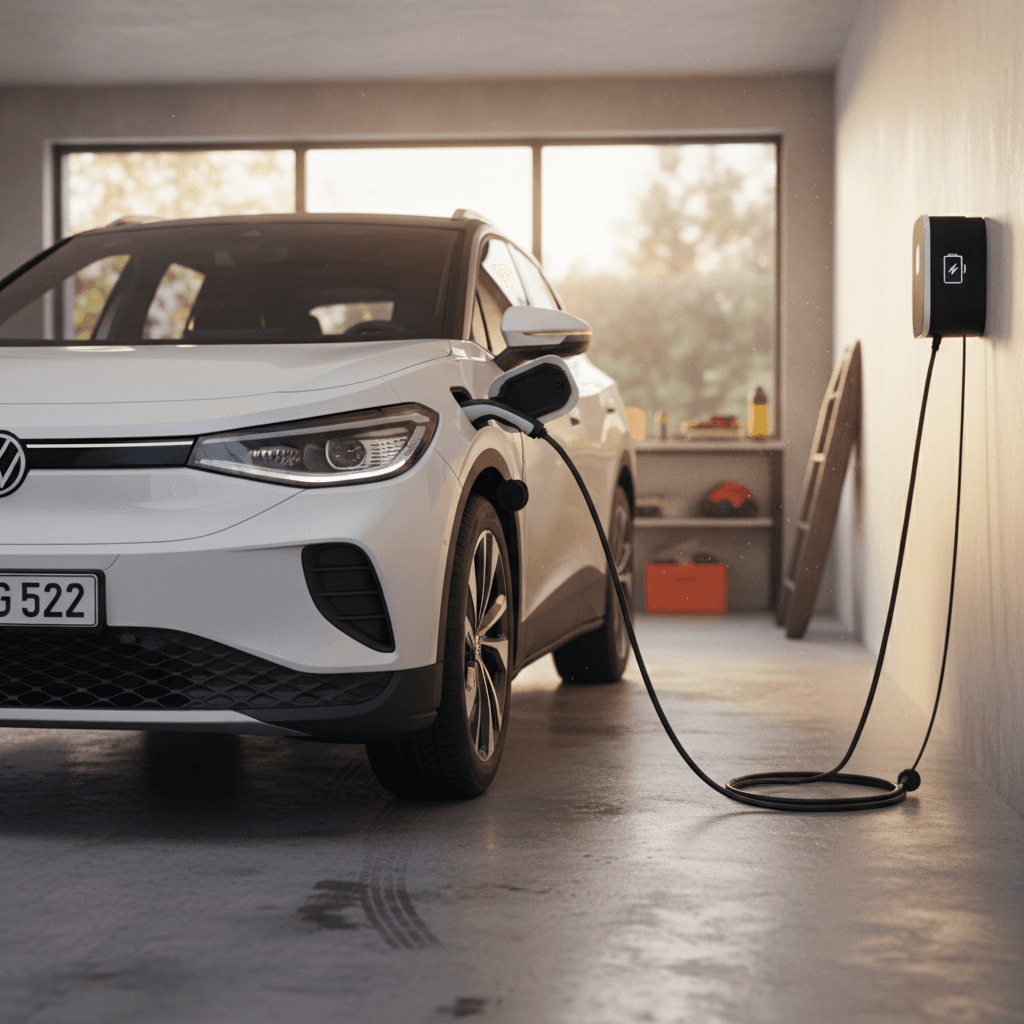
This is where the ID.4 really feels like an EV that fits your life. With a 240V circuit and a proper Level 2 charger, you can easily fill the pack overnight.
- On‑board charger: up to 11 kW AC on most ID.4s
- Typical home setup: 32–48 amps (7–11 kW)
- 0–100% time (82 kWh pack): about 7.5–11.5 hours, depending on amperage
- 0–100% time (62 kWh pack): around 5.5–8 hours
In day‑to‑day driving, you almost never go from 0–100%. If you arrive home with 40% and charge to 80% overnight on Level 2, you’re refilling about 30–35 kWh. On a typical 7.2 kW home charger, that’s only around 4–5 hours of actual charging, and the car can schedule that while you sleep or during off‑peak electricity rates.
Get Level 2 installed the right way
How long to charge a Volkswagen ID.4 on DC fast charging
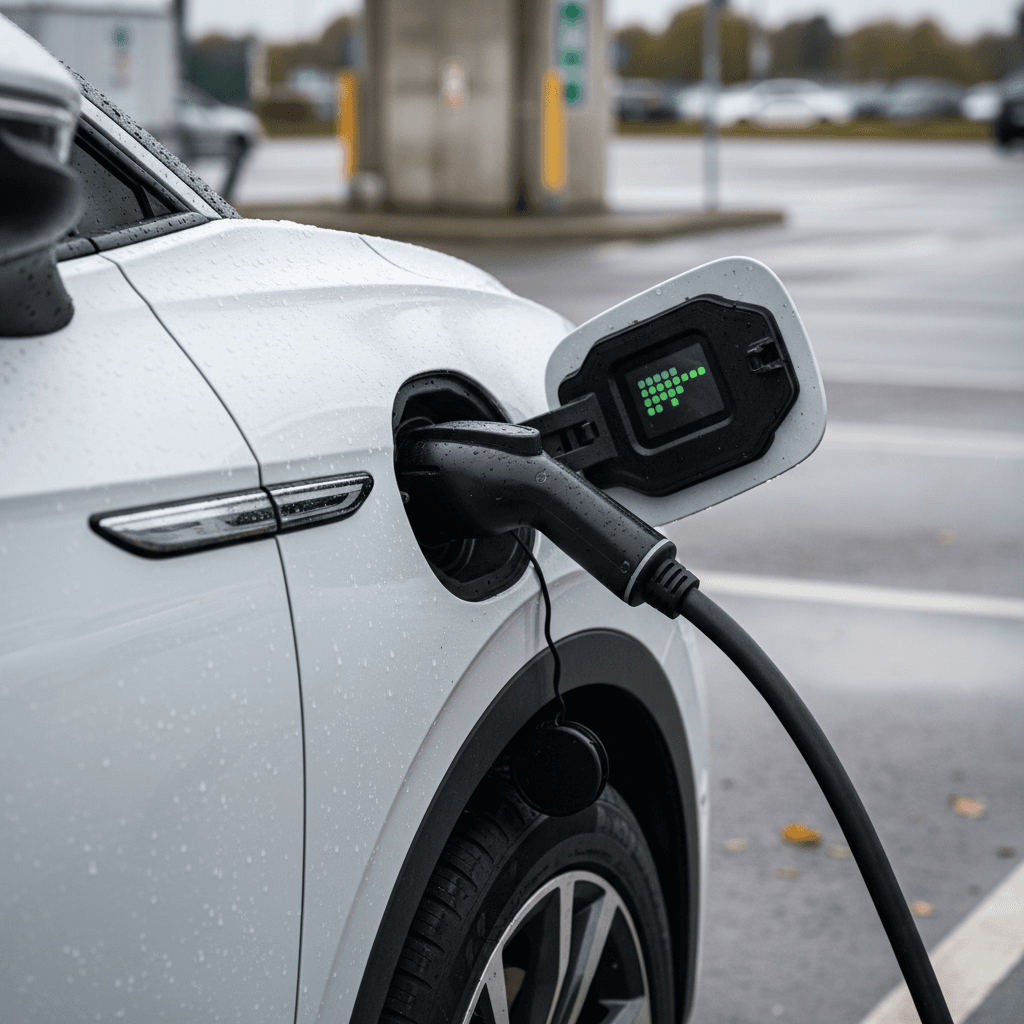
DC fast charging is what you’ll use on road trips or when you’re in a hurry. Instead of 7–11 kW like a good Level 2 charger, a strong DC station can deliver 100–150 kW or more to a modern ID.4, at least for part of the session.
Typical Volkswagen ID.4 DC fast charging times
Assumes a healthy battery, warm pack, and a capable station.
10–80% on 62 kWh pack
Time: roughly 25–35 minutes
Smaller battery, so it refills a bit quicker. Great for shorter‑range trims on highway trips.
10–80% on 82 kWh pack
Time: roughly 28–40 minutes
Most recent Pro / S / AWD ID.4s land in this range on a good 125–150 kW charger.
0–100% on DC fast
Time: 60–75+ minutes (not recommended)
Charging tapers hard after 80%. For trip time, it’s usually faster to unplug around 70–80% and get back on the road.
Volkswagen’s own specs for recent 82 kWh ID.4s quote a roughly 28–36 minute window from 10–80% on a high‑power DC charger in ideal conditions, and independent tests back that up. In practice, you’ll see a curve: high power when the battery is low, then a gradual slowdown as it passes about 50–60% and again near 80%.
Road‑trip planning rule of thumb
Real world vs. brochure: why your ID.4 might charge slower
If you’ve ever pulled into a fast charger, watched the glossy “up to 135 kW” number in the brochure, and then seen 60 kW on the screen, you’re not alone. A few common factors make an ID.4 charge slower than the spec sheet promises:
- Battery temperature: The ID.4 doesn’t aggressively precondition the pack like some EVs. A cold battery, common in winter or after short drives, will pull less power until it warms up.
- State of charge (SOC): You’ll see the highest power when the battery is relatively low, often between about 10–40%. As SOC climbs, the car automatically reduces power to protect the pack.
- Charger limitations: A station labeled 150 kW doesn’t always deliver 150 kW. Older hardware, shared cabinets, or grid limits can cap real‑world power well below the nameplate.
- Software and age: Earlier ID.4 software limited peak power more than newer updates. Battery health on older, high‑mileage cars can also slightly reduce effective charge rates.
Cold‑weather charging reality check
Tips to make your ID.4 charge faster and smarter
Practical ways to optimize Volkswagen ID.4 charging time
1. Install (or use) solid Level 2 at home
If you can swing a 40‑ or 48‑amp Level 2 charger on a 240V circuit, your ID.4’s 11 kW onboard charger can do its best work, easily refilling a big pack overnight. For apartment living, look for Level 2 at work or in your building instead.
2. Aim to charge between 10–80%
Below about 10%, power may dial back to protect the pack; above 80%, it tapers hard. For the best combination of battery health and trip time, live mostly in the 20–80% window and save 100% charges for road trips.
3. Precondition in cold weather when possible
If your ID.4 or charging app supports any kind of preconditioning, use it before a winter fast‑charge stop. Even just driving 20–30 minutes at highway speeds before you plug in can warm the battery and shorten charge time.
4. Check the station, not just the map icon
Apps like Electrify America, ChargePoint, or PlugShare often show real‑time status. If a 150 kW unit is derated or shared between stalls, your charge might be slower. Sometimes a 150 kW charger that actually delivers 100 kW beats a 350 kW unit that’s throttled.
5. Take advantage of scheduled charging
Use the ID.4’s charge scheduling to start Level 2 charging later at night when rates are cheaper and the car has hours to fill slowly. You still wake up to a full battery and a lower electric bill.
6. Don’t obsess over 0–100% numbers
In daily life, what matters is how quickly you can refill the chunk of range you use in a day. For many ID.4 owners, that means adding 40–80 miles overnight at home, something even a modest Level 2 charger handles in just a few hours.
How Recharged helps
Ready to find your next EV?
Browse VehiclesCharging time considerations for used VW ID.4 buyers
If you’re shopping the used market, charging time isn’t just a spec sheet number. It’s tied to how the previous owner treated the battery, how up‑to‑date the software is, and how you plan to charge at home.
What to check on a used Volkswagen ID.4
These questions tell you more than a quick test drive.
Battery health and history
- Ask whether the car mostly lived on Level 2 or DC fast charging.
- Look for signs of excessive degradation (unusually low range estimate at high SOC).
- On a Recharged vehicle, review the battery health data in the Recharged Score.
Software and charging behavior
- Confirm the car has current software for optimal charging curves.
- If you can, do a quick DC fast‑charge test: note peak kW and time from ~10–60%.
- Talk with the seller about their real‑world fast‑charge times on trips.
Your home charging setup
- Do you have access to 240V power for Level 2, or just 120V?
- Will you park and plug in for 8–10 hours most nights?
- Factor electrician and charger costs into your total budget.
Your driving pattern
- Mostly local driving? Level 2 at home plus occasional public charging is plenty.
- Frequent long trips? Pay closer attention to DC fast‑charge times and station coverage on your routes.
- Consider how often you’re willing to stop 25–35 minutes to charge.
FAQ: How long to charge a Volkswagen ID.4?
Frequently asked questions about VW ID.4 charging time
Bottom line: how to think about ID.4 charging time
When you break it down by charger type, Volkswagen ID.4 charging time stops being mysterious. A standard outlet will limp along in days, a decent Level 2 setup will quietly refill the pack overnight, and a good DC fast charger can give you a solid 10–80% bump in roughly half an hour when you’re on the road. The real trick is matching the car to your life: where you’ll charge, how far you drive, and how patient you are on road trips.
If you’re looking at a used ID.4, don’t be shy about asking for details on battery health and real‑world charging behavior. That’s exactly why Recharged includes a Recharged Score Report with every vehicle, so you know how quickly that particular car will charge, not just what the brochure once promised. Get that piece right, and charging becomes background noise while you enjoy a quiet, roomy electric crossover that’s ready to go every morning.