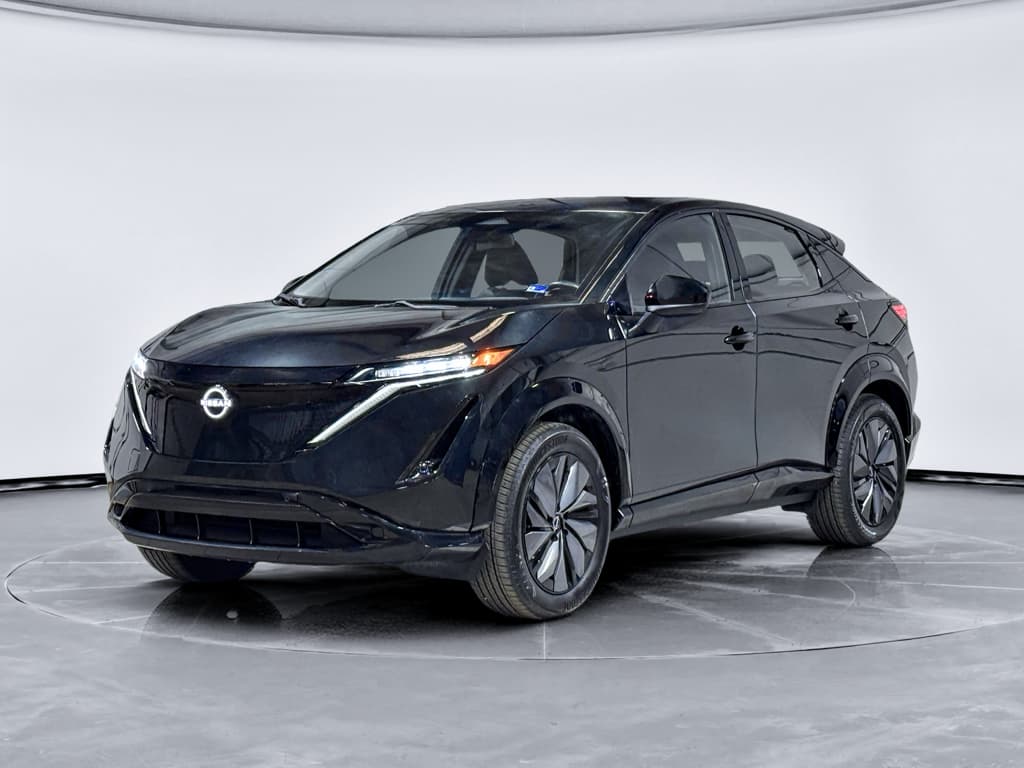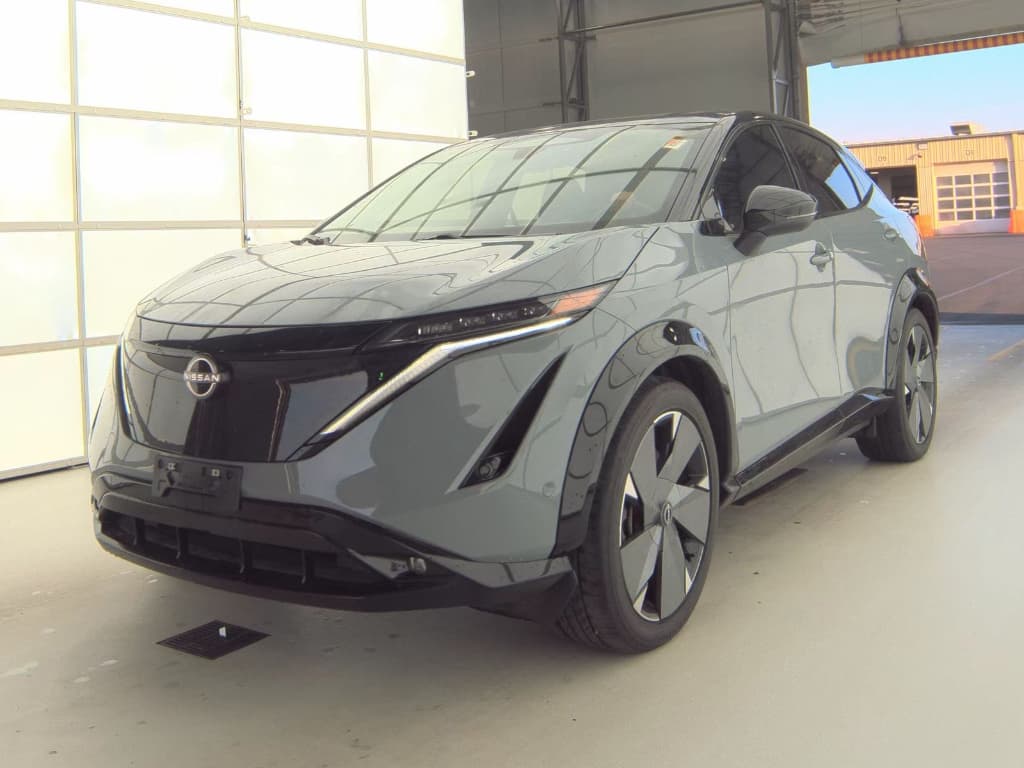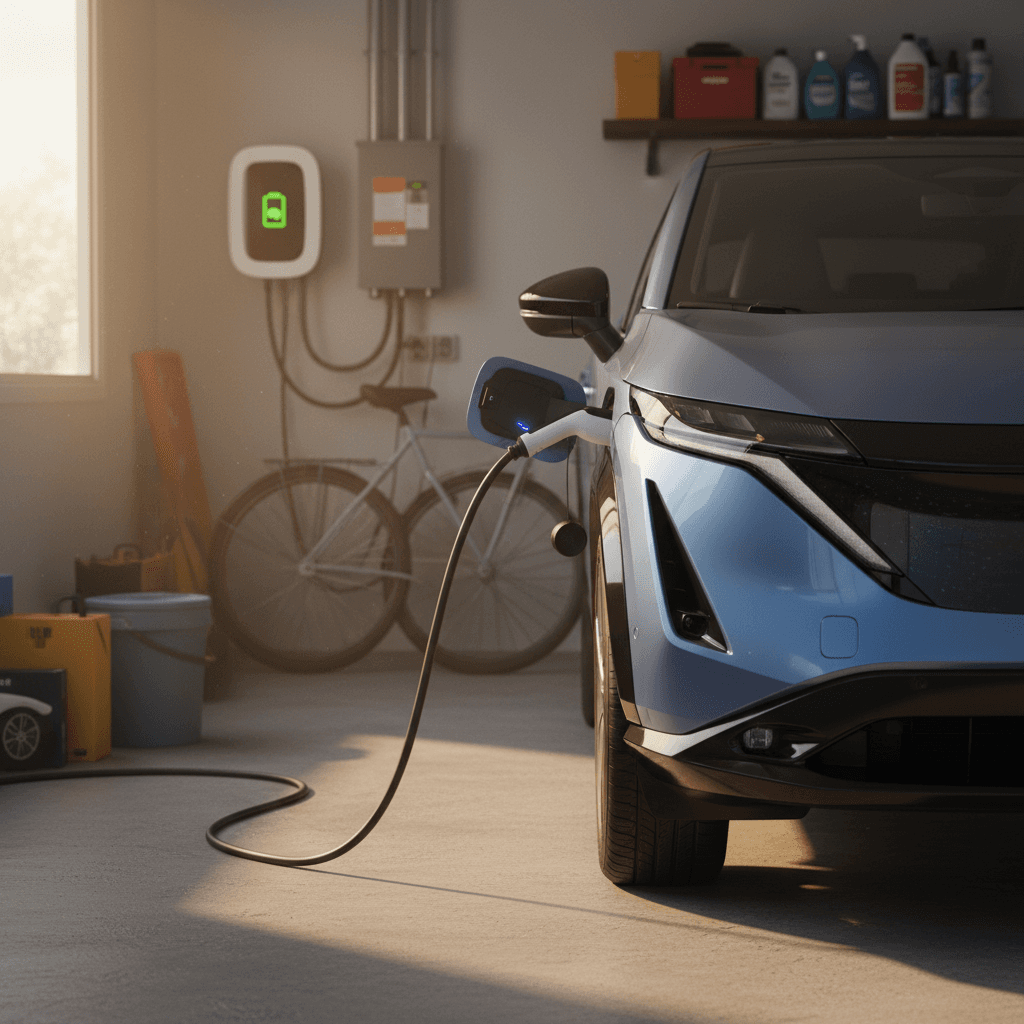
If you’re eyeing a Nissan Ariya, or you already have one, the first real‑world question isn’t the brochure range figure. It’s, very simply, how long does it take to charge a Nissan Ariya at home and on the road? The answer depends on your battery size, where you plug in, and how much of the pack you’re actually filling.
Quick answer
Nissan Ariya charging time at a glance
Typical Nissan Ariya charging times (63 & 87 kWh)
How long to charge a Nissan Ariya by charger type
Approximate charge times for both Nissan Ariya battery sizes. These are ballpark figures meant for planning, not second‑by‑second promises.
| Charger type | Use case | Battery size | 0–100% est. | 10–80% est. | Miles added (10–80%)* |
|---|---|---|---|---|---|
| Level 1 (120 V) | Emergency / occasional | 63 kWh | ~42–50 hrs | ~30–36 hrs | ~140–160 mi |
| Level 1 (120 V) | Emergency / occasional | 87 kWh | ~55–60 hrs | ~40–45 hrs | ~180–210 mi |
| Level 2 (240 V, ~7 kW) | Home & workplace | 63 kWh | ~10–11 hrs | ~7–8 hrs | ~140–160 mi |
| Level 2 (240 V, ~7 kW) | Home & workplace | 87 kWh | ~13–14 hrs | ~9–10 hrs | ~180–210 mi |
| DC fast (up to 130 kW) | Road trips | 63 kWh | ~60–70 min** | ~30–35 min | ~140–160 mi |
| DC fast (up to 130 kW) | Road trips | 87 kWh | ~70–80 min** | ~35–40 min | ~180–210 mi |
Real‑world drivers rarely charge from absolute 0 to 100%. The most time‑efficient window is usually 10–80%.
About those numbers
Nissan Ariya batteries and charging hardware
Every charging conversation with the Ariya starts with two questions: which battery and what charger.
- Battery options: most Ariya trims use either a usable ~63 kWh pack (often marketed as 63 kWh) or a larger ~87 kWh pack.
- On‑board AC charger (North America): about 7.2 kW, which is what limits your maximum Level 2 speed at home or work, even if you buy a beefier wallbox.
- DC fast‑charging hardware: designed for a peak of roughly 130 kW on CCS fast chargers, with a relatively flat, conservative charge curve that holds decent power into higher states of charge.
What this means for you
Level 1 home charging: how long it really takes
Level 1 is the “yes, technically it’s charging” solution: you plug the Ariya’s portable cord into a regular 120 V household outlet. It’s slow, and with a large battery crossover like this, that slowness is no longer cute, it’s structural.
Nissan Ariya Level 1 charging time (120 V)
Useful for topping up, frustrating from empty.
Typical speeds
- 63 kWh pack: around 3.8–4.5 miles of range per hour of charging.
- 87 kWh pack: similar miles per hour; you just have more miles to fill.
How long from low state of charge
- 10–80%: roughly 30–40 hours depending on battery size.
- 0–100%: about 42–58 hours in real‑world estimates.
Don’t plan your life around Level 1
Level 2 home charging: the real daily solution
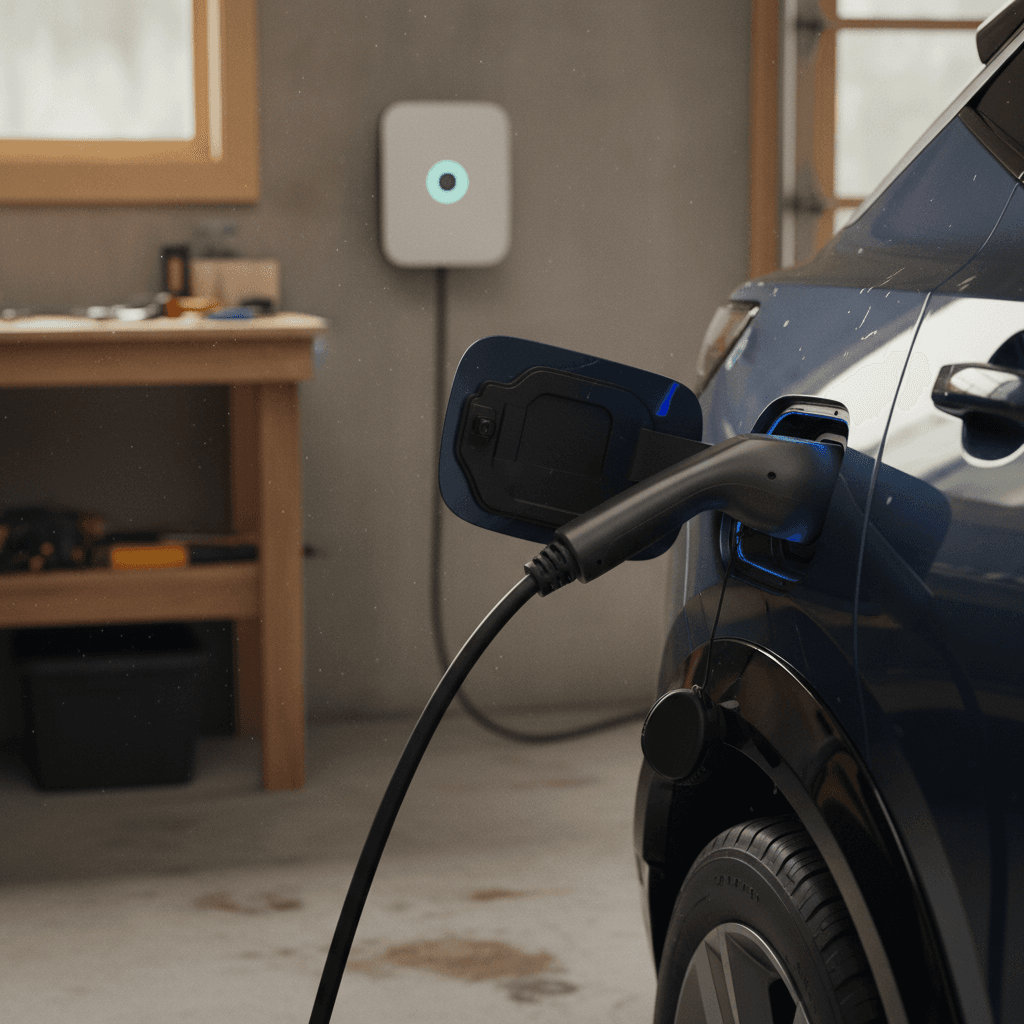
Level 2 is where the Ariya wakes up as a practical EV. This means a 240 V circuit and a wallbox or plug‑in EVSE wired to roughly 30–40 A, delivering around 7 kW of power, right in the wheelhouse of the Ariya’s on‑board charger.
How long to charge a Nissan Ariya on Level 2 (240 V)
Approximate home charging times on a typical 32 A Level 2 charger, which is what many Ariya owners install.
| Battery | State-of-charge window | Approx. time | What it feels like day-to-day |
|---|---|---|---|
| 63 kWh | 10% → 80% | ~7–8 hours | Arrive nearly empty in the evening, wake up near full. |
| 63 kWh | 0% → 100% | ~10–11 hours | Completely empty to full between late night and breakfast. |
| 87 kWh | 10% → 80% | ~9–10 hours | More like a true overnight; low battery to road‑trip ready by morning. |
| 87 kWh | 0% → 100% | ~13–14 hours | From “turtle” to full if you plug early in the evening. |
Think in overnight windows, not minute‑by‑minute. You rarely need a full 0–100% in one shot.
Why buying a bigger wallbox doesn’t always help
Making Level 2 work perfectly with your life
1. Match charger output to Ariya’s capability
A 32 A Level 2 charger on a 40 A circuit is usually ideal for the Ariya. You get full speed without overspending on hardware you can’t use.
2. Use scheduled charging when your utility offers off‑peak rates
If your utility has time‑of‑use pricing, set the car or charger to start in the small hours. The Ariya can’t yet target a specific charge limit by %, but you can still time the start and end.
3. Plan for where you actually park
A clean, well‑lit garage wall is perfect, but plenty of Ariyas charge from outdoor posts or pedestals. Just make sure the cable comfortably reaches your charge port without becoming a clothesline.
4. Leave headroom in your electrical panel
Before you add a 240 V circuit, have an electrician look at your main panel’s capacity. A load calculation up front is much cheaper than an overloaded service later.
DC fast charging: how long to charge on road trips
Out on the interstate, your Ariya trades in the slow, steady drip of home charging for the firehose of DC fast charging on CCS. This is where the 130 kW peak hardware and Nissan’s conservative charge curve come into play.
Realistic DC fast charge expectations for Nissan Ariya
Think in chunks of time and chunks of range, not absolute full charges.
Typical fast-charge window
Most owners use 10–80% on road trips. That’s where the Ariya charges fastest and gives you the most miles per minute plugged in.
63 kWh pack
Expect around 30–35 minutes to go from 10–80% on a healthy 150 kW charger when the battery is already warm from driving.
87 kWh pack
Plan on roughly 35–40 minutes for the same 10–80% window, rewarding you with more miles in the bank at every stop.
If you insist on going from single digits to 100%, the back half of the pack is slower. Beyond 80%, the Ariya, like almost every modern EV, starts to taper charging power to protect the battery. That last 20% can take another 25–40 minutes for just a modest bump in range.
Faster road trips with shorter, more frequent stops
Factors that make your Ariya charge faster or slower
The numbers above are averages. In the wild, your charging experience swings with temperature, charger quality, and how you drive into the station.
- Battery temperature: A cold pack will pull less power, especially on DC fast. After a couple of highway stints, your second and third charges of the day are usually quicker than the first frozen one at dawn.
- Charger limitations: Many public DC stations can’t sustain their advertised power, or they share it between stalls. If your Ariya peaks at 80–90 kW instead of 120–130 kW, expect your 10–80% session to stretch toward the long side of the ranges above.
- Starting state of charge: Plugging in at 40–50% is kinder to your timeline than limping in at 5% in a cold rain. Very low states of charge sometimes trigger more protective behavior from the battery management system.
- Accessory load: Cabin heat, especially in deep winter, can be an invisible tax on your effective charging speed, because some of that power is warming you, not the pack.
- Battery age and health: A degraded or abused pack can show slower effective charge rates. This is where a proper battery health report, like the Recharged Score on used Ariyas, earns its keep.
Preconditioning and DC charging
How to choose the right home charging setup
Before you obsess over whether your Ariya will charge in nine hours versus eleven, step back and look at your life. Charging is less about the stopwatch and more about whether the car is quietly ready whenever you are.
Apartment or street parking
- Check if your building offers shared Level 2 spots. Even a few hours a couple of times a week can keep an Ariya happy.
- Scout reliable public Level 2 or DC fast chargers near work or regular errands. Treat them like your “virtual driveway.”
- Consider whether your usage really fits all‑EV ownership. If you’re dependent on random, crowded DC chargers for everything, a plug‑in hybrid might be the saner choice.
Garage or driveway owners
- A dedicated 240 V circuit and a mid‑range Level 2 charger are the sweet spot: essentially every day starts with what feels like a full tank.
- Set-and-forget charging is the magic of EV life. You’re not waiting on the car; you’re sleeping while it charges.
- If you’re thinking about solar, pairing it with an Ariya can turn your daily commute into a rooftop‑powered ritual.
Where Recharged can help
Ready to find your next EV?
Browse VehiclesCharging habits and Ariya battery health
Nissan built a generous buffer into the Ariya’s pack, which is why the company is more relaxed about charging to 100% than some rivals. Owners who charge to full on Level 2 most nights aren’t seeing horror‑story degradation, especially in temperate climates.
Simple habits that keep your Ariya happy long-term
You don’t have to baby it, but a little care goes a long way.
Live in the middle
For daily use, it’s kinder to hover roughly between 20% and 80% when you can, instead of hammering 0–100% every single day.
Save 100% for real needs
Charging to full is fine before a road trip or an unusually busy week. Just avoid parking at 100% for days on end in blazing heat.
Go gentle in the cold
In serious winter weather, consider shorter DC sessions and give the car a bit of driving time before you ask for maximum charge rates.
Fast charging isn’t a crime, but…
When you’re shopping used: what to look for
Used Nissan Ariyas are quietly one of the smarter buys in the EV space right now. Prices have softened compared to new, but the underlying hardware is still thoroughly modern. The question is less “Can this car charge fast?” and more “Has this pack been treated well enough to keep doing it?”
Charging-related checks for a used Ariya
Ask how the previous owner charged it
A car that lived on a Level 2 home charger and only saw DC fast chargers on road trips is usually a safer bet than one that lived on fast chargers because the owner had no home option.
Look at real-world charging behavior
If you can, plug the car into a known-good Level 2 or DC fast charger. Does it reach expected power levels? Does the estimated time to full seem in line with the numbers in this guide?
Get a proper battery health report
A diagnostic report, like the <strong>Recharged Score</strong> our vehicles include, goes beyond range guesswork and shows how much usable capacity is really left in the pack.
Match battery size to your life
The 63 kWh cars charge a bit quicker and cost less; the 87 kWh versions give you longer legs between stops. Neither is “better” in a vacuum; they’re suited to different daily patterns.
Nissan Ariya charging time FAQ
Frequently asked questions about Nissan Ariya charging time
Bottom line: how long to charge a Nissan Ariya
Live with a Nissan Ariya for a week and the stopwatch anxiety melts away. On a proper Level 2 setup, both the 63 kWh and 87 kWh versions are classic “plug in at night, full‑enough by morning” EVs. On road trips, you’re looking at roughly half an hour to forty minutes for a useful 10–80% DC fast charge, long enough for a restroom, a coffee, and a stretch, not a full workday.
The real trick isn’t shaving three minutes off a fast‑charge stop; it’s choosing the right battery, the right home charging plan, and a car whose pack has been treated well. If you’re exploring a used Ariya, Recharged can help you line all of that up, verified battery health, realistic charging expectations, and clear pricing, so the only surprise left is how quickly an EV starts to feel like the easy option.