If you’re trying to figure out how long it takes to charge a Kia Niro EV, the honest answer is: it depends. Charger type, starting battery level, weather, and even which outlet you use all matter more than the marketing headline on a spec sheet. This guide breaks those variables down so you know what to expect at home, at work, and on a road trip.
Quick answer
Kia Niro EV charging basics
When we talk about how long it takes to charge a Kia Niro EV, we’re mostly talking about the current‑generation model (roughly 2023 and newer) with a 64.8 kWh usable battery and an ~11 kW onboard AC charger. Earlier e‑Niro models are in the same ballpark, but some top out around 7.2 kW on AC charging and have slightly different DC fast‑charging behavior.
- Battery: about 64.8 kWh usable capacity
- Onboard AC charger: ~11 kW (up to 48A at 240V with the right circuit and EVSE)
- Typical DC fast‑charging peak: ~70–85 kW, 10–80% in roughly 40–45 minutes on a healthy fast charger
- Connectors: J1772 for Level 1/2 AC, CCS for DC fast charging (in North America)
Rule of thumb for any EV
Kia Niro EV charging time at a glance
Typical Kia Niro EV charge times (current‑gen, ~64.8 kWh battery)
Kia Niro EV charging times by charger type
Approximate real‑world times for a modern Kia Niro EV in mild weather. Your results will vary with temperature, charger quality, and starting state of charge.
| Charger type | Typical power | From / to | Approx. time | Best use case |
|---|---|---|---|---|
| Level 1 (120V outlet) | 1.3–1.8 kW | 0–100% | 30–40 hours | Occasional top‑ups, very low‑mileage drivers, emergencies |
| Level 2, 240V 32A | ~7.2 kW | 0–100% | 9–10 hours | Overnight home charging on a 40A circuit |
| Level 2, 240V 40A–48A | 9.6–11 kW | 0–100% | 6–8 hours | Fast overnight home or workplace charging |
| DC fast, 50 kW | 35–45 kW avg | 10–80% | 55–70 minutes | Older or lower‑power highway sites |
| DC fast, 100–150 kW | 70–80 kW avg | 10–80% | 40–45 minutes | Most practical long‑trip fast‑charge sessions |
These numbers are estimates meant for planning, not lab‑perfect promises.
Specs vs reality
How long to charge a Kia Niro EV on Level 1
Level 1 charging uses a standard 120‑volt household outlet and the portable cord that comes with the car. It’s technically simple but painfully slow for a 60+ kWh battery like the Niro EV’s.
- Power: ~1.3–1.8 kW depending on circuit and vehicle settings
- 0–100% time: roughly 30–40 hours from empty
- Realistic daily use: ~3–5 miles of range per hour of charging in mixed driving
- Good for: drivers doing short commutes who can leave the car plugged in for long stretches, or as a backup if your Level 2 goes down
Don’t rely on Level 1 for real mileage
How long to charge a Kia Niro EV on Level 2
Level 2 charging is where the Kia Niro EV really becomes easy to live with. A 240‑volt circuit, similar to what a clothes dryer or oven uses, lets the Niro’s ~11 kW onboard charger stretch its legs. This is the setup most owners should plan for at home.
Typical Level 2 charging scenarios for a Kia Niro EV
Same car, different circuits, very different charge times.
Home, 240V 32A (40A circuit)
Power: ~7.2 kW
- 0–100% in about 9–10 hours
- 10–80% in roughly 6–7 hours
- Good match for many 40A home circuits
Home or work, 240V 40A–48A
Power: 9.6–11 kW
- 0–100% in about 6–8 hours
- 10–80% in roughly 4–6 hours
- Maxes out the Niro EV’s onboard AC charger
Public Level 2 (mall, parking garage)
Power: 6–11 kW depending on site
- Plan on 20–35 miles of range per hour
- Great for topping up while you work or shop
Think in "miles per hour" of charge
How to estimate your own Level 2 charging time
1. Note your battery size
Recent Kia Niro EVs use about a 64.8 kWh usable battery. Earlier models are similar; verify in your manual or on the spec sheet.
2. Confirm your charger’s kW
Check your home charger or public station: 7.2 kW, 9.6 kW, 11 kW, etc. Multiply amps × volts ÷ 1000 if needed (e.g., 40A × 240V ≈ 9.6 kW).
3. Estimate needed energy
If you’re going from, say, 20% to 80%, that’s 60% of 64.8 kWh ≈ 38.9 kWh you need to add.
4. Divide energy by power
Take that 38.9 kWh and divide by your charger’s power. At 9.6 kW, that’s just over 4 hours in ideal conditions, add a small buffer for charging taper and losses.
How long to DC fast charge a Kia Niro EV
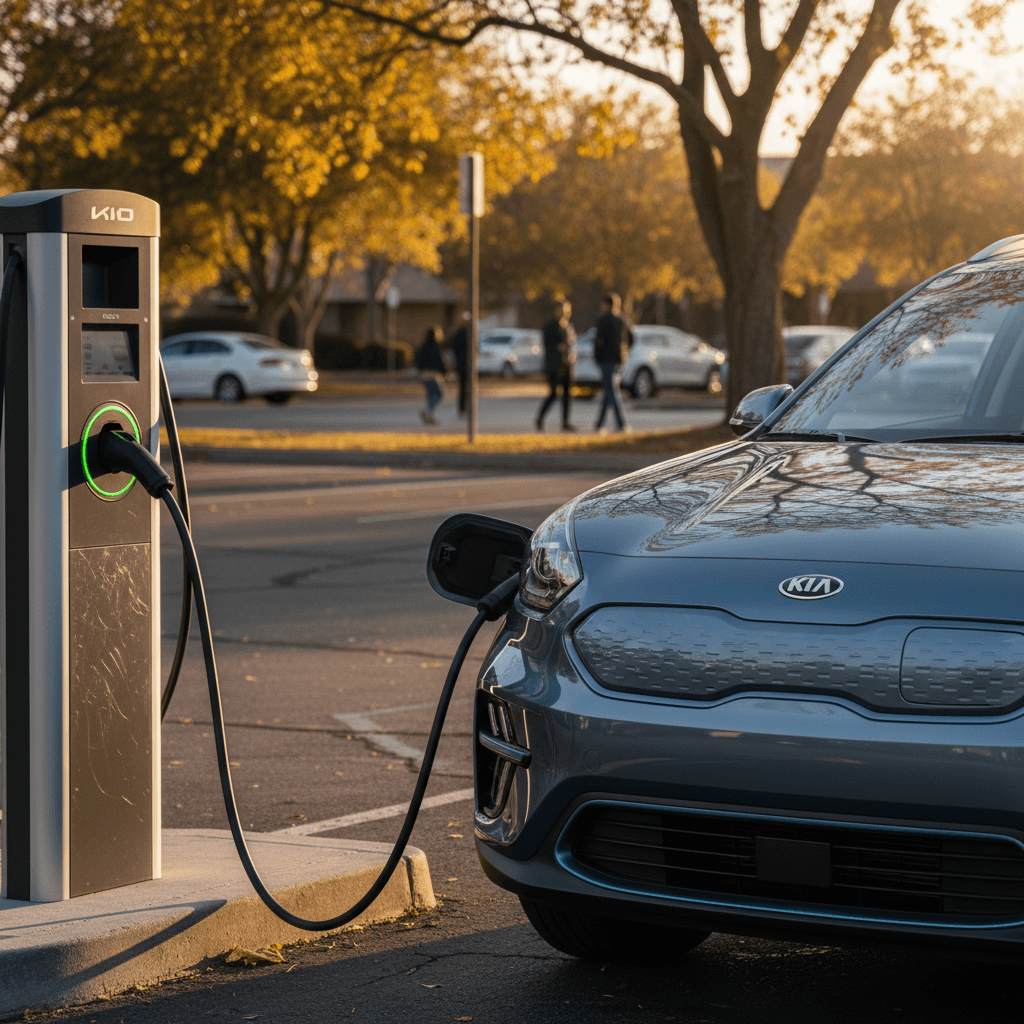
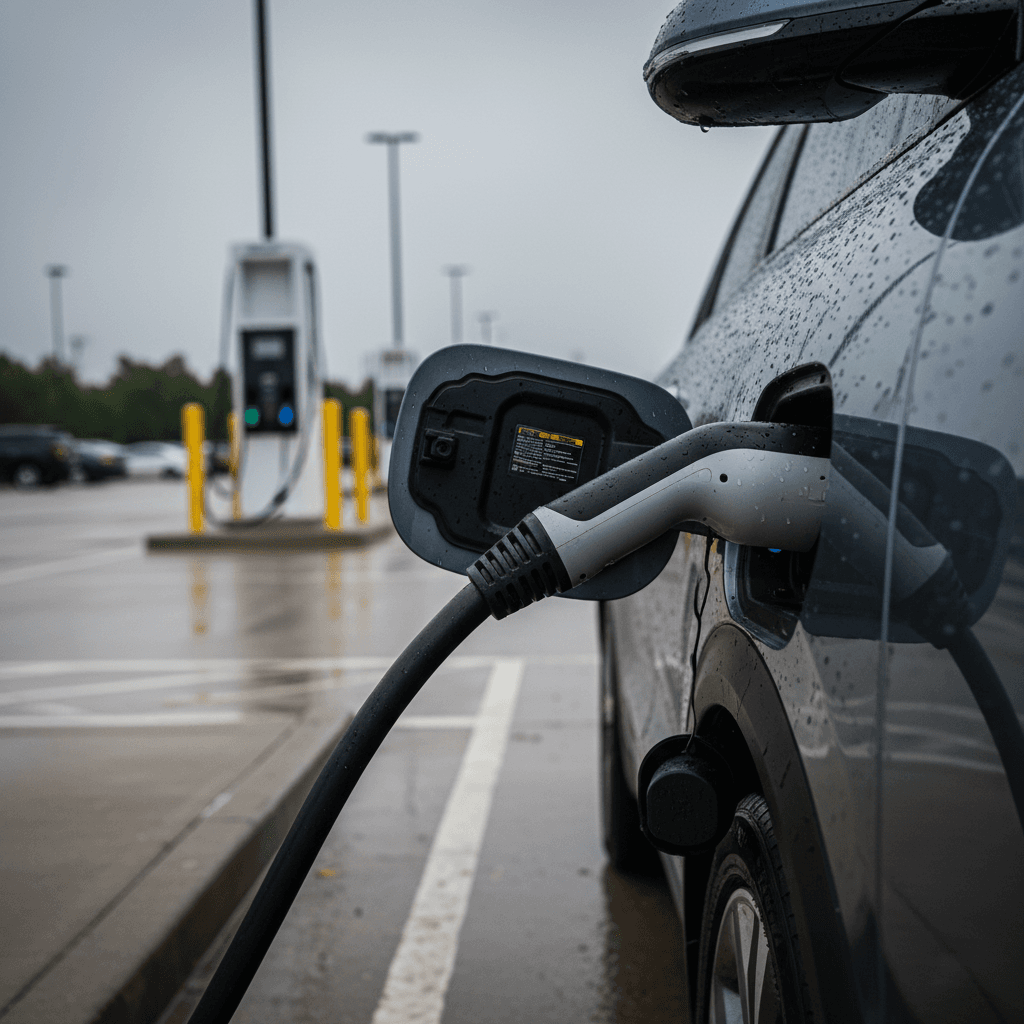
DC fast charging (often called Level 3) skips the car’s onboard AC charger and feeds DC power straight into the pack. On paper, the current Niro EV can pull around 80–85 kW peak on a strong CCS station, though average power over a session is lower because the charge rate tapers as the battery fills.
Real‑world 10–80% session
- Typical charger: 100–150 kW CCS unit
- Peak: ~70–85 kW when the battery is warm and at low state of charge
- Average over the session: 50–65 kW is common
- Time from 10–80%: roughly 40–45 minutes under decent conditions
0–100% looks very different
- Below ~10%: ramp up from lower power as the car gets comfortable
- 10–60%: strongest part of the curve, good power and efficiency
- Over 80%: power drops sharply to protect the battery
- 80–100% can take as long as 10–80% did, so most owners stop around 60–80% on road trips
Don’t chase 100% on DC fast
5 factors that change your actual charge time
- Starting state of charge (SoC): Charging from 5% to 55% is much faster than 55% to 105%, mainly because you never go above 100%, and the car tapers power as it gets full.
- Temperature: Cold batteries charge slowly, especially on DC fast. After a night parked in freezing temps, expect dramatically lower power until the pack warms up.
- Charger quality and load: Shared or older stations often deliver far less than their advertised kW, especially if another car is plugged into the same cabinet.
- Vehicle generation: Early e‑Niro models and the latest Niro EV share broadly similar specs, but onboard AC rates and DC curves can vary slightly by year and market.
- Charging targets and settings: If you’ve set a charge limit (say 80%) or scheduled charging in the car, your results won’t match a simple 0–100% calculation.
Cold‑weather reality check
Charging strategy: daily driving vs road trips
The question isn’t just “how long does it take to charge a Kia Niro EV?” It’s really “how often do I have to think about charging at all?” For most owners with home Level 2, the car is simply full every morning. For road trips, you swap the overnight trickle for a series of planned fast‑charge sprints.
Two different charging lives for your Kia Niro EV
Daily commuter / around‑town use
Install or regularly use a 240V Level 2 charger at home or work.
Set a daily charge target around 70–90% rather than 100% to reduce time on charger and protect long‑term battery health.
Plug in most nights so you’re topping up from, say, 40–60% back to 70–90%, which might only take 1–3 hours.
Use public Level 2 as a backup if you don’t have home charging, think of it like parking that happens to refill the car.
Highway road trip
Plan legs between fast chargers in the 100–150 mile range rather than running the pack from 0 to 100%.
Arrive at fast chargers low (10–20%) and leave around 60–80% to spend more time in the “fast part” of the charging curve.
Use apps like PlugShare, ChargePoint, or Electrify America to find reliable CCS sites along your route.
Try to stay flexible: if a charger is slow or busy, grab enough to reach the next location instead of waiting for a perfect 100% charge.
When charging just disappears into the background
Will fast charging hurt my Niro EV battery?
Kia, like most automakers, designs the Niro EV’s battery management system to protect the pack. The car automatically tapers power at higher states of charge and in hot or cold conditions. That’s why the last 20% feels slow on DC fast, it’s the car defending its long‑term health.
- Kia documentation generally recommends using Level 2 as your primary charging and reserving DC fast for trips.
- Occasional fast‑charge sessions, say a couple of times a month, are unlikely to materially hurt battery life on their own.
- Repeatedly charging to 100% and letting the car sit full for long periods is tougher on the pack than simply using a DC fast charger smartly up to ~80%.
- Most degradation comes from time, high temperatures, and extreme usage patterns (e.g., sitting at 100% in summer heat), not from normal, mixed real‑world charging.
Battery‑friendly habits
Picking the right home charger for your Niro EV
Because the Kia Niro EV’s onboard AC charger can accept around 11 kW, it actually benefits from a reasonably robust Level 2 setup. You don’t have to max it out, but undersizing your home charger can turn a flexible EV into something that always feels like it’s waiting to catch up.
Home charging options that pair well with a Kia Niro EV
Think about your panel capacity, parking, and daily miles, not just the biggest number on the box.
32A Level 2 (7.2 kW)
Best for: Lower‑mileage drivers, limited electrical capacity
- 9–10 hours from empty to full
- Plenty if you drive 40–60 miles/day
- Easier fit on older 100A service
40A–48A Level 2 (9.6–11 kW)
Best for: Heavier use, multi‑EV households
- 6–8 hours from empty to full
- Great for back‑to‑back errands or rideshare use
- Often requires a 60A dedicated circuit
Used Niro EV buyers
Best for: Planning around an existing panel
- Have an electrician check your capacity before you buy hardware.
- If you’re shopping a used Niro EV on Recharged, factor home charging into your total cost picture.
Where Recharged fits in
FAQ: Kia Niro EV charging times
Frequently asked questions about Kia Niro EV charging times
Bottom line: how long does it really take?
For a modern Kia Niro EV, the headline is simple: plan on 6–9 hours for a full charge on Level 2 at home, 40–45 minutes from 10–80% on a decent DC fast charger, and more than a day on a regular wall outlet. The nuance comes from where you start, where you’re going, and what kind of charging life you want to have.
If you mostly drive locally and can add a 240‑volt circuit where you park, charging fades into the background and your Niro EV just feels like a quiet, efficient crossover that’s mysteriously full every morning. If you’re planning to rely on public infrastructure or take frequent road trips, understanding these charge‑time ranges, and test‑driving a Niro EV long enough to try them yourself, is the smartest way to decide if it fits your life. And if you’re shopping used, a Recharged Score battery health report plus an honest discussion about your charging options will tell you more about living with the car than any brochure ever will.