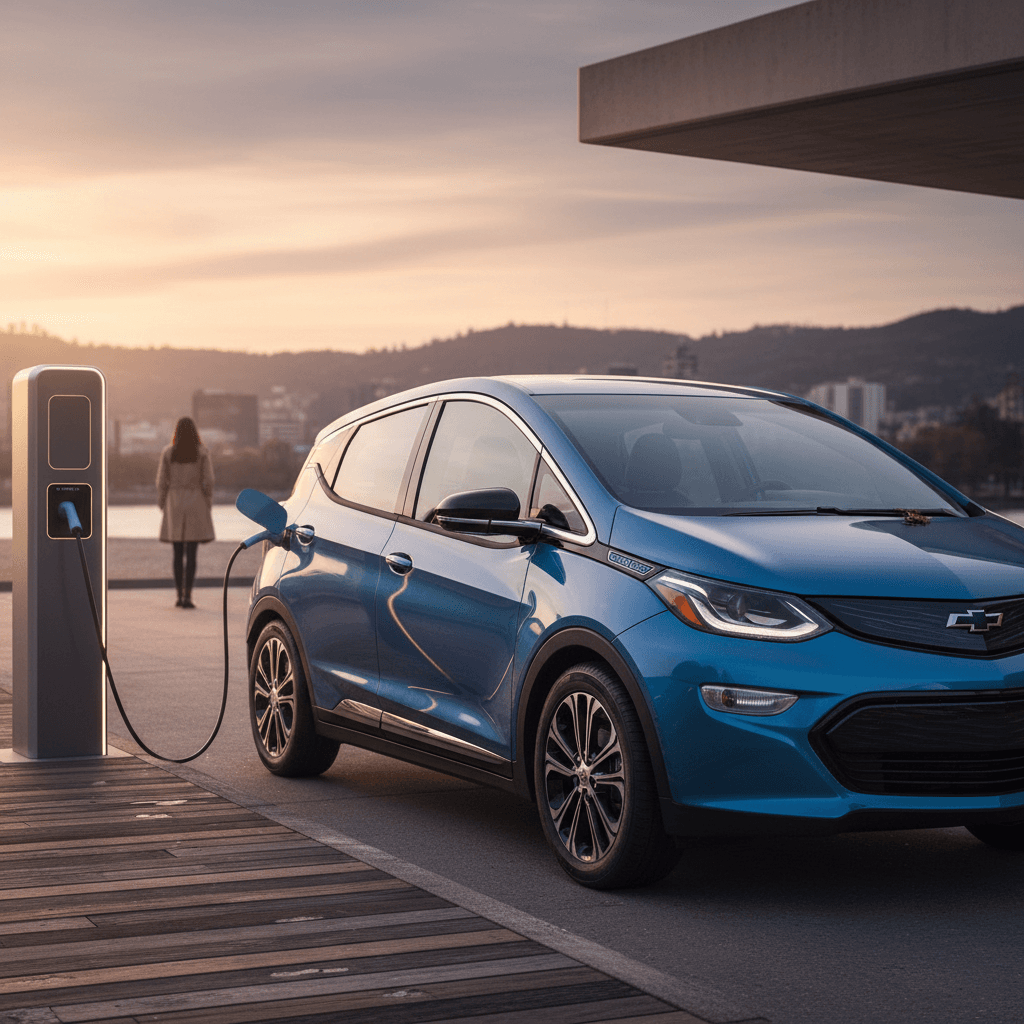
If you’re hunting for an affordable, practical electric hatchback, a certified pre-owned Chevrolet Bolt EV probably sits near the top of your list. It delivers real-world range, a roomy cabin, and that small‑car, big‑city magic, without the new‑car sticker shock. But the Bolt’s history of battery recalls, changing incentives, and a second‑generation model on the way mean you need to shop with your eyes wide open.
Quick take
Why consider a certified pre-owned Chevrolet Bolt EV?
- Price: Used Bolt EVs typically undercut comparable new EVs by thousands of dollars while still offering 200+ miles of EPA‑rated range on many trims.
- Practicality: Tall hatchback body, generous rear headroom, and a surprisingly deep cargo well make it a flexible daily driver or city runabout.
- Efficiency: The Bolt has long been one of the most efficient EVs on the road, helping you stretch every kWh and every charging stop.
- Peace of mind: A certified pre-owned Chevrolet Bolt EV adds factory‑backed inspections and warranty coverage on top of the original EV component and battery warranties.
For many shoppers, CPO is a way to split the difference between a brand‑new EV and a mystery‑history used car. You get a late‑model Bolt, often off lease, with some warranty left and extra coverage layered on top. That’s the idea, at least. The reality depends on which CPO program you’re looking at and how carefully you evaluate battery health and recall work.
How the Chevrolet certified pre-owned program works for the Bolt EV
Chevrolet’s own Certified and Certified Select programs have covered the Bolt EV at various times, but the fine print matters. The exact benefits can vary by model year and mileage, so always read the current Chevrolet CPO terms and your specific vehicle’s paperwork. In broad strokes, here’s how the program usually works for a Bolt EV sold through a Chevy dealer:
Typical Chevy CPO benefits for Bolt EV shoppers
Details vary by year and program, so always verify on the window sticker and contract.
Multi‑point inspection
The dealer completes a multi‑point inspection that includes major electrical and high‑voltage components, brakes, steering, tires, and interior electronics.
Limited warranty
CPO Bolts usually include an extended limited warranty beyond whatever is left from the original 3‑year/36,000‑mile bumper‑to‑bumper coverage.
Roadside & perks
Many Chevy CPO programs include roadside assistance, courtesy transportation, and sometimes limited scheduled maintenance benefits.
Not all “certified” labels are equal
Warranty and battery coverage on certified Bolt EVs
With any used EV, the real star of the show is the battery warranty. Chevrolet’s new‑vehicle EV warranty has typically covered the high‑voltage battery for 8 years or 100,000 miles from the in‑service date, whichever comes first. That coverage usually transfers to subsequent owners, including CPO buyers.
Typical warranty coverage on a used Chevy Bolt EV
A certified pre-owned Chevrolet Bolt EV can also be eligible for extended service contracts like the Chevrolet EV Protection Plan or third‑party coverage. These plans may cover non‑battery components, infotainment, HVAC, electronics, that can still produce costly repair bills on an EV, even when the battery is healthy.
How to check your exact coverage
Bolt EV battery recalls and what they mean for you
If you’ve followed EV news even casually, you’ve heard about the Bolt EV and its battery recall. Early cars suffered from a defect that could, in rare cases, lead to battery fires. GM ultimately replaced or repaired battery packs on a huge number of cars and updated charging software.

- Verify that all recall campaigns have been completed on the specific VIN. This should show in GM’s service history and on the owner portal.
- Ask whether the car received a full battery replacement or a software fix and individual module replacement, and get that documented on the repair order.
- Ask for the most recent battery state‑of‑health report (some dealers can print this), and don’t be shy about asking questions if anything looks off.
- Charge the car to a high state of charge on a DC fast charger during your test drive if possible. Note how quickly it charges and whether it hits expected power levels.
Do not skip the recall check
CPO vs non‑CPO vs Recharged “certified”
1. Chevy CPO Bolt EV
- Pros: Factory‑backed limited warranty, roadside assistance, standardized inspection checklist.
- Cons: Inspection depth can vary by dealer; battery health reporting may be limited; pricing sometimes higher than non‑CPO options.
2. Non‑CPO dealer or private sale
- Pros: Often the lowest advertised prices; more negotiating room; broad selection of trims and mileages.
- Cons: You’re largely on your own for inspection, history, and battery health. Any warranty is whatever’s left of the original factory coverage.
3. Recharged certified Bolt EV
- Pros: Every car includes a Recharged Score Report with verified battery health, fair‑market pricing data, and a transparent condition rundown.
- Cons: Inventory is curated, so you may not see every combination of color and trim that exists in the wild.
How Recharged improves on traditional CPO
Real‑world pricing: what certified Bolt EVs cost
Used Bolt EV prices swung wildly when the recall hit, then surged again as new EV prices climbed and GM announced the first‑generation Bolt’s discontinuation at the end of 2023. By early 2026, the market has cooled somewhat, but you still see meaningful variation between non‑CPO and certified examples.
Typical price relationships you’ll see shopping for a used Bolt EV
These are directional relationships, not quotes. Actual prices vary with mileage, trim, region, and incentives.
| Vehicle type | Mileage band | Typical asking price vs non‑CPO | What you’re paying for |
|---|---|---|---|
| Non‑CPO Bolt EV | 50k+ miles | Baseline | Market price with only remaining factory battery/EV warranty. |
| Chevy CPO Bolt EV | Under 60k miles | +5–15% | Factory CPO inspection, limited warranty, and roadside support. |
| Dealer “certified” (non‑Chevy) | Varies | +0–10% | Dealer’s own warranty and checklist, quality varies widely. |
| Recharged Bolt EV with Score Report | Varies | Competitive with CPO | Verified battery health, transparent pricing, and EV‑specialist guidance. |
Use this table as a negotiating frame, then compare against up‑to‑date market data or a Recharged listing.
Think in terms of total value, not just price
Key checks before you buy a Bolt EV
Pre‑purchase checklist for any used or certified Bolt EV
1. Confirm recall and warranty status
Run the VIN through GM’s recall lookup and NHTSA tools. Then verify factory battery and EV component warranty dates with a Chevy dealer or the online owner portal.
2. Review battery health data
Ask for a recent high‑voltage battery report or SOH (state of health) reading. On Recharged vehicles, this is summarized in the <strong>Recharged Score Report</strong> so you’re not reading tea leaves.
3. Examine DC fast‑charging history
Heavy fast‑charging isn’t automatically bad, but you want to know how the car was used. Ask the seller or previous owner, and compare that story with the battery report.
4. Inspect tires, brakes, and suspension
EVs are heavy; they can eat tires and suspension bushings faster than comparable gas cars. A certified pre-owned Chevrolet Bolt EV should include a clear checklist of wear items.
5. Drive it like you’ll use it
On your test drive, include highway and stop‑and‑go segments. Test one‑pedal driving, regen strength, ride quality, and wind noise at your typical cruising speeds.
6. Check charging compatibility at home
Make sure you understand how you’ll charge: standard 120‑V outlet, 240‑V home charger, or nearby public charging. If you’re installing Level 2 at home, budget that into the deal.
Financing, trade‑ins, and total cost of ownership
One of the quiet advantages of a certified pre-owned Chevrolet Bolt EV is predictability. You’re buying after the steepest part of the depreciation curve, at a time when much of the major recall work has already been completed. That can translate into a calmer ownership experience and a friendlier monthly payment, especially if you structure the deal intelligently.
Money questions to answer before you sign
CPO label or not, these topics make or break your EV budget.
Financing the right way
Compare financing offers from the dealer with online lenders and credit unions. Market rates move quickly; even a 1‑point APR difference can add up over a 60‑month loan.
Shopping with Recharged? You can handle financing digitally, see your terms up front, and keep the math crystal clear.
Trade‑ins and instant offers
If you’re coming out of a gas car, get multiple bids, online instant offers, local dealers, and marketplaces like Recharged that support trade‑ins or consignment. Don’t let an undervalued trade quietly erase the savings of buying used in the first place.
Don’t forget fuel and maintenance savings
The future of the Bolt and what it means for resale value
GM ended first‑generation Bolt EV production in December 2023, then confirmed a second‑generation Bolt built on its Ultium platform, aimed at the 2027 model year. That sounds like trouble for today’s used‑Bolt values, but it’s more nuanced than that.
How a new Bolt helps you
- Keeps the nameplate alive, which usually supports long‑term parts availability and service knowledge.
- Makes your used Bolt feel less like an orphaned experiment and more like part of an ongoing EV story.
- Can make early Bolts even more appealing as the "simple, affordable" option when new EVs skew upscale.
What to watch out for
- When the new Bolt launches, some shoppers may hold out for the latest tech, putting short‑term downward pressure on used prices.
- If the new model offers much faster fast‑charging or more range at a similar price, older cars might feel dated faster.
- On the flip side, that can be your opportunity to negotiate a better deal on a certified pre-owned Chevrolet Bolt EV that still fits your needs perfectly.
FAQ: certified pre-owned Chevrolet Bolt EV
Frequently asked questions about certified Bolt EVs
Bottom line: Is a certified pre-owned Bolt EV worth it?
If you want an honest‑to‑goodness electric car that still feels like a car, not a science project, the Chevrolet Bolt EV deserves a spot on your shortlist. A certified pre-owned Chevrolet Bolt EV can be worth the extra money if you’re getting real benefits: meaningful warranty coverage, verified recall work, and clear documentation. But don’t let a CPO sticker hypnotize you. Battery health, charging history, and transparent pricing matter more than a logo on the window.
That’s where modern EV‑focused retailers like Recharged change the game. Every used Bolt EV comes with a Recharged Score Report for battery health, fair‑market pricing, and a guided digital buying experience, from financing and trade‑in to nationwide delivery or a visit to the Richmond, VA Experience Center. If you’re ready to plug into Bolt ownership without the guesswork, starting your search with Recharged is a smart move.