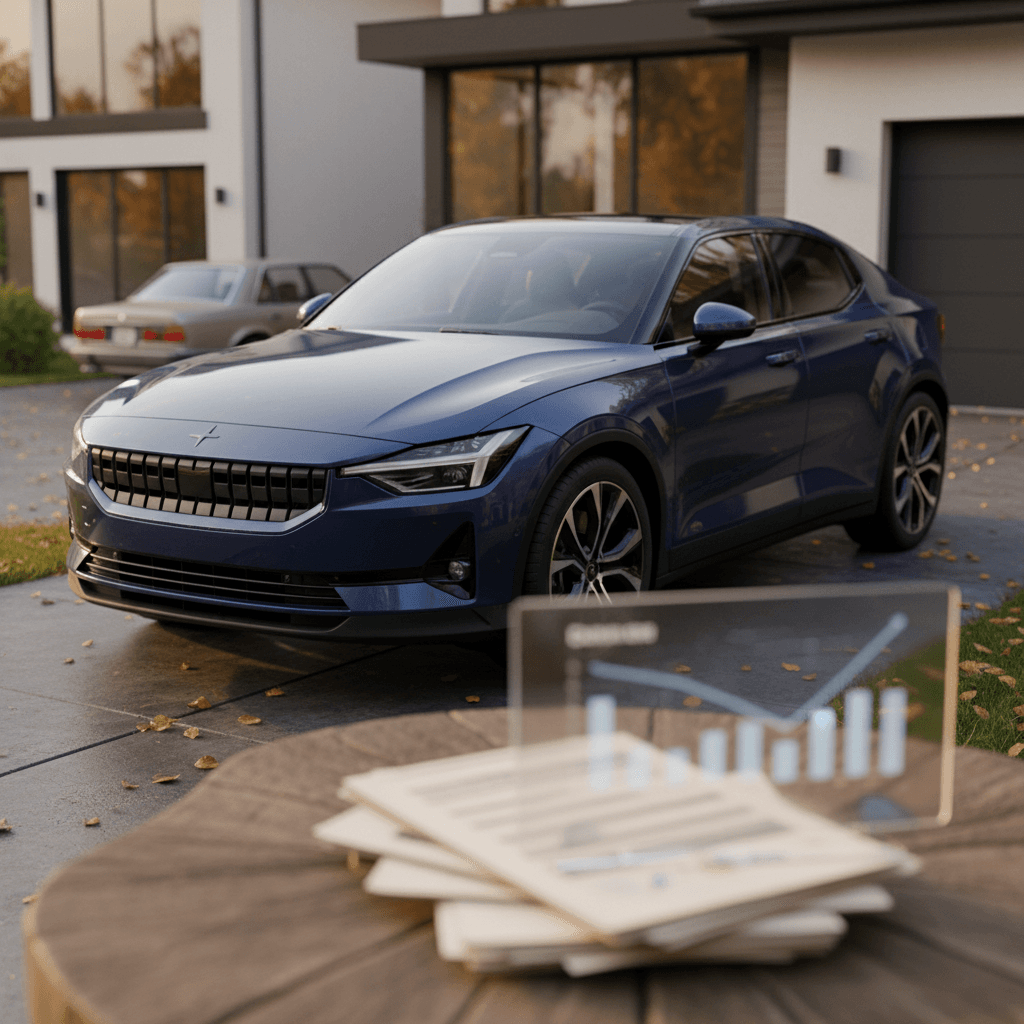
If you’re eyeing a Polestar 2, or already driving one, the question isn’t just “What does it cost?” It’s “How fast does the Polestar 2 depreciate, and what does that mean for my wallet over the next 3–5 years?” In today’s fast‑moving EV market, depreciation is the single biggest line item in your true cost of ownership.
Bottom line up front
How fast does Polestar 2 depreciate?
Put simply: the Polestar 2 depreciates faster than a Tesla Model 3, but broadly in line with other premium EV sedans from younger brands. Early data from used listings, auction reports, and residual‑value forecasts points to an average annual depreciation rate of around 18% in the first three to four years of ownership, then a gentler slide after that.
Translated into real money, that means a well‑optioned Polestar 2 with a new MSRP in the low‑to‑mid $60,000s can easily be selling in the mid‑$30,000s after just three years, with clean examples of early cars showing up in the mid‑$20,000s by year five.
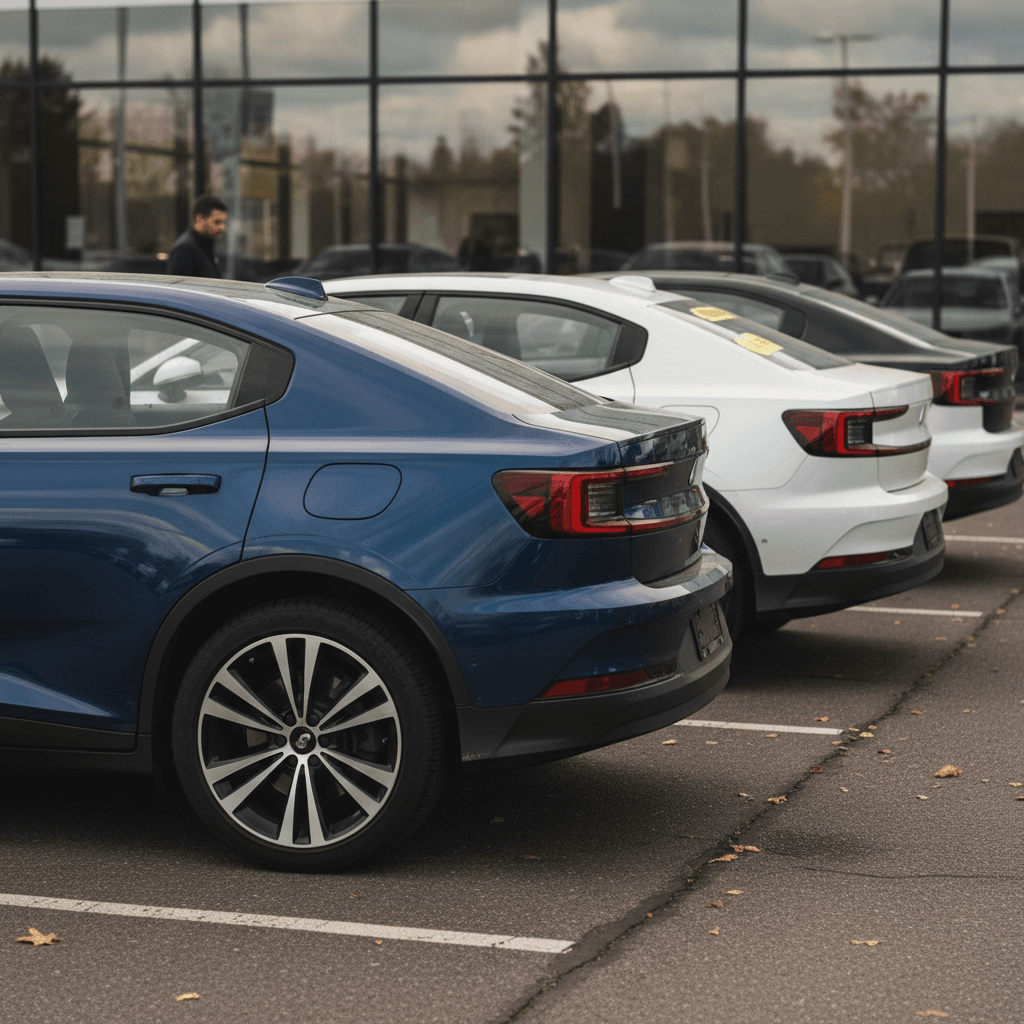
Polestar 2 depreciation snapshot (U.S., early 2026)
Polestar 2 depreciation at a glance
Because Polestar is still building brand recognition and resale history in the U.S., you won’t see perfectly tidy curves yet. But if you average real‑world asking prices and trade values across trims, here’s the pattern most owners and shoppers are seeing.
Approximate Polestar 2 value vs. original MSRP
These are directional U.S. market averages assuming typical mileage (10,000–12,000 miles per year), clean history, and no major accidents.
| Age of vehicle | Typical remaining value vs. original MSRP | What that looks like in dollars* |
|---|---|---|
| Brand‑new (0–1 year) | 80–88% | A $60,000 build might still retail around $48,000–$53,000. |
| 3 years old | 65–72% | That same car could be listing around $39,000–$43,000. |
| 5 years old | 45–55% | Expect retail asking prices closer to $27,000–$33,000. |
| 7+ years old | 35–45% | Values flatten; well‑kept cars in the low‑to‑mid $20,000s. |
Actual pricing depends heavily on trim, options, local demand, and condition, but this table captures the broad pattern owners are experiencing.
A note about percentages
Year‑by‑year Polestar 2 depreciation
If you’re working out whether to buy new, buy used, or keep your current car another year, it helps to think in milestones rather than a smooth line. Here’s a more practical, “what happens when” look at Polestar 2 depreciation.
- Years 0–1: Biggest single‑year hit happens the moment the car is titled. Expect roughly a 10–15% drop from MSRP even with low miles, largely because factory incentives and discounted leases effectively reset the real‑world “new” price.
- Years 1–3: This is the steepest part of the curve, especially for early 2021–2023 cars that were priced higher than today’s refreshed models. Combined, most owners see 25–30% gone by year three.
- Years 3–5: Depreciation slows a bit, but this is where tech changes (longer range, updated interiors, newer rivals) start to bite. By year five, 45–55% of MSRP is typically gone.
- Years 5–8: The curve flattens as value depends more on condition, mileage, and battery health than on model‑year bragging rights. A well‑kept, lower‑mile Polestar 2 can hold up surprisingly well here compared with rougher examples.
Why 3–5 years is the “sweet spot” for buyers
How Polestar 2 depreciation compares to Tesla and other EVs
Tesla Model 3 vs. Polestar 2
The Model 3 still sets the pace on resale value among compact luxury EV sedans. High demand, deep brand awareness, and a massive Supercharger network help it retain a larger share of its MSRP than the Polestar 2 after 3–5 years.
- Model 3s commonly keep 55–65% of value at 5 years.
- Polestar 2 more often lands in the 45–55% range.
That gap is exactly why used Polestar 2s can look like such strong deals next to same‑year, similar‑mileage Teslas.
Other premium EVs
Compared with other non‑Tesla premium EVs (think Mercedes EQE, BMW i4, Genesis Electrified G70), the Polestar 2 is roughly in the middle of the pack on depreciation.
- Not as strong as long‑established luxury brands with loyal followings.
- Not as punishing as some niche or discontinued EVs that struggle to find second owners.
As Polestar’s U.S. footprint grows and more buyers learn the name, resale values are likely to stabilize and slowly improve.
The upside for used buyers
What drives Polestar 2 depreciation?
Depreciation isn’t just one number; it’s the sum of a dozen smaller stories. With the Polestar 2, four themes dominate: brand maturity, EV tech turnover, incentives, and the fundamentals of the actual car you own.
Key factors that move Polestar 2 values up or down
Some you can control, some you can’t, but you should understand all of them.
Brand awareness
Polestar is still new to many U.S. shoppers. Lower brand recognition compared with Tesla or BMW means fewer buyers hunting specifically for a Polestar 2, which tends to soften resale values, at least for now.
Battery & range
Long‑range dual‑motor cars and newer packs aged gently tend to hold value better. Shoppers will pay more for healthy batteries and 200+ miles of realistic range, especially in colder climates.
Incentives & pricing swings
Factory incentives, lease‑only tax credits, and big discounts on new stock effectively reset what “new” is worth. When new prices fall, used prices follow, even if nothing changed about your car.
Software & feature updates
Over‑the‑air updates help, but meaningful range or interior refreshes make early cars feel older on paper. That’s one reason 2021–2022 cars took a bigger hit once newer configurations arrived.
Mileage & use pattern
Polestar 2 shoppers are sensitive to mileage. All else equal, a 25,000‑mile car will sell faster and closer to asking than a 60,000‑mile twin.
Condition & history
Clean Carfax, documented service, original wheels, no aftermarket hacking of the wiring harness, these are the unglamorous details that separate top‑dollar cars from fire‑sale listings.
Depreciation red flags
Buying a used Polestar 2: smart price bands
If you’re a shopper, the real question is, “What does a *good* deal on a used Polestar 2 look like?” Below are rough U.S. market bands as of early 2026. Your local listings may skew a bit higher or lower, but this gives you a realistic starting point.
Typical used Polestar 2 price ranges (early 2026)
Approximate retail asking prices from dealers and reputable online marketplaces in the U.S., assuming clean history and standard equipment.
| Model year | Mileage range | Typical asking range | What you’re usually getting |
|---|---|---|---|
| 2024 | < 15,000 miles | $38,000–$45,000 | Lightly used refreshed cars, often still under full factory warranty. |
| 2022–2023 | 20,000–40,000 miles | $30,000–$38,000 | Sweet‑spot cars with modern range, plenty of warranty, and steep first‑owner depreciation already baked in. |
| 2021 | 30,000–60,000 miles | $25,000–$32,000 | Early cars; best value if battery health checks out and options match your needs. |
| Older imports / high‑miles | 60,000+ miles | $22,000–$27,000 | Riskier plays where condition and history matter more than model year. Great deals exist, but so do money pits. |
Exact numbers vary by region and spec. Performance Pack, Pilot/Plus packages, and rare colors can push prices to the high side of each band.
Used Polestar 2 buying checklist
1. Focus on 3–5‑year‑old cars
This is where depreciation has done the hardest work for you. You’ll often save $15,000–$25,000 versus the original MSRP while still getting current‑feeling tech.
2. Prioritize battery health verification
Ask for a <strong>battery health report</strong> or range assessment, not just a dashboard screenshot. At Recharged, every EV gets a Recharged Score Report with verified pack health so you know what you’re buying.
3. Check option packages carefully
Pilot, Plus, and Performance packs change the driving and ownership experience, and the value. Don’t overpay for a lightly optioned car just because the color is pretty.
4. Compare against new incentives
If factory incentives have pushed new Polestar 2 prices down, a lightly used car should still be meaningfully cheaper. If it isn’t, renegotiate or walk away.
5. Inspect for urban wear
Curb rash, door dings, chipped windshields, and worn tires are common on city‑driven Polestars. They’re fixable, but they’re also leverage when you’re negotiating price.
6. Consider certified used specialists
Buying through an EV‑focused retailer like <strong>Recharged</strong> can mean battery diagnostics, transparent pricing, and nationwide delivery baked into the deal.
Selling or trading in your Polestar 2
If you already own a Polestar 2, the depreciation story looks a little different. Your goal isn’t to beat the market; it’s to land on the right exit ramp, trade‑in, instant offer, consignment, or private sale, at the right time.
Trade‑in or instant offer
If you value convenience and speed, a trade‑in or instant‑offer sale is tough to beat. You won’t get every last dollar, but you also avoid detail bills, listing fees, tire‑kickers, and financing fall‑through.
At Recharged, you can submit your Polestar 2 details online for an instant offer or explore consignment if you’d like to chase a higher number with professional help.
Consignment or private sale
If you’re willing to wait and do a bit more work, you can sometimes net thousands more than a basic trade‑in by selling on consignment or directly to another driver.
- Best when your car is clean, well‑optioned, and low‑mile.
- Presentation matters: photos, detail work, and a recent service record all help.
- Battery documentation is a must; buyers are savvier every year.
Timing your exit
How to slow down depreciation on a Polestar 2
You can’t change the overall market, but you can absolutely control where your particular car lands within it. Two Polestar 2s of the same year can be worth dramatically different amounts depending on how they’ve been treated.
Practical ways to protect your Polestar 2’s value
Little habits now can add up to thousands of dollars later.
Protect the battery
- Avoid living at 100% charge; keep daily use in the 20–80% window when possible.
- Limit frequent DC fast‑charging if you primarily drive short city trips.
- Follow Polestar’s recommended service intervals and software updates.
Keep the car looking sharp
- Fix curb rash on those big wheels, buyers notice.
- Address chips and scratches before they turn into clear‑coat horror stories.
- Consider paint‑protection film on high‑impact areas if you drive lots of highway miles.
Document everything
- Save invoices for tire changes, software updates, and repairs.
- Keep charging equipment, manuals, and both keys together.
- A tidy folder (or digital record) can justify a top‑of‑market asking price.
Think about where you rack up miles
- High‑mile highway commuters should expect faster depreciation; that’s reality.
- If you’re close to replacement, consider keeping miles down in the final year.
- Shorter, mixed‑use driving is generally easier on both the battery and cosmetics.
How Recharged evaluates your Polestar 2
Is Polestar 2 depreciation a dealbreaker?
If you’re hunting for the single strongest‑resale EV on the market, the Polestar 2 isn’t it, that crown still belongs to a handful of high‑demand Teslas and certain luxury brands. But if you’re weighing what you get for the money, especially on the used market, the Polestar 2’s faster early depreciation can actually be your friend.
For first owners, the key is to buy wisely, maintain the car carefully, and pick your exit strategy before big maintenance or mileage milestones. For second owners, a 3–5‑year‑old Polestar 2 with documented battery health can deliver near‑new performance, safety, and design for the price of a nicely trimmed gas sedan.
If you’re ready to run the numbers on a specific car, or you want to see what your current Polestar 2 is really worth, Recharged can help with transparent battery health reports, fair market pricing, financing, and trade‑in or consignment options, all handled online with nationwide delivery.