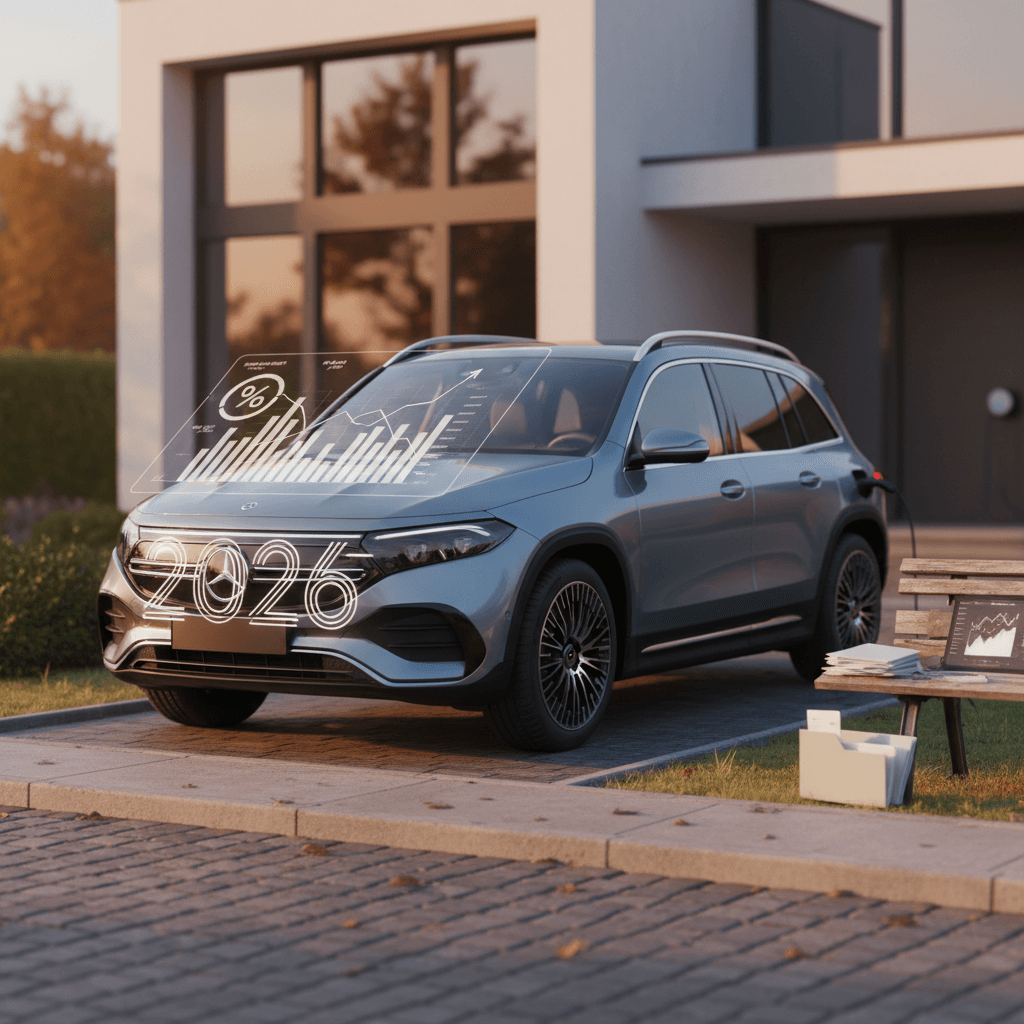
If you’re eyeing a Mercedes EQB, especially a used one, you’re probably wondering what a realistic Mercedes EQB insurance cost in 2026 looks like. The answer is: it depends a lot on you, where you live, and how you drive, but we can narrow the range and show you what actually drives those numbers up or down.
Quick EQB insurance snapshot for 2026
Overview: What does Mercedes EQB insurance cost in 2026?
Let’s start with a ballpark. The Mercedes EQB is a compact luxury electric SUV, so its premiums tend to sit above a typical compact gas SUV but often below high‑performance EVs.
Typical 2026 Mercedes EQB insurance ranges (U.S.)
Those ranges assume a mainstream full‑coverage policy on a relatively new EQB. Your own quote may fall outside them, especially if you’re a new driver, have recent claims, or live in a state with very high insurance costs, but they’re a useful reference point while you’re shopping.
Don’t anchor on a single number
Why EVs, and the EQB, can cost more (or less) to insure
The EQB sits at the crossroads of three things insurers care about: it’s a luxury vehicle, it’s an EV, and it’s a compact family SUV. Each of those pulls your rate in a different direction.
What helps and hurts EQB insurance costs
Understanding the tradeoffs behind your premium
Why EVs can cost more to insure
- Expensive parts: High‑voltage batteries, power electronics, and aluminum bodywork cost more to repair or replace.
- Specialized repair shops: Fewer collision shops are certified for EVs, which can increase labor rates and repair times.
- Total loss risk: On severe damage, insurers sometimes total an EV instead of repairing the battery pack.
Why the EQB can also be cheaper
- Strong safety tech: Features like automatic emergency braking, lane‑keeping assist, and blind‑spot monitoring can reduce crash frequency.
- Calmer driving profile: The EQB isn’t a high‑performance rocket ship, so it tends to attract more pragmatic drivers.
- Usage‑based discounts: Many insurers now reward EV drivers who do lots of predictable, low‑mileage commuting.
Look for EV‑friendly insurers
Key factors that shape your Mercedes EQB insurance cost
Every insurer has its own secret sauce, but the ingredients are similar. Here’s how they usually look at an EQB in 2026, and where you can influence the outcome.
Major factors that change your EQB premium
Use this as a checklist when you compare quotes.
| Factor | How it affects EQB insurance | What you can do |
|---|---|---|
| Driving record | Tickets, at‑fault crashes, and DUIs move you from preferred to high‑risk pricing. | Drive defensively, contest incorrect tickets, and ask how long old violations will affect your rate. |
| Location | Dense, high‑claim zip codes or areas with high theft and repair costs mean higher premiums. | Compare quotes using your exact garaging address, not just your city. |
| Annual mileage | The more you drive, the more chances you have to file a claim. | Consider low‑mileage or usage‑based policies if you mostly commute or work from home. |
| Credit‑based insurance score (where allowed) | Lower scores often mean higher premiums, especially for luxury models like the EQB. | Set up automatic bill pay, reduce credit utilization, and avoid late payments to improve your score over time. |
| Vehicle configuration | Higher‑trim EQBs with more options and larger wheels usually cost more to repair. | If you’re shopping used, remember that a modestly optioned EQB can be cheaper to insure than a fully loaded one. |
| Coverage & deductibles | Full coverage with low deductibles costs more than higher deductibles or liability‑only. | Tune your comprehensive and collision deductibles based on how much risk you’re comfortable absorbing. |
You can’t control everything, but knowing which levers you can pull makes it easier to bend costs in your favor.
Example 1: "Ideal" EQB profile
A 45‑year‑old driver with a clean record, good credit, and a short commute in a suburban zip code is basically every insurer’s dream for a family EV. On a relatively new EQB, it’s reasonable for that driver to land in the $1,500–$1,900 per year range for solid full coverage.
Example 2: Higher‑risk EQB profile
A 24‑year‑old driver with one at‑fault accident in the last three years, living in a dense city and financing a new EQB, could easily see quotes north of $2,400 per year, and sometimes much higher. In that scenario, shopping quotes and choosing higher deductibles becomes crucial.
Don’t forget lender requirements
New vs. used Mercedes EQB: How insurance costs differ
Shopping new and shopping used don’t just change your purchase price; they also change the insurance conversation. Insurers see a new EQB and a five‑year‑old EQB very differently.
How age changes EQB insurance pricing
Same model, different risk profile over time
Newer Mercedes EQB (0–3 years old)
- Higher vehicle value: More expensive to repair or replace, so comprehensive and collision portions of your premium are higher.
- More likely financed or leased: Lenders require full coverage, sometimes with low deductible caps.
- Lower mechanical risk: Newer vehicles tend to have fewer breakdowns, which can help with reliability‑related claims.
Older Mercedes EQB (4–8+ years old)
- Lower actual cash value: As the EQB depreciates, there’s less to insure, so full‑coverage portions generally decline.
- Liability‑only becomes viable: Some owners of older, lower‑value EQBs choose to drop comprehensive and collision entirely.
- Battery health matters: A healthy battery and clear history (like what you see in a Recharged Score) can make an older EQB more attractive to insure and own long‑term.
Why used EQBs can be an insurance sweet spot
Practical ways to lower your Mercedes EQB insurance bill
You can’t change the fact that the EQB is a luxury EV, but you can absolutely change how insurers see you as a risk. Think of it as tuning your driving and ownership habits the way you’d tune a suspension, small adjustments add up.
7 steps to shrink your 2026 EQB premium
1. Shop more than one carrier
Different insurers price EVs, especially German luxury EVs, very differently. Get at least three quotes, using identical coverage limits and deductibles, before you decide the EQB is “too expensive” to insure.
2. Adjust deductibles thoughtfully
Raising your comprehensive and collision deductibles from, say, $500 to $1,000 can cut your premium. Just make sure you have that extra cash available if you have to file a claim.
3. Ask about EV and telematics discounts
Many insurers now offer lower rates for EVs, vehicles with active safety tech, or drivers who opt into an app‑based driving monitor. If you’re a smooth, low‑mileage driver, these programs can meaningfully lower your EQB costs.
4. Bundle home and auto
If you own a home or condo, bundling your EQB policy with your homeowners or renters insurance often unlocks discounts on both. Even a 5–10% bundling discount adds up quickly on a luxury EV.
5. Revisit coverage as the EQB ages
If you buy a used EQB, its value may already be much lower than when it was new. Every couple of years, reassess whether full coverage still makes sense, or whether raising deductibles or dropping certain coverages is appropriate.
6. Keep your record clean for the long haul
It’s not glamorous advice, but it’s the most powerful: a few years of ticket‑free, claim‑free driving can move you into insurers’ best pricing tiers. That’s where you want to be with an EQB.
7. Compare quotes before and after you buy
If you’re browsing used EQBs online (for example, on <strong>Recharged</strong>), grab two or three VINs and run insurance quotes before you commit. Trim level, options, and even wheel size can change the number you see.
Use pay‑in‑full and autopay discounts
How coverage choices change your EQB premium
When you get quotes for your Mercedes EQB, you’ll see a menu full of coverage types. They’re not all created equal when it comes to cost. The big swings usually come from liability limits and whether you carry comprehensive and collision.
- Liability coverage (bodily injury and property damage) pays for other people’s injuries and vehicles if you’re at fault. Higher limits cost more but protect your assets better, especially important with a luxury EV in the driveway.
- Comprehensive covers non‑collision events like theft, vandalism, severe weather, and hitting an animal. It’s also the coverage that can kick in for many battery‑related losses.
- Collision covers damage to your EQB in an at‑fault crash or single‑vehicle incident (like clipping a pole). On an expensive EV, collision is a big slice of your bill.
- Extras like roadside assistance, rental reimbursement, and gap coverage add modestly to your cost but can be very useful, especially if the EQB is your only vehicle.
Full coverage on a newer EQB
If you’re buying or financing a 2024–2026 EQB, full coverage with robust liability limits (for example, 100/300/50 or higher) is the norm. Expect this to account for the higher end of the monthly ranges we discussed earlier.
Liability‑only on an older EQB
On an older, fully paid‑off EQB with a lower market value, some owners, especially high‑mileage commuters, choose to drop comprehensive and collision. That can move you closer to the $90–$120 per month liability‑only range, depending on your profile and state requirements.
Be careful dropping full coverage
Where insurance fits into EQB total ownership cost
Insurance is just one slice of EQB ownership, but it’s a recurring slice you’ll feel every month or year. The good news: EVs like the EQB often hit you less on fuel and routine maintenance, which can help balance a higher insurance bill.
EQB cost buckets to budget for
Insurance is only one line item in the spreadsheet
Energy vs. fuel
Maintenance & repairs
Insurance & taxes
If you’re comparing a used EQB against another EV, or against a gas SUV, run the numbers over three to five years. Sometimes the EQB’s higher insurance is more than offset by fuel savings and lower maintenance, especially if you charge mostly at home.
How Recharged can help when you insure a used EQB
If you’re leaning toward a used Mercedes EQB, the car’s history and its battery health matter just as much as the number on your insurance quote. That’s where a transparent marketplace built around EVs can save you time and guesswork.
Why a Recharged EQB is easier to insure with confidence
Clarity for you, clarity for your insurer
Recharged Score battery & history report
Expert, EV‑specific support
Ready to find your next EV?
Browse VehiclesBundle your decisions for a smoother start
Mercedes EQB insurance cost 2026: FAQ
Frequently asked questions about insuring a Mercedes EQB in 2026
Bottom line on 2026 EQB insurance costs
Insuring a Mercedes EQB in 2026 won’t be as cheap as covering a basic gas crossover, but it also doesn’t have to be a budget‑breaker. For many drivers, full‑coverage premiums fall into a range that’s manageable once you factor in lower fuel and maintenance costs, especially if you take advantage of EV‑friendly discounts and keep your record clean.
If you’re shopping used, a well‑documented EQB with strong battery health can be a sweet spot: you get the tech and safety insurers like at a lower vehicle value, which often means more reasonable premiums. Browsing used EQBs on Recharged gives you that clarity up front with a Recharged Score Report on every vehicle, plus help with financing, trade‑in, and delivery, so you can line up the right car and the right insurance before you ever head to the driveway.