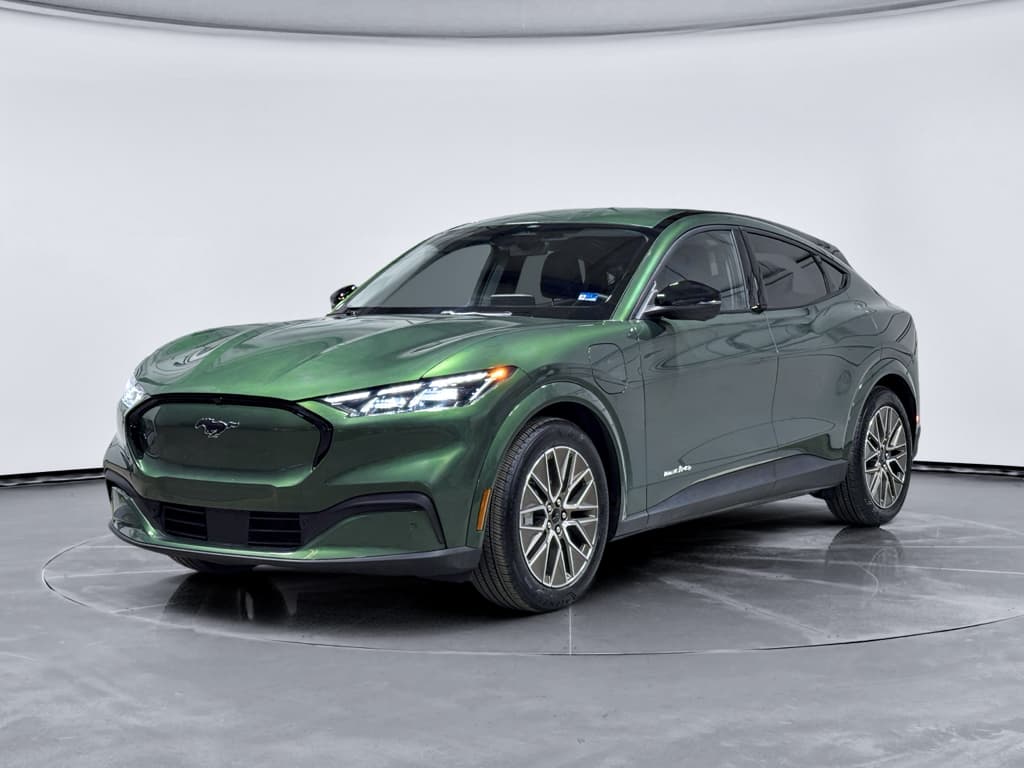
If you’re considering a Ford Mustang Mach‑E, or just brought one home, you’re probably asking a simple question with a lot of different answers: how long does it take to charge a Mustang Mach‑E? The truth is that it depends heavily on the charger you’re using, your battery size, and how low you let the battery get. This guide breaks down real‑world charge times so you can plan both daily driving and road trips with confidence.
Quick answer
Mustang Mach‑E battery and charging basics
Before you worry about charge time, it helps to know what you’re charging. The Ford Mustang Mach‑E has come with two main battery sizes across model years. Earlier cars used roughly 68 kWh usable (standard‑range) and 88 kWh usable (extended‑range) packs. Newer model years quote similar usable capacities even if the gross pack size has changed. Most trims support around 10.5 kW on Level 2 AC charging and up to about 115 kW (standard‑range) or 150 kW (extended‑range) on DC fast charging under ideal conditions.
Ford Mustang Mach‑E charging fast facts
Those numbers explain why there is no single answer to “how long to charge a Ford Mustang Mach‑E.” The bigger the battery and the slower the charger, the longer it takes. What matters day to day is matching the charger to how you actually drive.
Level 1 charging: Standard 120V outlet times
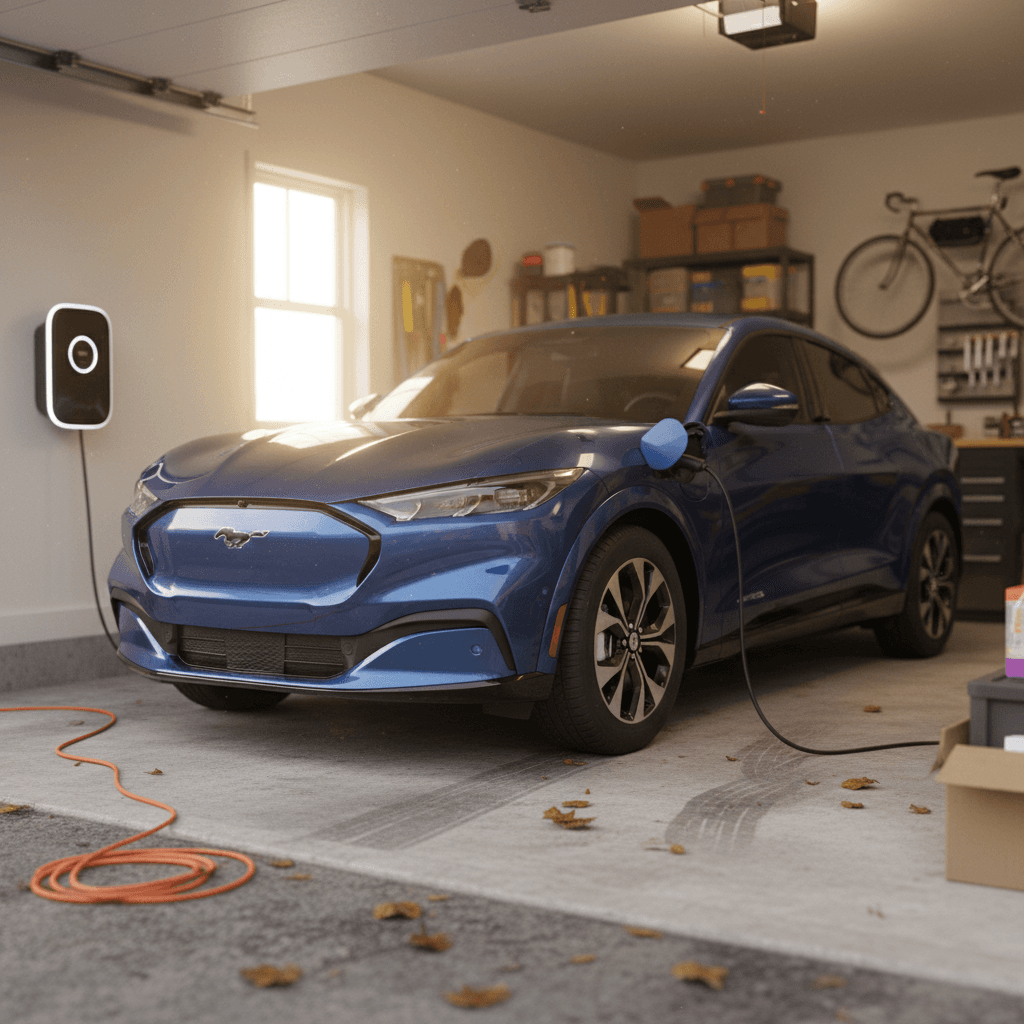
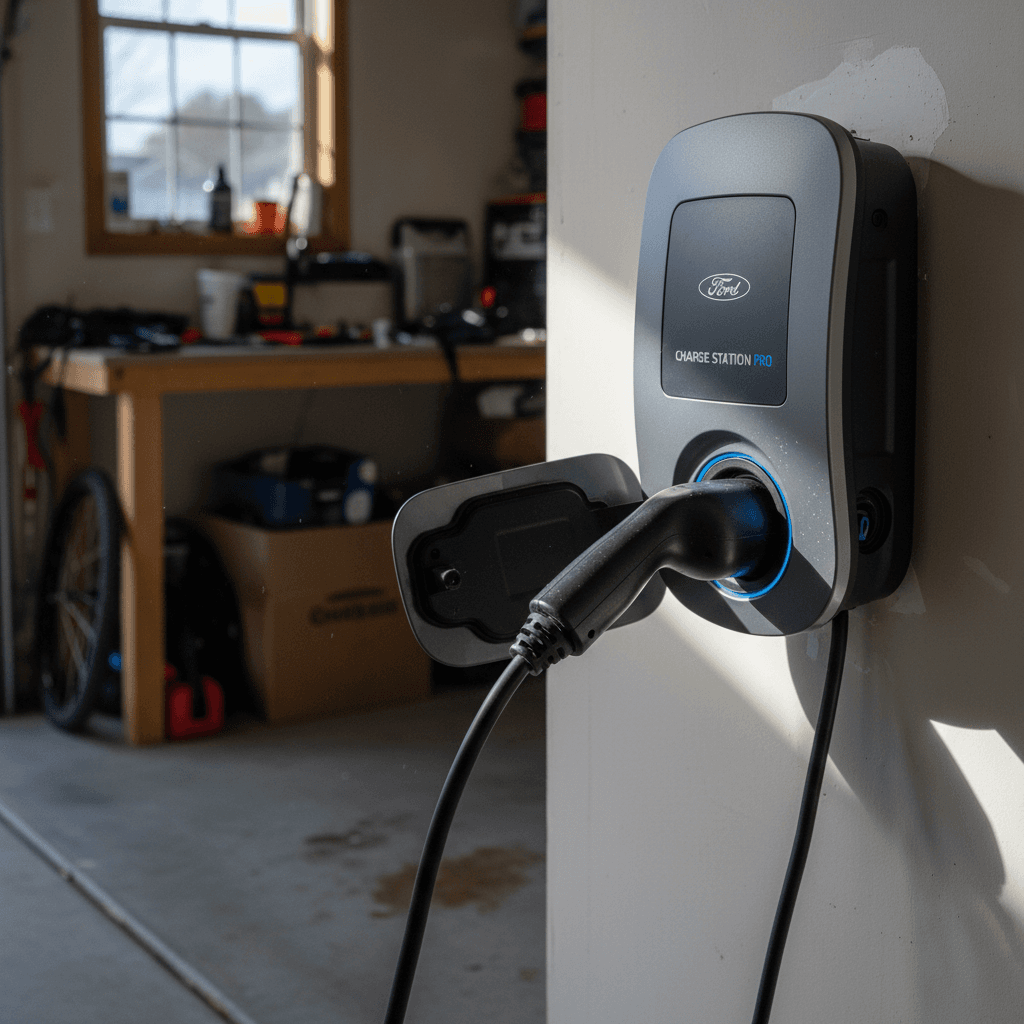
Level 1 charging uses a regular 120‑volt household outlet, typically at 12 amps. It’s slow but useful if you can’t install a 240V circuit yet or you’re staying somewhere without a dedicated EV charger.
Approximate Mustang Mach‑E Level 1 charge times
Estimated times from empty to full (0–100%) on a 120V outlet. Real‑world results vary with temperature, losses, and exact trim.
| Battery | Approx. power | 0–100% time | Miles of range added per hour* |
|---|---|---|---|
| Standard‑range (~68 kWh usable) | ~1.3 kW | ~50–55 hours | ~3–4 mi/hr |
| Extended‑range (~88 kWh usable) | ~1.3 kW | ~65–70 hours | ~3–4 mi/hr |
Use Level 1 as a backup or for light daily driving, not heavy highway use.
Level 1 is a temporary solution
Level 2 home and public charging times
Level 2 chargers use 240 volts, either from a hard‑wired wall unit or a 240V outlet like a NEMA 14‑50. The Mustang Mach‑E’s on‑board charger can draw around 10.5 kW when the circuit supports it. That’s the sweet spot for most home and workplace setups and is what makes overnight charging practical.
Common Level 2 setups for a Mustang Mach‑E
How charger power changes your wait time at home or work
32A (7.7 kW) home charger
Often used on a 40A circuit.
- Good for renters or smaller panels
- Works well if you drive modest miles
- Longer sessions, but still overnight‑friendly
40A–48A (9.6–11.5 kW) wallbox
Typical for dedicated home EVSEs.
- Matches Mach‑E’s 10.5 kW capability
- Ideal for larger batteries
- Comfortably refills overnight
Public Level 2 (6–11 kW)
Found at parking garages, hotels, and workplaces.
- Perfect for topping up while you’re parked
- Power level varies by site
- Prices range from free to per‑kWh or per‑hour
Approximate Mustang Mach‑E Level 2 charge times
Estimated times from about 10% to 80% on Level 2 AC charging. These are practical overnight "empty to mostly full" scenarios.
| Battery & charger | Approx. power | 10–80% time | Miles of range added per hour* |
|---|---|---|---|
| Standard‑range on 32A (7.7 kW) | ~7.7 kW | ~6–7 hours | ~22–25 mi/hr |
| Standard‑range on 48A (10.5 kW) | ~10.5 kW | ~4.5–5.5 hours | ~30–35 mi/hr |
| Extended‑range on 32A (7.7 kW) | ~7.7 kW | ~7–8 hours | ~22–25 mi/hr |
| Extended‑range on 48A (10.5 kW) | ~10.5 kW | ~5.5–7 hours | ~30–35 mi/hr |
Most owners focus on 10–80% for daily use; the last 20% always takes longer.
Overnight is your friend
DC fast charging: 10–80% times on the road
DC fast chargers (sometimes called Level 3) skip the on‑board AC charger and feed high‑power DC straight into the battery. That’s what you’ll use on road trips. The Mach‑E can accept up to roughly 115 kW (standard‑range) or 150 kW (extended‑range) for short bursts in the lower part of the battery, then gradually taper to protect longevity.
Typical Mustang Mach‑E DC fast‑charging times
Real‑world style estimates for a healthy battery on a capable 150 kW+ DC fast charger, in good weather, starting with a warm pack.
| Battery | DC peak power | Typical 10–80% time | Best‑case miles added (10–80%) |
|---|---|---|---|
| Standard‑range (~68 kWh usable) | Up to ~115 kW | ~30–35 minutes | ~150–190 miles |
| Extended‑range (~88 kWh usable) | Up to ~150 kW | ~32–40 minutes | ~190–230 miles |
Expect longer times in cold weather, on underpowered stations, or if another car is sharing the charger.
What about 0–100% on DC?
5 factors that change your real‑world charge time
Key variables that speed up or slow down Mach‑E charging
1. Charger power and sharing
A “150 kW” station doesn’t guarantee 150 kW to your Mach‑E. If the site is power‑limited or you’re sharing with another car, you might see 60–100 kW instead, which can easily add 10–15 minutes to a 10–80% session.
2. Battery state of charge (SoC)
Your Mach‑E charges fastest when the battery is low, then slows as it fills. A 20–60% window is much quicker than trying to push from 80% to 100%, especially on DC fast charging.
3. Pack temperature and weather
Cold batteries charge more slowly. In winter, even if the screen says a 150 kW charger is available, you may see much lower power until the pack warms up. Preconditioning the battery before a fast‑charge stop can help.
4. AC circuit limits at home
Your Level 2 charge rate is capped by the <strong>weakest link</strong>: the EVSE, the circuit breaker, wiring, and the car’s on‑board charger. If your panel only supports a 30A circuit, you’ll see slower speeds than a 50A or 60A install.
5. Battery health and age
As a Mach‑E ages, usable capacity and charging behavior can change slightly. A well‑cared‑for pack should still charge efficiently, but a detailed <strong>battery health report</strong> on a used car helps you set realistic expectations.
How long should you actually plan to stop?
Numbers are useful, but planning real drives is about patterns, not perfection. On road trips, many Mach‑E owners settle into a rhythm of roughly 2.5–3 hours of driving followed by a 25–40 minute fast‑charging stop. That window lines up nicely with bathroom breaks and meals, and it keeps you in the fastest part of the car’s charging curve.
Daily driving pattern
- Plug in at home most nights on Level 2
- Set a charge limit (often 80–90%) for battery longevity
- Wake up to a consistent range, rarely below 20–30%
- Only see Level 1 if you’re away from your usual charger
Road‑trip pattern
- Arrive at DC fast chargers around 10–25% when possible
- Charge to 60–80% depending on the next leg
- Plan stops around meals and rest breaks
- Aim for 25–40 minute sessions instead of one huge 0–100% push
Use apps to time your stops
Charging a used Mustang Mach‑E: What to expect
If you’re shopping for a used Mustang Mach‑E, understanding charge time is just as important as looking at range and features. A three‑year‑old extended‑range Mach‑E that still fast‑charges efficiently to 80% in about 35 minutes is a very different ownership experience than one that’s noticeably slower or missing peak power because of battery or software issues.
Why battery health reports matter
Used Mustang Mach‑E charging checks
Questions to ask before you buy
Charging history
Ask whether the previous owner mainly used:
- Home Level 2 (ideal)
- Frequent DC fast charging
- Public Level 2 only
Heavy DC use can be fine, but patterns matter.
Current DC fast behavior
On a test drive, if possible:
- Start a DC fast‑charge session
- Watch how quickly power ramps up
- See how long it holds strong before tapering
Battery & software records
Check for:
- Completed software updates
- Any battery‑related service
- Open recalls or TSBs
This helps explain any odd charging behavior.
A transparent history and data‑backed battery report are especially valuable if you’re cross‑shopping multiple Mach‑E trims. A well‑cared‑for standard‑range car that still charges briskly may fit your lifestyle better than a neglected extended‑range pack that feels sluggish on fast chargers.
Ford Mustang Mach‑E charging time FAQ
Frequently asked questions about Mach‑E charging times
Bottom line: Planning around Mustang Mach‑E charging times
When you break it down, how long it takes to charge a Ford Mustang Mach‑E is less about one magic number and more about choosing the right charger for the way you drive. Level 1 works in a pinch, Level 2 at home makes daily life easy, and DC fast charging turns long trips into a series of manageable, 30‑to‑40‑minute breaks instead of all‑day waits.
If you’re comparing new and used Mach‑E models, pay attention not just to range and 0–60 times, but also to how quickly each one can refill in the real world. A clean battery health report and honest charging data, like the Recharged Score Report that comes with every EV on Recharged, can make the difference between an electric SUV that fits seamlessly into your life and one that constantly has you watching the clock at the charger.