If you’re looking at an Audi Q4 e-tron, new or used, the first practical question is simple: how long does it take to charge? The honest answer is that it depends where you plug in. Below, we’ll break down Audi Q4 e-tron charging times at home and on the road so you can see what a full charge really looks like in hours, not marketing gloss.
Key takeaway on Q4 e-tron charging
Audi Q4 e-tron charging time: the short answer
Typical Audi Q4 e-tron charging times (77 kWh usable pack)
Every recent U.S.-spec Audi Q4 e-tron uses a roughly 77 kWh usable battery. With that in mind, think of charging in three bands: slow but convenient Level 1, practical everyday Level 2, and road-trip-only DC fast charging. The rest of this guide shows how those options play out in your daily life, and which one you actually need.
Q4 e-tron battery & charging hardware explained
Before you can make sense of “how long to charge an Audi Q4 e-tron,” it helps to understand what you’re working with under the floorpan. In U.S. models, the Q4 typically carries an 82 kWh gross / ~77 kWh usable battery. That’s the energy tank you’re trying to refill.
- Onboard AC charger: up to 11 kW (Level 2) in most recent models, which is what limits how fast you can charge at home or on public Level 2 stations.
- DC fast-charge peak: earlier Q4 e-trons were around 125 kW; updated models can reach up to about 175 kW in ideal conditions, though average power over a session is lower.
- Connector types: in North America you’ll see a CCS (or emerging NACS) fast-charge port for DC and a J1772-style AC inlet for Level 1 and Level 2.
Think in kW, not just “percent”
Home charging: Level 1 vs Level 2 times
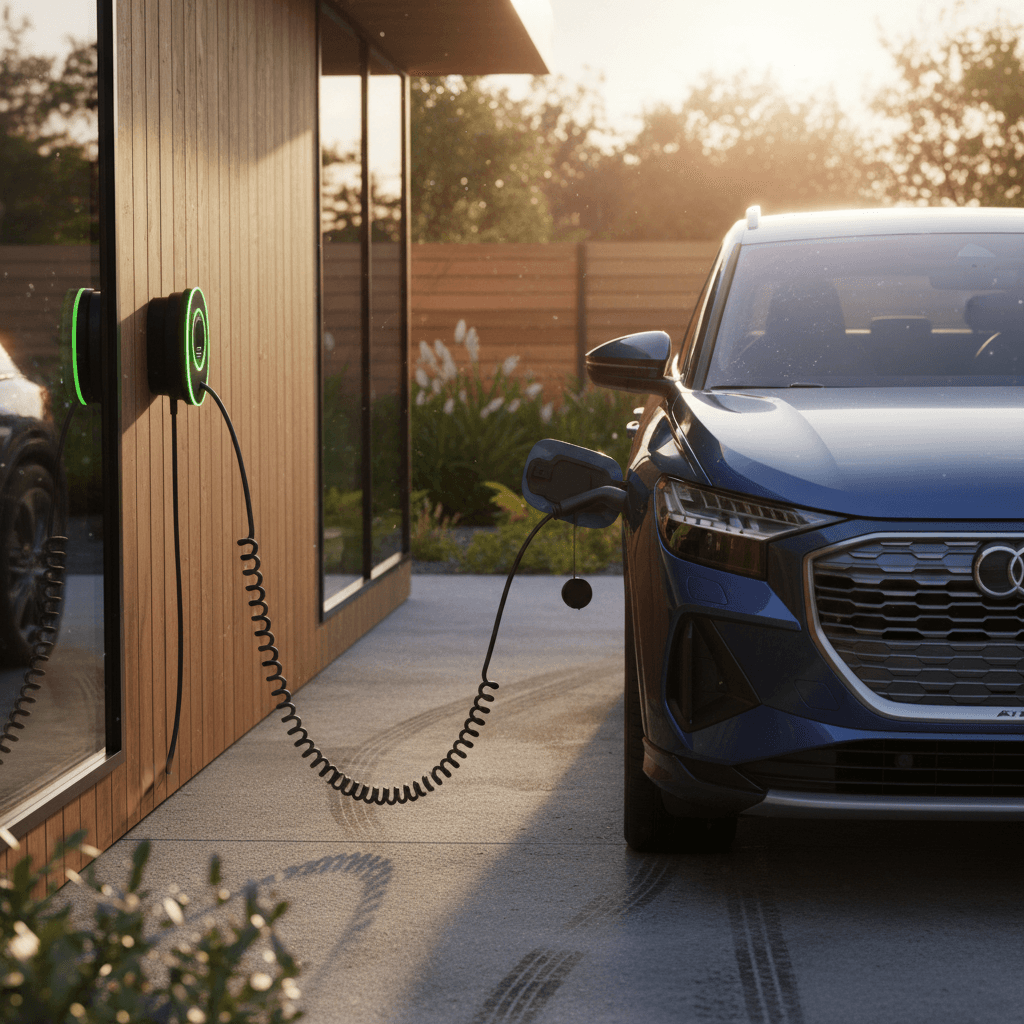
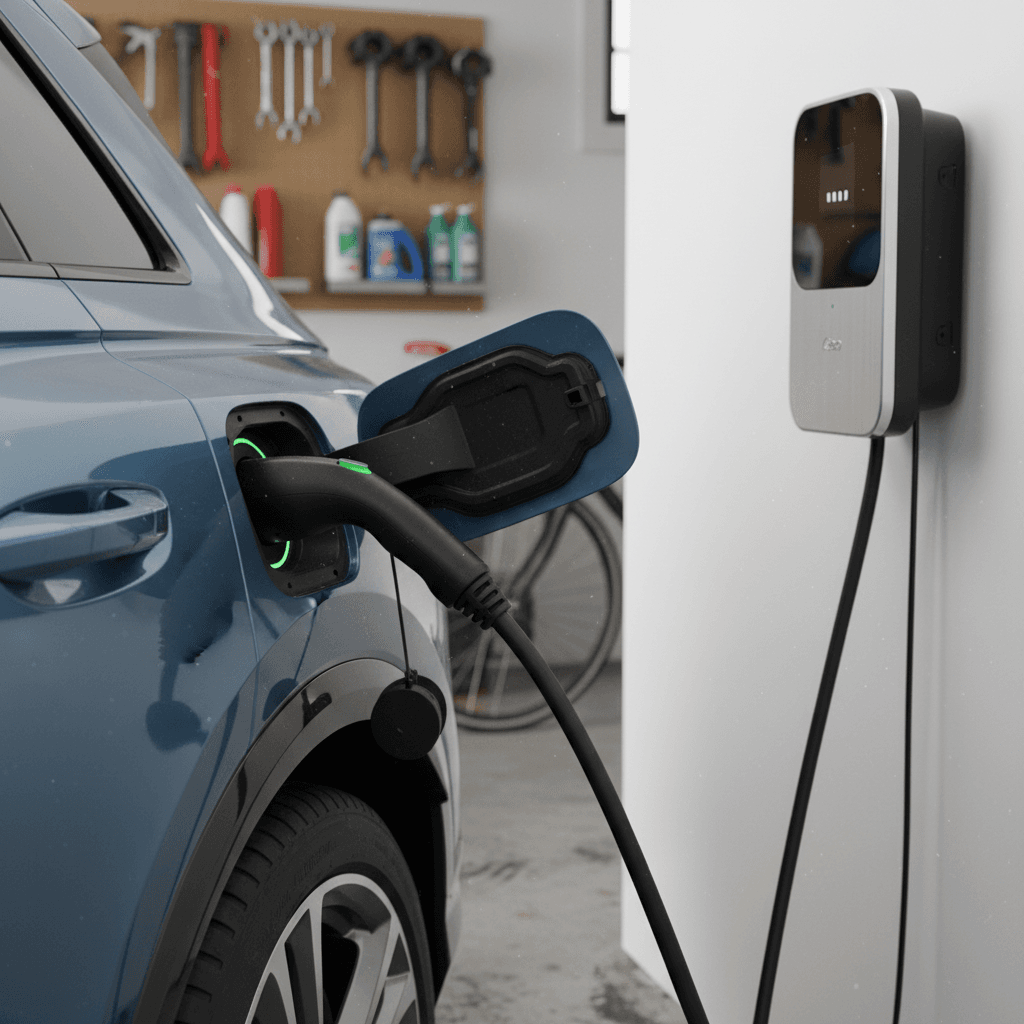
Home is where most EV charging happens, and it’s also where owners get the biggest shock, either at how slow a normal outlet is, or how wonderfully boring life becomes with a proper Level 2 charger. Here’s what Audi Q4 e-tron charging times look like in the real world at home.
Audi Q4 e-tron home charging options
How long it takes, how many miles you gain, and who each option is really for.
Level 1: Standard 120 V outlet
Power: ~1.2–1.4 kW (typical 12 A draw)
Range added: ~3–4 miles of range per hour
Time 10–80%: roughly 18–24 hours
Time 0–100%: 2+ days if you truly run it down
This is fine if you drive 20–30 miles a day, park all night, and you’re patient. For most Q4 e-tron owners, Level 1 is a backup plan, not a lifestyle.
Level 2: 240 V home charger
Power: 7.2–11 kW depending on circuit (30–48 A typical)
Range added: ~25–35 miles of range per hour
Time 10–80%: about 5–8 hours
Time 0–100%: roughly 7–11 hours from near empty
On a common 40 A / 9.6 kW setup, a Q4 that’s down around 10–20% will be back at 80% well before breakfast.
Don’t overspec the home charger
Approximate Audi Q4 e-tron home charging times
Assumes ~77 kWh usable battery and typical U.S. power levels. Real times vary with temperature, state of charge, and home electrical limits.
| Charging type | Approx. power at car | Miles of range added per hour | Time 10–80% | Time 20–80% | Time 0–100%* |
|---|---|---|---|---|---|
| Level 1 – 120 V, 12 A | ~1.4 kW | 3–4 mi/hr | 18–24 hrs | 14–18 hrs | 40–48 hrs |
| Level 2 – 240 V, 30 A | ~6.2 kW | 18–22 mi/hr | 9–11 hrs | 7–9 hrs | 12–14 hrs |
| Level 2 – 240 V, 40 A | ~9.6 kW | 25–30 mi/hr | 6–8 hrs | 5–7 hrs | 8–10 hrs |
| Level 2 – 240 V, 48 A | ~11 kW (onboard limit) | 28–35 mi/hr | 5–7 hrs | 4–6 hrs | 7–9 hrs |
Use this as a planning tool, not a promise. Your utility, wiring, and weather all have a vote.
About that 0–100% number
DC fast charging times on road trips
Out on the highway, the story flips. You’re not worried about babying your pack; you’re worried about making it to the next meeting, the next hotel, the next soccer tournament three states away. This is when DC fast charging matters.
Q4 e-tron DC fast charging in practice
What to expect when you plug into a high-power public charger.
Peak power
Depending on model year and software, recent Q4 e-trons can reach roughly 125–175 kW peak on a strong DC fast charger when the battery is warm and at a lower state of charge.
10–80% window
From about 10–80% state of charge, expect roughly 30–35 minutes under good conditions, longer in cold weather or on older/limited stations.
0–100% reality
Going from very low to 100% on DC can take an hour or more, because charging slows dramatically above ~80%. On road trips, it’s usually smarter to unplug at 60–80% and get moving.
Cold batteries charge slower
Approximate Audi Q4 e-tron DC fast-charging times
High-level planning numbers for an ~82 kWh gross / 77 kWh usable Q4 e-tron battery on a healthy high-power DC fast charger.
| State of charge change | Ideal conditions (warm battery, strong charger) | Typical real world | Cold weather or weak site |
|---|---|---|---|
| 10% → 50% | ~15–18 minutes | 20–25 minutes | 25–35 minutes |
| 10% → 80% | ~25–30 minutes | 30–40 minutes | 40–55 minutes |
| 20% → 80% | ~20–25 minutes | 25–35 minutes | 35–45 minutes |
| 10% → 100% | ~45–55 minutes | 50–70 minutes | +70 minutes (not recommended unless you must) |
Always check the car’s estimate on the screen, real chargers and sites vary a lot.
Real-world examples: how long charging really takes
Scenario 1: Typical commuter with home Level 2
You drive 40–50 miles a day, mostly city and suburban. You arrive home with 45% battery and want to be around 80% before tomorrow morning.
- Plug into a 40 A Level 2 (≈9.6 kW).
- You need roughly 27 kWh to go from 45% → 80% on a 77 kWh usable pack.
- 27 kWh ÷ 9.6 kW ≈ 3 hours of charging time.
In practice, you plug in at 7 p.m., the car quietly charges for a few hours, possibly on an off‑peak schedule, and you wake up to 80%. Minimal lifestyle disruption.
Scenario 2: Highway road trip with DC fast charging
Interstate run, 300 miles total. You start at 90%, drive 180 miles, and arrive at a DC fast charger with about 20% remaining.
- Plug into a 150–250 kW DC charger.
- Charge from 20% → 70%: about 20–30 minutes in average conditions.
- You’ve added ~120–140 miles of usable range; enough to finish the trip with buffer.
You’re out of the car long enough to hit the restroom, grab coffee, and scroll your phone. Not exactly the dystopian charging slog some people imagine.
What most Q4 owners actually do
What actually changes your Q4 e-tron’s charging time
The brochure numbers are clean; reality is messier. Several real-world factors change how long it takes to charge an Audi Q4 e-tron, sometimes dramatically.
Key factors that speed up or slow down charging
1. Charger power & circuit size
A 16 A portable Level 2 brick on a dryer outlet is not the same as a hardwired 48 A wallbox. The car can only draw what the circuit safely provides, and the Q4’s onboard AC charger tops out around 11 kW anyway.
2. Battery temperature
Lithium-ion batteries like it not-too-hot, not-too-cold. Extremely cold or very hot packs will charge more slowly, and the car may spend energy warming or cooling the pack before giving you peak speeds, especially on DC.
3. State of charge when you plug in
Fastest charging happens when the pack is more empty. Above roughly 60–70%, the car tapers power down to protect the battery, which is why 80–100% takes much longer than 20–40%.
4. Site and station limitations
That “350 kW” sign on the pedestal doesn’t guarantee 350 kW to you. Shared power cabinets, aging hardware, or site-level limits often mean your Q4 sees 80–150 kW max even on a high-spec unit.
5. Battery health and software
Over time, usable capacity shrinks a little and software updates may tweak charging curves. A well-maintained Q4 e-tron should still charge briskly years in, but no EV is frozen in time.
Use the car’s estimate as your north star
How to choose the right charging setup for your Q4 e-tron
Charging time is only a problem when you pick the wrong tool for your life. Here’s how to match an Audi Q4 e-tron charging setup to your driving habits, especially if you’re buying used and trying to budget realistically.
Match your Audi Q4 e-tron charging to your lifestyle
Three simple profiles that cover how most drivers actually live.
Short-distance city driver
Daily miles: 20–40
Home: Street or shared parking
Best setup: Mix of workplace Level 2 and opportunistic public charging.
You can limp along on Level 1 if needed, but a reliable Level 2 option, either at work or nearby public stations, keeps your Q4 stress-free.
Suburban commuter with driveway
Daily miles: 30–70
Home: Dedicated parking spot or garage
Best setup: 40 A Level 2 charger on a 50 A circuit.
This gets you back to 80% in 5–8 hours from low SOC. Set it to charge at off‑peak hours and forget about it.
Frequent road-tripper
Weekly pattern: Regular 150–300 mile days
Home: Any, but near DC corridors
Best setup: Strong home Level 2 plus familiarity with regional DC fast networks.
You’ll still spend most charging time at home, but knowing which 150–350 kW sites actually deliver good speeds is half the game.
Planning for off-peak rates
Charging time tips for used Audi Q4 e-tron shoppers
If you’re shopping the used market, and especially if you’re browsing Q4 e-trons on Recharged, charging time isn’t just a comfort issue; it’s a window into how the previous owner treated the car and how the battery has aged.
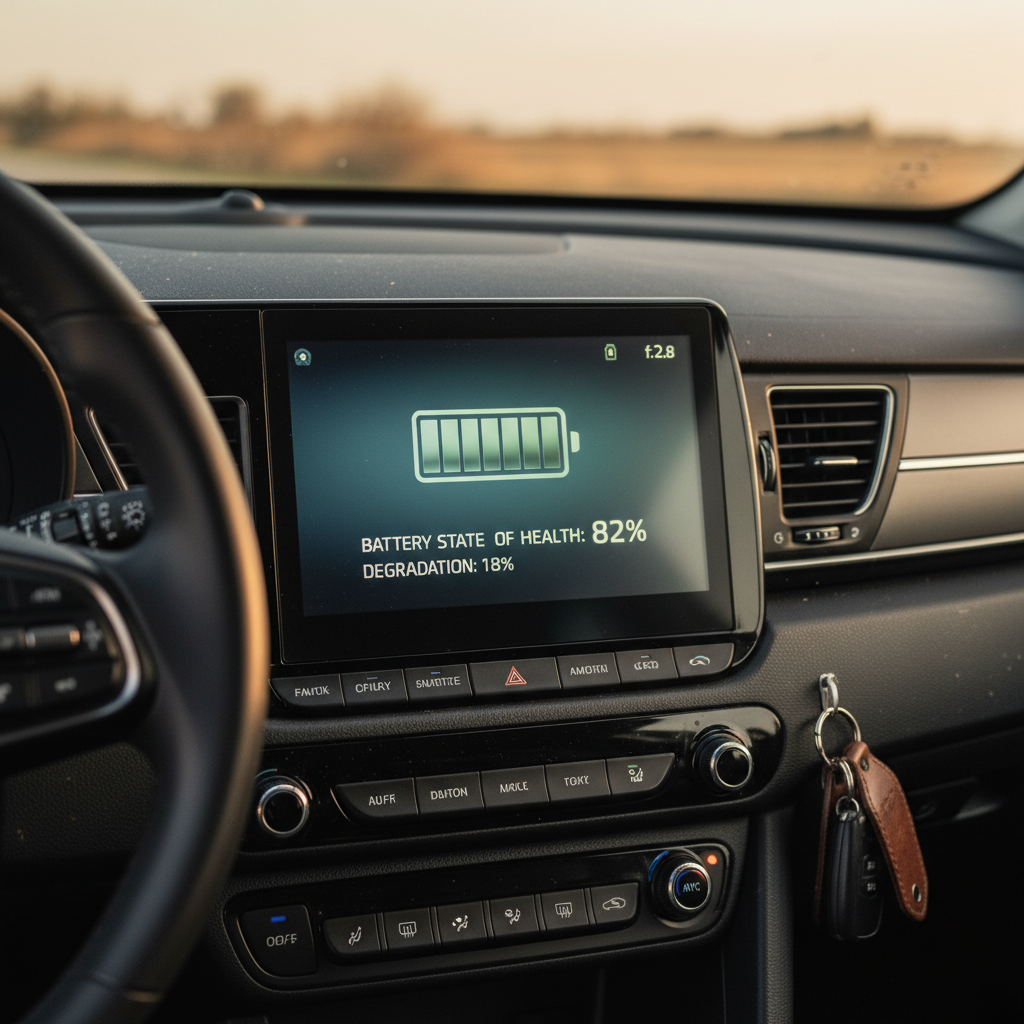
- Ask for data, not vibes. A proper battery health report tells you how much usable capacity remains, which directly affects how long you’ll need to charge for the range you expect.
- Look at the previous owner’s charging habits if available. A car that lived mostly on gentle Level 2 and occasional DC should age better than one hammered daily on fast chargers.
- Confirm that the included charging cable and any wallbox hardware are in good condition; a frayed portable cable is a slow, unhappy way to live with a Q4.
- Test-charge if you can: a quick DC session on a known-good charger can reveal whether the car reaches expected power levels or plateaus suspiciously low.
How Recharged helps here
Ready to find your next EV?
Browse VehiclesAudi Q4 e-tron charging time FAQ
Audi Q4 e-tron charging time: frequently asked questions
Bottom line: how long it takes to charge the Q4 e-tron
Strip away the jargon and the Audi Q4 e-tron is straightforward to live with: overnight on Level 2, coffee stop on DC fast. A well-installed 240 V charger at home turns a near‑empty pack into an 80% pack while you sleep, and a good highway station will take you from 10–80% in about the time it takes to grab a snack and doom‑scroll your feed.
If you’re considering a used Q4 e-tron, the crucial questions are battery health and how the previous owner charged it. That’s where Recharged steps in: every car comes with a Recharged Score Report that makes those invisible details visible, battery condition, fair pricing, and expert EV support from the first click to delivery. Get the right charging setup at home, understand what your times really look like, and the Audi Q4 e-tron stops feeling like a gadget and starts feeling like just a very good car you happen to plug in at night.