If you’ve just bought an electric vehicle or you’re shopping for a used EV, one of the first questions you’ll have is: how long does Level 1 charging take on a regular household outlet? The honest answer is that it’s slower than most people expect, but for the right kind of driving, it can still work surprisingly well.
Short answer
What Is Level 1 Charging, Exactly?
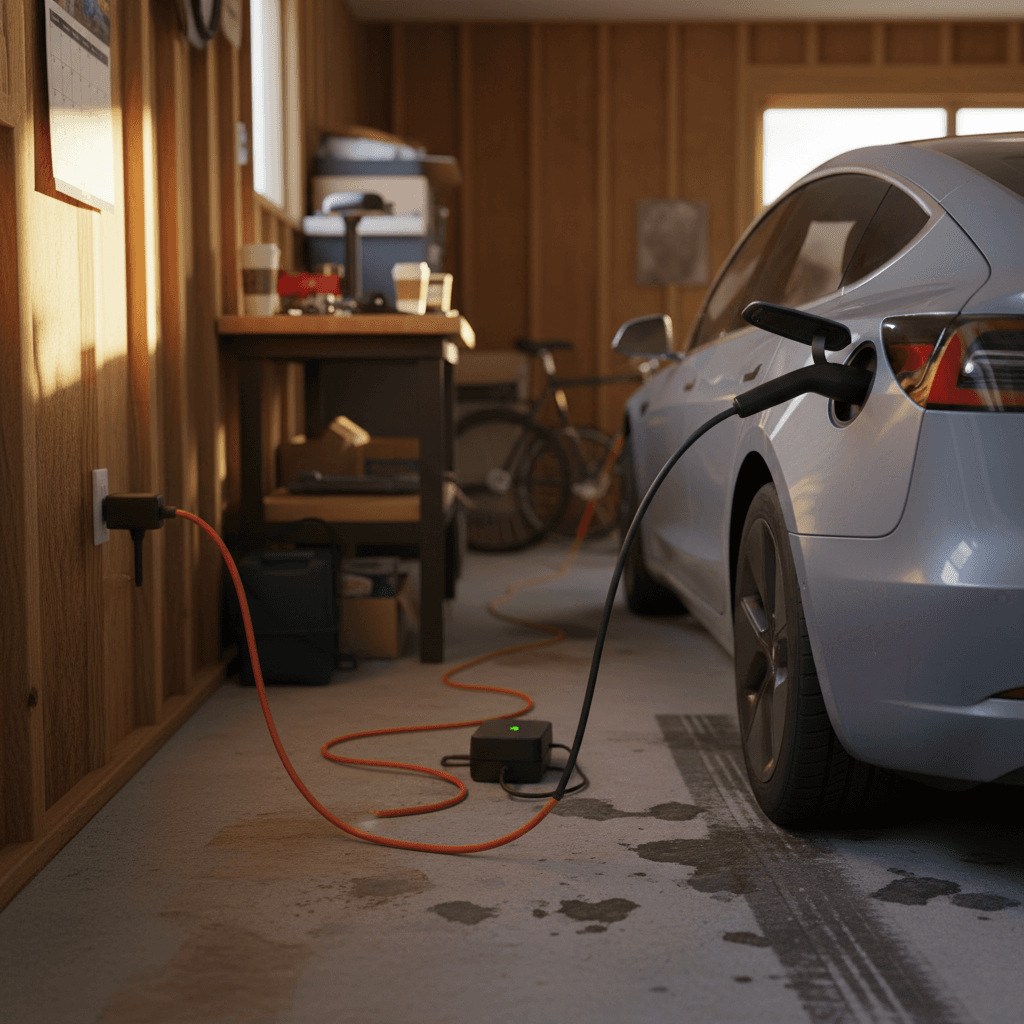
Level 1 charging is the simplest way to charge an EV: plugging the included portable charger into a standard 120-volt household outlet. It’s the electrical equivalent of plugging in a phone charger, just on a much bigger scale.
- Voltage: 120V AC (standard in North American homes)
- Power: Typically 1.2–1.9 kW depending on amperage and vehicle limits
- Hardware: The “granny” or “portable” charging cable usually included with the car
- Outlet: Standard three-prong grounded outlet on a dedicated circuit is strongly recommended
Safety note
So How Long Does Level 1 Charging Actually Take?
To talk about how long Level 1 charging takes, you need to think about two things: battery size (kWh) and charging power (kW). Charging time is essentially battery size divided by charging power.
Typical Level 1 Charging Times (Rule of Thumb)
In raw energy terms, a typical Level 1 setup delivers around 1.4 kW (120V × 12A). That means it can add about 1.4 kWh of energy per hour. If your EV uses roughly 0.25–0.3 kWh per mile, you end up with those 3–5 miles of range per hour figure that shows up in most owner manuals.
Think in miles, not percent
Real-World Miles Per Hour of Level 1 Charging
Every EV is a little different, but here’s a realistic range of what you can expect from Level 1 charging on common battery sizes and efficiencies.
Miles of Range Gained Per Hour on Level 1
Approximate real-world Level 1 charging speeds based on vehicle efficiency.
| Vehicle Type / Efficiency | Energy Use (kWh/mi) | Approx. mi/hr @ 1.4 kW |
|---|---|---|
| Highly efficient compact EV | 0.23–0.25 | 5–6 mi/hr |
| Typical sedan or crossover | 0.27–0.30 | 4–5 mi/hr |
| Larger SUV or performance EV | 0.30–0.35 | 3–4 mi/hr |
Use this table as a directional guide; your actual results will vary with temperature, driving style, and battery size.
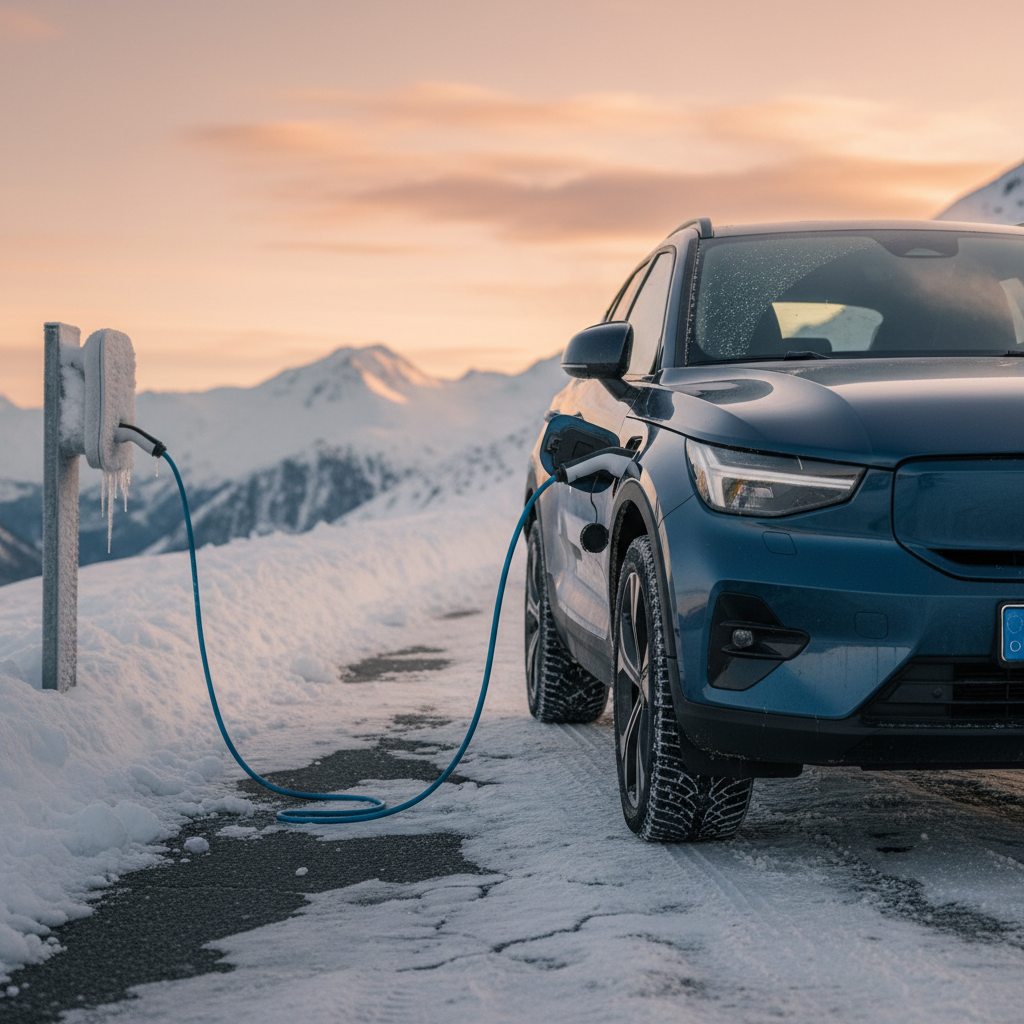
Cold weather effect
When Level 1 Charging Is Totally Enough
Despite the slow reputation, Level 1 can work very well for a lot of drivers, especially in the U.S., where the average daily trip is modest. The key is matching your daily miles to what Level 1 can realistically add back overnight.
Situations Where Level 1 Charging Usually Works Fine
If your driving fits into these buckets, you may not need faster home charging right away.
Short daily commute
Two-car household
Infrequent driving
Great for apartment or rental situations
When Level 1 Charging Is Too Slow (and Becomes a Headache)
Level 1 starts to fall apart when your daily miles consistently exceed what you can add back overnight, or when you need to recover a large chunk of battery in a short window. That’s when people start to feel "range anxiety" at home, not just on road trips.
- You routinely drive 40–70+ miles per day and only park overnight for 8–10 hours.
- You often come home with low state of charge and need the car ready early the next morning.
- You share the EV among multiple drivers with overlapping schedules.
- You live in a cold climate where winter cuts your effective miles-per-hour significantly.
- You frequently take last-minute longer trips and don’t want to rely on public fast charging to make up for slow home charging.
Watch for the "downward spiral"
Level 1 vs Level 2: Time, Cost, and Convenience Compared
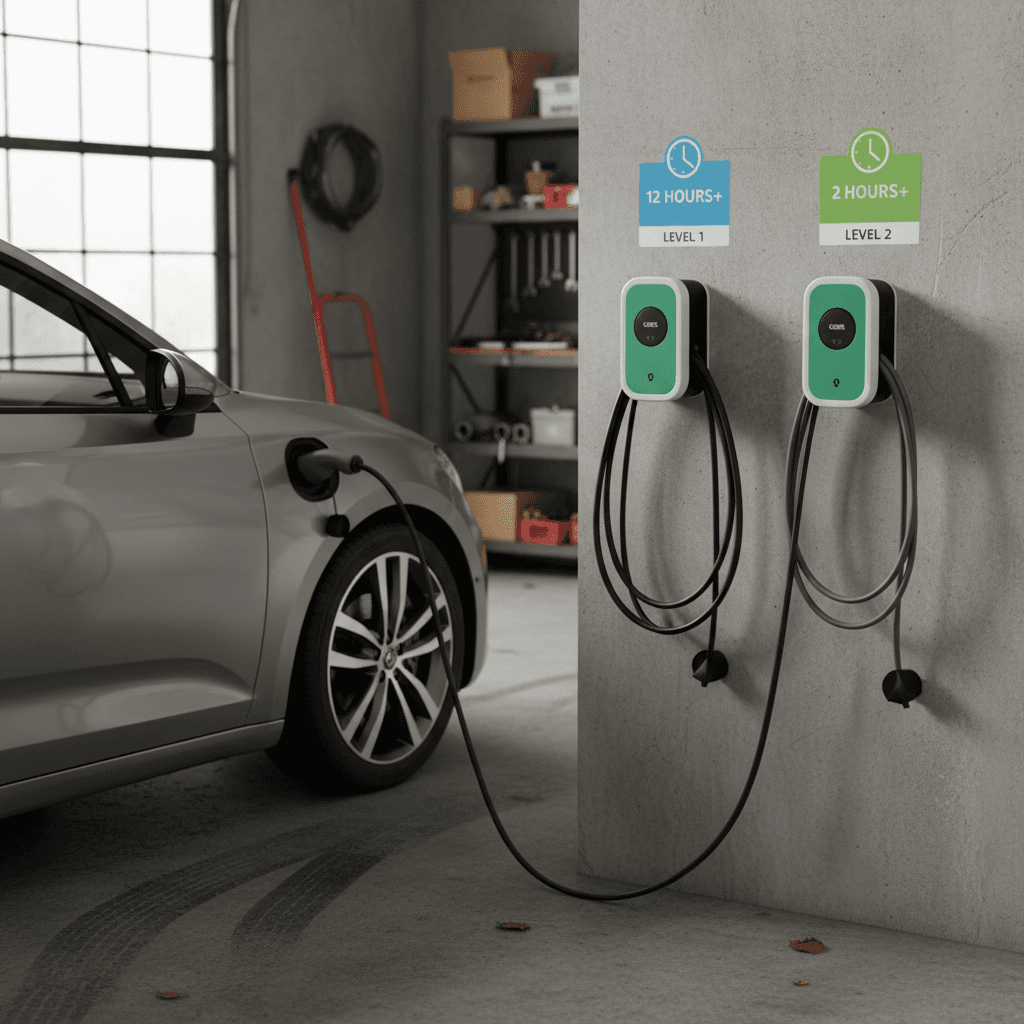
To understand how long Level 1 charging takes in context, it helps to compare it directly to Level 2, which uses a 240V circuit like an electric dryer or oven. For many households, Level 2 is the long-term sweet spot.
Level 1 vs Level 2 Home Charging at a Glance
Approximate differences between a typical Level 1 and a common 32A Level 2 home charger.
| Feature | Level 1 (120V) | Level 2 (240V, ~7 kW) |
|---|---|---|
| Power output | ~1.4 kW | ~7.0 kW |
| Miles added per hour | 3–5 mi/hr | 20–35 mi/hr |
| Typical overnight (10 hrs) | 30–50 miles | 200–300+ miles |
| Full charge on 60 kWh battery | 30–50 hours | 8–10 hours |
| Upfront hardware & install | Often $0 (included cable) | Few hundred to a couple thousand dollars installed |
| Best for | Light daily driving, renters | Daily drivers, heavier mileage, multi-driver households |
Exact numbers depend on your EV and charger specs, but the ratios are representative.
Where Recharged fits in
Does Slower Charging Help Your Battery or Electric Bill?
Many new EV owners assume that slower charging is always better for the battery and cheaper on the electric bill. The reality is more nuanced, but it’s fair to say Level 1 charging is very gentle on both your battery and your utility meter.
- Battery health: What matters most is avoiding extreme heat and routinely fast charging to 100%. Low-power Level 1 charging at home is about as gentle as it gets.
- Electric bill: Your total cost is driven by energy used (kWh), not the charging speed. Level 1 and Level 2 cost the same per kWh. The advantage is when you can schedule either one for cheaper off-peak hours.
- Charging losses: Very low-power charging can have slightly higher overhead losses, especially in cold weather. In some situations, Level 2 can actually be slightly more efficient per mile, even though it’s faster.
Bottom line for battery and bill
How to Plan Your Routine Around Level 1 Charging
If you decide to stick with Level 1, at least for now, you’ll want to be intentional about how you use it. A few smart habits can turn a slow charger into something that quietly does its job in the background.
Practical Habits to Make Level 1 Work
1. Know your miles-per-hour
Use your car’s display or a few simple tests to estimate your actual <strong>miles of range added per hour</strong> on Level 1. That number becomes the backbone of your planning.
2. Plug in whenever you’re home
With slow charging, <strong>time is your fuel</strong>. Make plugging in as automatic as locking the doors so you’re always reclaiming some miles whenever the car is parked.
3. Protect the outlet
Have an electrician confirm the circuit is healthy and ideally dedicated. Warm is fine; hot is not. Replace old outlets and avoid daisy-chaining through power strips.
4. Use charging schedules if rates vary
If your utility offers off-peak rates, use the car’s scheduling features so most of your Level 1 charging happens when electricity is cheapest, even if it’s slower.
5. Keep a buffer for surprises
If your commute only needs 20 miles, aim to start each day with <strong>50–70 miles</strong> so last-minute errands don’t push you into a low state of charge.
6. Know your public charging backup
Identify a nearby DC fast charger or Level 2 station as a "pressure relief valve" for weeks when your driving temporarily outgrows what Level 1 can replace.
Choosing the Right Home Charging Setup for Your Driving
If you’re deciding whether Level 1 is enough, or if you should budget for Level 2, it helps to look at your situation the way a fleet manager or analyst would: match the charging power to your daily energy needs with a comfortable margin.
If Level 1 is probably enough
- You typically drive under 30 miles per day.
- You can park and charge for 8–12 hours most nights.
- You have access to at least one reliable 120V outlet on a healthy circuit.
- You have a backup option for occasional long trips (second car, rental, or public fast charging).
In this case, you can start with Level 1, live with it for a few months, and only invest in Level 2 if you feel the pain.
If you should plan on Level 2
- Your commute or daily use is 40–70+ miles.
- Multiple drivers rely on the same EV.
- You live in a cold climate and park outside.
- You want the ability to recover a big chunk of battery in a single evening.
Here, Level 2 doesn’t just add convenience, it can be the difference between an EV that fits your life and one that constantly feels like it’s catching up.
Buying used? Factor charging into the decision
FAQ: Common Questions About Level 1 Charging Time
Frequently Asked Questions
Key Takeaways: Is Level 1 Enough for You?
Level 1 charging on a regular 120V outlet is slow on paper, but in practice it can work well for a surprising share of EV owners. If you’re driving short daily distances, can park and plug in for 8–12 hours overnight, and have a healthy outlet, Level 1 can quietly keep your battery topped up without any upfront investment.
- Expect roughly 3–5 miles of range per hour on Level 1 for most EVs.
- Think in terms of miles replaced overnight, not full 0–100% charges.
- Level 1 is best for light to moderate daily driving and households with backup options.
- If your daily miles regularly exceed what you can add back overnight, Level 2 is worth prioritizing.
- When shopping for a used EV, make sure its battery, efficiency, and your home charging setup are in sync, something Recharged’s transparent battery health reports are designed to make easier.
If you’re still unsure, one smart approach is to start with Level 1, live with it for a few weeks, and be honest about any friction you feel. If it fits your life, you’ve saved money and complexity. If it doesn’t, you’ll know exactly why you’re upgrading to Level 2, and you’ll appreciate the time savings every single day.