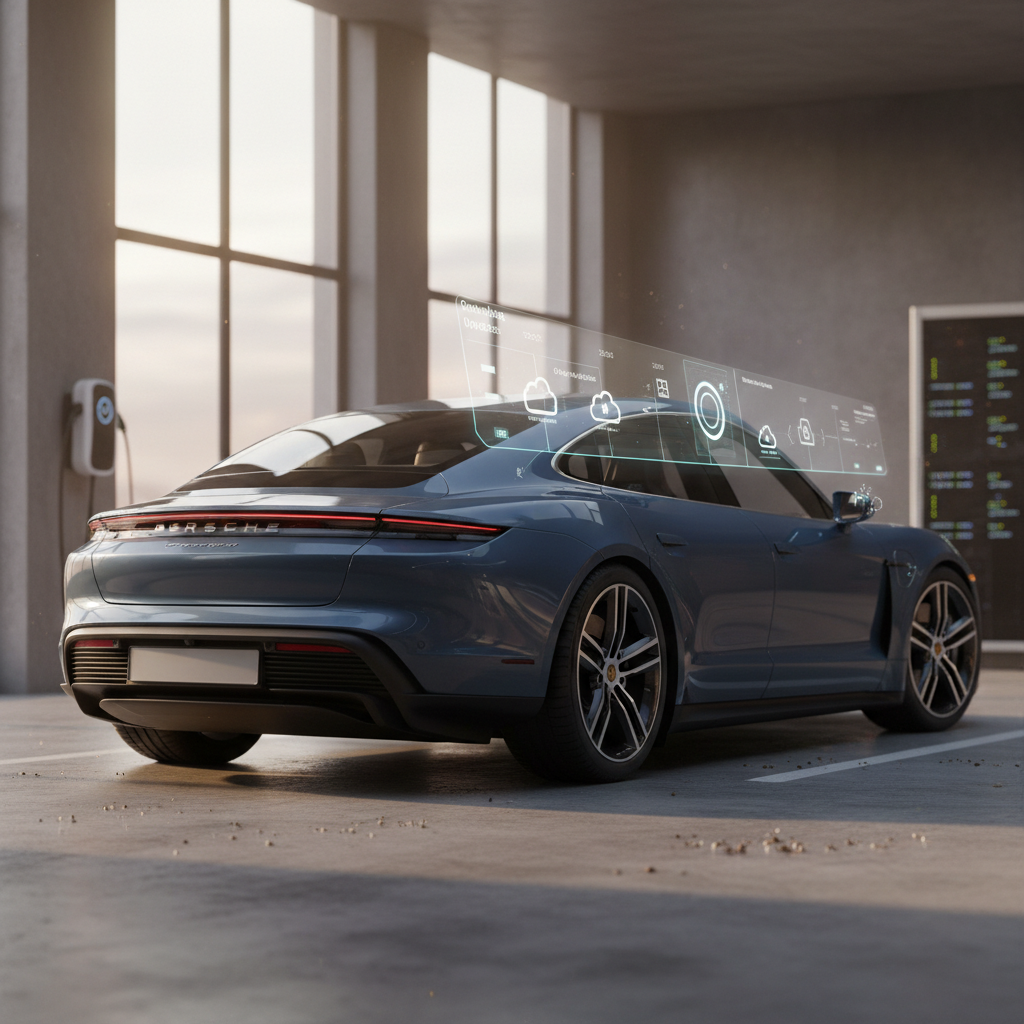
If you’re driving, or thinking about buying, a Porsche Taycan, you’ve probably heard that EVs are easy on brakes. That’s mostly true, but when pads or rotors finally do need service, the *Porsche* part of the equation kicks in. Understanding realistic Porsche Taycan brake pad replacement costs will help you budget smartly, especially if you’re cross‑shopping new vs. used.
Quick answer
Why Porsche Taycan Brake Costs Matter
The Taycan is a high‑performance luxury EV. That means you get brutal acceleration and serious stopping power, but also premium‑priced wear items. For many first‑time EV or first‑time Porsche buyers, brake service is one of the first big maintenance bills that feels different than a mainstream EV or a gas sedan.
- Brakes are a key safety component and can’t be deferred once they’re worn.
- EV regenerative braking means pads can last far longer than in gas cars, but also sit unused and corrode if the car isn’t driven regularly.
- Porsche OEM parts and dealer labor rates are at the upper end of the market.
- On a used Taycan, brake condition is a meaningful input into total cost of ownership and price negotiations.
Tip for buyers
How Regenerative Braking Affects Taycan Brake Wear
Electric vehicles slow primarily with regenerative braking, where the motors act as generators and feed power back into the battery. The Taycan’s regen system is aggressive by design, which means you use the friction brakes less often than in an equivalent gas Porsche.
What Regen Means for Taycan Brake Service
Longer life, but some unique pitfalls
Much longer pad life
Less fade in daily use
Corrosion if under‑used
Don’t ignore surface rust
Typical Porsche Taycan Brake Pad Replacement Cost
Let’s get specific. Actual pricing varies by dealer, independent shop, and region, but there are clear ranges for Porsche Taycan brake pad replacement costs on steel brakes (the most common setup). Figures below assume out‑of‑warranty service in the U.S.
Estimated Porsche Taycan Brake Pad Replacement Costs (Steel Brakes)
Ballpark parts + labor estimates for typical Taycan pad services in the U.S.
| Service | Where | What’s Included | Estimated Cost (USD) |
|---|---|---|---|
| Front pads only | Porsche dealer | OEM pads + labor | $450–$750 |
| Rear pads only | Porsche dealer | OEM pads + labor | $400–$650 |
| Front pads only | Independent Euro/EV shop | Aftermarket or OEM‑equivalent pads + labor | $300–$550 |
| Rear pads only | Independent Euro/EV shop | Aftermarket or OEM‑equivalent pads + labor | $275–$500 |
| Front pads + rotors | Porsche dealer | OEM pads, rotors, hardware | $1,100–$1,800 |
| Rear pads + rotors | Porsche dealer | OEM pads, rotors, hardware | $900–$1,500 |
Use these numbers as planning ranges; always get a written quote for your VIN and options.
Why the range is wide
Rotor Replacement Costs and CCB vs. Steel
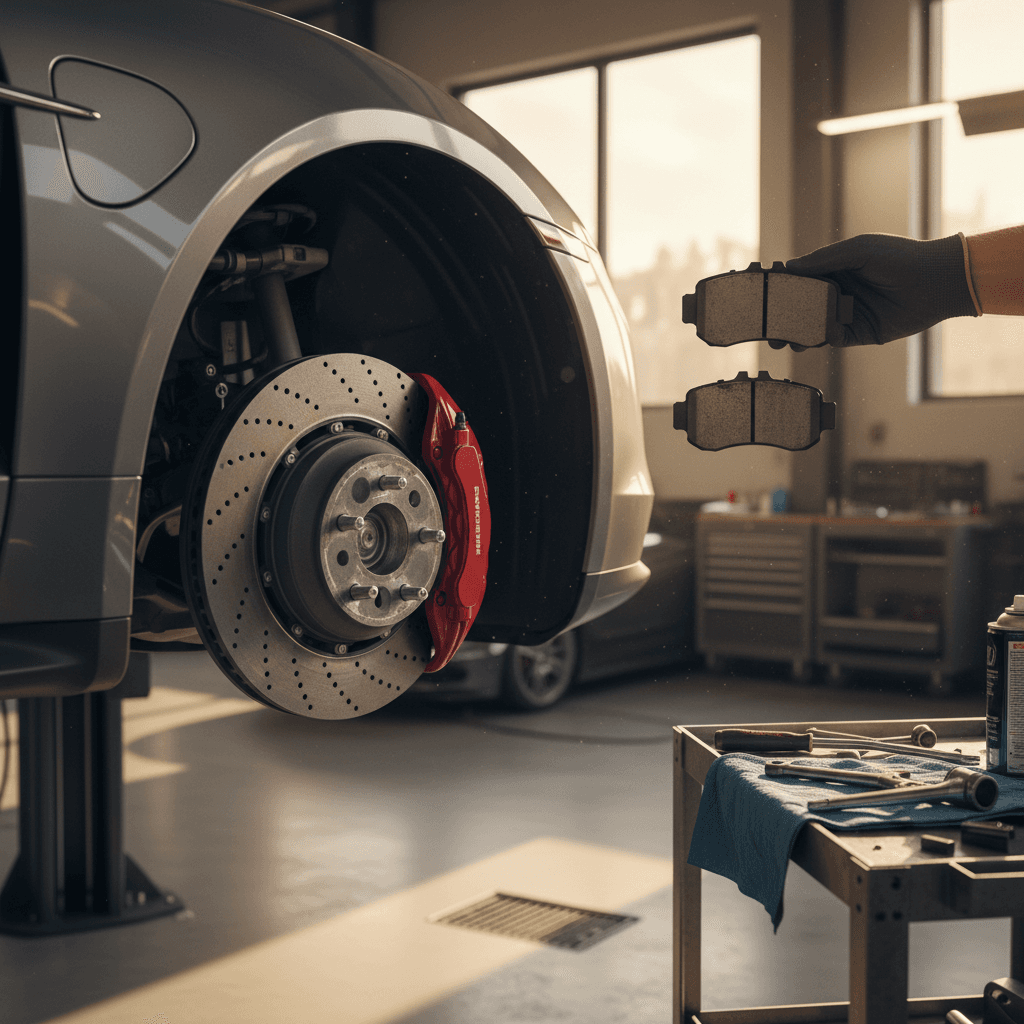
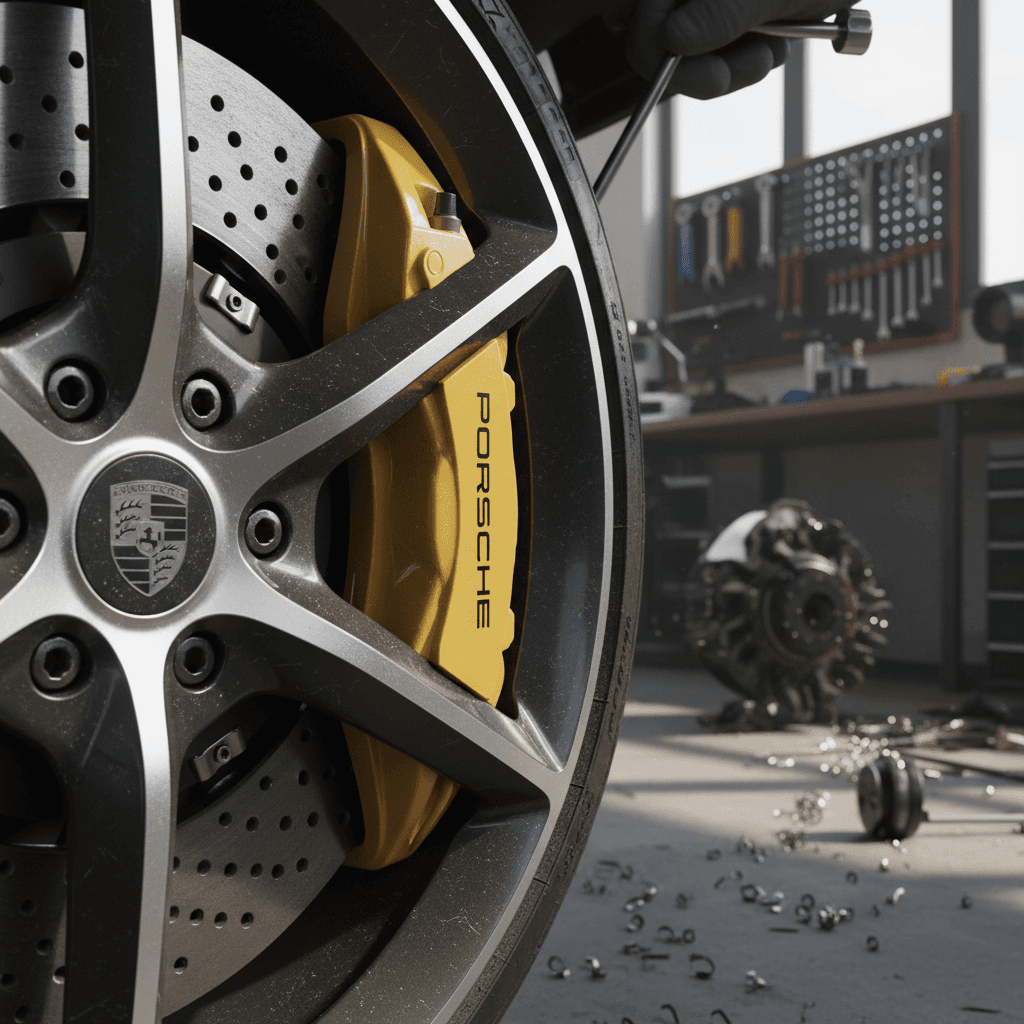
Pads are only half the story. Rotors eventually need replacement due to wear, grooves, or corrosion. On a Taycan, this is where the bill can climb quickly, especially on cars equipped with Porsche Ceramic Composite Brakes (PCCB).
Steel rotors (most Taycans)
- Front axle (pads + rotors): Often in the $1,100–$1,800 range at a dealer, less at independents.
- Rear axle (pads + rotors): Commonly $900–$1,500 at a dealer.
- High‑performance variants with larger rotors and calipers lean toward the top of these ranges.
Porsche Ceramic Composite Brakes (PCCB)
- Rotors themselves can cost thousands of dollars per corner, not including pads or labor.
- The upside: they’re designed to last a very long time if not abused (track curbing, chips, or damage are expensive mistakes).
- If you’re looking at a used Taycan with PCCB, treat rotor condition as a major due‑diligence item.
Carbon‑ceramic sticker shock
Labor, Taxes, and Other Fees to Expect
Even if the parts pricing seems straightforward, your out‑the‑door cost includes more than just pads and rotors. Plan for these line items when you budget a Taycan brake service.
- Labor hours: A straightforward pad swap usually books at 1.0–1.5 hours per axle; pads + rotors often 1.5–2.5 hours.
- Shop rate: Porsche dealers frequently charge $200+ per hour in major metro areas; independents can range from $130–$190 per hour.
- Brake fluid service: If you’re due for a fluid change, expect another $150–$300 depending on shop and fluid type.
- Taxes and fees: State sales tax on parts, shop supplies, and environmental/disposal fees usually add a modest but real amount to the final bill.
Ask for an itemized estimate
How Often Do Taycan Brakes Need Replacing?
Unlike gas Porsches, where 20,000–40,000 miles on front pads is normal, Taycan brakes can last significantly longer thanks to regen. But usage patterns matter more than any generic interval.
Typical Taycan Brake Lifespan Ranges
Don’t rely on mileage alone
Ways to Lower Your Taycan Brake Costs
You can’t change the fact that you’re maintaining a six‑figure‑MSRP EV, but you *can* be smart about how and where you service it. Here are practical ways to keep Taycan brake bills in check without cutting corners on safety.
Cost‑Saving Playbook for Taycan Brakes
Use regen to do the heavy lifting
Drive in modes that maximize regenerative braking when it’s safe. The more you let the motors slow the car, the less friction work your pads and rotors need to do.
Brake firmly, not constantly
Lightly riding the pedal generates more wear and heat than firm, decisive braking followed by full release. Smooth, planned stops help both range and pad life.
Find a reputable EV/Euro specialist
A good independent shop familiar with Porsches and EVs can often save you <strong>20–30%</strong> vs. dealer pricing while using OEM or high‑quality aftermarket components.
Bundle brake work with other service
If you’re already in for tires or suspension work, adding brakes can avoid a second visit and sometimes earn you discounted labor time.
Avoid track abuse without prep
If you’re tracking your Taycan, use appropriate pads and fluid, and accept that braking system wear (especially on heavier EVs) is part of the hobby.
Where used EVs can shine
Ready to find your next EV?
Browse VehiclesCost Comparison: Taycan vs. Other EV Brakes
How do Taycan brake costs stack up against other premium EVs? In broad strokes, you’re paying more than mainstream brands but in line with, or slightly above, other German luxury EVs, especially when performance packages are involved.
Brake Service Cost Comparison: Taycan vs. Other EVs (Front Pads Only, Typical Dealer Pricing)
Approximate ranges for front pad replacement at branded dealers, parts + labor.
| Model | Vehicle Class | Front Pad Service Range |
|---|---|---|
| Porsche Taycan | Performance luxury EV | $450–$750 |
| Tesla Model S/Model X | Premium EV | $350–$600 |
| Mercedes‑Benz EQE/EQS | Luxury EV | $400–$750 |
| BMW i4/i5 | Sporty luxury EV | $350–$650 |
| Hyundai Ioniq 5 / Kia EV6 | Mainstream EV | $250–$450 |
Real‑world quotes can land above or below these ranges; this table is meant for directional comparison, not exact budgeting.
The luxury EV pattern
Brake Health Checklist for Used Taycans
If you’re evaluating a used Taycan, whether at a Porsche dealer, an independent lot, or online, brakes should be on your inspection shortlist. You don’t need to be a master tech to ask the right questions.
Used Taycan Brake Inspection Checklist
Ask for recent service records
Look for line items like “front pads replaced,” “pads + rotors,” or “brake fluid flush.” A recent major brake job is a tangible value add.
Confirm pad thickness measurements
Have a shop or seller provide pad thickness in millimeters for each wheel. Thin or uneven readings can signal imminent costs or underlying issues.
Inspect rotors for scoring and rust
Look through the wheel spokes for deep grooves, heavy rust, or lips on the rotor edge. Photos or a pre‑purchase inspection help here if you’re buying remotely.
Test drive for noise and vibration
On a safe road, brake from moderate speeds. Listen for squeals or grinding and feel for steering‑wheel shake or pulsing in the pedal.
Check for brake warning messages
Ensure no brake wear or ABS/ESC warnings are lit on the dash. Scan reports from a Porsche‑capable diagnostic tool add even more confidence.
Use third‑party inspection data
A structured health report, like the <strong>Recharged Score</strong>, can combine brake condition with battery diagnostics and pricing data so you see the whole ownership picture, not just one repair line item.
How Brake Costs Fit Into Overall Taycan Ownership
Viewed in isolation, spending four figures on brakes can feel painful. But in context, a Taycan’s brake costs are one part of a broader EV ownership profile that includes minimal oil‑change‑type maintenance, no exhaust system, and a battery that typically outlasts most owners’ time with the car.
Costs that go down vs. gas Porsches
- No oil changes, spark plugs, or timing chains.
- Fewer fluids and filters to maintain.
- Less day‑to‑day brake wear thanks to regen.
Costs that stay “Porsche‑level”
- Brakes, tires, and suspension components on performance trims.
- Out‑of‑warranty electronic modules and sensors.
- Dealer labor rates in major metro areas.
Use total cost of ownership, not single bills
FAQ: Porsche Taycan Brake Pad Replacement Cost
Common Questions About Taycan Brake Costs
The Bottom Line on Taycan Brake Pad Costs
Owning a Porsche Taycan means brake service will never be “cheap”, but thanks to aggressive regenerative braking, it doesn’t have to be frequent. For most owners, planning around $450–$900 per axle for pad replacement on steel brakes, and understanding that pad + rotor jobs can reach into the low four figures at a dealer, is a realistic way to budget.
If you’re shopping for a Taycan, especially used, fold brake condition into your bigger ownership picture: battery health, tire wear, and service history. Tools like the Recharged Score give you verified battery diagnostics, market‑fair pricing, and transparency around wear items so you’re not blindsided by your first service bill. That way, you can enjoy the Taycan’s performance and refinement knowing where your real costs live, and where they don’t.