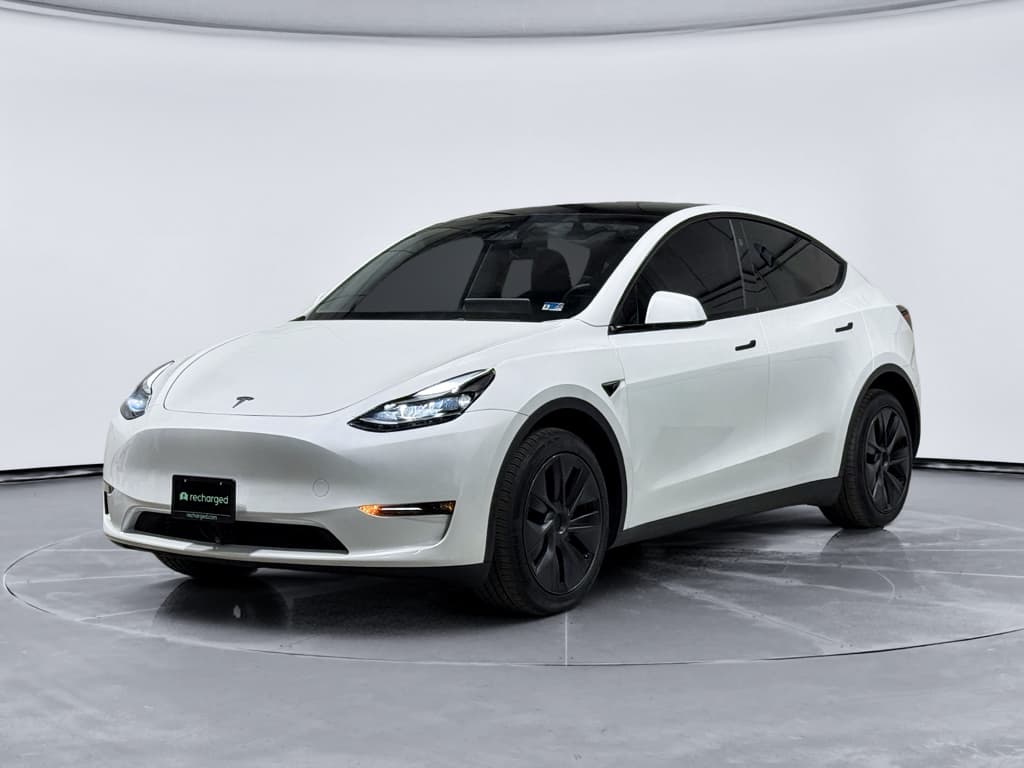
If you’re shopping for a Tesla Model Y, you’re probably hearing two conflicting stories: that Teslas hold their value incredibly well, and that recent price cuts have crushed resale values. So how fast does a Tesla Model Y actually depreciate in the real world, and what does that mean if you’re buying used, or thinking about selling?
Quick answer
Tesla Model Y depreciation at a glance
Typical Tesla Model Y depreciation snapshot
Data caveat
Year-by-year: How fast does a Model Y depreciate?
Different research outfits publish slightly different numbers for Tesla Model Y depreciation because they measure from different starting prices and sample different vehicles. To keep things practical, here’s a simple, rounded view of how fast a typical Model Y loses value if it starts at about $50,000 MSRP.
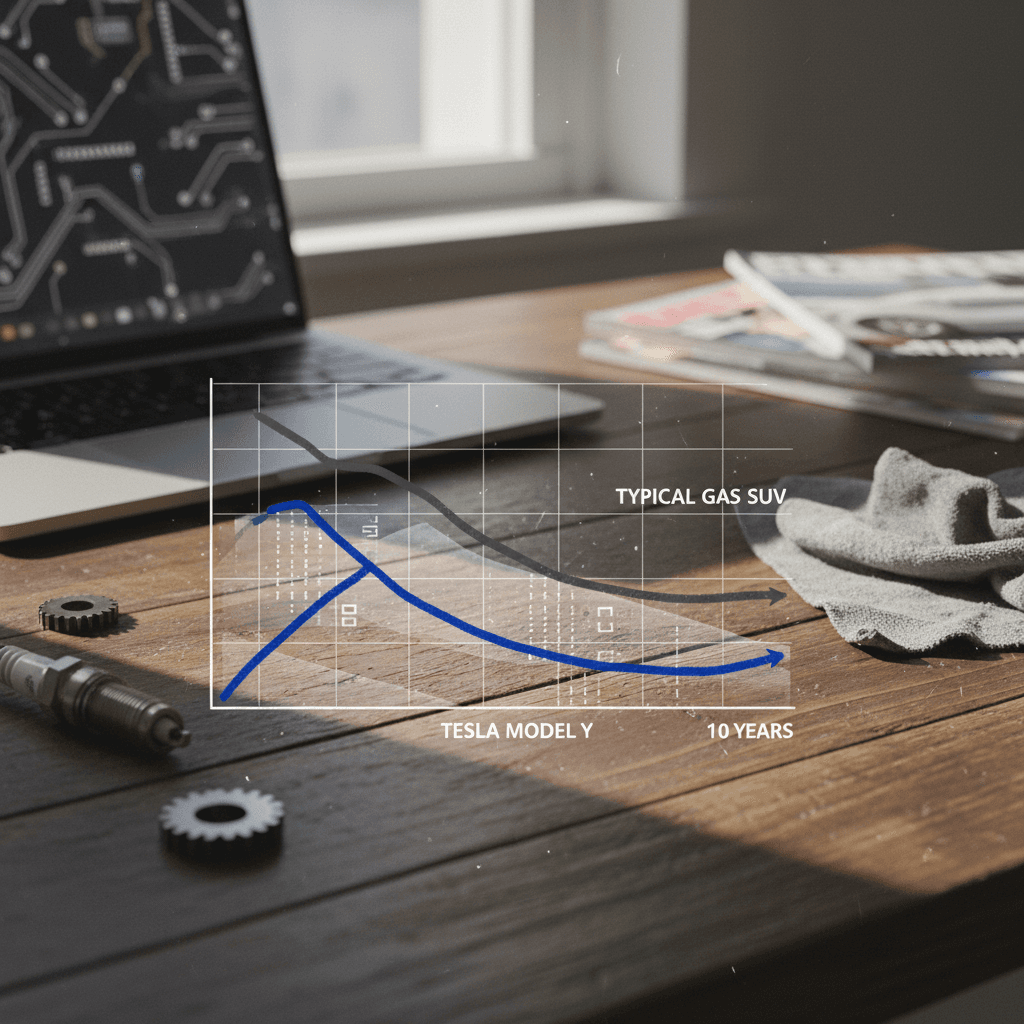
Illustrative Tesla Model Y depreciation curve
Approximate retained value for a Model Y that cost $50,000 new, assuming normal mileage and no major accidents.
| Age of vehicle | Approx. value retained | Approx. dollar value | What this looks like in the market |
|---|---|---|---|
| 1 year | 75–85% | $37,500–$42,500 | Nearly-new CPO and low‑mile 1‑year‑olds often list in the high‑30s to low‑40s. |
| 3 years | 60–65% | $30,000–$32,500 | Plenty of 3‑year‑old Long Range examples show up around low‑30s with average mileage. |
| 5 years | 45–55% | $22,500–$27,500 | Well‑kept 5‑year‑olds typically live in the mid‑20s, depending on trim and options. |
| 7 years | 35–40% | $17,500–$20,000 | Older high‑mile cars with good batteries still command high‑teens to ~20k. |
| 10 years (projected) | 30–35% | $15,000–$17,500 | Based on other Teslas and current trends, healthy 10‑year‑olds should land in the mid‑teens. |
These figures reflect blended data from several sources and real‑world used listings as of early 2026. Your exact vehicle may differ.
Think in dollars, not just percentages
Years 0–3: The steep part of the curve
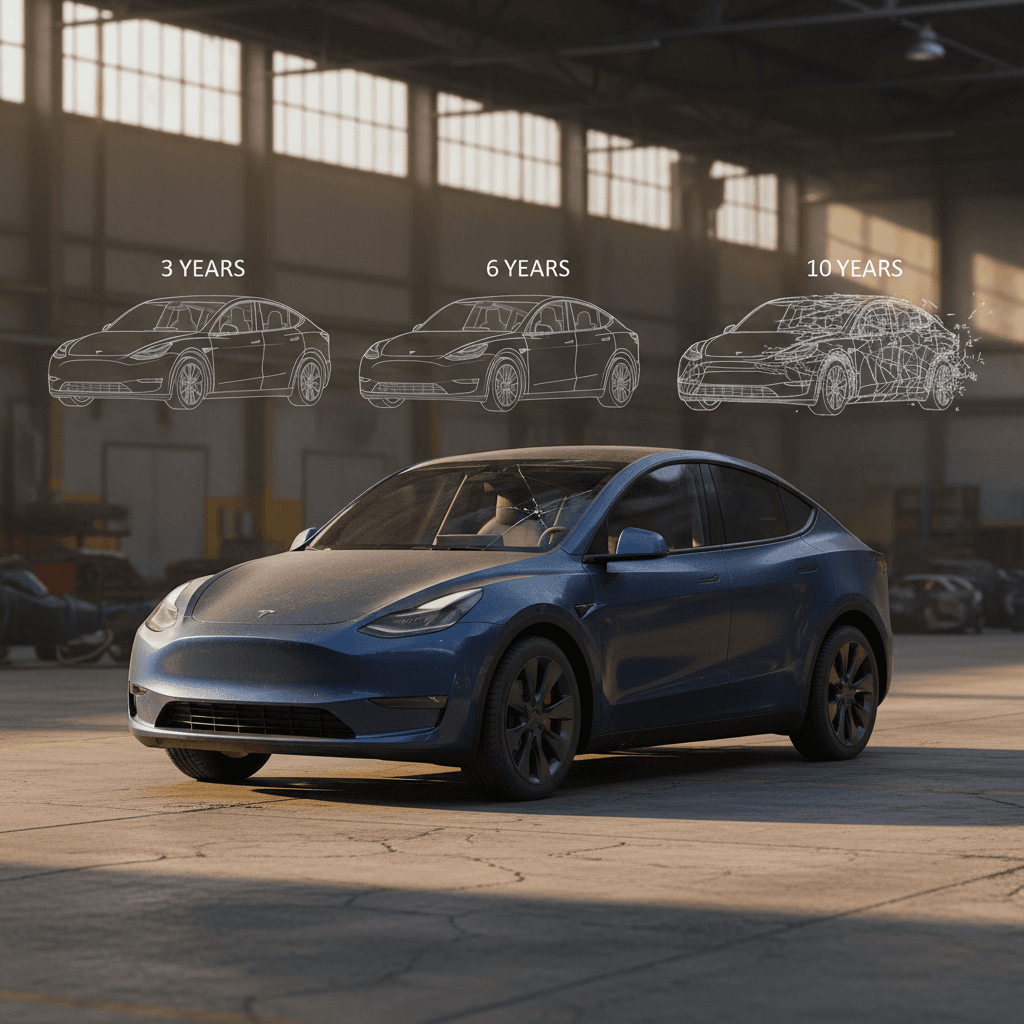
From new to around 3 years old, the Model Y typically loses 35–40% of its value. That’s driven by:
- Initial new‑car markup over transaction prices
- Tesla list‑price cuts that immediately drag used values down
- Fast technology iteration that makes brand‑new cars more appealing
Years 3–8: Depreciation slows down
Once the big initial drop is over, annual depreciation often slows to roughly 5–8% of remaining value per year, assuming normal miles and clean history. At this point, the Y’s strengths, SUV body style, range, and charging network, do a lot of work to support resale value.
What actually drives Tesla Model Y depreciation?
Key forces behind Model Y depreciation
Some are in your control, others aren’t, but all affect what your Y is worth later.
Tesla’s own price changes
Tesla changes sticker prices more often than traditional automakers. When they cut new‑car prices, used Model Y values tend to reset downward quickly, because buyers can suddenly get a new one for less.
Body style & demand
The Model Y is a compact SUV, currently one of the hottest segments in the U.S. market. That steady demand helps it hold value better than many sedans and niche EVs, even in a price‑cut environment.
Battery & software health
Used‑EV shoppers care about range and battery health above almost anything else. Model Ys with verified good battery state of health (SOH) and current software tend to lose less value and sell faster.
Mileage & use pattern
Just like any vehicle, mileage and how it was driven matter. Highway‑light, gently used cars with regular charging and no accident history depreciate significantly more slowly than hard‑used rideshare vehicles.
Charging access & standards
The Y’s access to the Supercharger network is a major value prop. As NACS spreads to other brands, that advantage narrows slightly, but for now it still supports Model Y resale value relative to many rivals.
Build years & revisions
Early‑build Model Ys had more fit‑and‑finish complaints. Later model years with incremental updates, added range, and improved build quality tend to command higher resale values and depreciate more slowly.
The “price cut shock” effect
Model Y vs other EVs and gas SUVs
Depreciation only makes sense in context. It’s not enough to say “the Model Y loses 50–60% in five years” without asking: compared to what? Compact luxury crossovers and EVs are its real competitive set.
How Tesla Model Y depreciation stacks up
High-level comparison of typical 5‑year value loss for similar vehicles in early‑2026 U.S. market conditions.
| Vehicle type | Example models | Typical 5‑year depreciation | Notes |
|---|---|---|---|
| Tesla Model Y | Model Y Long Range / Performance | ~45–55% (some studies show ~60%) | Better than many EVs, slightly worse than Model 3; price‑cut years look harsher on paper. |
| Other mainstream EV crossovers | VW ID.4, Hyundai Ioniq 5, Kia EV6 | ~55–65% | Smaller used‑buyer pool and weaker charging networks drag values down. |
| Luxury EV SUVs | Jaguar I‑Pace, Audi e‑tron (Q8 e‑tron) | ~60–70%+ | Higher MSRPs and rapid tech obsolescence mean heavy losses for first owners. |
| Gas compact luxury SUV | BMW X3, Audi Q5, Lexus NX | ~50–60% | Well‑known brands hold value, but maintenance and fuel costs are higher than a used Y. |
These are broad ranges, not hard promises, individual trims and incentives can move a specific vehicle up or down the band.
Where the Model Y shines
How battery health changes depreciation math
For EVs, depreciation isn’t just about age and miles, it’s about usable range. A Model Y that still delivers close to its original range is worth significantly more than one that’s lost 15–20% of its capacity, even if they’re the same year and mileage.
- Most Model Y packs show relatively modest degradation in the first 100,000 miles when treated reasonably well.
- Fast DC charging all the time, repeated 0–100% cycles, and extreme heat can accelerate degradation, and future buyers will discount accordingly.
- A documented record of healthy State of Health (SOH) from a trusted battery report can narrow that discount dramatically.
Where Recharged fits in
Best age and mileage to buy a used Model Y
Because the Model Y sheds value fastest in the early years and then stabilizes, there’s a clear “sweet spot” where you let the first owner eat the worst depreciation but still get a modern, long‑range EV.
Three sweet spots for value-conscious buyers
Which one makes sense for you depends on how long you plan to keep the car.
1–2 years old
Best if you want “like new” without full MSRP. You’ll often save $5,000–$10,000 versus new, with warranty and latest tech largely intact. Depreciation during your ownership will still be noticeable, but less brutal than from day zero.
3–4 years old
Often the true value sweet spot. A lot of the initial drop has already happened, values are down roughly 35–40%, but you’re still getting current‑generation range and charging performance. Depreciation from here tends to be much slower.
5–6 years old
Best for low monthly cost of ownership. Purchase prices are in the mid‑20s for many trims, and annual depreciation is typically modest if the battery checks out. Ideal if you don’t care about having the very latest interior tweaks.
Match age to your ownership horizon
What you can do to slow down depreciation
You can’t control Tesla’s pricing or macro EV demand, but you can influence how your individual Model Y performs on the used market. Think of it as protecting your future self when you go to sell or trade in.
Practical ways to protect your Model Y’s value
1. Keep the battery in its comfort zone
Avoid frequent 0–100% charge cycles and minimize long‑term parking at 100%. Keeping the pack mostly in the 20–80% window and limiting unnecessary DC fast charging can help slow degradation and preserve range.
2. Document software and service history
Save service invoices, show over‑the‑air update history, and note any major warranty work. A clean, traceable record builds buyer confidence and can justify a higher resale price.
3. Protect the interior and exterior
Regularly wash, de‑salt in winter, and address paint chips or wheel rash early. Non‑smoker vehicles with clean interiors and undamaged upholstery are significantly easier to sell and depreciate more slowly.
4. Avoid heavy modifications
Aggressive suspension changes, oversized wheels, and unvetted aftermarket electronics may hurt resale. Subtle, reversible mods, or none at all, keep your buyer pool as wide as possible.
5. Watch the miles
If you drive 20,000+ miles a year, you’ll outrun typical depreciation curves. High‑mileage Teslas can still be great cars, but they often fall into lower price brackets sooner than average‑mile examples.
6. Choose the right moment to sell
If Tesla announces another major price cut or floods inventory with discounted new cars, used values can soften. When possible, list your Y before or well after these waves, not in the middle of them.
When a used Model Y from Recharged makes sense
If you’re trying to thread the needle between getting a solid deal and not inheriting someone else’s problems, the used market can feel like a minefield, especially with EVs, where battery health and software history matter as much as mileage. That’s exactly the gap companies like Recharged are built to fill.
Why depreciation makes used Model Ys attractive
- First owners absorbed the steepest 0–3 year value drop.
- You can buy into Tesla’s ecosystem, range, Supercharging, tech, for tens of thousands less than original MSRP.
- Insurance and taxes are often lower than on a new build while the driving experience is nearly identical.
What Recharged adds on top
- Recharged Score Report with verified battery health, pricing transparency, and history checks.
- EV‑specialist advisors who can help you compare a Model Y to other used EVs, not just on price but on long‑term cost of ownership.
- Financing, trade‑in options, and nationwide delivery, so you can shop the best examples, not just what’s on the closest lot.
Turn depreciation into an advantage
Ready to find your next EV?
Browse VehiclesTesla Model Y depreciation FAQ
Common questions about Model Y depreciation
Bottom line: Is Tesla Model Y depreciation “bad”?
In absolute dollars, Tesla Model Y depreciation can look painful, especially if you’re the first owner watching list‑price cuts and newer tech show up every year. But in relative terms, the Model Y usually depreciates on par with or better than many comparable gas SUVs and competing EVs, particularly once you get past the first 3 years.
If you approach it strategically, buying a well‑documented 3–6‑year‑old example, paying attention to battery health, and planning to keep it long enough to amortize the remaining value loss, the Model Y’s depreciation curve can actually work in your favor. That’s where a curated used marketplace like Recharged earns its keep: surfacing Model Ys with strong Recharged Scores, transparent pricing, and EV‑savvy guidance so you can let depreciation subsidize your purchase rather than surprise you down the road.